How to Learn Treading Water Safely
Panic usually starts the same way in deep water – the body stiffens, the chin lifts, and the legs start kicking too hard. That is exactly why people search for how to learn treading water. They do not just want a technique. They want enough control to stay calm, stay afloat, and stay safe.
Treading water is one of the most practical survival skills a swimmer can build. It gives you time to breathe, look around, signal for help, wait for instructions, or recover after entering water where you cannot stand. For children, it supports water confidence and progression into stronger swimming skills. For adults, it often becomes the turning point between fear and real independence in the pool.
Why treading water matters more than people think
Swimming forward is useful, but it is not always the first skill you need in an unexpected situation. In many real-life moments, staying in one place safely matters more. If a child slips into deeper water, if an adult loses rhythm during a lap, or if a learner becomes tired halfway across the pool, treading water becomes the skill that buys time and reduces panic.
This is also why structured swim programs teach flotation control, breathing, and basic survival movement early. Treading water is not an advanced trick. It is a foundation skill. In SwimSafer-style progression, survival ability and water confidence are built step by step, not left until the end.
How to learn treading water step by step
If you are wondering how to learn treading water, start by removing one common misconception: you do not need to “fight” the water to stay up. In fact, the more tense and rushed you are, the harder the skill becomes.
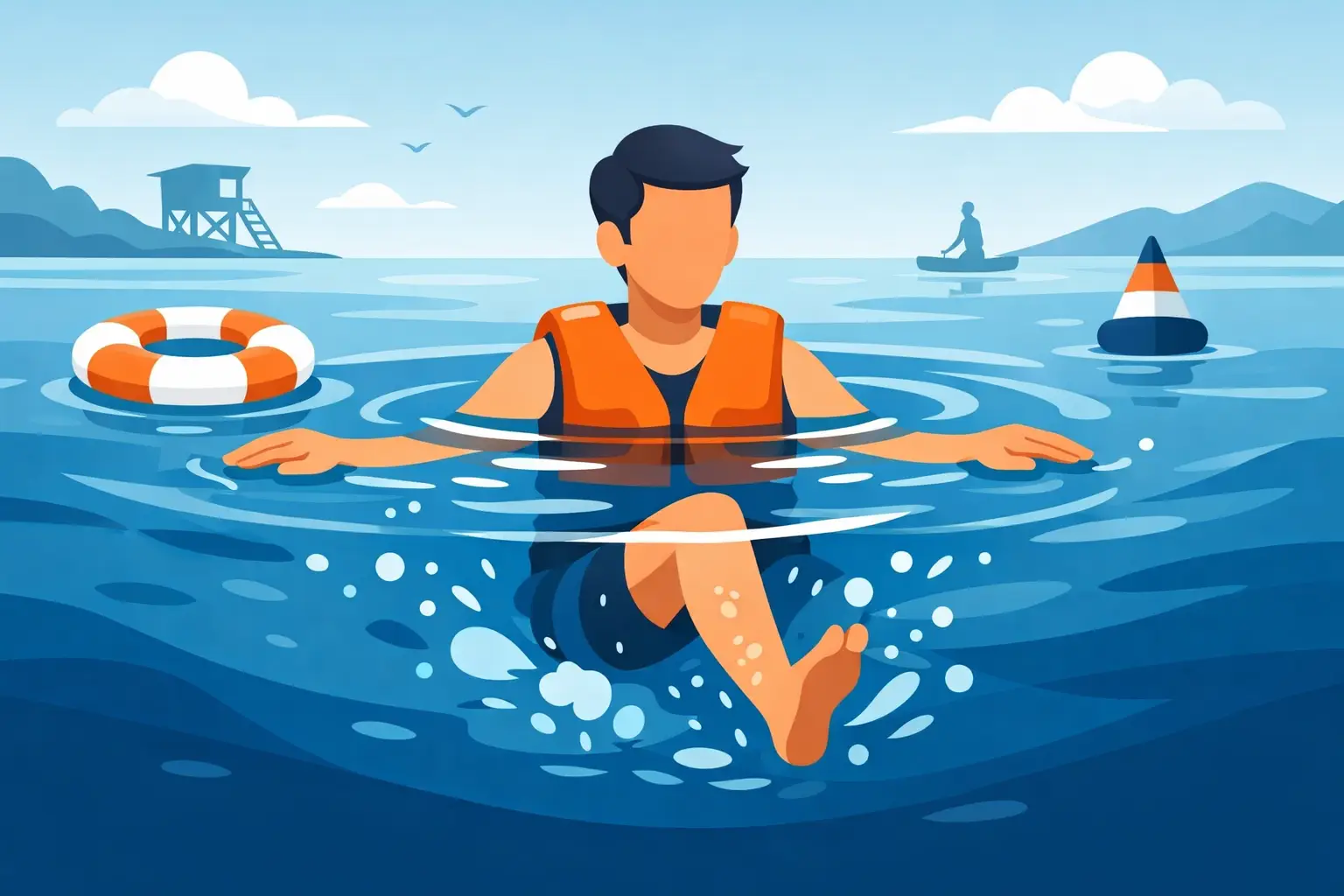
The first step is body position. Keep your head relaxed, eyes forward, and chin neutral. Many beginners try to hold their face very high above the surface, which pushes the hips and legs downward. Instead, let the water support you around mouth level. You only need enough height to breathe comfortably.
The second step is learning that your arms and legs have different jobs. Your arms help with balance and gentle lift. Your legs provide steady support from below. When beginners move everything fast at once, they waste energy and lose rhythm. When each part does a simple, controlled job, floating becomes much easier.
The third step is breathing. Exhale steadily and avoid short, panicked breaths. Holding your breath often creates stiffness in the shoulders and neck, which makes the body sink lower. A calm breathing pattern helps the whole skill work.
Start where you can stand
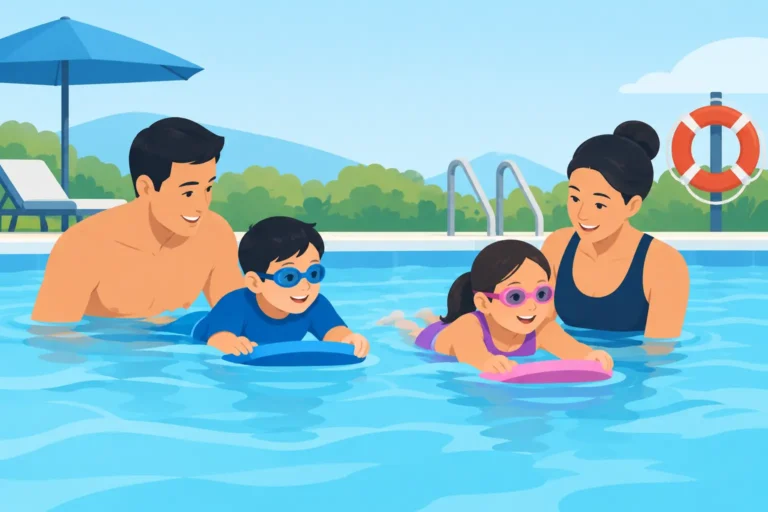
The safest way to learn is in water that is shallow enough for you to recover your footing. Stand near the pool wall or within arm’s reach of an instructor. Practice leaning back slightly and lifting your feet for two or three seconds at a time. Then return to standing. This teaches your body that floating briefly is manageable.
From there, increase the time slowly. Aim for five seconds, then ten, then fifteen. Short repetitions work better than one exhausting attempt. Children and nervous adults usually progress faster when they experience repeated success in small doses.
Use a simple arm action first
For beginners, the hands should move in small outward and inward sweeps at the water surface. Think of pressing the water gently away and then bringing the hands back in. The motion should stay relaxed, with the elbows slightly bent. Wide, slapping arm movements create splash, not support.
It helps to imagine tracing small circles or scoops with the hands. The goal is not power. The goal is steady pressure against the water.
Choose the easiest kick for your current level
Not every swimmer should start with eggbeater kick. It is effective, but it is also more technical and harder for complete beginners. For many learners, a gentle scissor kick or breaststroke-style kick is easier to understand at first.
If you are just starting, try alternating small kicks under the body while keeping the knees from lifting too high. Large bicycle kicks often push the body backward and tire the legs quickly. Compact movement works better.
As control improves, you can progress toward a more efficient eggbeater action, especially if your goals include lifesaving skills, water polo, synchronized swimming, or stronger deep-water endurance.
The most common reason beginners struggle
Most people do not fail because they are too heavy, too weak, or “not built” for floating. They struggle because they are trying to stay too high in the water. That one mistake creates a chain reaction: the body becomes vertical and stiff, the legs sink, the kicking speeds up, and fatigue arrives fast.
Good treading water is economical. Your mouth needs to stay clear. Your shoulders do not. Once learners accept that lower, calmer position, progress becomes much faster.
This is especially important for parents teaching children. A child who believes they must keep their whole upper chest out of the water will often panic and overwork. Clear coaching helps them understand what successful treading actually looks like.
How long does it take to learn treading water?
It depends on starting confidence, coordination, and comfort in deeper water. A water-confident child may learn the basic movement pattern in a few lessons but need more time to sustain it. A nervous adult may need longer at the beginning yet make strong progress once breathing and fear are under control.
A realistic first goal is 10 to 20 seconds of calm treading in a supervised setting. After that, build toward 30 seconds, then one minute. Endurance matters, but quality matters more. Thirty seconds with relaxed breathing and efficient movement is far better than one minute of panic.
Structured coaching usually speeds this up because an instructor can correct body angle, kick pattern, and breathing in real time. That matters more than most people expect.
How to practice treading water safely
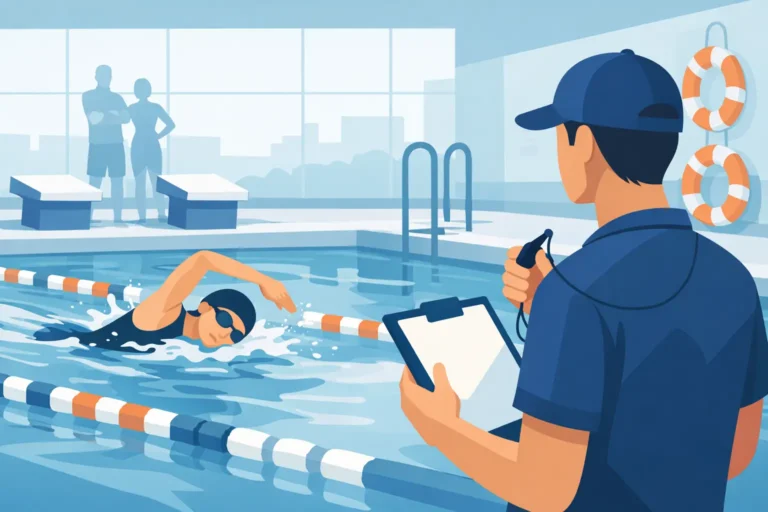
Safety should shape the entire learning process. Beginners should practice with close supervision, especially in deep water. Children should never train this skill alone, even if they can already swim short distances.
Use the pool wall strategically. Start beside it, then move half a step away, then a full step away. This creates progression without removing security. If goggles help a child or adult feel calmer, use them, but do not let equipment replace actual confidence.
Practice in short sets. For example, work for 10 to 15 seconds, rest, and repeat. Fatigue changes technique quickly. Once a learner gets tired, they often start kicking too hard and lifting the chin, which reinforces the wrong habits.
If fear is significant, combine treading practice with floating and back recovery drills. A swimmer who knows how to roll onto the back and rest will approach deep water with more control.
When formal instruction makes a big difference
Some skills are difficult to self-correct because the swimmer cannot easily see what their body is doing. Treading water is one of them. A coach can spot whether the hands are too deep, whether the kick is too wide, or whether the learner is wasting energy trying to rise too high.
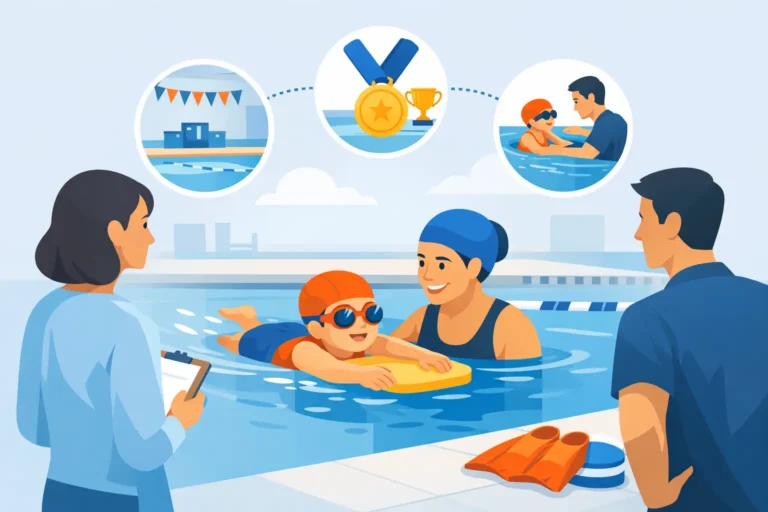
This is where structured swim teaching has a clear advantage. A progression-based program does not treat treading water as a random exercise. It places it alongside breathing control, sculling, floating, and survival movement. That sequence is what builds dependable skill, especially for children preparing for assessments and adults who want practical water safety rather than guesswork.
At AQZOG, this kind of structured progression matters because survival ability is taught as a measurable outcome, not a vague hope. That is often the difference between trying hard and actually improving.
Signs you are getting better
Progress is not only about lasting longer. It also shows up in smaller ways. Your breathing becomes quieter. Your arms stop splashing. Your legs feel less frantic. You can look forward, listen to instructions, or answer a question without losing control.
For children, another strong sign is emotional. They enter deeper water with less hesitation. For adults, it is often the moment they realize they can pause in deep water without immediately searching for the wall.
Those changes matter because they reflect real skill, not just effort.
A better goal than “just stay up”
The best way to think about treading water is not survival by struggle. It is controlled waiting. You are learning to stay calm enough to breathe, think, and act. That is what makes the skill useful in swimming lessons, assessments, and real emergencies.
If you are learning for yourself, be patient with the first few sessions. If you are supporting a child, focus on calm repetition rather than dramatic progress. Strong treading water is built through structure, confidence, and correction. Once that clicks, deep water stops feeling like a threat and starts feeling manageable.