Kids Swim Lessons vs Adult Lessons
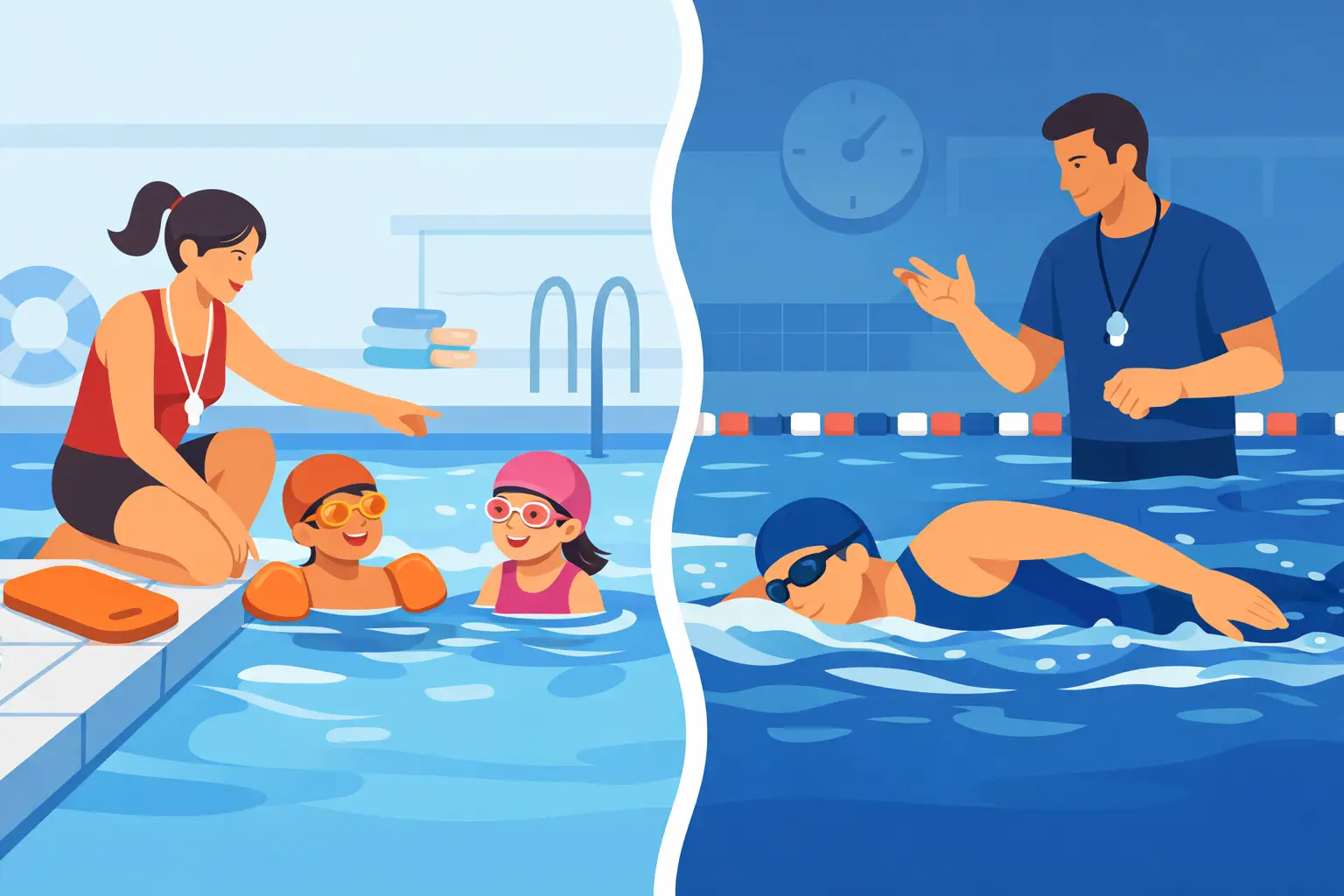
A child clinging to the pool edge and a grown adult standing stiffly in chest-deep water may look very different, but the coaching challenge can be surprisingly similar. Both need trust, structure, and clear progress. The real difference in kids swim lessons vs adult lessons is not who learns “faster.” It is how lessons are designed around safety, confidence, body awareness, and motivation.
For parents choosing a program and for adults thinking about starting at last, that difference matters. The right lesson format can speed up progress, reduce fear, and build practical water skills that hold up beyond the first few classes.
What kids swim lessons vs adult lessons are really designed to do
At a basic level, both lesson types teach breathing, floating, kicking, stroke control, and safe movement in water. But the end goal is often different.
Kids’ lessons are usually built around long-term progression. A child may start with water adjustment, then move into independent movement, then formal stroke development, and later test-based benchmarks such as stage certifications. Safety is taught from the start, but it is woven into every stage – entering the water properly, turning to the wall, recovering after submersion, and following pool rules.
Adult lessons are often more immediate. Some adults want to overcome fear and learn basic survival. Others want to swim laps efficiently, prepare for a fitness goal, or correct technique they never properly learned. That means adult coaching often starts with a direct question: what does success look like for this learner in the next few weeks or months?
This is why a strong swim school does not simply use the same syllabus for everyone. Children usually need developmental progression. Adults usually need targeted progression.
The biggest difference is not age – it is learning behavior
Children and adults process instruction differently in the water.
Children often learn through repetition, routine, and carefully structured play. They may not understand technical explanations about drag, timing, or body alignment, but they respond well to visual cues and repeated movement patterns. A good coach knows how to keep the lesson controlled without making it feel rigid. Young swimmers improve when they feel safe enough to try, fail, and try again.
Adults tend to want reasons. If you ask an adult to exhale underwater, they may want to know why they keep sinking, why their body gets tense, or why breathing throws off their stroke timing. That can be helpful. Adults can understand mechanics quickly. But they can also overthink every movement, especially if they are anxious.
This creates an interesting trade-off. Kids may be physically relaxed but mentally distracted. Adults may be mentally focused but physically tense. Coaching has to solve different problems to reach the same result.
Why fear shows up differently
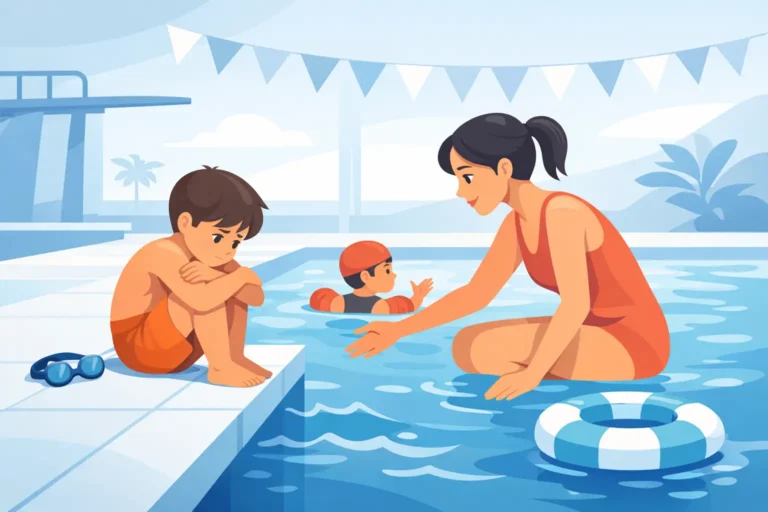
Fear in children is often situational. A child may dislike putting their face in, jumping in, or going where they cannot touch. With patient exposure and consistent lesson structure, that fear often reduces steadily.
Fear in adults is usually more established. It may come from a bad past experience, years of avoidance, or embarrassment about learning late. Adults also tend to protect themselves by staying stiff, lifting the head too high, or refusing to trust buoyancy. Progress can still be fast, but only when the lesson sequence respects that fear rather than dismissing it.
Class structure usually needs to change
The class structure for children is usually narrower in focus and more carefully staged. Short attention spans, varying emotional responses, and motor development all matter. Instructors often break one skill into smaller steps, using predictable routines from week to week. That consistency helps children feel secure and allows measurable improvement.
Adult classes can usually move more directly, especially if the learner is physically comfortable in the water. Coaches may spend more time correcting specific technical habits, adjusting breathing patterns, or improving efficiency. Adults can also tolerate longer explanation periods, though the best lessons still keep talking brief and practice high.
Private lessons can be especially useful at both ends of the age range, but for different reasons. For children, one-on-one coaching can support shy learners, very young beginners, or those preparing for assessment milestones. For adults, private coaching can reduce self-consciousness, accelerate fear management, and target very specific goals.
Safety teaching is broader for children and more personal for adults
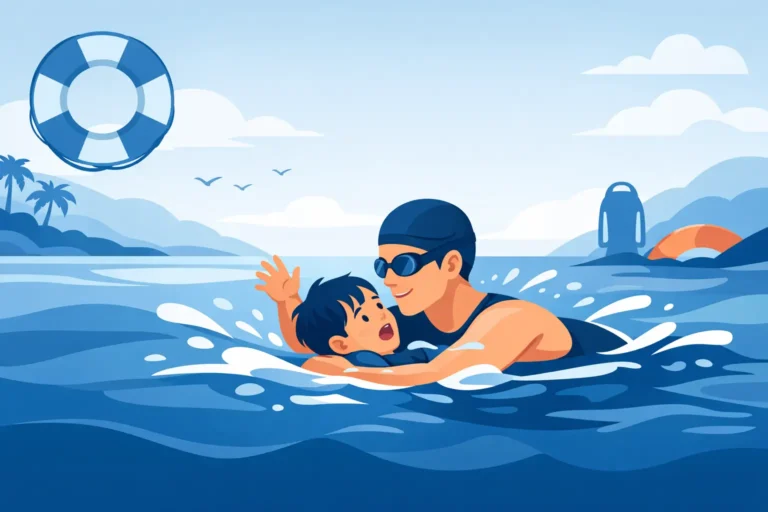
One of the most misunderstood parts of swim instruction is safety. People often think safety means learning not to drown. That is only the starting point.
For children, safety education needs to be broad and repeated. It includes safe entry and exit, listening to instructions, understanding boundaries, recovering to the wall, floating to breathe, and recognizing how to respond when things go wrong. In structured programs, this usually forms part of every stage, not a separate lesson.
For adults, safety is often more personal and situational. An adult beginner may need to learn how to stay calm after an accidental gulp of water, how to rest without panicking, or how to move to safety without wasting energy. A stronger adult swimmer may want open-water confidence, better endurance, or lifesaving-oriented progression. The lesson can be more customized because adult risks and goals vary more widely.
This is where structured coaching stands out. A casual lesson may teach movement. A structured program teaches judgment, recovery, and progression under pressure.
Progress looks different, even when both are improving
Parents often want to know how fast children should progress. Adults ask the same question, usually with more urgency. The honest answer is that progress depends on consistency, comfort in water, fitness, coordination, and lesson quality.
Children often make progress in layers. First they stop resisting the water. Then they accept submersion. Then they move independently for short distances. Stroke quality may take longer because coordination develops over time. A child who looks playful in class may still be building very serious water competence underneath that play.
Adults can sometimes make visible gains quickly, especially with regular practice. An adult who commits to weekly lessons and follows instructions well may go from fear to basic independent swimming faster than expected. But technical refinement can be slower because adults carry ingrained movement habits and tension patterns.
So who progresses faster? It depends on what you measure. Adults may reach a practical short-term goal faster. Children often build stronger long-term foundations when progression is introduced early and reinforced consistently.
When group lessons work best, and when they do not
Group lessons are highly effective when the learner fits the class level and the program is well organized. For children, group learning can build routine, social confidence, and motivation. Watching peers complete a skill often encourages participation. It also prepares children for structured progression and stage-based training.
For adults, group classes can work well when learners share similar ability and goals. A beginner adult class should not feel like a race, and an advanced technique class should not be slowed down by basic fear issues. Grouping matters more than people realize.
There are times when private coaching is the better choice. A toddler who needs close attention, a child struggling to meet assessment standards, or an adult with strong water anxiety may all benefit from a more personalized format first. After that, moving into a group can make sense.
Choosing the right lesson pathway
If you are choosing for a child, look beyond whether the lesson seems fun. Fun helps, but structure is what builds reliable skill. Ask whether the program has clear levels, safety outcomes, qualified coaching, and a progression pathway toward stronger independence and formal benchmarks where relevant.
If you are choosing for yourself as an adult, be honest about your starting point. Are you uncomfortable putting your face in? Do you want basic survival, lap swimming, stroke correction, or test readiness? The clearer the goal, the easier it is to match the lesson type.
A school with experience across toddlers, children, and adults will usually do a better job of placing learners correctly because it understands that beginner does not mean the same thing at every age. That is one reason many families and adult learners look for established programs such as AQZOG, where structured progression and safety remain central across different lesson formats.
The best lessons respect the learner in front of them
Kids swim lessons vs adult lessons should never be treated as a simple comparison of easy versus hard. Children need coaching that matches development, attention span, and safety learning. Adults need coaching that addresses fear, efficiency, and practical goals without embarrassment or wasted time.
The strongest lesson program is the one that meets the swimmer where they are, then moves them forward with a clear method. Whether the learner is five years old or fifty, that is what turns a weekly class into real water confidence – and into skills that matter when they are truly needed.