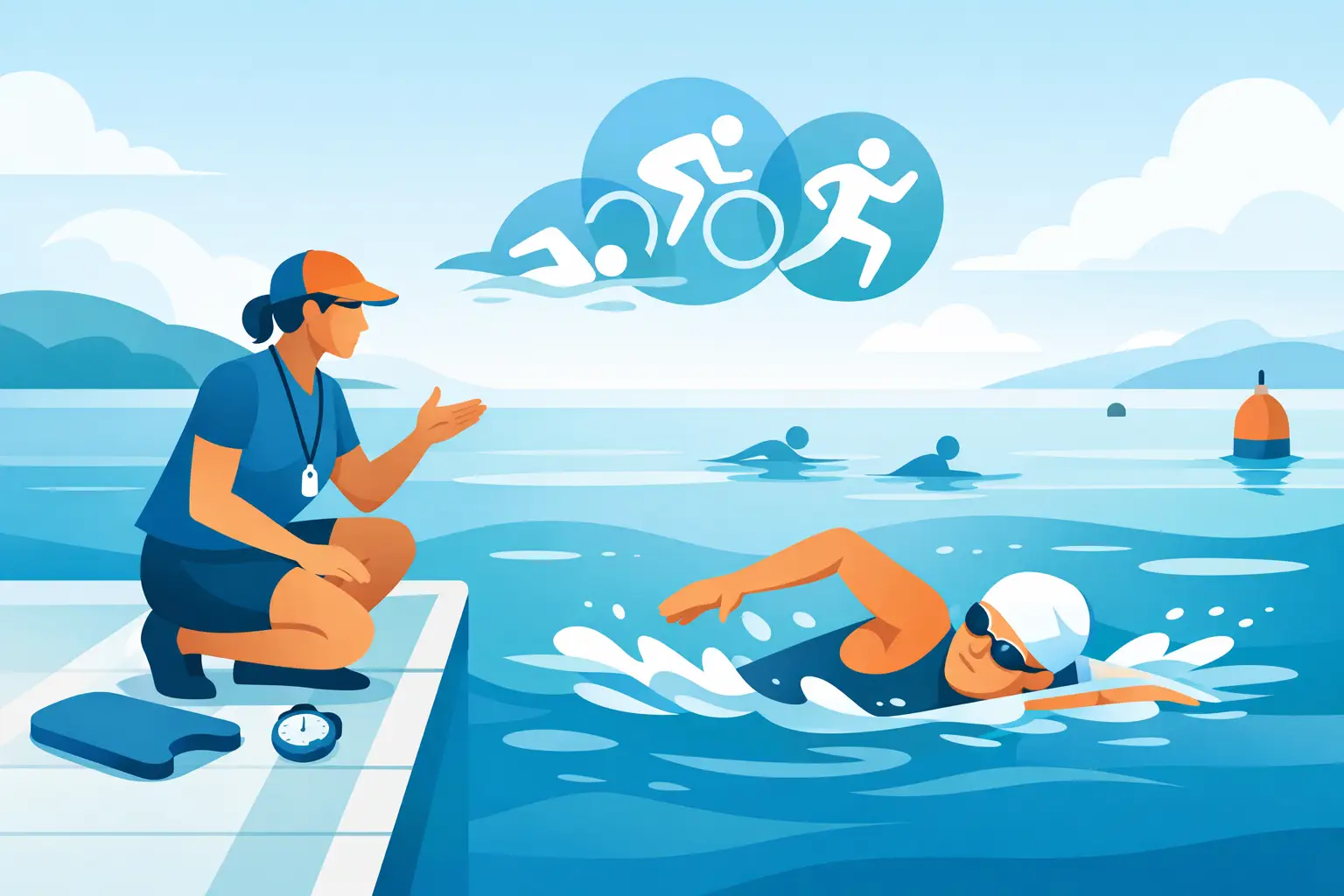
Triathlon Swim Coaching for Beginners
The first shock for most new triathletes is not the distance. It is the feeling of trying to swim efficiently while breathing under pressure, staying calm, and moving in a straight line. That is exactly why triathlon swim coaching for beginners matters. Good coaching does not just make you faster. It helps you become safe, controlled, and confident in the water before race day adds stress.
Many beginners assume the swim leg is only about fitness. In practice, technique usually matters more at the start. A runner or cyclist can be very fit and still struggle in the pool because swimming punishes poor body position, rushed breathing, and wasted movement. Structured coaching gives you a clear progression so you are not guessing what to fix first.
Why triathlon swim coaching for beginners works
Beginner triathletes often face three problems at the same time. They may have limited swim background, mild fear in deeper water, and no clear understanding of race-specific skills. Swimming laps without feedback can improve endurance slowly, but it often locks in inefficient habits.
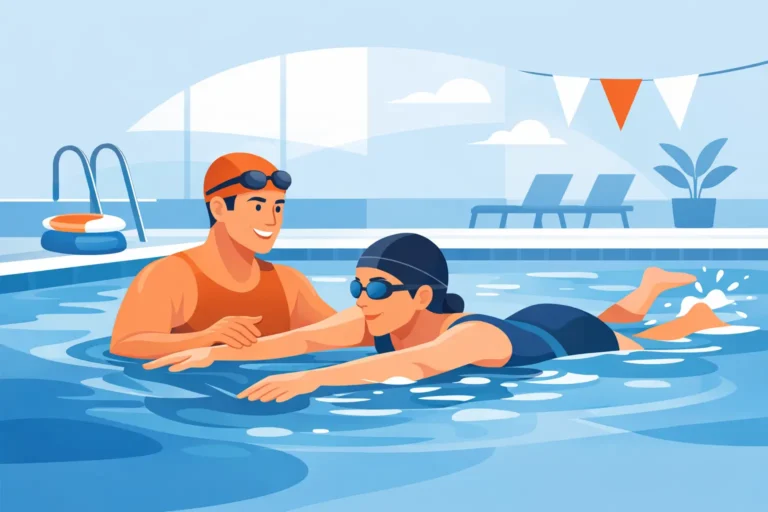
A coach shortens that learning curve. Instead of telling you to simply swim more, a good beginner program breaks the process into manageable parts – breathing rhythm, body alignment, kick control, arm recovery, and pacing. That structure matters because early wins build confidence, and confidence changes how you move in the water.
There is also a safety factor that should never be treated lightly. Triathlon swimming is different from casual pool swimming. You may deal with crowding, disrupted breathing, cold water, and open-water nerves. For a beginner, the right coach builds skill in an order that supports control first, then speed.
What a beginner triathlon swim coach should actually teach
Not every swim lesson is designed for triathlon. Some programs focus on general stroke development, which is useful, but triathlon coaching should also prepare you for the demands of a race environment.
Body position before power
Most new swimmers try to move faster by pulling harder. Usually, that creates more fatigue without much gain. A coach should first address balance in the water. If your hips and legs sink, every stroke becomes harder than it needs to be.
This is why early sessions often look simple. You may spend time on floating, streamlining, and controlled kicking. That is not basic work for the sake of it. It is the foundation for sustainable swimming over race distance.
Breathing that stays calm under stress
Breathing errors are one of the biggest reasons beginners panic. Lifting the head too high, holding the breath too long, or rushing the inhale can break your rhythm immediately. Coaching should help you exhale steadily in the water and turn to breathe without losing alignment.
This takes repetition, but it also takes the right progression. Some swimmers need bilateral breathing work. Others do better learning a reliable one-side breathing pattern first. It depends on comfort, mobility, and race goals.
Efficient freestyle for race conditions
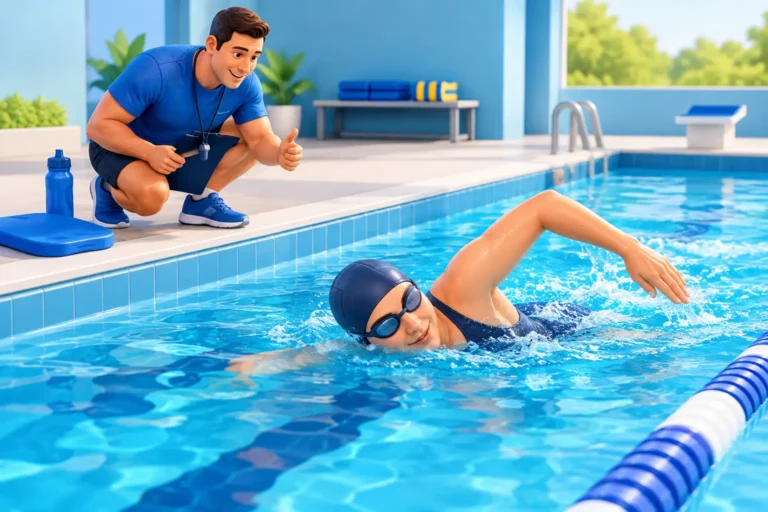
For most beginners, freestyle is the priority stroke for triathlon. A coach should refine your catch, pull, recovery, and timing in a way that suits your current ability. That does not mean chasing a perfect elite stroke. It means building a stroke you can repeat when tired.
This is an important trade-off. A highly polished stroke can take time to develop. A race-usable stroke that is stable and energy-efficient may be the smarter short-term target for a first sprint or Olympic-distance triathlon.
Sighting, pacing, and open-water readiness
Pool confidence does not automatically transfer to race conditions. Triathlon coaching for beginners should include sighting technique, pacing awareness, and strategies for swimming when visibility or space is limited. If open-water training is not available immediately, these skills can still be introduced in the pool.
You do not need to simulate every race condition from day one. You do need to understand how to stay composed when your rhythm gets interrupted.
How beginner coaching should be structured
A strong coaching plan is progression-led, not random. Each phase should solve a clear problem before moving on to the next one.
In the first stage, the focus is usually water comfort, breath control, and basic freestyle mechanics. This stage is especially important for adult learners returning to swimming after many years, or those who never learned proper technique in the first place.
The second stage builds consistency. You start linking strokes together, holding form over longer repeats, and reducing unnecessary effort. This is where many swimmers first notice that the water feels less like a struggle.
The third stage becomes more race-specific. Sessions may include controlled intervals, sighting drills, turnarounds, and efforts that teach you how to settle after a fast start. At this point, endurance grows more naturally because technique is no longer collapsing every few laps.
For some beginners, private coaching is the fastest route because it allows immediate correction and a pace matched to the individual. Group coaching can also work well if the class is well structured and the coach pays close attention to ability level. The right format depends on how much support you need, how quickly you want to progress, and whether confidence is currently your biggest barrier.
Common mistakes beginners make without coaching
The most common mistake is training too hard too early. New triathletes often believe that discomfort means progress, so they push through poor form and leave the pool exhausted but unchanged. Swimming does not reward that approach very well.
Another mistake is copying advanced workouts. Intervals, paddles, or high-volume sessions may look productive, but if your breathing and alignment are unstable, more volume just means more inefficient repetition.
Some beginners also avoid addressing fear. They tell themselves they only need more fitness, when the real issue is tension in the water. Tight shoulders, rushed strokes, and shallow breathing are often signs of anxiety, not lack of effort. A good coach identifies that quickly and adjusts the lesson plan.
What results beginners should realistically expect
The right expectations matter. In the first few weeks, progress often shows up as better control rather than dramatic speed. You may feel less breathless, swim farther without stopping, or finish a session feeling technically cleaner.
That is real progress. Speed usually follows once efficiency improves. A beginner with sound technique can make noticeable gains in a relatively short period, but the timeline varies. Someone comfortable in the water may improve quickly. Someone managing fear or poor habits built over years may need more time.
What matters is measurable improvement. You should be able to identify clear changes in stroke count, distance per set, breathing stability, or rest time needed between repeats. Coaching should produce visible progression, not vague encouragement.
Choosing the right triathlon swim coach for beginners
Look for a coach who teaches in a structured way and can explain why each drill matters. Beginners do not need complicated language. They need clear instruction, feedback they can apply immediately, and a training path that builds confidence step by step.
Experience with adult learners is especially valuable. Teaching children and teaching beginner triathletes are not the same skill, even though both require patience and structure. The best coaches know when to simplify, when to challenge, and when to slow things down for safety.
It also helps if the coach understands broader swim education principles, not just race performance. At AQZOG, that emphasis on progression, water confidence, and safe skill development reflects what beginner swimmers need most before they can train at a higher level.
Convenience matters too. If your lessons are difficult to attend consistently, progress slows. A practical schedule at an accessible pool often beats an ideal program you cannot sustain.
Is coaching worth it if your race is still months away?
Usually, yes. Starting early gives you time to build skill without panic. If you wait until race season is close, every session feels urgent, and that pressure can work against learning. Early coaching creates a better base for all the swim fitness work that comes after.
It is also worth it if you are unsure whether triathlon swimming is for you. A few structured lessons can quickly show whether the problem is technique, confidence, or both. That clarity is valuable. It helps you train smarter and avoids wasting months on guesswork.
If you are a beginner, the goal is not to look like an elite swimmer. The goal is to become safe, efficient, and steady enough that the swim leg stops feeling like a threat and starts feeling manageable. Once that happens, the rest of your training opens up in a much more productive way.
The best place to start is not with a tougher workout. It is with a coach who can teach you how to move through the water with control, because confidence in the swim changes the entire race experience.