Can Children Fail the SwimSafer Test? Parent Guide
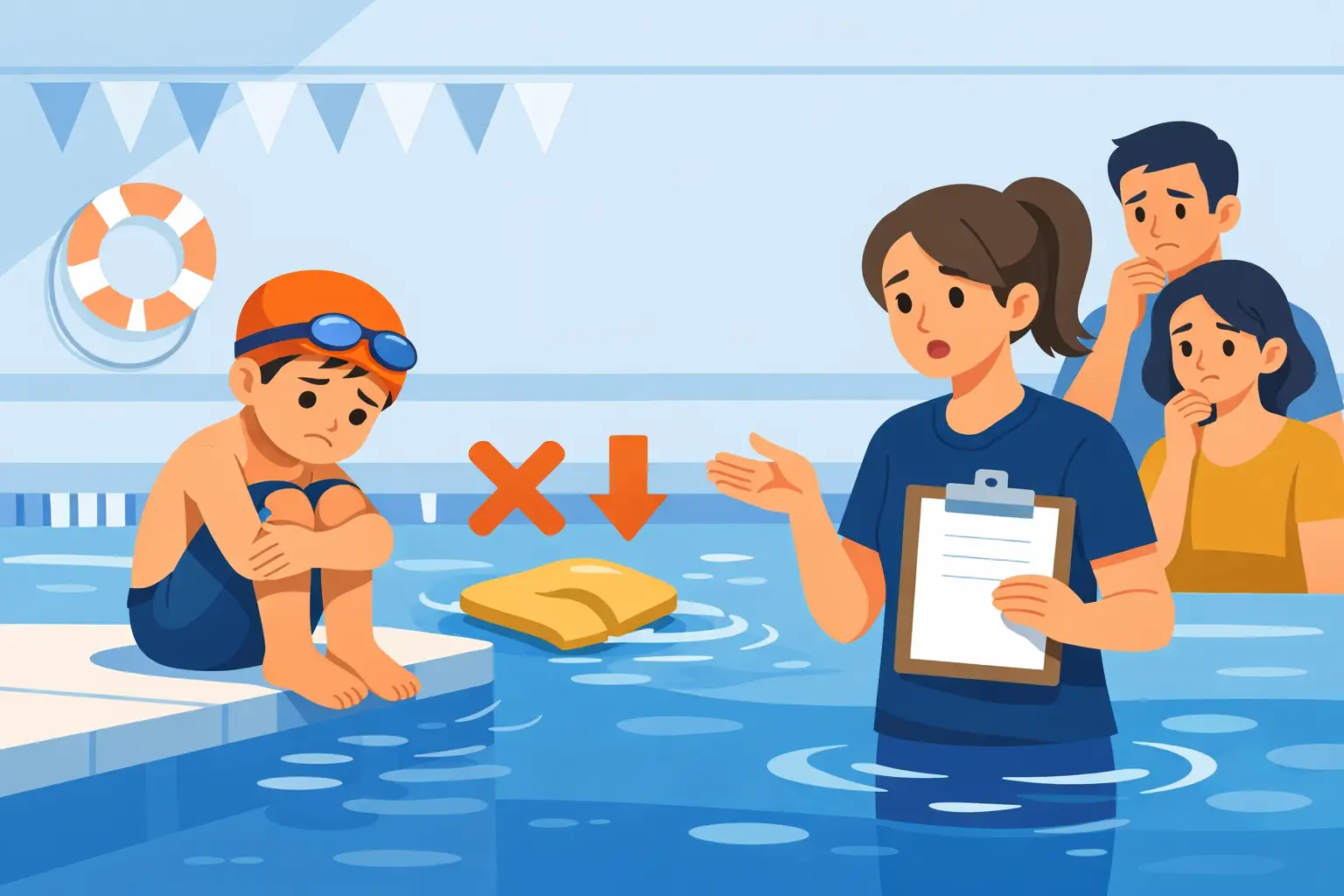
A child may come home worried after an assessment, especially if they did not receive the SwimSafer stage certification they expected. So, can children fail the SwimSafer test? Yes. A child can be assessed as not yet competent in one or more required skills. But this result should not be treated as a setback or a label. It is a safety-based decision that shows the child needs more practice before progressing.
SwimSafer is designed to develop capable, safety-aware swimmers, not to rush children through certificates. Each stage requires children to demonstrate specific water survival, swimming, and rescue-related skills with control and confidence. If those skills are not demonstrated consistently on assessment day, a retry is often the right next step.
Can Children Fail the SwimSafer Test?
Children can be unsuccessful in a SwimSafer assessment when they do not meet the required standard for their stage. This may involve a particular component, such as an entry into deep water, a survival float, a distance swim, or a sequence that combines several skills under the assessor’s observation.
The word “fail” can sound harsh, particularly to a young child. In practical terms, it is more helpful to view the outcome as “not yet ready.” SwimSafer certification confirms that a child can perform important water safety skills independently and according to the required criteria. Awarding a certificate before those skills are reliable would defeat the purpose of the program.
A child may be confident during weekly lessons yet struggle during a formal assessment. That does not automatically mean the child cannot swim. Assessment conditions can feel unfamiliar, and some children become anxious when asked to perform while being observed. Others may have learned a skill but still need better technique, endurance, or consistency.
What Assessors Are Looking For
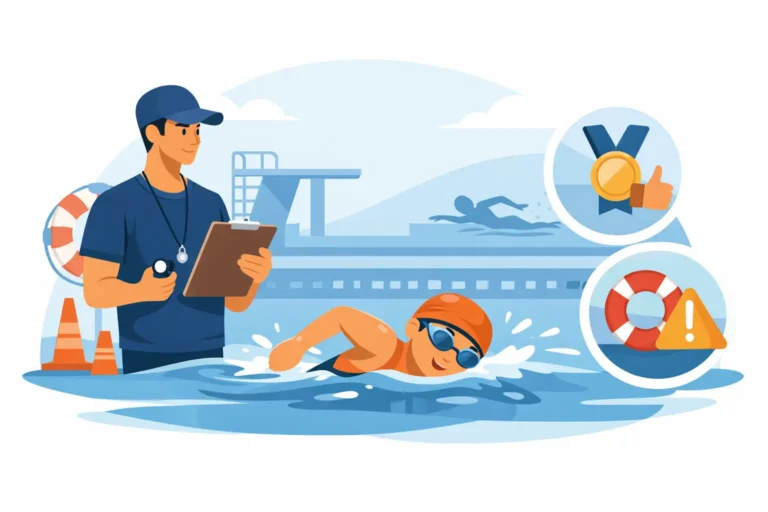
A SwimSafer assessment is not based on effort alone. Assessors need to see that the child can complete the required tasks safely, correctly, and with an appropriate level of independence for the stage.
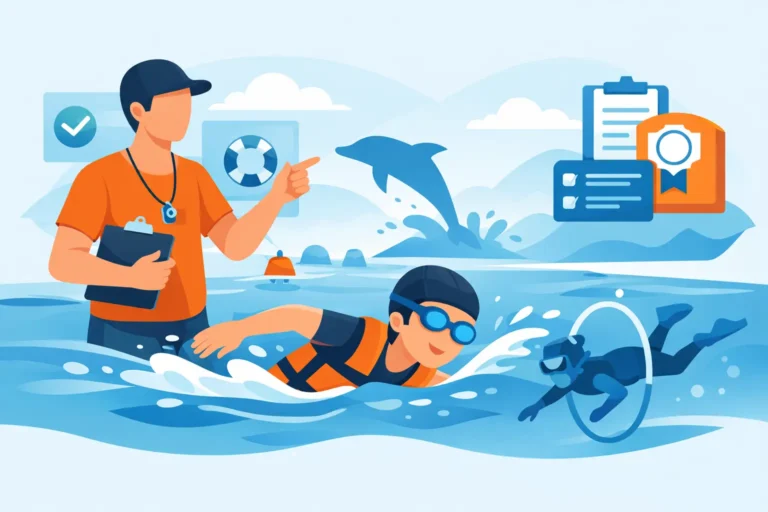
Depending on the stage, children may be asked to demonstrate controlled water entry, safe exits, submersion, floating, sculling, swimming strokes, water survival sequences, or basic rescue awareness. The exact activities and standards differ by stage, which is why structured stage-specific preparation matters.
For example, a child who can swim a distance in a familiar lesson setting may still need to show a clear body position, effective breathing, continuous movement, and the ability to finish without excessive assistance. In survival skills, an assessor is looking beyond whether the child eventually completes the task. Calmness, control, safe decision-making, and correct technique are all part of water readiness.
This is also why parents should avoid promising a certificate before assessment day. A better message is: “Show what you have practiced, listen carefully, and do your best.” It keeps the focus on skills and safety rather than pressure.
Common Reasons Children Need a Retry
Most children who need another assessment are not far behind. Often, one or two areas need focused attention. The most common reason is inconsistent technique. A child may perform a skill correctly once, but not reliably enough under assessment conditions.
Nerves are another major factor. Some children hold their breath too long, rush through instructions, forget the order of a sequence, or become tense in deeper water. These reactions are normal, particularly for younger swimmers or children taking their first formal aquatic assessment.
Fitness and stamina can also affect results. Swimming and survival tasks require children to maintain form when they are tired. If a child begins strongly but loses control halfway through a distance swim or survival sequence, more conditioning and repetition may be needed.
Attendance and practice history matter as well. Children progress at different speeds, and a missed block of lessons can interrupt skill development. A child who is still building confidence with deep water should not be pushed into an assessment simply because classmates are taking it.
Finally, some children need clearer understanding of the task. SwimSafer includes safety knowledge and practical decision-making, not just stroke performance. Regular theory preparation, simple explanations, and mock-test familiarity can make a meaningful difference.
A Retry Is Part of Safe Progression
Needing to retry does not erase a child’s progress. It identifies the exact skill gap so training can be targeted. In many cases, children return more confident because they now understand the assessment format and know what to improve.
Parents should ask the coach or assessor for specific feedback. Was the issue endurance, body position, breathing, sequence order, water confidence, or a safety component? Clear feedback turns disappointment into an action plan.
It is also worth remembering that advancing too early can create bigger challenges at the next stage. SwimSafer skills build on one another. A strong foundation in floating, breathing, propulsion, and survival control supports safer progress as tasks become more demanding.
How Parents Can Help Before the Next Assessment
The best preparation is consistent, structured swimming instruction. Children need enough time in the water to make skills automatic, rather than relying on last-minute practice before a test.
At home, parents can support readiness by keeping conversations calm and practical. Ask your child to explain what they practiced, what felt easy, and which skill still feels challenging. Let them know that needing more practice is normal and that safety comes before certificates.
Avoid trying to coach technical skills from the pool deck unless you have been guided by an instructor. Mixed instructions can confuse children, especially with breathing patterns, body alignment, or rescue sequences. Instead, reinforce the coach’s cues and encourage your child to listen carefully during class.
Mock practical tests are particularly useful for children who are nervous or unfamiliar with formal assessments. A realistic practice session helps swimmers experience the order of activities, follow instructions independently, manage waiting time, and perform skills without frequent coaching prompts. It allows weaknesses to appear before the official assessment, when there is still time to improve them.
For children who need faster progress, private or semi-private coaching can provide additional focused practice. This is not necessary for every swimmer. Group lessons work well for many children, especially when they attend consistently. However, one-to-one attention can be helpful when a child has a specific technical gap, strong water fear, limited time before a retest, or difficulty keeping pace with a group.
When Should a Child Retake the SwimSafer Assessment?
A retake should happen when the child has addressed the skills that prevented certification, not simply at the earliest available date. The right timing depends on the feedback received and the child’s current level of confidence.
For a small issue, such as forgetting one part of a sequence because of nerves, a short period of focused revision may be enough. For deeper concerns, such as fear in deep water, weak survival floating, or poor stamina, the child may benefit from several more weeks of structured practice.
Parents should look for signs of genuine readiness. The child should be able to complete the relevant skills repeatedly, follow instructions without panic, and recover calmly if something does not go perfectly. Confidence is valuable, but it should be supported by demonstrated ability.
Experienced SwimSafer coaching helps children prepare for both the skill standard and the assessment experience. At AQZOG, training is built around structured progression, water safety, practical skill development, and test readiness so children understand not only what to do, but why each skill matters.
Helping Children Respond Positively to an Unsuccessful Result
The conversation after an unsuccessful assessment can shape how a child feels about swimming. Start by acknowledging the effort: “You worked hard today.” Then make the next step clear: “Your coach will help you practice the parts that need more time.”
Try not to compare siblings, friends, or classmates. Children develop at different rates, particularly when confidence, coordination, and water experience vary. A certificate earned after genuine preparation carries more value than one gained through pressure.
Swimming is a life skill with consequences beyond a test result. The child who spends extra time improving a back float, learning to control breathing, or becoming calm in deep water is gaining something far more important than a faster certificate – the ability to respond more safely around water.
The most helpful goal is not to make a child pass at any cost. It is to help them become ready. With patient coaching, regular practice, and a clear progression plan, a retry can become the moment a child builds stronger confidence for every swim that follows.