8 Top Signs Your Child Needs Swim Coaching
Some children love the water but do not actually know how to move safely in it. Others can kick, splash, and play for hours, yet still struggle with the skills that matter most. That is why many parents start looking for the top signs your child needs swim coaching only after progress slows, fear appears, or a school test starts coming closer.
Swimming is not just another enrichment activity. It is a core safety skill, and for many families, it also becomes a clear progression pathway through formal stages, better confidence, and stronger technique. If you are unsure whether your child simply needs more time or would benefit from structured lessons, these signs can help you make that call earlier.
Why small struggles in the pool should not be ignored
Children do not always say, “I am falling behind in swimming.” More often, they show it in quieter ways. They cling to the wall, avoid putting their face in the water, resist lessons, or repeat the same mistakes without improving.
The challenge for parents is that casual pool time can hide real gaps. A child may look comfortable in shallow water but still lack breath control, body position, or the ability to recover calmly when something goes wrong. Coaching matters because it turns random practice into structured progression.
Top signs your child needs swim coaching
1. Your child is comfortable in water but not truly independent
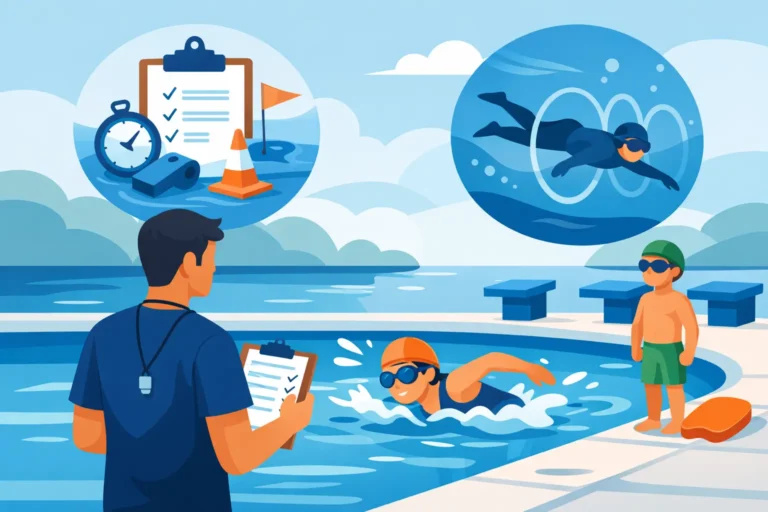
This is one of the most common situations. A child may enjoy being in the pool, jump in happily, and move short distances with float support, yet still depend heavily on adults for safety. That gap between enjoyment and actual ability is significant.
A coached swimmer learns more than how to “get by.” They build controlled breathing, safe entries and exits, floating, kicking, coordination, and recovery skills. If your child seems confident only when conditions are easy, formal instruction can strengthen the fundamentals before bad habits set in.
2. Progress has stalled for weeks or months
Some children plateau because they have reached the limit of what casual practice can teach. They keep doing the same kick, the same head-up movement, or the same rushed breathing pattern, and no one is correcting it in real time.
A short plateau is normal. A long one usually means the child needs clearer instruction, repetition with purpose, and feedback that matches their stage of development. This is especially true when a child has already spent time in the water but still cannot float confidently, streamline, or swim a basic stroke with control.
3. Fear is starting to affect participation
Fear does not always look dramatic. Sometimes it appears as hesitation. Your child suddenly refuses to submerge, becomes tense during deeper-water practice, or asks to skip class altogether.
That does not always mean the child is not ready. Often, it means the learning process needs to be slower, more structured, and guided by an experienced coach who understands how to build confidence without forcing the child. The right coaching approach can turn fear into familiarity step by step. The wrong approach can make avoidance worse.
4. Your child can swim in one way only
Many parents feel reassured when a child can move from one side of the pool to the other. That is encouraging, but it is not the full picture. If your child can only swim with their head lifted, can only use one stroke pattern, or cannot tread water, float, or recover after swallowing water, there is still an important skills gap.
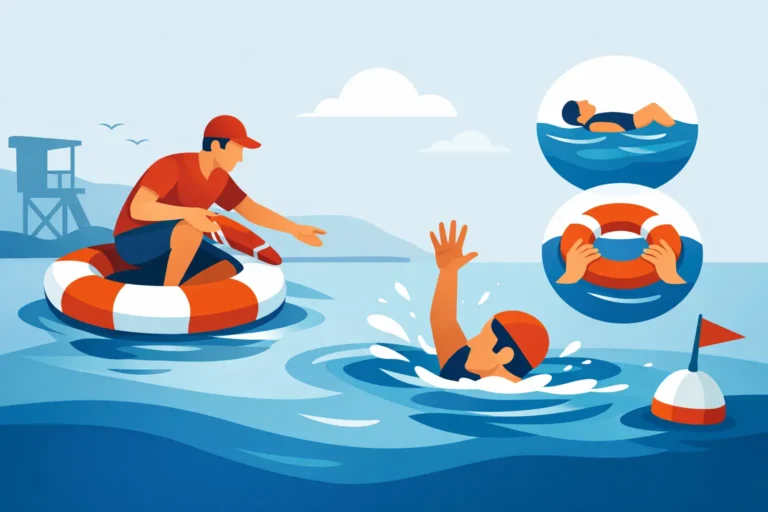
Good swim coaching develops versatility. Children should not only move forward. They should learn how to breathe properly, float on front and back, kick efficiently, stay calm, and manage themselves in different pool situations. Water safety depends on more than distance.
5. School assessments or SwimSafer stages are becoming stressful
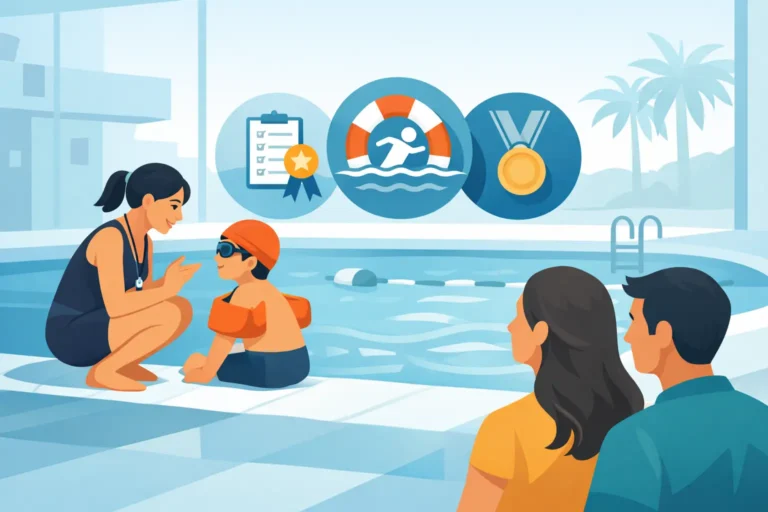
For many families, swimming becomes more urgent when a school requirement or structured certification stage approaches. A child who is underprepared often shows it through anxiety, inconsistent performance, or difficulty completing skills in sequence.
This is where coaching can make a practical difference. Structured lessons help children understand what is expected, practice skills in the right order, and build test readiness rather than relying on last-minute effort. If your child knows some skills but cannot perform them consistently under supervision, targeted coaching usually helps more than extra free play in the pool.
When technique problems become safety problems
Technique is not only about looking neat in the water. Poor technique can create fatigue, panic, and loss of control.
A child who holds their breath too long may struggle the moment they need to exhale and recover. A child who kicks hard but without alignment may use a lot of energy and still go nowhere. A child who always swims with their head up may become exhausted quickly and never develop efficient breathing. These are not minor style issues. Over time, they can reduce safety, confidence, and progression.
6. Your child tires very quickly
If your child can only swim a short distance before stopping, coughing, or grabbing for support, there may be a breathing, coordination, or body-position problem underneath. Children often compensate with effort, but effort alone is not enough.
A coach can identify whether the issue is timing, tension, weak kick mechanics, or poor balance in the water. Once corrected, children often improve faster than parents expect because they stop fighting the water and start moving with more control.
7. They listen, but cannot apply corrections on their own
Some children are eager learners and still do not improve because they need more precise guidance. They may understand instructions like “kick straighter” or “blow bubbles,” but they cannot connect those words to their body movements.
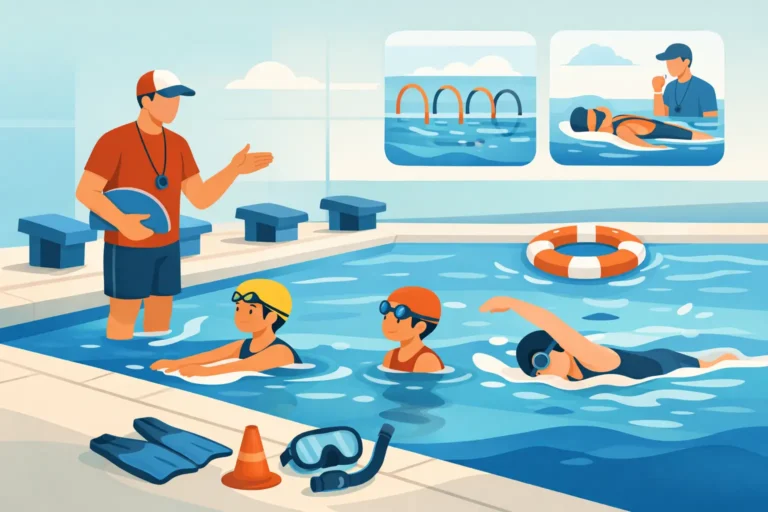
That is where experienced coaching becomes valuable. Skilled instructors break swimming into manageable parts, use the right drills, and repeat cues in a way the child can actually act on. Coaching is not just supervision. It is the ability to turn confusion into a measurable skill.
8. Your child needs a clearer progression pathway
Not every child who needs coaching is struggling badly. Some are doing reasonably well but are ready for structured advancement. If your child has basic water confidence and now needs stroke development, survival skills, or certification-focused progression, coaching can provide the next step.
This is often the difference between occasional swimming and meaningful development. A progression-based program gives parents visible milestones and gives children a sense of achievement that keeps motivation high.
It depends on age, temperament, and goals
There is no single age when every child “should” need coaching. A toddler who is new to water needs a different approach from a primary-school child preparing for staged assessments. Likewise, a very cautious child may need confidence work first, while an active child may need help slowing down and learning control.
Goals matter too. If your main concern is water safety, focus on floating, breathing, orientation, and calm recovery. If your child is moving toward school assessments or SwimSafer progression, the coaching should also include structured skill sequencing and test familiarity. The right lesson format depends on whether your child needs confidence, correction, or acceleration.
What parents should look for in swim coaching
If you have noticed several of these signs, the next step is not just to find any class. It is to find coaching that is structured, age-appropriate, and built around progression.
Look for instruction that teaches in stages rather than rushing children through drills. A strong program should emphasize safety skills, confidence building, and measurable development. It should also match the child’s current level instead of placing them in a lesson that is either too easy or too demanding.
Parents in Singapore often benefit from coaches who understand formal skill benchmarks and how children progress through recognized stages. That is especially important when lessons need to support both water confidence and certification readiness. AQZOG’s approach reflects that balance by treating swimming as a life skill first and a progression journey second.
Should you wait or start now?
If the issue is minor and your child is still improving steadily, a little time may be reasonable. But if confidence is dropping, technique is stuck, or safety skills are incomplete, waiting usually does not solve the problem. Children tend to reinforce the habits they repeat most often, whether those habits are helpful or not.
Starting coaching earlier does not mean pushing harder. It means giving your child a clearer path, safer habits, and a better chance to enjoy swimming with real confidence. The best time to step in is often before frustration grows, not after.
A child does not need to be struggling badly before coaching becomes worthwhile. Sometimes the clearest sign is simply this: they are ready for guidance that turns water time into real progress.