Some Bad Swimming Habits to Avoid in Lessons
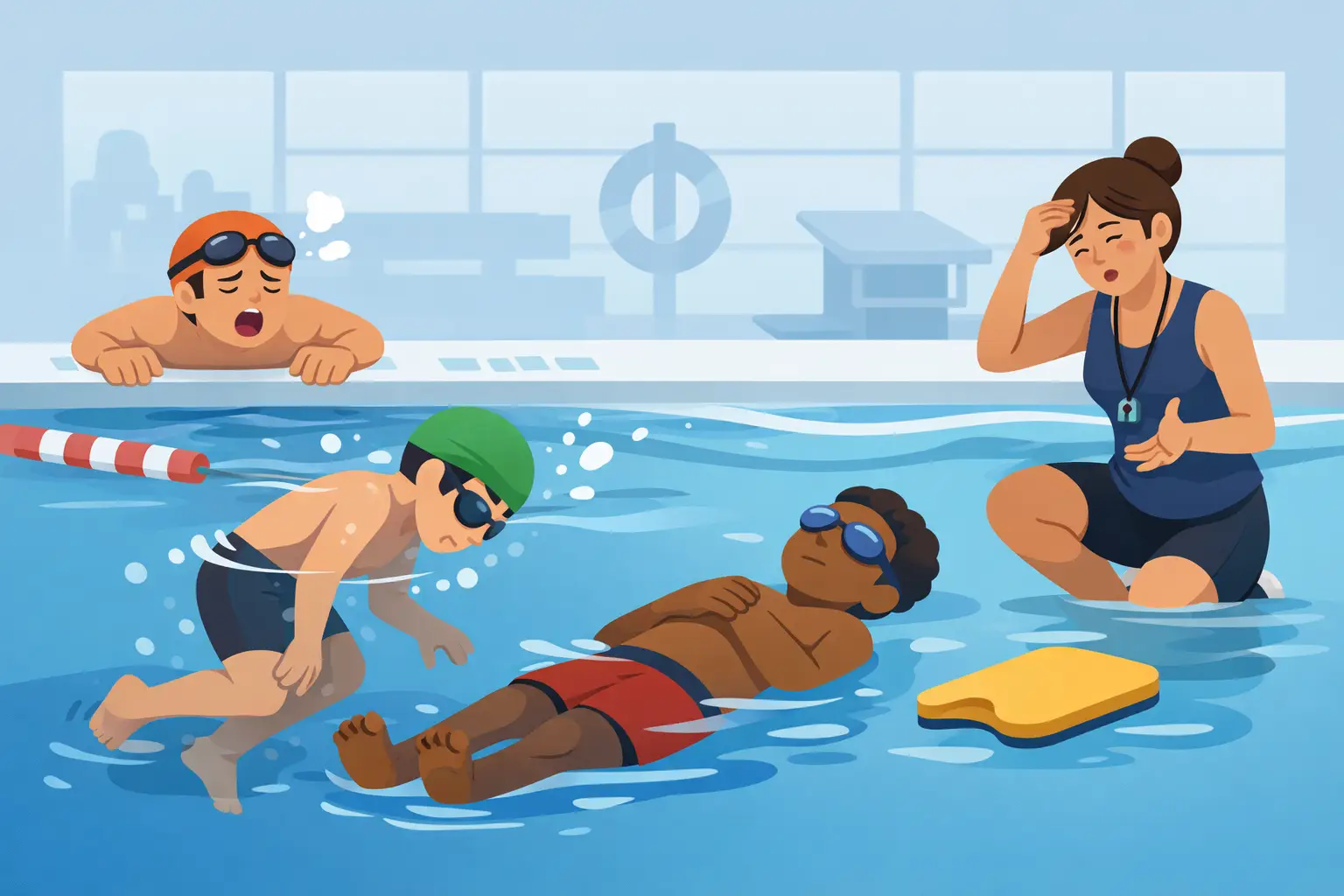
A swimmer can complete a length of the pool and still be practicing a habit that limits safety, confidence, and progress. Some bad swimming habits to avoid may look small at first: lifting the head for air, gripping the wall too long, or rushing through drills. Left uncorrected, they can make swimming more tiring and harder to improve.
For children, poor habits can affect water-survival skills and SwimSafer test readiness. For adults, they often reinforce fear, inefficient movement, or frustration with a stroke that never feels comfortable. The answer is not simply to swim more laps. It is to identify the habit, understand why it happens, and replace it with a skill that works under calm and pressured conditions.
Some Bad Swimming Habits to Avoid From the Start
Holding the breath instead of exhaling underwater
Many beginners take a breath, put their face in the water, and hold that breath until they need to surface. It feels protective, especially for a nervous child or adult. In practice, it creates tension in the chest and shoulders, makes the next breath urgent, and often leads to head lifting.
A more useful pattern is steady, controlled exhalation while the face is in the water. Bubbles should be continuous and relaxed, whether through the nose, mouth, or both. The swimmer then turns or lifts only enough to take a fresh breath.
This takes patient practice. A child who is still uncomfortable submerging should not be pushed into fast breathing drills before building trust in the water. Start with short, repeatable bubble exercises at a comfortable depth, then progress to floating, kicking, and stroke breathing.
Lifting the head to breathe
When the head rises, the hips usually drop. Once the hips drop, the legs drag, the swimmer works harder, and the stroke can become a cycle of panic and recovery. This is common in freestyle, but it also affects breaststroke when swimmers lift too high and too late.
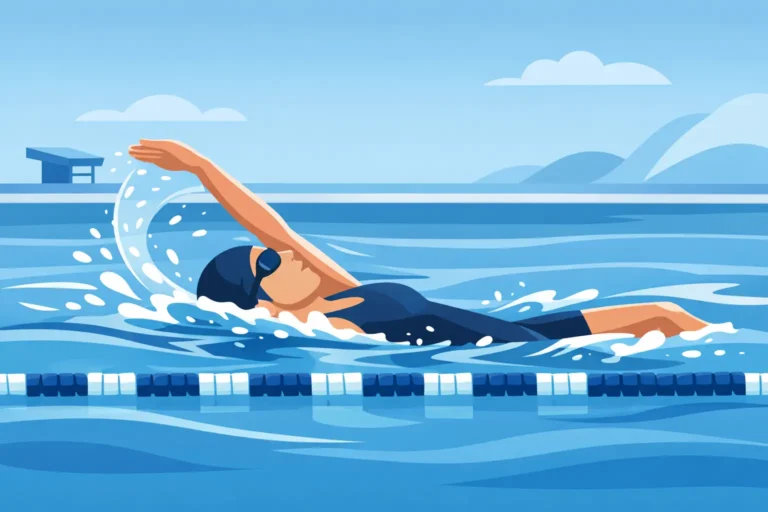
The correction depends on the stroke. In freestyle, the head should rotate with the body rather than lift forward, with one goggle remaining in the water during the breath. In breaststroke, the breath is a quick part of the pull, followed by a long, balanced glide with the face returning to the water.
Parents sometimes see a child lifting their head and assume they need stronger arms. More often, they need better timing, body position, and confidence that they can exhale underwater. Strength helps, but it does not replace sound technique.
Looking forward all the time
Swimmers naturally want to see where they are going. At a pool, that can mean staring at the wall, watching another swimmer, or searching for a parent on deck. Constant forward-looking changes body alignment and can strain the neck.
For freestyle, the eyes should generally look down and slightly ahead, allowing the back of the neck to stay long. For backstroke, the swimmer should look upward and keep the head still rather than repeatedly turning to check direction. Learning to use lane markings, flags, and calm awareness of surroundings is safer than swimming with the head constantly raised.
Bending the knees too much while kicking
A bicycle-style kick is one of the most common habits among beginners. The knees bend deeply, the feet push downward, and the swimmer creates splashes without producing much forward movement. It can also make the body sink.
An effective flutter kick begins from the hips, with relaxed ankles and only a gentle knee bend. The legs remain long and narrow. The goal is not the biggest splash. It is a consistent kick that supports a horizontal body position.
Young swimmers may need time to develop ankle flexibility and leg awareness. Short kick sets with a clear purpose are more valuable than asking them to kick until they are exhausted. Good coaching helps swimmers feel the difference between moving water and simply making noise.
Rushing every length
Speed can hide a lack of control. A child may rush to finish first, while an adult may believe a hard workout is the quickest route to improvement. Both can lead to incomplete arm recovery, skipped breathing, poor turns, and loss of awareness around other pool users.
Slow practice is not wasted practice. It is where a swimmer learns to hold a streamlined shape, finish a kick, rotate correctly, and recover after a mistake. Once the movement is consistent, speed can be added gradually.
This matters especially for formal assessments. SwimSafer progression is not only about completing a distance. A swimmer must demonstrate composure, water safety awareness, and controlled skills. Rushing through a task can turn an otherwise capable swimmer into an unprepared test candidate.
Habits That Affect Safety, Not Just Technique
Pushing off or jumping in without checking the space
Pool awareness is a swimming skill. Before entering, pushing off, diving, or starting a drill, swimmers need to look for others in their path. This is particularly important in public pools, where lanes may be busy and abilities vary widely.
Children should learn that an instructor’s signal, a clear lane, and the correct entry point matter. Adults should also avoid treating a shared pool as a private training space. Fast swimming has its place, but only when the lane conditions and pool rules allow it.
Treating the wall as a place to rest indefinitely
Holding the wall is useful when learning to float, recover balance, or listen to instructions. The problem begins when a swimmer grips the wall every few meters because they do not trust their ability to stop safely, tread water, or regain position.
A structured program gradually builds independent recovery skills. These can include turning onto the back to float, sculling, treading water, and moving safely to the wall. The right progression depends on age and confidence. A toddler needs close support and simple routines, while an older child preparing for a practical test needs reliable independent responses.
Ignoring fatigue, cold, or fear signals
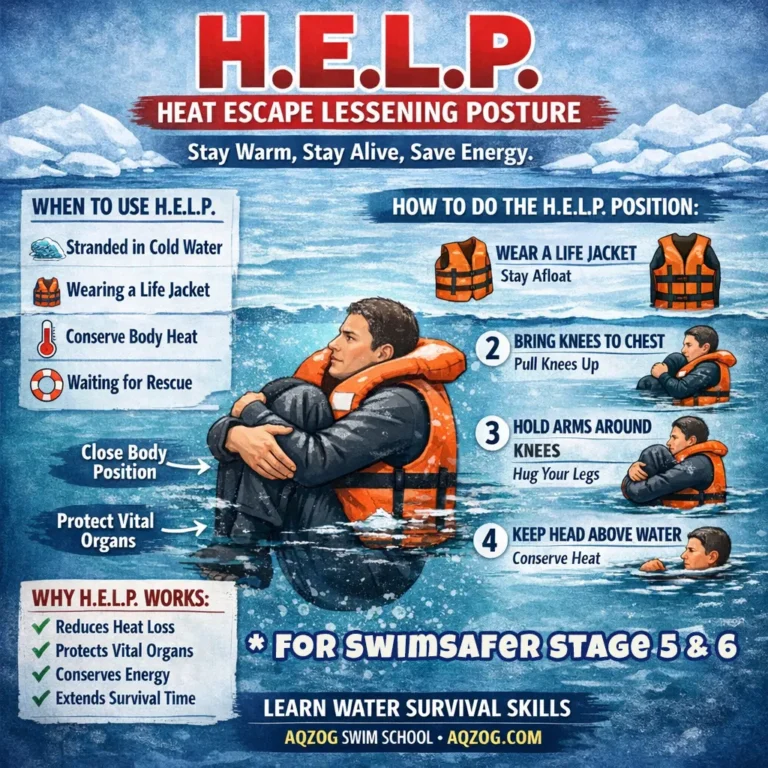
Determination is valuable, but swimmers should not be taught to push through every uncomfortable feeling. Shivering, cramps, dizziness, chest discomfort, and rising panic require attention. A swimmer who becomes frightened may need to stop, hold the wall, use a safe recovery position, and communicate clearly with the instructor or lifeguard.
There is a difference between the normal challenge of learning and a loss of control. Experienced instruction creates room for both effort and safety. A child can be encouraged to try again without being shamed for needing a pause. An adult can work through water fear in manageable steps rather than being rushed into deep water before they are ready.
Replacing Bad Habits With Better Practice
The fastest progress comes from focused repetition. Instead of telling a swimmer to “swim properly,” isolate one skill: exhale for five seconds, keep the eyes down for half a length, finish each breaststroke glide, or practice a calm back float after a short swim. Clear goals make improvement measurable.
Feedback should also be specific. “Good job” builds encouragement, but “you kept your hips higher when you looked down” tells the swimmer what to repeat. For parents, this is a useful standard when choosing lessons. Look for instruction that develops skills in sequence, checks technique regularly, and prepares swimmers for real water situations, not just pool distances.
Video can be helpful for older children and adults because many habits feel different from how they look. However, it should support coaching rather than replace it. A swimmer may see a dropped elbow or bent-knee kick on screen but still need guided drills to change the movement safely.
When a Habit Needs Extra Support
Some habits persist because there is an underlying issue: fear of submersion, limited coordination, poor balance, an earlier negative experience, or a swimmer progressing too quickly through a group level. This is not a reason to label someone a weak swimmer. It is a reason to adjust the teaching approach.
Private or small-group coaching can be especially useful when a swimmer needs more repetitions, closer observation, or a customized progression. AQZOG coaches build fundamentals before adding distance, speed, and assessment demands, helping learners develop confidence that is based on proven skills.
The most useful habit a swimmer can develop is simple: pause, reset, and practice the right movement before moving on. That approach creates calmer beginners, stronger strokes, and safer decisions wherever the water leads.