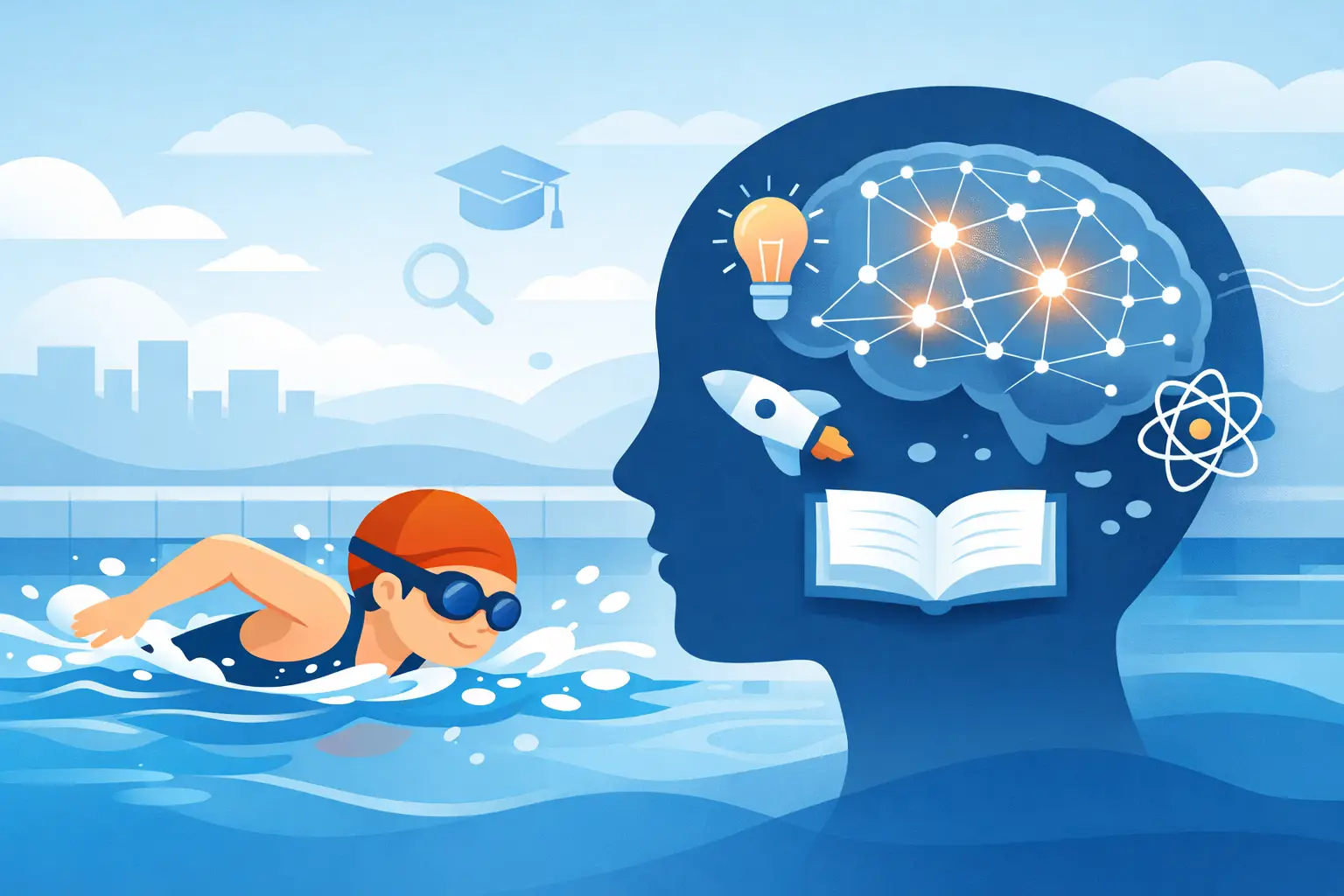
Can Swimming Make Kids Smarter?
A child who learns to float, kick, breathe, and listen to instructions at the same time is doing far more than just moving through water. That is why parents often ask whether swimming make kids smarter. The better question is this: what does swimming train in the brain and body that supports learning, focus, and confidence outside the pool?
The answer is encouraging, but it needs to be explained carefully. Swimming is not a magic shortcut to higher grades or instant academic success. What it can do is strengthen several foundational skills that help children learn more effectively. When lessons are structured well, children practice attention, coordination, memory, sequencing, self-control, and problem-solving in a very real environment where safety matters.
Can swimming make kids smarter, or just more active?
It helps to separate headlines from reality. Swimming does not “increase intelligence” in a simple, measurable way after a few lessons. Parents should be cautious about claims that make swimming sound like a guaranteed academic booster. Children develop differently, and outcomes depend on age, readiness, coaching quality, consistency, and what happens at home and school.
What swimming does especially well is build the underlying capacities that support learning. A child in a lesson has to process verbal cues, watch demonstrations, copy movement patterns, regulate breathing, and adjust to feedback. That combination is demanding. It asks the brain and body to work together under structure, which is one reason swimming is such a strong developmental activity.
Water also changes the learning environment. In the pool, children cannot rush carelessly without consequences. They must pay attention. They must learn sequence. They must respond to instructions with control. For many children, that creates a powerful setting for concentration and discipline.
How swimming supports brain development
One of the clearest benefits of swimming is that it develops coordination across multiple systems at once. A swimmer has to manage arm action, leg action, body position, breathing rhythm, and direction. Even basic skills like kicking with a board or blowing bubbles require timing and body awareness.
That matters because coordinated movement is closely linked to how children organize information and carry out tasks. When a child learns a new stroke progression, they are not only exercising muscles. They are practicing sequencing, correction, and repetition. Those are the same patterns used in classroom learning, whether a child is sounding out words, solving math steps, or following multi-part instructions.
Swimming also strengthens attention control. In a structured lesson, children learn to wait, watch, and act at the right moment. They listen for cues like “hold the wall,” “kick from the hips,” or “turn and breathe.” Over time, this kind of repeated instruction-following can improve a child’s ability to stay on task.
There is also a memory component. Children remember routines, safety rules, and movement sequences. They learn that one skill builds into the next. Float first, then kick. Breath control first, then stroke timing. This progression-based learning encourages children to connect cause and effect, which supports broader cognitive growth.
Why structured lessons matter more than casual pool time
Not all swimming experiences produce the same benefits. Casual play in the water can be enjoyable and physically active, but it does not always build concentration or measurable skill. For swimming to support development in a meaningful way, instruction needs structure.
A structured lesson gives children clear goals, age-appropriate tasks, and consistent feedback. It introduces skills in sequence rather than all at once. That matters because children learn best when the challenge is manageable but still demanding enough to require effort.
This is also where safety and learning come together. A child who is taught properly does not just splash with confidence. They learn how to enter safely, recover, float, move with control, and respond under pressure. Those are life skills, but they also reinforce judgment, composure, and self-management.
For parents who want more than recreation, structured swim education offers a stronger pathway. AQZOG has long positioned swimming this way – as an essential life skill supported by clear progression, not just an after-school activity.
The link between swimming, confidence, and learning
Children learn better when they believe they can improve. Swimming is especially effective here because progress is visible. A child who once feared putting their face in the water may later float independently, then swim a short distance, then complete a full skill assessment. Each stage gives proof of progress.
That confidence can carry over into other parts of life. When children experience steady improvement through practice, they begin to understand that effort leads to results. This mindset is valuable in school and beyond. It can make children more willing to try, make mistakes, and keep working when something feels difficult.
There is an emotional regulation side as well. Water can feel unfamiliar, especially for beginners. Learning to stay calm, follow instructions, and complete tasks in that setting helps children manage stress. A calmer, more self-regulated child is often better prepared to learn, listen, and adapt.
Does age make a difference?
Yes. The way swimming supports development looks different at different ages.
For toddlers and preschoolers, the gains are often centered on water familiarity, listening, simple coordination, and comfort with routine. At this stage, short, consistent exposure matters more than technical perfection. Children are learning trust, body control, and basic response skills.
For school-age children, the cognitive benefits become easier to see. They can follow more detailed instructions, remember sequences, and work toward specific standards. This is also the age when structured progression, including staged assessments, can sharpen focus and motivation.
For older children, swimming often becomes a lesson in discipline and accountability. They can refine technique, improve endurance, and train toward benchmarks. The mental benefit is less about novelty and more about consistency, resilience, and measurable improvement.
So if a parent asks whether swimming make kids smarter at every age, the honest answer is that the support looks different depending on the child’s stage of development.
What parents should not expect
It is worth being realistic. Swimming should not be sold as a guarantee of better test scores, faster reading, or advanced academic performance. Children still need sleep, nutrition, school support, and healthy routines. Swimming is one part of a larger developmental picture.
Parents should also avoid confusing busyness with progress. A child attending lessons without structured goals or qualified feedback may enjoy the sessions but make limited gains in either safety or skill. Progress usually comes from regular attendance, proper coaching, and a program that matches the child’s level.
There can also be an adjustment period. Some children take time to settle into lessons, especially if they are anxious or easily distracted. That does not mean swimming is not helping. It often means the child is still building trust, routine, and readiness.
How to use swimming to support your child’s growth
If your goal is development as well as water safety, choose lessons that are systematic. Look for a program that teaches in stages, reinforces safety habits, and tracks outcomes over time. Children respond well when expectations are clear and progress is visible.
Consistency matters more than intensity for most families. Weekly lessons with clear instruction often do more than occasional bursts of activity. Repetition helps children retain skills and build confidence without becoming overwhelmed.
Parents can support the process by focusing on effort, not just performance. Instead of asking, “Did you swim fast?” ask, “What skill did you improve today?” That small shift teaches children to value learning and discipline.
It also helps to connect swimming lessons to daily life. Following directions, staying calm, finishing a sequence, and trying again after mistakes are not just pool skills. When parents point that out, children start to understand that swimming builds capability beyond the water.
So, can swimming make kids smarter?
In a practical sense, yes – but not in the simplistic way marketing headlines sometimes suggest. Swimming can help children become better learners by strengthening attention, coordination, memory, discipline, and confidence. It gives them a structured environment where progress must be earned, safety must be respected, and skills are built step by step.
That is why swimming remains one of the most valuable activities a child can learn. It protects life, develops the body, and trains habits that support learning across many settings. For parents, that is the real value: not a promise of genius, but a stronger, safer, more capable child who is learning how to improve with purpose.