Private Swim Coach Review: Is 1-on-1 Worth It?
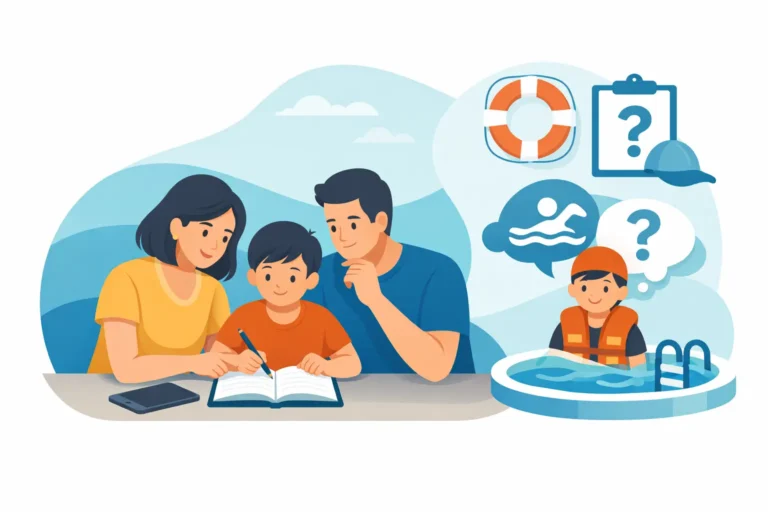
A child who freezes when asked to put their face in the water needs a different lesson from a swimmer who is one practical test away from certification. That is the central finding of any honest private swim coach review: one-to-one instruction can produce focused, visible progress, but it is most valuable when the coach, goals, and lesson plan are well matched.
For parents, the decision is rarely only about learning strokes. It is about water safety, confidence, and knowing whether a child can respond calmly if they lose footing or enter deep water unexpectedly. For adults, it may be about overcoming fear, preparing for a triathlon, or finally learning a skill they missed earlier in life. Private coaching can support each of these outcomes, provided the lessons are structured rather than simply supervised pool time.
What This Private Swim Coach Review Measures
A useful review should look beyond whether a learner enjoyed the lesson. Enjoyment matters, especially for toddlers and nervous beginners, but safety and measurable skill development matter more. The strongest private lessons begin with an assessment of current ability, then move through clear milestones such as controlled submersion, floating, breathing, propulsion, stroke coordination, and safe responses in deeper water.
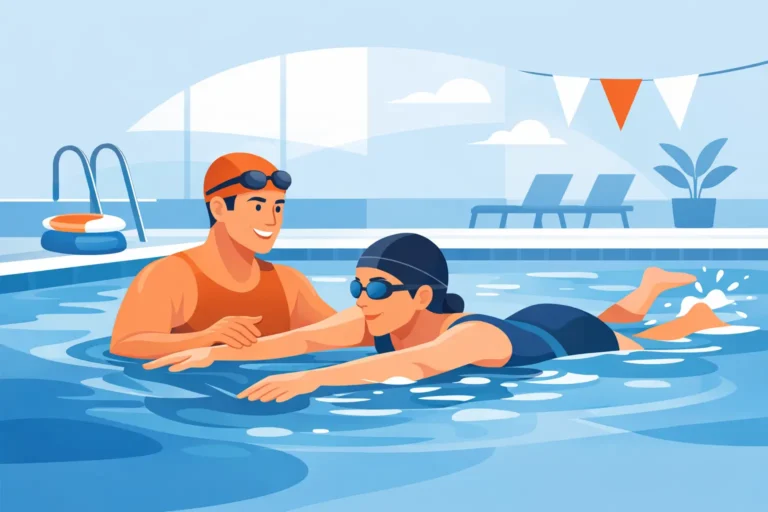
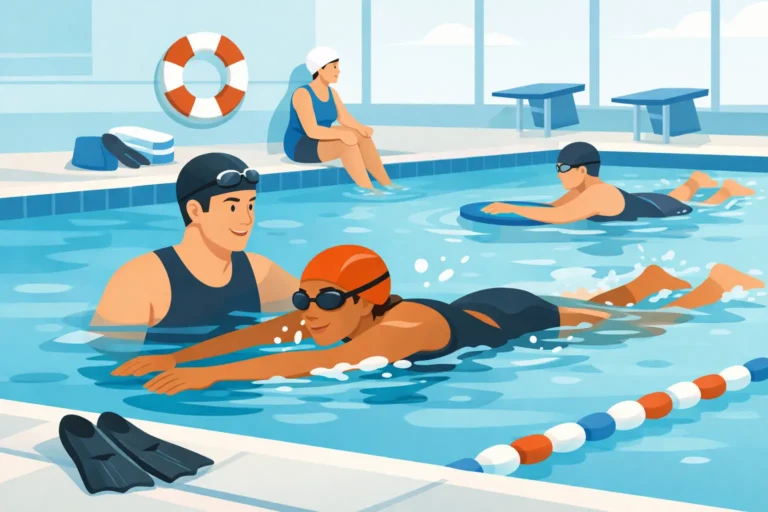
The greatest advantage of a private coach is attention. In a group class, an instructor must balance different confidence levels, learning speeds, and behavior. In a one-to-one lesson, every repetition can be adjusted immediately. A coach can spot a dropped elbow in freestyle, a breath-holding habit, or a child who is kicking hard but not moving forward efficiently. That feedback loop often helps learners correct problems before those habits become difficult to change.
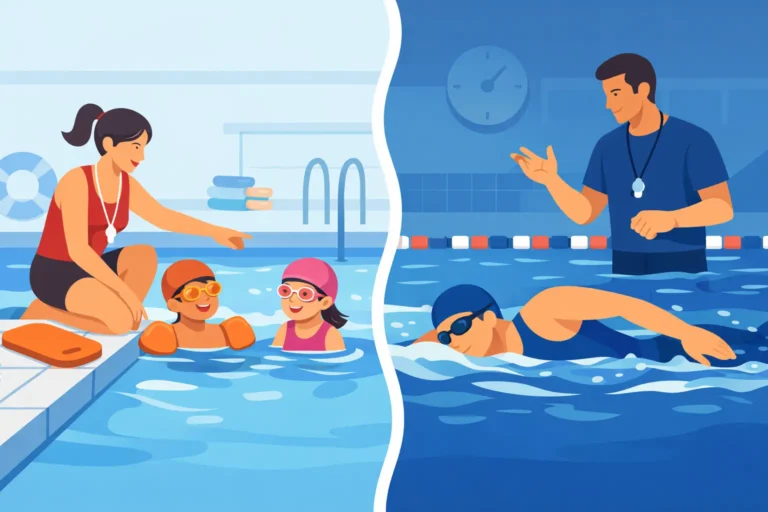
This does not mean private lessons are automatically better for every swimmer. Group classes can be excellent for children who are comfortable in water, benefit from peer motivation, and need steady weekly progression at a lower cost. A private format is most effective when there is a specific reason for concentrated coaching.
Who Benefits Most From One-to-One Lessons?
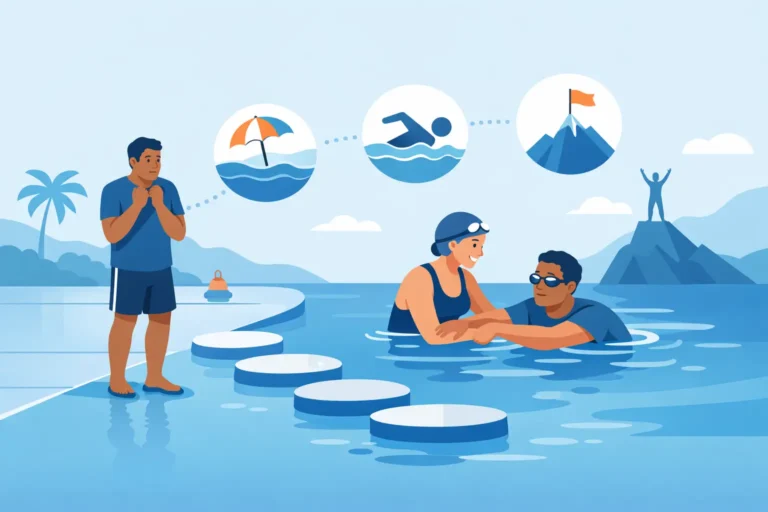
Private coaching is particularly helpful for complete beginners and water-fear learners. Some children need extra time to trust the water and their instructor before they can participate confidently. A calm coach can slow the pace, use age-appropriate water familiarization, and avoid pushing a child into tasks before they are ready. Progress may begin with small achievements: blowing bubbles, placing the face in water, floating with support, then recovering to standing safely.
It is also a strong option for learners with a deadline. A student preparing for a SwimSafer practical assessment, school requirement, holiday program, or lifesaving pathway may need targeted correction rather than a broad group syllabus. In these cases, a coach should identify the exact gaps in technique, water survival skills, knowledge, or test procedure and work through them systematically.
Adults often see fast value from private instruction as well. An adult beginner may not want to practice basic floating in front of a larger class. A fitness swimmer may need help with breathing rhythm and body position. A triathlon trainee may require efficient freestyle, open-water readiness, pacing, and confidence without relying on constant rest. Their needs are specific, so the lesson should be specific too.
The Trade-Off: Speed, Cost, and Independence
Private lessons usually provide faster feedback, but they also cost more per session than group classes. The right question is not whether one-to-one coaching is expensive. It is whether it addresses an obstacle that could otherwise slow progress for months.
For example, a child who is already progressing well in a structured group class may only need a few private sessions before an assessment or to resolve a particular stroke issue. A learner with deep anxiety around water may benefit from a longer private foundation before joining peers. The best pathway can be a combination: focused private instruction to establish safety and confidence, followed by group classes for regular practice and social learning.
Independence is another consideration. A good private coach gives support without creating dependence. As skills improve, the learner should practice safe entries, floating, kicking, breathing, and basic strokes with less physical assistance. The objective is not to make the student feel safe only beside the coach. It is to build calm, repeatable responses in the water.
What a Quality Private Lesson Should Include
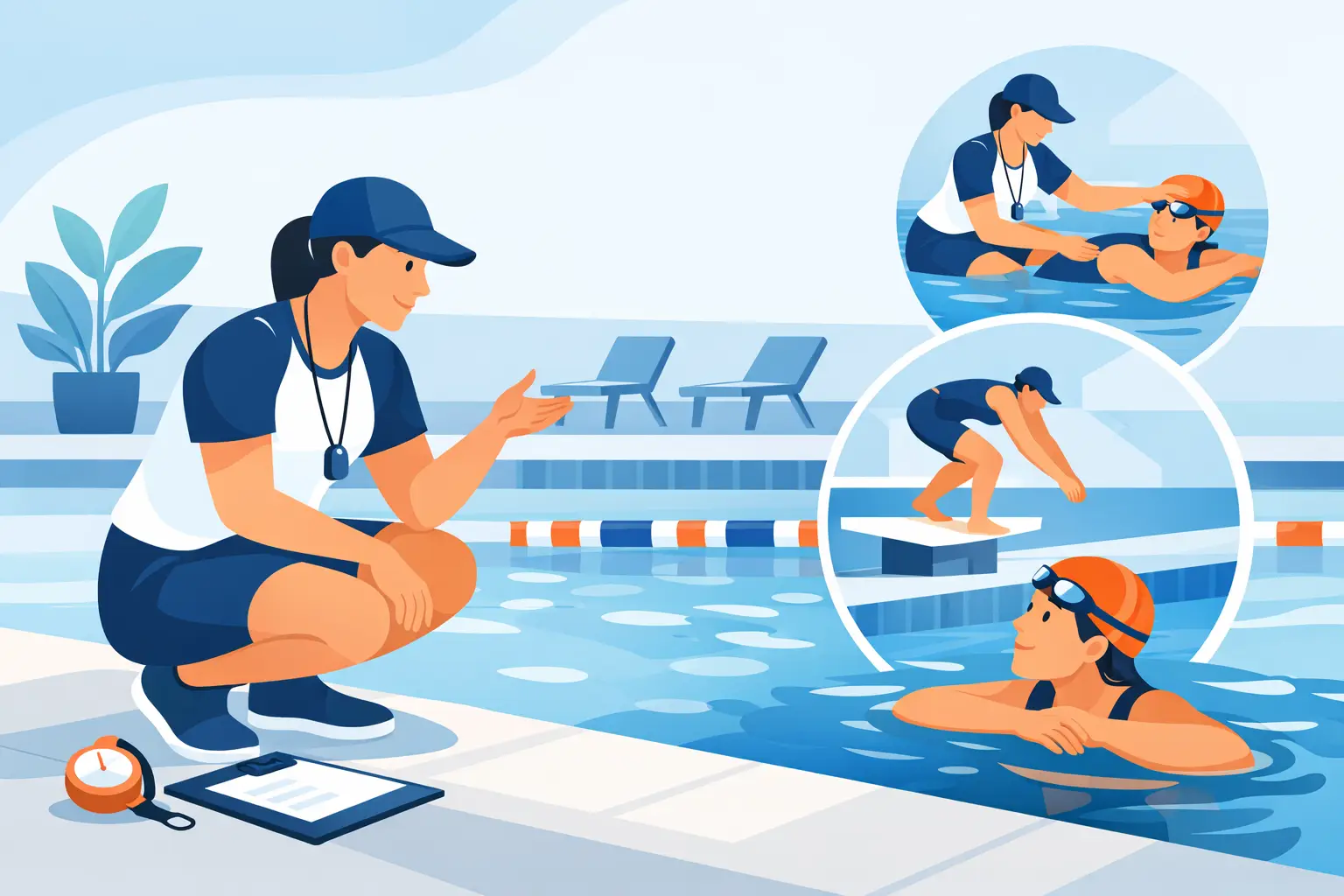
A private session should have a purpose from the first lesson. The coach should ask about the learner’s age, experience, fears, health considerations, prior lessons, and desired outcome. Parents should be able to understand what their child is working toward, whether that is safe water entry, a SwimSafer stage requirement, independent swimming, or stroke improvement.
Look for instruction that is progressive. Beginners should not be rushed into long-distance swimming before they can float, orient themselves, and recover safely. More advanced swimmers should not spend every lesson repeating the same laps without technique analysis. Quality coaching adjusts the challenge level while keeping safety standards consistent.
For test-focused learners, preparation should include more than the skill itself. They need familiarity with the expected sequence, clear understanding of safety commands, and practice performing under realistic conditions. Mock practical tests and theory preparation can reduce uncertainty, but they should reinforce genuine competence rather than encourage memorized performance.
At AQZOG, private coaching is built around this type of structured progression, with water safety, skill milestones, and certification readiness guiding the lesson plan. That approach is particularly relevant for Singapore families navigating SwimSafer requirements, but the principle applies anywhere: the lesson should lead to an observable next step.
Questions to Ask Before You Enroll
Before selecting a private coach, ask how they assess starting ability and how they define progress. A vague promise that a child will “learn fast” is less useful than a clear explanation of the first skills, expected practice needs, and factors that may affect pacing.
Ask about safety practices at the pool. The coach should maintain close supervision, choose an appropriate depth, and adapt the session when a learner is tired, distressed, or not ready for the next task. For young children, parents should also understand whether they are expected to be poolside, how the coach communicates after class, and how progress is recorded.
Credentials and experience deserve attention, especially when the goal involves formal assessment or lifesaving-oriented progression. Experience with a specific age group matters too. Teaching a fearful toddler, a school-age beginner, and an adult fitness swimmer requires different communication, pacing, and technical priorities.
Finally, ask what happens after the initial goal is met. Swimming is not a one-time achievement. A learner who completes a stage or learns a basic stroke needs continued practice to retain confidence, improve endurance, and respond safely in different water conditions.
How to Judge Progress After the First Few Lessons
Progress is not always measured by distance. A nervous learner who enters the pool willingly, puts their face in, and returns to standing without panic has made meaningful progress. A child who can float but still needs reminders to exhale may be moving forward, even if freestyle is not yet consistent.
For more experienced swimmers, look for cleaner technique and greater control. They may breathe with less interruption, maintain a more balanced body position, coordinate arms and kicks more effectively, or complete a set distance with less fatigue. For certification pathways, progress should be tied to the required competencies, not simply the number of lessons attended.
Parents can support this process by staying positive and avoiding comparisons. Some learners need repeated exposure before a skill feels safe. Others advance quickly at first, then slow down when coordination becomes more complex. A professional coach will explain these changes and adjust the plan rather than treating every learner as if they should progress at the same rate.
The right private coach does more than help a swimmer complete a lap. They create the conditions for a child or adult to enter the water with sound judgment, practical skills, and confidence that has been earned one safe step at a time.