A SwimSafer Retest Example for a Stronger Return
A retest can feel disappointing when a child has worked hard, especially when classmates have already progressed. But a SwimSafer retest example often shows something more useful than a simple pass or fail: it identifies the exact safety skill that needs more time, better technique, or greater confidence. With targeted coaching and calm practice, a retest becomes a practical second opportunity to demonstrate real readiness in the water.
For parents, the priority should not be rushing toward a certificate. SwimSafer progression is built around water survival, controlled movement, and the ability to respond safely when conditions are less comfortable. A child who is genuinely ready is more likely to perform steadily during assessment and carry those skills into everyday swimming.
What a SwimSafer Retest Usually Means
A retest is normally required when a learner has not yet met the expected standard in one or more assessed components. This does not mean the child cannot swim or has made no progress. Many learners can complete most of the assessment well but need additional work on a particular task, such as a safe water entry, a survival float, a correct stroke sequence, or following an instruction without hesitation.
The assessment outcome should be treated as useful feedback. It tells the swimmer, parent, and coach where preparation needs to become more specific. Rather than repeating every part of the program in the same way, the strongest approach is to isolate the gap, correct it, and then rebuild the full sequence under test-like conditions.
Retest arrangements, requirements, and timelines can vary by stage, organizer, and assessment setting. Parents should confirm the current process with the relevant provider. What does not change is the purpose: the swimmer must show the required skill safely, independently, and with enough control to meet the assessment standard.
SwimSafer Retest Example: Turning Feedback Into Progress
Consider a hypothetical Stage 2 learner, eight-year-old Ethan. He is comfortable putting his face in the water, can travel using his strokes, and enjoys weekly class. During his assessment, however, he struggles with the survival sequence. After entering the water, he becomes anxious, reaches for the wall too early, and cannot hold his back float long enough before moving into the next task.
Ethan does not need to start from the beginning. His feedback indicates that his main barrier is composure during the survival component. He understands the instruction and has performed elements of it in class, but he has not yet shown the full sequence with sufficient calmness and control.
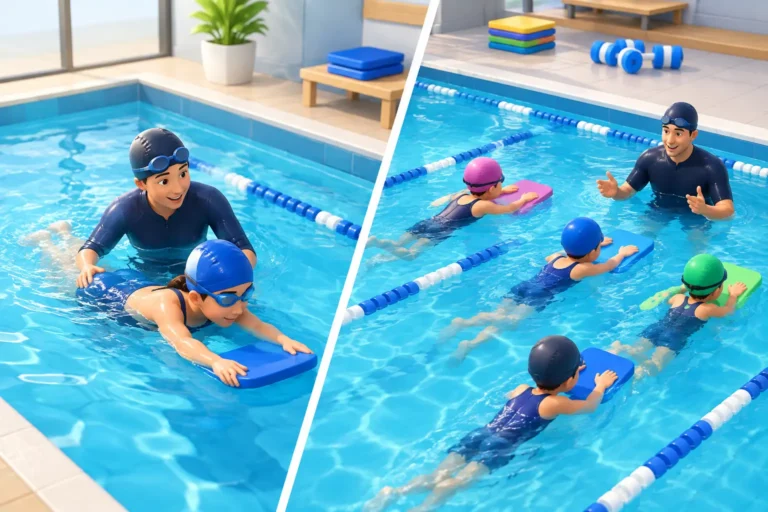
His retest preparation could focus on three connected areas. First, the coach helps him practice a relaxed back float with ears in the water, eyes upward, and a still body position. Second, Ethan repeats the entry-to-float transition so he learns not to rush after entering the water. Third, he completes short mock sequences with the coach standing back, allowing him to build independence rather than waiting for reassurance at every step.
After several focused sessions, Ethan completes a mock assessment. He still looks nervous before the entry, but he follows the sequence, settles into his float, and moves on only when he is ready. That is meaningful progress. On retest day, the goal is not for Ethan to appear fearless. The goal is for him to apply the safety skills correctly despite some natural nerves.
This is why mock practical testing is valuable. A child may perform well during a familiar lesson but hesitate when asked to work independently in a quieter, more formal assessment environment. Practice should include both skill development and the ability to perform a sequence when prompted once.
Why Children Need More Than Repetition
Simply repeating the task many times can help, but it is not always enough. If a child keeps practicing the same error, the mistake can become more familiar instead of improving. Retest training needs observation, correction, and a clear progression.
For example, a swimmer who drops their legs during a back float may be looking at their feet, lifting their head, or holding tension in their shoulders. Telling them to “float longer” does not solve the cause. A qualified coach can identify the body-position issue, provide a simple correction, and use appropriate drills before asking the swimmer to repeat the complete assessed task.
The same applies to strokes. A child may cover the required distance but stop frequently, lose breathing control, or use an unsafe recovery pattern. Distance alone is not the whole picture. Assessors look for the required skill performed with adequate control, safety awareness, and independence.
Common Reasons a Swimmer May Need a Retest
Each learner is different, but retest feedback often falls into a few practical categories. Some children need better technique, while others need confidence under assessment conditions.
- Incomplete sequence: The learner performs individual skills but misses a required step, changes the order, or stops before completing the task.
- Loss of body control: Common examples include standing too early, grabbing the wall, dropping the legs during floating, or losing balance during a water entry.
- Unclear stroke or breathing pattern: The swimmer may travel forward but struggle to coordinate breathing, maintain a recognizable stroke action, or complete the required distance continuously.
- Assessment anxiety: A child may have the ability in class but freeze, rush, or forget instructions when assessed independently.
The right response depends on the reason. A technical issue requires technical correction. An anxious but capable swimmer may benefit most from familiar routines, short independent practice sets, and repeated mock assessments. Treating every retest learner the same can waste time and affect confidence.
How Parents Can Support Retest Readiness
Parents play an important role, particularly in the days leading up to a retest. The most helpful message is calm and specific: “Your coach has shown you what to work on. Focus on doing one step at a time.” Avoid framing the retest as a high-stakes judgment or comparing your child with siblings and friends.
Before the assessment, make sure your child knows the practical routine. Arrive early enough to avoid rushing, bring the required swim items, and allow time for a calm change and briefing. A hungry, cold, or hurried child is less likely to show their best swimming.
It also helps to ask the coach direct questions. Which exact component needs improvement? Is the issue technique, confidence, or sequence recall? What should the swimmer practice during the next few lessons? Clear answers make preparation more efficient than general extra swimming.
At AQZOG, retest preparation is approached as structured progression rather than last-minute drilling. Coaches can use focused skill practice and mock test conditions to help swimmers understand what is expected, correct weaknesses, and return with stronger water confidence.
When a Retest Should Not Be Rushed
A quick retest may be suitable when the learner missed one manageable component and is already close to the required standard. For example, a child who completed everything well but lost focus during one transition may only need a short period of targeted practice.
However, more time is appropriate when a swimmer remains fearful, cannot complete key safety skills independently, or has inconsistent stroke control. Passing before these foundations are secure does not serve the child well. SwimSafer stages are meant to build on one another, so gaps at an earlier stage can make later requirements more difficult.
Parents should look for visible signs of readiness: the child can explain the sequence, complete it repeatedly during practice, recover calmly after a mistake, and show the skill without constant physical support. Confidence matters, but it should be confidence supported by ability.
A retest is not a label on a swimmer’s potential. It is a moment to slow down, strengthen one important skill, and let the child return to the water with the control and safety awareness that certification is meant to represent.