SwimSafer Stage 1 Training Explained
A child who can smile in the shallow end is not always a child who is safe in the water. That is why SwimSafer stage 1 training matters. It gives beginners a structured starting point – not just to get comfortable in the pool, but to learn the first safety habits, movement skills, and confidence markers that support real progress.
For many parents, Stage 1 is the point where swimming lessons start to feel serious in a good way. There is a clear framework, clear expectations, and a clear purpose behind each skill. Instead of random pool play, the child works through a progression designed to build water confidence, survival awareness, and the basics needed for later stroke development.
What SwimSafer stage 1 training is meant to do
Stage 1 is the entry level of the SwimSafer pathway for beginners who are still learning how to move safely and confidently in water. At this level, the focus is not speed, perfect technique, or deep-water performance. The priority is water familiarization, body control, breath confidence, and simple movement patterns that prepare a child for more formal swimming skills later on.
That distinction matters. Some parents expect Stage 1 to produce a child who can swim long distances independently. In reality, Stage 1 is about building the foundation for that outcome. A good program develops comfort with submersion, safe entry and exit habits, supported and unsupported movement, and early coordination. When these basics are rushed, children may look busy in class but progress more slowly over time.
What children usually learn in SwimSafer stage 1 training
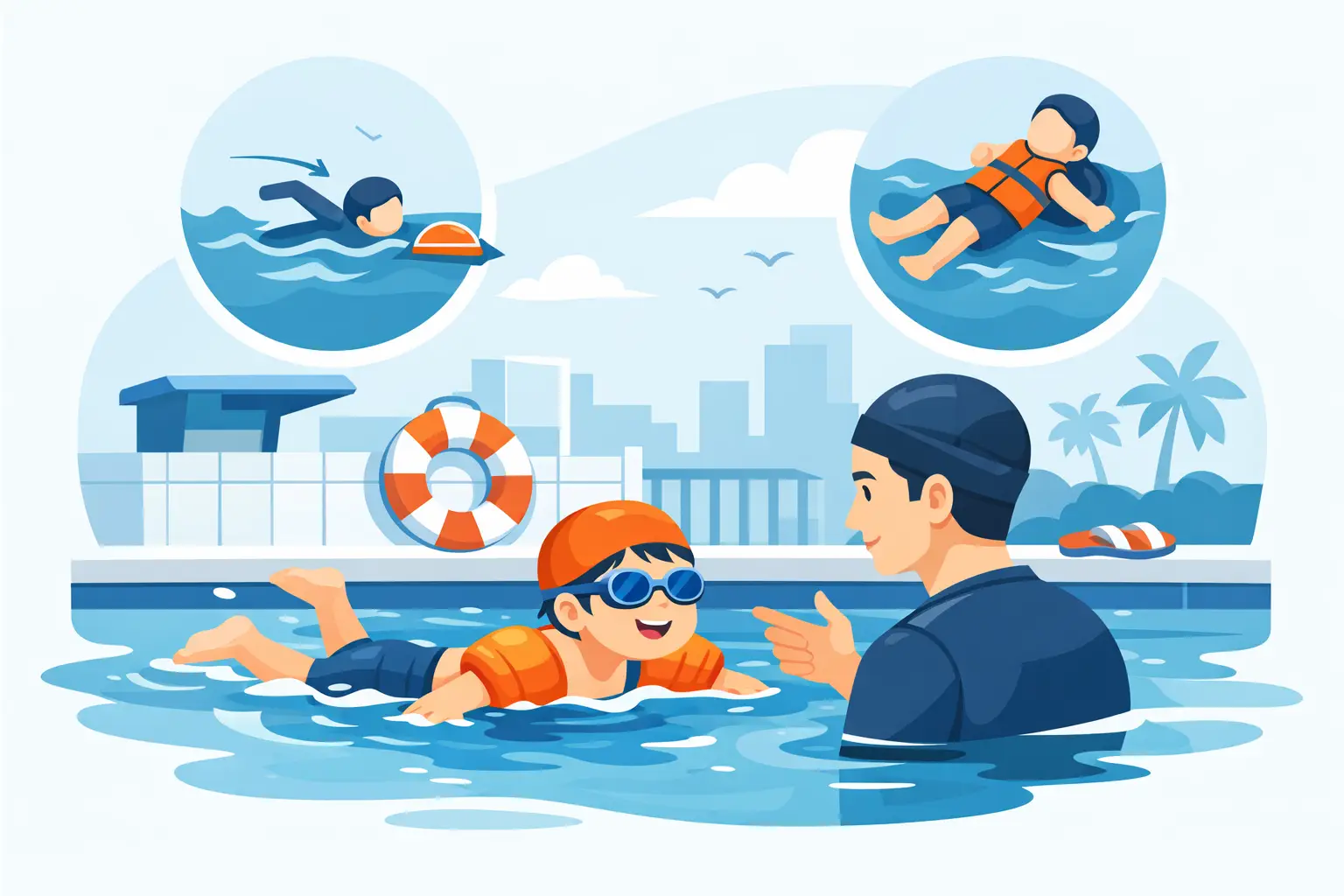
The exact teaching sequence can vary by coach and class format, but the training goals are generally consistent. Children are introduced to core beginner skills in a structured order. That often includes water entry and exit, blowing bubbles, opening the eyes in water, front and back floating, gliding, kicking movement, and basic propulsion.
They also begin learning how to listen and respond in a lesson setting. This is often overlooked, but it is part of successful progression. A child who can follow pool instructions, wait safely at the wall, and attempt repeated drills will usually improve faster than one who is only willing to play on their own terms.
At this level, confidence and skill are closely linked. Some children are physically able to perform a glide or kick, but hesitate because they dislike getting their face wet. Others are fearless but lack control. Effective coaching works on both sides at the same time – reducing fear while introducing repeatable technical habits.
Key outcomes parents should expect
By the end of a solid Stage 1 program, most learners should show stronger water confidence, better breath control, improved floating ability, and early independent movement over short distances. Just as important, they should be safer, calmer, and more aware of how to behave in and around the pool.
That does not mean every child progresses at the same speed. Age, temperament, coordination, prior exposure to water, and attendance all affect results. A younger child may need more repetition before being test-ready, while an older beginner may move through the skills more quickly. The goal is not to rush the badge. The goal is to build a base that holds.
Why structured Stage 1 training works better than casual lessons
Beginners need consistency. A structured program gives each lesson a purpose and puts skills in the right order. Children first learn to trust the environment, then manage their breathing, then control their body position, then move with intention. That sequence is more effective than jumping straight into stroke imitation.
This is where experienced instruction makes a difference. Coaches who understand the SwimSafer framework know what to correct early and what can wait. For example, a beginner does not need polished freestyle arms before they can maintain a stable float or glide. If the foundation is weak, later stages become harder than they need to be.
Structured training also helps parents measure progress realistically. Instead of asking, “Can my child swim yet?” the better questions are: Can they put their face in the water calmly? Can they float with less support? Can they kick forward with control? Can they recover from hesitation and try again? These are meaningful Stage 1 wins.
Who is ready for SwimSafer stage 1 training
Stage 1 is suitable for true beginners, including children with little or no formal lesson experience. It is especially appropriate for learners who need a safe, step-by-step entry into swimming. In many cases, this includes children who enjoy the water but have not yet developed control, as well as children who are cautious and need confidence-building before advancing.
Adults can also benefit from Stage 1-type training principles, even if they are not following the exact same child-focused pathway. Beginner adults often need the same fundamentals – breathing control, floating, kicking balance, and water confidence – before they can progress efficiently.
The best starting point depends on the swimmer, not just their age. A six-year-old who is anxious may need a gentler pace than a four-year-old who is highly water-confident. That is why assessment by an experienced coach is useful. The right level is the one that creates progress without overwhelming the learner.
What parents should look for in a Stage 1 program
Not all beginner classes are equally effective. A strong Stage 1 program should be organized, safety-focused, and clearly aligned with measurable learning outcomes. Coaches should know how to break down each skill into manageable steps and adjust their approach based on the child’s response.
Class size matters too. In a beginner setting, children often need frequent correction, reassurance, and repetition. If the class is too crowded, some swimmers may spend more time waiting than learning. Private or small-group formats can accelerate progress for nervous beginners or children who need closer supervision, while group classes can work well for learners who respond positively to routine and peer modeling.
Parents should also pay attention to whether the teaching style is overly forceful or too passive. Beginners usually improve best with calm, firm coaching. Children need encouragement, but they also need standards. A good coach does not pressure a fearful child recklessly, yet does not allow avoidance to become the lesson.
How long Stage 1 usually takes
This is one of the most common questions, and the honest answer is that it depends. Some children show Stage 1 readiness within a relatively short period, especially if they attend consistently and are comfortable in water. Others need more time to stabilize the basics.
Weekly lessons are effective for steady development, but progress is usually faster when attendance is consistent and there are minimal long gaps between classes. Intensive holiday training can help some learners gain momentum, particularly if they need repeated exposure to move past fear or inconsistency.
Parents should be cautious about comparing timelines. One child may pass quickly because they had prior water exposure. Another may take longer but build stronger long-term confidence. Fast is useful only when the skill is real and repeatable.
Common mistakes that slow progress
One common mistake is focusing too early on advanced-looking strokes. If a child cannot float calmly or manage breathing, adding more arm action will not solve the issue. Another mistake is irregular attendance. Young swimmers forget quickly, and long breaks often mean spending lesson time rebuilding confidence rather than progressing.
Sometimes the issue is expectation. Parents may unintentionally pressure the child to perform before they are ready, which can create resistance. On the other hand, some families mistake comfort for competence. A child who likes splashing is not automatically prepared for assessment standards.
There is also the question of readiness for testing. Entering an assessment too early can affect confidence. Good coaching includes honest feedback about when a swimmer is likely to perform reliably, not just occasionally.
Why Stage 1 matters beyond certification
The value of Stage 1 is not limited to passing a level. It introduces habits that support water safety for life. Children learn that the pool is enjoyable, but also structured. They learn to respect instructions, control panic, and move with intention instead of reacting randomly.
That foundation supports everything that comes next – stronger strokes, better endurance, deeper water confidence, and smoother progression through the SwimSafer system. At AQZOG, this is why early-stage teaching is treated seriously. The first level is where trust, discipline, and safety awareness begin to take shape.
For parents, the best approach is simple: choose structured coaching, give the process time, and look for steady improvement rather than instant results. When SwimSafer stage 1 training is taught well, children do not just learn to complete tasks in the water. They begin building the confidence and control that make every later stage easier and safer.
A strong swimmer is rarely created in one breakthrough moment. More often, it starts with small wins repeated properly until confidence becomes skill.