Water Polo Basic Skills for Confident Beginners
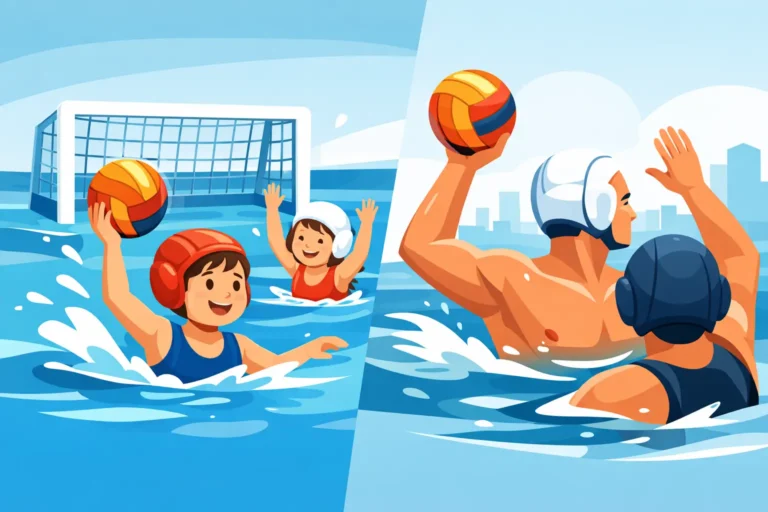
A water polo player can be a strong swimmer and still feel unprepared when the ball is in play. Unlike lap swimming, the sport requires players to stay high in the water, change direction quickly, protect the ball, read teammates, and make decisions while being challenged. Building water polo basic skills in the right order gives children and adults the confidence to learn the game safely rather than simply trying to keep up.
For beginners, the priority is not scoring spectacular goals. It is developing stable body control, reliable ball handling, and awareness of other players. These fundamentals create the platform for faster passing, stronger shooting, and more confident game participation later.
Start With Water Safety and Swimming Readiness
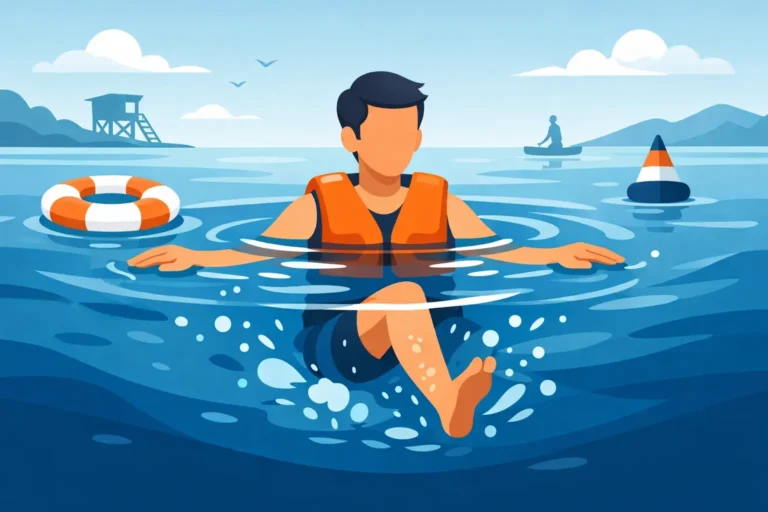
Water polo takes place in deep water, where players usually cannot touch the bottom. Before joining regular game drills, a beginner should be comfortable floating, swimming with control, rolling from front to back, and moving through the water without panic. They should also be able to listen and respond to instructions while tired or splashed.
For young players, confidence in deep water matters as much as speed. A child who can swim one length but becomes anxious when stopping in the middle of the pool needs more water-confidence practice before intensive water polo work. Adult beginners may need the same foundation, especially if they have learned to swim only for fitness or recreation.
A structured swim program develops breath control, body position, and efficient movement before adding the demands of a ball and opposing players. This progression supports safer participation and helps coaches spend more time teaching game skills instead of managing fear or fatigue.
The Water Polo Basic Skills Every Beginner Needs
Eggbeater kick: the sport’s working position
The eggbeater kick is the most important water polo skill. It allows a player to remain upright, lift their shoulders above the surface, free both hands for the ball, and explode upward for a pass, block, or shot.
Rather than kicking up and down like freestyle, each leg moves in a separate circular motion. The legs alternate, creating steady lift. Beginners should first practice slowly with hands supporting them at the pool wall or on a float. The goal is a relaxed, continuous rhythm, not maximum height.
Once the pattern feels natural, players can practice keeping their hips high while holding a ball overhead, turning their body, or moving sideways. Strong eggbeater technique conserves energy. Poor technique causes players to sink, overuse their arms, and tire early in a game.
Head-up swimming and directional movement
Water polo players often swim with their heads up so they can see teammates, defenders, and the goal. This is different from a standard freestyle stroke, where the face is mostly in the water. Head-up swimming can feel awkward at first because lifting the head causes the hips and legs to drop.
Beginners should learn to look forward without craning the neck excessively. Use a quick, shallow freestyle action while maintaining a steady kick. Start with short distances, then add changes of direction: forward, backward, sideways, and around a marker.
Players also need to stop quickly and regain a vertical position. In a match, this happens repeatedly. A swimmer who reaches the ball first but cannot stop, turn, and protect it has not yet gained control of the play.
Ball handling with one hand
Water polo is primarily a one-handed game. Players pick up, pass, catch, and shoot with one hand while staying balanced through their eggbeater kick. Two hands may be used in certain situations, but beginners should avoid relying on them when learning standard field play.
Start by placing the ball on the water and scooping it into one hand. Keep the wrist relaxed and the fingers spread around the ball rather than squeezing it tightly. Then practice lifting the ball clear of the water while the body stays tall.
Dribbling is another essential skill. A player pushes the ball ahead while swimming, keeping it within reach and using their forehead or stroke rhythm to guide it. The common mistake is chasing a ball that has been pushed too far forward. Controlled dribbling is slower at first, but it keeps possession secure.
Passing and catching under control
Good water polo passing is direct, accurate, and timed to the receiver’s movement. Beginners should begin with short passes to a stationary partner, focusing on a high elbow, a stable body position, and a clean wrist snap. The ball should travel firmly but not so hard that the receiver cannot control it.
Catching requires more than reaching for the ball. The receiving player should be upright, balanced, and ready to absorb the pass with one hand. They should look at the ball early, then bring it into a protected position without allowing it to drift away.
As confidence improves, add movement. Pass while swimming, pass after turning, and pass to a teammate who is changing direction. These drills teach players to communicate through eye contact, body position, and timing. A pass to open water can be better than a pass directly at a teammate if it helps them move away from a defender.
Shooting with balance, not force alone
A powerful shot begins with the legs. Players use eggbeater to rise, rotate through the torso, and throw with a high elbow and full follow-through. Beginners often focus only on the arm, which leads to weak shots and strained shoulders.
Start close to the goal or target. Practice accuracy before distance. Aim for clear target areas, such as the corners, and learn to release the ball quickly without dropping the elbow. As players become stronger, they can add fakes, skip shots, and shooting under defensive pressure.
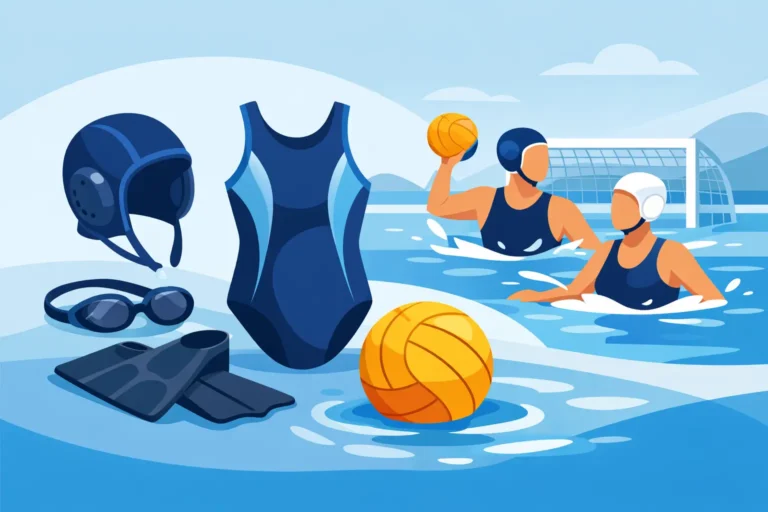
For younger children, a smaller ball and shorter shooting distance may be more appropriate. The right equipment and pool setup depend on age, hand size, strength, and experience. Good coaching adjusts the task while preserving correct technique.
Defense Is an Active Skill
Beginners often see water polo as an attacking sport, but defensive habits shape every match. Players need to maintain position between an opponent and the goal, keep their heads up, and use their legs to stay mobile. They should learn to move laterally, track the ball, and raise an arm to challenge a passing or shooting lane.
Safe defense is especially important for new players. Water polo is physical, but beginners should learn legal positioning, controlled contact, and respect for personal space before playing harder contests. Pulling, pushing under water, or striking at the ball can create unsafe situations and lead to fouls.
A useful first defensive drill is shadowing. One player moves across a small area while the other mirrors them at a safe distance. This teaches body awareness and quick directional movement without the pressure of full-contact play.
Learn Game Awareness Early
Players do not need to memorize every rule before their first session, but they should understand the purpose of possession, spacing, and transition. When their team has the ball, beginners should avoid crowding the same area. Creating width and passing lanes makes the game easier for everyone.
When possession changes, players must react quickly. The nearest player may pressure the ball, while others recover toward the goal and mark open opponents. These habits are built through short, guided games with simple objectives rather than long scrimmages where beginners can become lost.
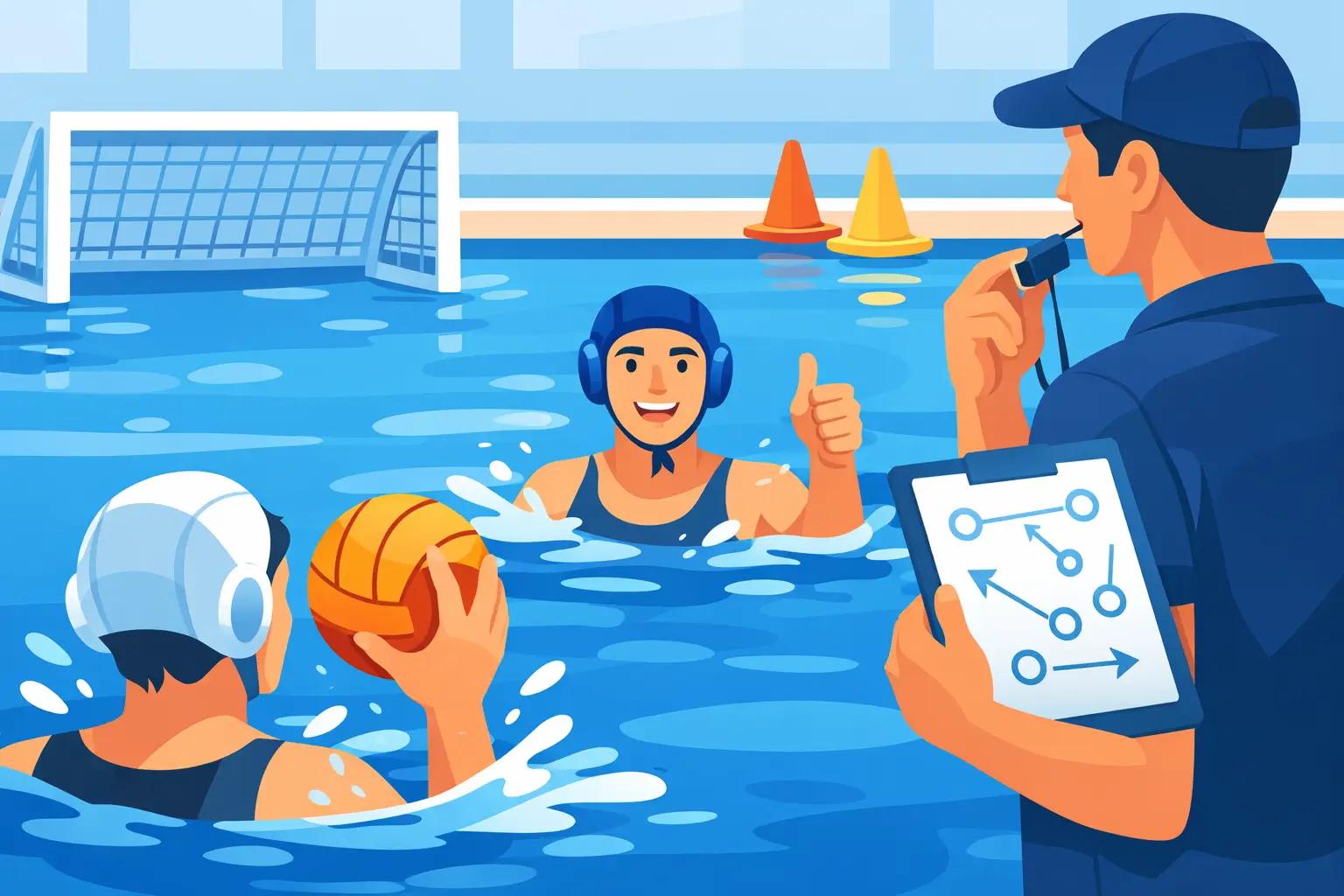
Coaches should also teach players to recognize basic fouls, restart play calmly, and keep listening for the whistle. Game awareness grows through repetition. A player who understands where to move is often more effective than a stronger swimmer who only follows the ball.
A Safe Progression for Children and Adults
The best learning pathway moves from individual control to partner work, then small-group play. Start with eggbeater, head-up swimming, and ball pickup. Add passing and catching, followed by dribbling and simple shooting. Only then should players move into defended drills and game situations.
Children benefit from short, active activities with clear success markers: stay upright for 20 seconds, complete five accurate passes, or swim while controlling the ball. Adults often appreciate the same measurable progression, particularly if they are returning to sport or building confidence in deep water.
At AQZOG, the same principle used in structured swim education applies well to water polo preparation: confidence is built through skills that can be observed, practiced, and improved. Private coaching can be useful for a swimmer who needs focused help with eggbeater, deep-water confidence, or stroke efficiency before joining a team environment.
The most helpful next step is simple: practice one skill at a time until it feels dependable under mild pressure. When a player can stay tall, see the pool, control the ball, and make a calm pass, the game starts to feel less chaotic and far more enjoyable.