Holiday Intensive or Weekly Swimming: Which Fits?
A school break can feel like the perfect time for a child to make rapid progress in the pool. But when parents compare holiday intensive or weekly swimming, the better choice is not always the fastest one. It is the format that matches your child’s starting point, confidence level, attention span, and next safety or certification goal.
For some children, several focused lessons in one week create the momentum needed to overcome hesitation and establish core skills. For others, a steady weekly routine gives them more time to process coaching, build fitness, and retain technique. Both pathways can be effective when instruction is structured, age-appropriate, and focused on safe progression.
Holiday Intensive or Weekly Swimming: The Key Difference
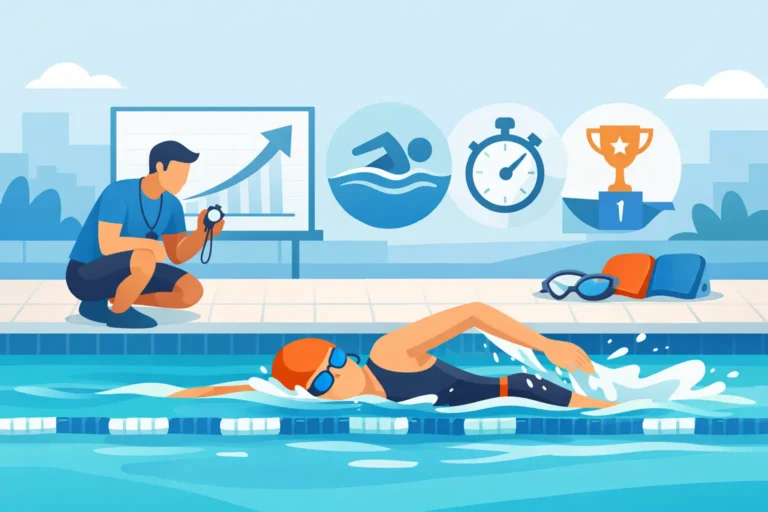
A holiday intensive program places several lessons close together, often over consecutive days or within one to two weeks. This concentrated schedule reduces the gap between sessions. Children can repeat a skill while the coach’s feedback is still fresh, making intensives especially useful for beginners, returning swimmers, and learners preparing for a practical assessment.
Weekly swimming lessons follow a consistent long-term rhythm. One lesson each week gives children time to rest, reflect, and return ready to practice again. This format supports gradual development across water confidence, breathing control, body position, stroke technique, water survival, and SwimSafer progression.
The difference is not simply speed. An intensive builds short-term repetition; weekly lessons build a dependable habit. A child who needs a breakthrough may benefit from concentrated coaching. A child who is already progressing comfortably may gain more from steady reinforcement over months.
When a Holiday Intensive Makes Sense
Holiday lessons are a practical option when a family has a clear, time-sensitive objective. Perhaps your child has recently developed a fear of putting their face in the water, has missed lessons during a busy school term, or needs extra preparation before a SwimSafer stage assessment. In these situations, repeated exposure can be highly valuable.
Building confidence without long gaps
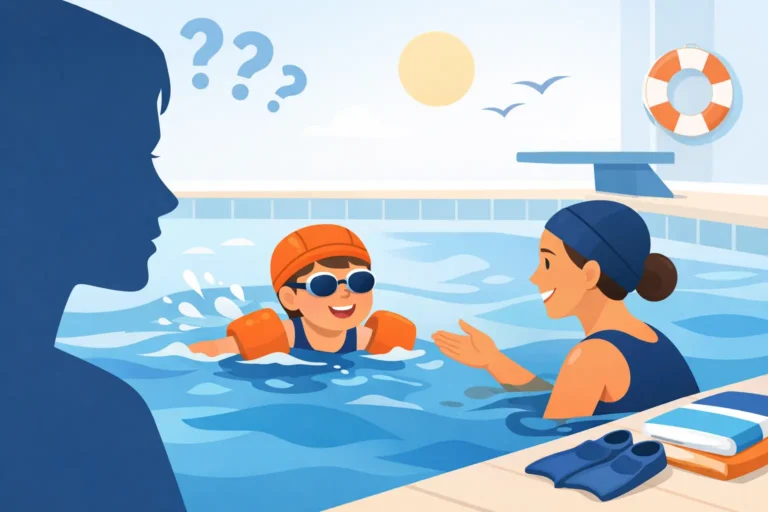
Children who are nervous in the water often need familiarity before they can focus on technique. Seeing the same pool environment and revisiting the same safety routines several times in a week can help reduce uncertainty. The coach can reinforce simple wins: entering safely, blowing bubbles, floating with support, recovering to a standing position, and moving independently over a short distance.
This does not mean every fearful child should be placed in an intensive. If a child becomes overwhelmed easily, a lighter schedule may be more productive. The goal is confident participation, not pushing through distress to finish a course.
Accelerating a specific skill
An intensive works well when the target is clear. A child may need to improve breathing timing for freestyle, gain consistency in backstroke kicking, or practice survival sequences required for a stage. Frequent coaching allows errors to be corrected before they become habits.
For older children and adults, an intensive can also restart momentum after a long break. A learner who once swam independently may regain comfort and coordination faster with several supervised sessions than with a single lesson followed by a week away from the pool.
Preparing for SwimSafer assessments
Test preparation is one of the strongest reasons to consider a holiday intensive. SwimSafer progression requires more than swimming a stroke across the pool. Learners must demonstrate controlled movement, water safety awareness, survival competence, and the ability to complete required tasks under assessment conditions.
Focused sessions can identify gaps before an assessment. A coach can work on task sequence, distance management, treading water, safe entries, floating, and the calm execution that helps a child perform at their true level. An intensive should prepare a learner for readiness, not promise a pass before the required standard has been reached.
Why Weekly Lessons Remain the Strong Foundation
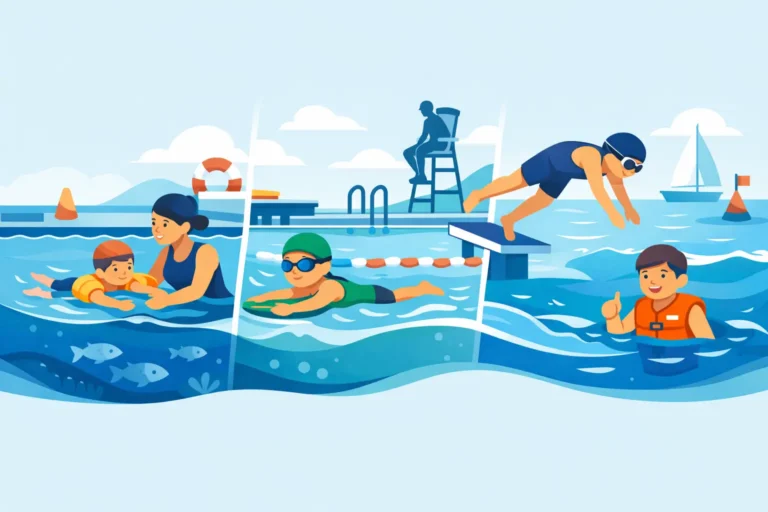
Weekly classes are often the best long-term choice for children who are new to swimming or working through a complete progression pathway. Skills develop in layers. A child first needs comfort in the water, then balance and breathing control, then propulsion, then coordinated strokes and survival skills. Giving each layer time to settle can produce more confident, lasting results.
Progression becomes part of the routine
A regular lesson slot creates consistency for both the learner and the family. Children know what to expect, coaches can monitor development over time, and parents can see gradual, measurable improvement. This is especially helpful for younger learners who respond well to familiar routines.
Weekly instruction also makes it easier to build physical endurance safely. A child may learn the movement pattern of a stroke during an intensive, but sustained distance and efficient technique take longer to develop. Regular practice supports strength, coordination, and stamina without rushing the process.
More time to mature between milestones
Not every delay in swimming is a coaching issue. Sometimes a child understands a skill but needs time to develop the confidence, coordination, or emotional readiness to perform it independently. Weekly lessons allow that growth to happen naturally.
This is particularly relevant for toddlers and preschool-aged children. Early water introduction should create positive associations with the pool while teaching safety habits. A calm weekly program can be more suitable than an intensive schedule for a young child who is still adjusting to separation, instructions, and a new environment.
Better for continuous SwimSafer development
SwimSafer is not a one-time event. It is a structured progression in water safety and swimming capability. Weekly lessons give learners repeated opportunities to retain earlier skills while moving toward the next stage. Rather than practicing only for a test date, children develop the judgment and control needed to remain safer around water.
For families whose goal is a complete, sustainable pathway, weekly lessons provide the framework. Holiday programs can then be used strategically to reinforce a particular stage or address a specific challenge.
Choose Based on the Learner, Not the Calendar
The most useful question is not, “Which program is better?” Ask, “What does my child need next?” A child with strong water confidence who needs additional assessment practice may benefit from an intensive. A beginner who is still learning to relax, float, and listen to poolside instructions may be better served by weekly classes.
Consider the learner’s energy too. Consecutive lessons require concentration. Some children enjoy the routine and improve quickly; others become tired, distracted, or resistant after several days. A quality program adjusts expectations and keeps safety at the center of every session.
Parents should also consider what happens after the intensive ends. Without continued exposure, a new skill can fade. If the family chooses a holiday course, it is wise to plan the next step in advance: continued weekly lessons, supervised practice, or targeted coaching before an upcoming assessment.
A Combined Pathway Often Delivers the Best Results
For many families, the choice does not need to be permanent. Weekly lessons can provide the foundation, while a holiday intensive provides an extra boost at the right time. This approach combines steady skill retention with focused improvement.
For example, a child may attend regular lessons through the school term, then take a short holiday program to strengthen weak areas before moving into the next SwimSafer stage. Another learner may begin with an intensive to become comfortable in the water, then shift to weekly instruction to develop technique and endurance. Adults who are preparing for a fitness event or lifesaving pathway may similarly use private intensive coaching alongside ongoing practice.
AQZOG plans instruction around visible progression rather than a one-size-fits-all timetable. The right schedule should reflect the learner’s current ability, safety needs, and readiness for the next goal.
What Good Instruction Should Deliver in Either Format
Whether lessons are held weekly or intensively, the essentials should remain the same: qualified coaching, clear lesson objectives, appropriate class placement, safe pool practices, and honest feedback about progression. Fast results are valuable only when the learner can repeat the skill with control and confidence.
Look for a program that teaches more than strokes. Children should learn safe entry and exit, floating and recovery, breathing control, orientation in the water, survival awareness, and the discipline to follow instructions. These are the skills that support certification readiness and, more importantly, help make swimming a lifelong safety skill.
The best schedule is the one your child can attend consistently, engage with positively, and build on week after week. Start with the next skill that matters, then give that skill enough quality practice to become confidence rather than a one-time achievement.