Semi-Private Versus Group Lessons for Swimmers
A child who hesitates at the pool edge, an adult who cannot yet put their face in the water, and a swimmer preparing for a practical assessment do not need the same learning environment. When comparing semi private versus group lessons, the right choice comes down to more than class size. It affects coaching attention, confidence building, practice time, safety habits, and how quickly a swimmer can progress toward clear goals.
For families and adult learners, the best format is the one that provides enough support without removing the benefits of regular practice and structured instruction. Both group and semi-private swimming lessons can produce strong results when the swimmer is placed at the right level and follows a consistent progression plan.
Semi-Private Versus Group Lessons: The Core Difference
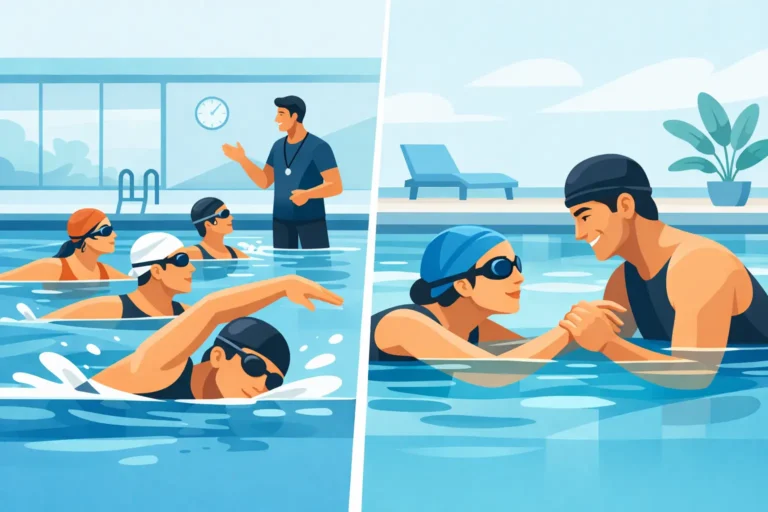
Group lessons bring several swimmers together under one coach, usually with participants of similar age and ability. The coach leads a structured class plan that may include water entry, breathing control, floating, kicking, stroke development, survival skills, and progression drills. This format works especially well for beginners who need regular exposure to the water and children who learn confidently alongside peers.
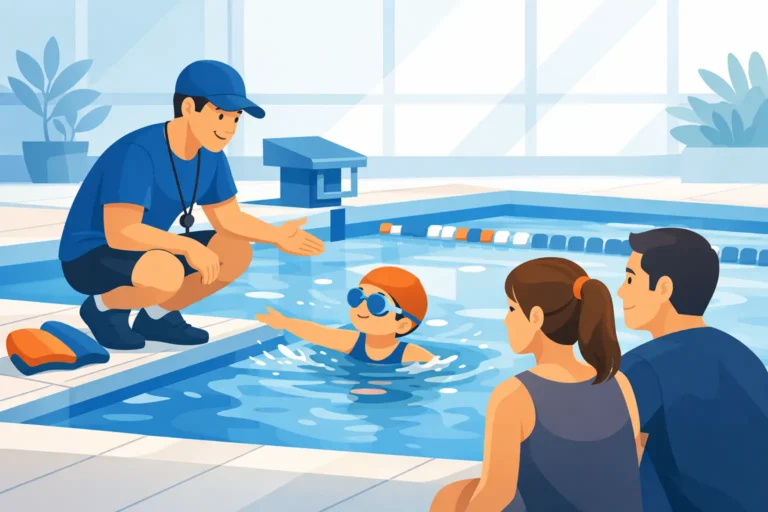
Semi-private lessons usually involve two swimmers learning with one coach. The swimmers may be siblings, friends, or matched learners with similar ability and goals. With fewer swimmers to monitor, the coach can provide more frequent correction, adjust drills more quickly, and spend more time on individual technique.
Neither format is automatically better. The more useful question is: what does this swimmer need next to become safer, more capable, and ready for the next stage?
When Group Lessons Are the Stronger Choice
A well-organized group class offers structure, consistency, and a valuable social learning environment. For many children, watching classmates blow bubbles, float independently, or complete a new kick drill reduces anxiety. They see that learning a skill takes practice, not perfection.
Group lessons are particularly suitable for swimmers who are comfortable participating with others, can follow simple instructions, and benefit from a routine. A beginner does not need to be highly confident before joining a group. In fact, a supportive group can be the place where confidence begins, provided the class is properly leveled and the coach can maintain safe supervision.
For parents focused on long-term water safety and SwimSafer progression, group classes can build excellent foundations. Weekly repetition gives children time to absorb core skills such as safe water entry, front and back float, breathing control, propulsion, and basic survival awareness. As swimmers advance, group practice also helps them learn to stay focused amid normal pool activity, an important part of real-world water confidence.
Group lessons can also be a practical option for families who want regular coaching at a more accessible price point. The value is strongest when classes are not overcrowded, swimmers are placed appropriately, and the curriculum has clear progression rather than random activities from week to week.
What Group Lessons Require From the Swimmer
Group instruction works best when a swimmer can wait briefly for a turn, listen while others practice, and repeat drills independently after coaching. Younger children may need a little time to develop these habits. That is normal, and an experienced instructor should use age-appropriate activities to keep the class engaged while still working toward measurable skills.
If a child becomes distressed whenever attention shifts to another swimmer, or if they need repeated physical support to remain safe in the water, a smaller format may be a more productive starting point.
When Semi-Private Lessons Deliver Faster Progress
Semi-private coaching is often the right choice for swimmers who need more direct attention but still enjoy learning with a partner. With only two students, the coach can observe details that are easy to miss in a larger class: a head position that interrupts breathing, a kick that bends too much at the knee, a weak streamline, or hesitation during water entry.
This extra attention can make a meaningful difference for a child who is close to meeting a progression requirement or an adult who wants to correct a specific technical issue. It is also useful when two siblings have similar abilities but different confidence levels. Each swimmer receives individual feedback, while the shared lesson keeps the experience encouraging and interactive.
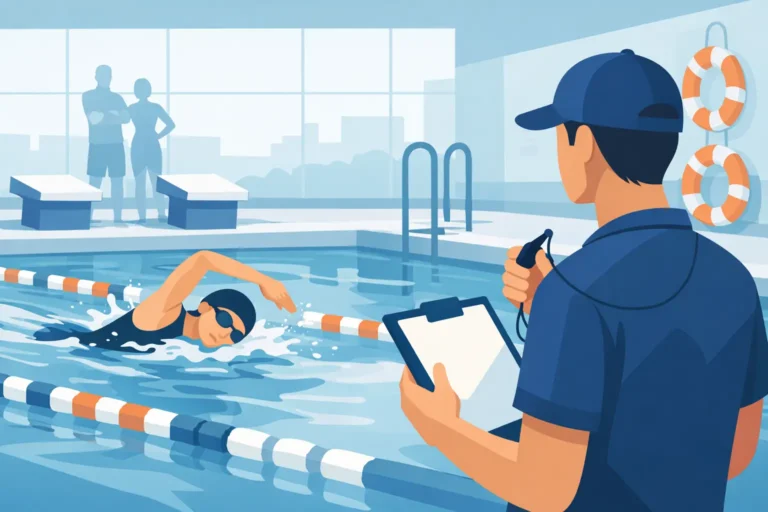
For assessment-focused learners, semi-private sessions can be especially efficient. A coach can spend more time rehearsing required skills, identifying gaps, and building consistency before a practical test. This does not mean every swimmer needs semi-private instruction to pass a SwimSafer stage. It means the format gives more room for targeted preparation when timing, confidence, or technique needs attention.
Adults often appreciate semi-private lessons for the same reason. A nervous beginner may feel less exposed with one other learner than in a larger group, while a fitness swimmer can receive closer feedback on breathing rhythm, freestyle efficiency, and endurance pacing.
The Importance of the Right Pairing
Semi-private lessons are most effective when the two swimmers are reasonably well matched. They do not have to be identical in skill, but their needs should be compatible. Pairing a water-fear beginner with a confident swimmer preparing for advanced stroke work may slow both learners down.
Before enrolling together, consider age, confidence level, safety awareness, current swimming ability, and goals. Two children may be siblings, but if one is still learning to float while the other is ready for stage assessment practice, separate classes may provide better results.
Safety Is Not Determined by Class Size Alone
Parents often assume smaller classes are always safer. Individual attention is valuable, but safety depends on several factors working together: appropriate swimmer grouping, active supervision, clear pool rules, instructor experience, lesson planning, and a curriculum that teaches survival skills alongside stroke technique.
A strong group class should never treat water safety as a side topic. Swimmers need to learn how to enter and exit safely, regain a stable float, move through the water with control, respond to instructions, and respect the pool environment. These skills matter before a child can swim a polished freestyle lap.
Semi-private instruction gives the coach more opportunities to reinforce these habits directly. Group lessons give swimmers more chances to practice them around others. Both outcomes are valuable. The right choice depends on whether the swimmer currently needs closer reassurance or more experience applying skills independently.
Consider Your Goal, Not Just Your Starting Point
The most effective lesson format often becomes clear when you define the goal. For a toddler’s first water introduction, a small setting may help the child feel secure. For a school-age beginner building weekly confidence, a structured group may provide the right balance of practice and motivation. For a child approaching a SwimSafer assessment, semi-private coaching may help sharpen weak areas and improve test readiness.
Adults should also be honest about their goals. Someone learning basic water survival has different needs from a swimmer training for a triathlon. A group can build consistency and fitness, while semi-private coaching can accelerate technical correction. Some learners may start semi-private, then move into a group once they have enough confidence to practice independently.
Progress is not always linear. A swimmer can improve rapidly for several weeks, then need more time to master breathing, treading water, or a survival sequence. The lesson format should support that process rather than create unnecessary pressure.
Questions to Ask Before Enrolling
Ask how swimmers are grouped, what skills are taught at each level, and how progress is assessed. Find out whether the program includes water survival, certification preparation, and practical feedback for parents or adult learners. You should also ask what happens if a swimmer is not ready to move forward. A credible program will prioritize readiness over rushing through stages.
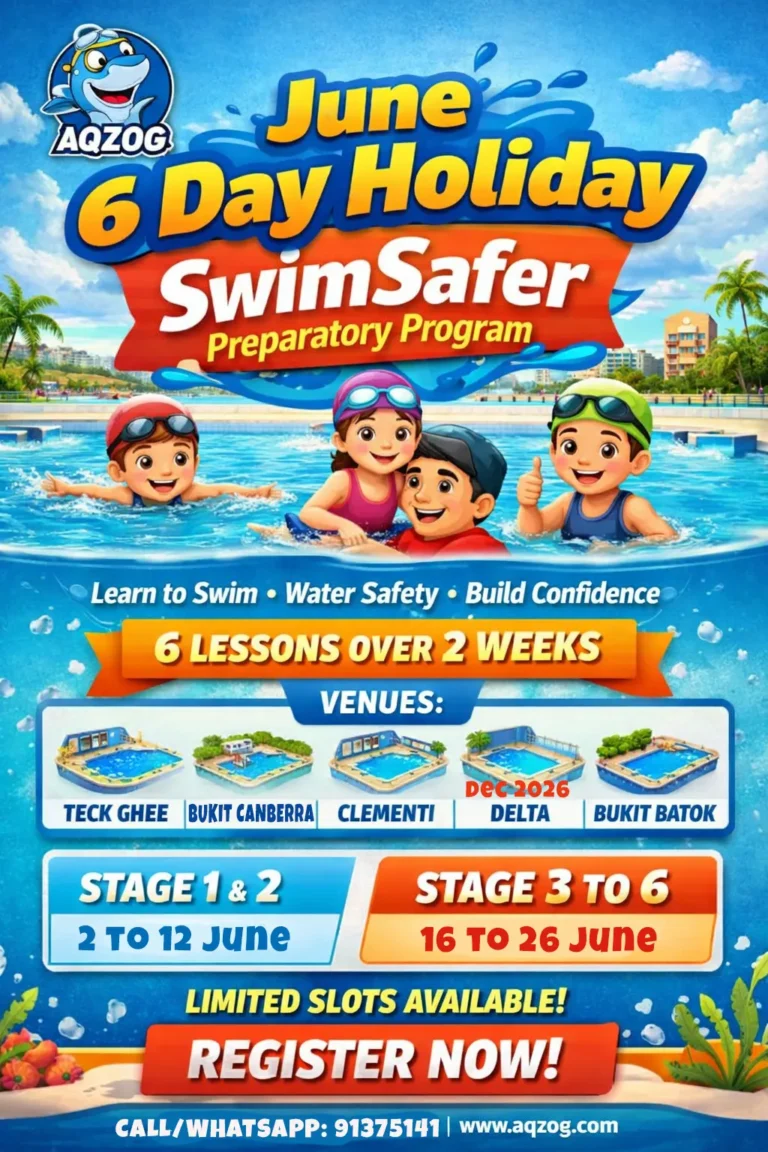
At AQZOG, lesson pathways are designed around structured skill development, water confidence, and measurable progression. Whether a swimmer learns in a group or semi-private setting, the goal remains the same: build the ability to stay calm, move safely, and progress with purpose.
Choose the setting that gives the swimmer enough challenge to grow and enough support to keep showing up. Consistent, well-coached practice is where water confidence becomes a lifelong skill.