Private Versus Group Swimming Lessons Compared
A child who clings to the wall, a beginner adult who avoids putting their face in the water, and a confident swimmer preparing for a practical assessment do not need the same teaching environment. The decision between private versus group swimming lessons affects how quickly a swimmer progresses, how much individual correction they receive, and how confidently they approach water safety skills.
Both formats can produce strong results when the program is structured, the coach is experienced, and the swimmer is placed at the right level. The better choice depends on the swimmer’s starting point, goals, personality, schedule, and need for focused support.
Private Versus Group Swimming Lessons: The Core Difference
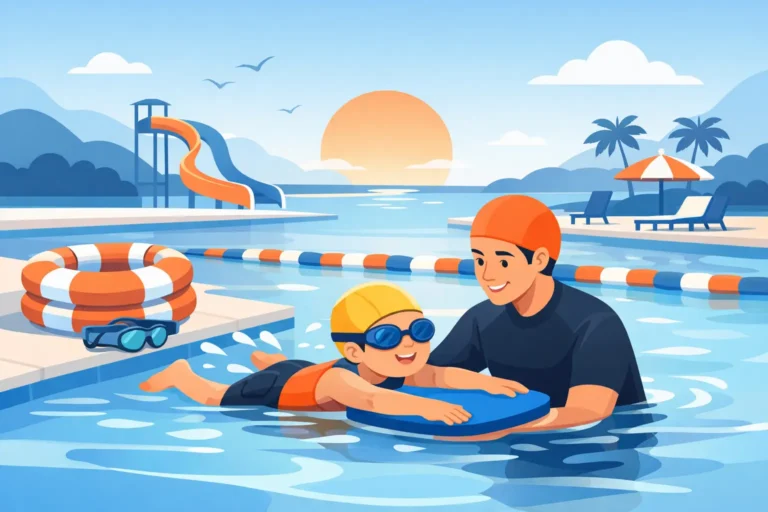
Private swimming lessons provide one-to-one coaching. Every drill, correction, and practice activity is centered on a single swimmer’s needs. This format is particularly effective when a learner needs to overcome fear, correct a specific stroke problem, prepare for a test, or make progress within a limited timeframe.
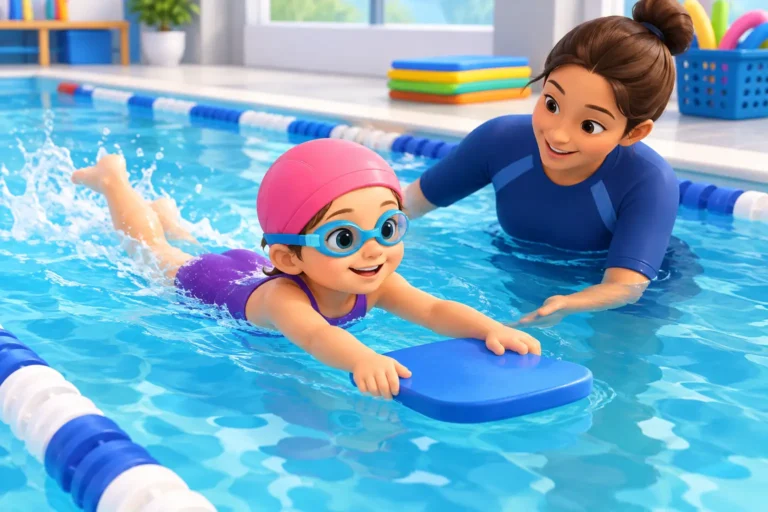
Group swimming lessons place swimmers with similar ages or abilities together under a coach’s guidance. Students learn through a structured weekly progression while practicing alongside peers. For many children, this setting makes lessons more enjoyable and helps them build confidence through shared routines, games, and achievable milestones.
Neither option is automatically better. A strong group class is not simply several private lessons happening at once, and a private session is not always the fastest answer for every learner. The right setting should match the swimmer’s current needs.
When Private Lessons Are the Better Choice
Private coaching is best when individual attention will make a meaningful difference. A coach can immediately adjust the lesson plan based on the swimmer’s response in the water. If a child is nervous about submerging, the session can spend more time on breathing control and safe water entry before moving to kicking or arm coordination.
This focused approach often benefits swimmers who have had a long break from lessons, are struggling to keep up with a group, or have developed habits that need correction. For adults with water fear, one-to-one instruction can also reduce the pressure of learning in front of others. Progress becomes more manageable when the learner can ask questions freely and repeat a skill without feeling rushed.
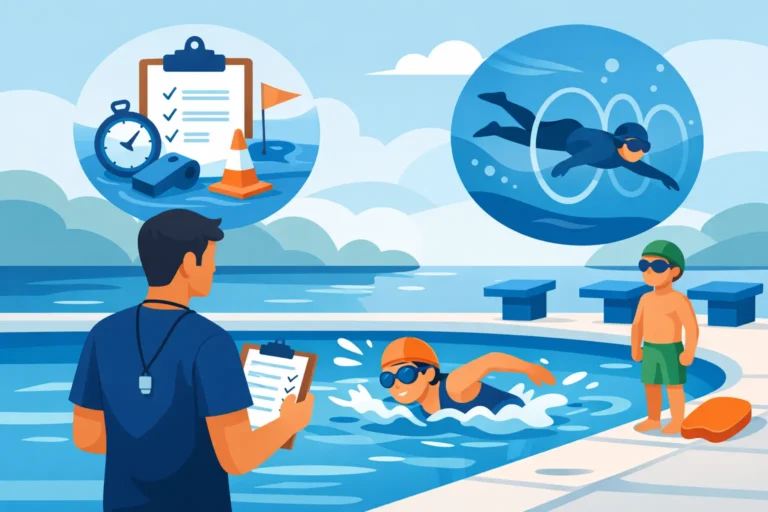
Private lessons are also a practical option for test-focused swimmers. A coach can assess whether the swimmer is consistently meeting the required standard for floating, propulsion, breathing, rescue awareness, and controlled movement. Rather than practicing every skill equally, training can target the areas that may affect assessment readiness.
For competitive, fitness, or triathlon swimmers, private coaching can refine technique in ways that are difficult to address in a larger class. Details such as body position, timing, breathing pattern, kick efficiency, and turns require close observation and specific feedback.
The trade-off is cost. Private instruction usually has a higher per-lesson price because the coach’s time is dedicated to one swimmer. It may be the best investment for short-term acceleration or a specific challenge, but it is not necessary for every child who is learning to swim.
Why Group Lessons Build More Than Swimming Skills
A well-organized group class offers an important advantage: children learn that swimming is a skill they can practice confidently with others. Seeing peers attempt a back float, complete a kick set, or move independently through the water can motivate a hesitant swimmer to try.
Group instruction also develops listening skills, patience, turn-taking, and independence. These are useful qualities in formal swimming progression, where students must understand instructions, perform skills in sequence, and demonstrate safe choices around water.
For children who are already comfortable in the pool, a group environment can be highly productive. The coach can set clear drills, observe each swimmer, and provide corrections while the class remains active. Repetition matters in swimming. When students return weekly and practice skills in a consistent order, confidence grows through familiarity rather than pressure.
Group classes are generally more affordable than private coaching and work well for families seeking steady, long-term development. They are often the strongest foundation for beginners who do not require intensive support and for swimmers progressing through staged water safety programs.
The key is proper placement. A beginner placed with swimmers who are far more advanced may become discouraged. A capable swimmer placed too low may lose focus. Classes should be organized by age, confidence, and demonstrated ability, not only by what a swimmer hopes to achieve next.
Consider the Swimmer’s Personality and Starting Point
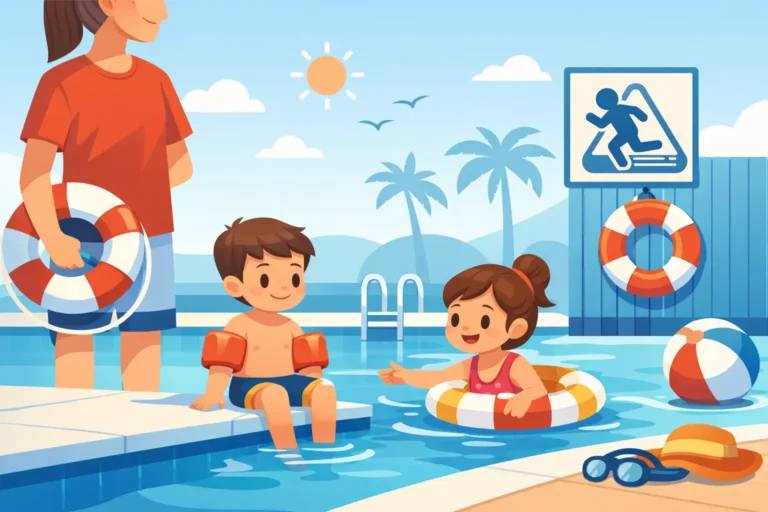
Some children become braver when friends are nearby. They enjoy games, routines, and earning recognition alongside classmates. Others need a quieter setting before they are ready to participate confidently in a group. A child who cries at the pool edge may not need more pressure. They may need a patient coach, small achievable steps, and time to build trust in the water.
Adults should make the same honest assessment. A social learner may enjoy the accountability and energy of a group class. An adult who is embarrassed by their current ability, has a strong fear response, or needs flexible pacing may benefit more from private instruction at the beginning.
Starting point matters just as much as personality. A child who can already put their face in the water, float with support, and follow instructions may be ready for a beginner group. A swimmer who panics during submersion, cannot release the wall, or has inconsistent safety awareness may progress more effectively with individual coaching first.
Choose Based on the Goal, Not Just the Lesson Price
Parents often compare lesson formats by weekly cost alone. A more useful comparison considers the outcome needed. If the goal is regular exposure, water confidence, and structured progression over time, group lessons can deliver excellent value. If the goal is to pass an upcoming practical assessment, address a persistent technical issue, or help a fearful learner feel safe enough to join a class, private lessons may provide faster results.
For SwimSafer progression, regular practice and skill consistency are essential. A swimmer needs more than a one-time demonstration of a float or stroke. They must show control, safe decision-making, and confidence across the required skills. Group lessons provide the routine needed for ongoing progression, while private sessions can strengthen specific gaps before a mock practical test or formal assessment.
Semi-private lessons can be a useful middle option. Two swimmers with similar abilities can share the coach’s attention while practicing together. This suits siblings, friends, or adults who want a more personal setting without the full cost of one-to-one coaching. However, the swimmers should have compatible goals. Pairing a confident swimmer with a fearful beginner can make pacing difficult for both.
Questions to Ask Before Enrolling
Before selecting a lesson format, ask what the swimmer needs to achieve in the next three to six months. Is the priority water comfort, independent swimming, stroke improvement, fitness, certification progression, or assessment readiness? A clear goal makes the decision easier.
Also ask how the swimmer responds to instruction. Do they benefit from watching others, or do they need repeated individual reassurance? Are they able to focus in a class setting? Have they had previous lessons, and if so, what stopped their progress?
Finally, look at the quality of the program. Experienced coaches, appropriate class sizing, structured skill progression, and regular feedback matter more than a lesson label. At AQZOG, lesson pathways are designed around measurable development, water safety, and readiness for the next stage rather than simply keeping swimmers busy in the pool.
A Practical Path for Many Swimmers
For many families, the best answer is not permanently choosing one format over the other. A nervous beginner may start with private lessons to establish water confidence, then move into a group class once they can participate comfortably. A group student approaching a SwimSafer assessment may add a short block of private coaching to sharpen skills and address weak areas.
This flexible approach respects the swimmer’s progress. It also keeps the focus where it belongs: building reliable water skills that remain with the learner long after a certificate is earned.
Choose the setting that helps your swimmer show up calmly, practice consistently, and take the next safe step with confidence.