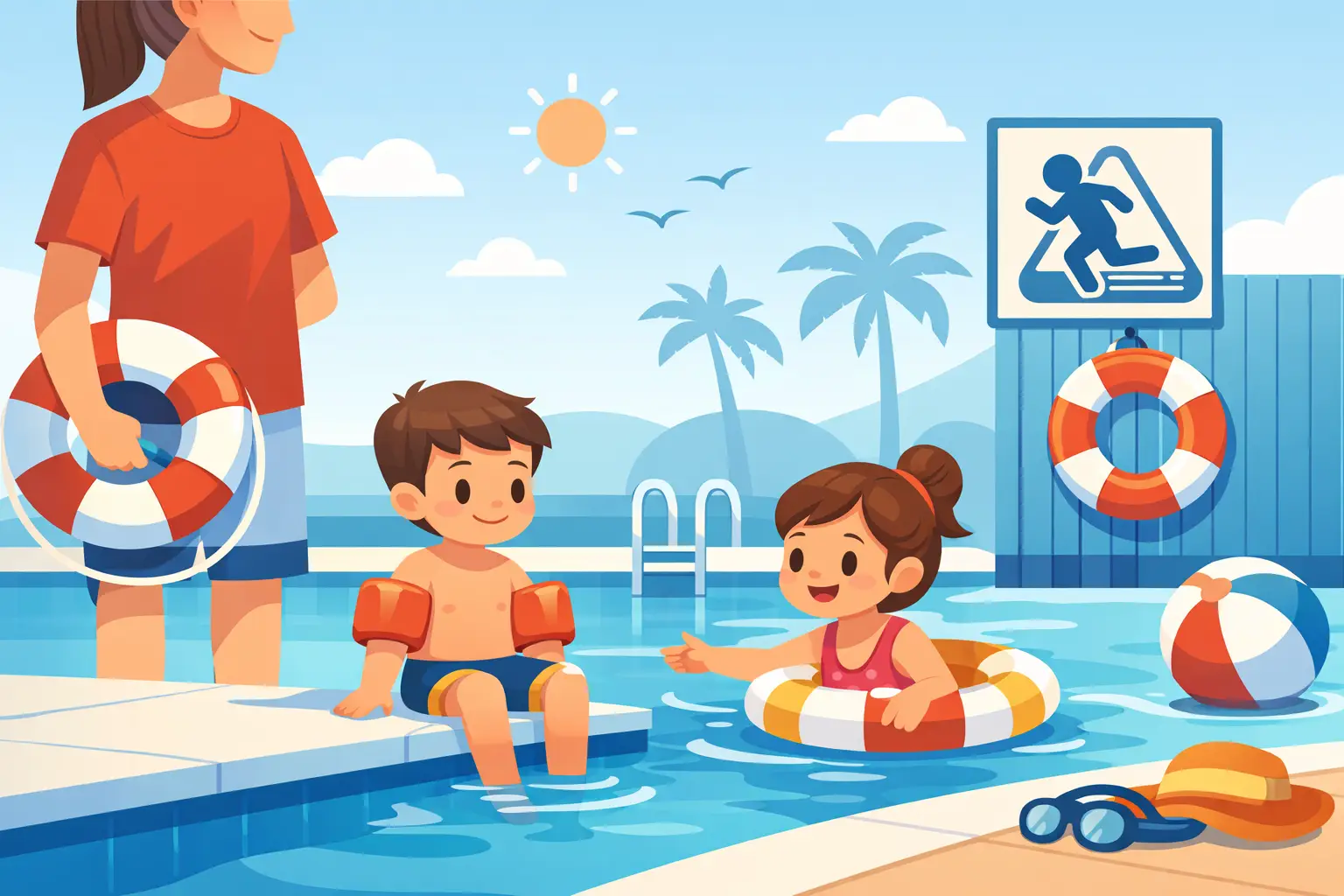
10 Best Pool Safety Rules for Children
A child can slip into a pool quietly and in seconds. That is why the best pool safety rules children learn should start long before free play, float toys, or first strokes. Real pool safety is built through supervision, clear routines, and structured swim instruction that teaches children what to do, not just what to avoid.
Why the best pool safety rules children follow must be simple
Children do best with rules they can remember and repeat. If the message is too long, too technical, or only discussed after a close call, it usually does not stick. Good pool rules are short, consistent, and practiced every single visit.
For parents, the goal is not to create fear around water. The goal is to build respect, attention, and predictable habits. Children who understand pool safety early are more likely to stay calm, follow instructions, and make better choices around water as they grow.
Rule 1: An adult must actively watch at all times
This is the rule that supports every other rule. Active supervision means a responsible adult is watching the child without distractions. Not chatting across the deck, not checking messages, and not assuming another adult is watching.
For younger children and weak swimmers, supervision should be close enough for immediate reach. This matters even if the child has had lessons or feels confident in the water. Swim skills reduce risk, but they do not replace adult oversight.
A useful standard for families is to assign one water watcher at a time. When responsibility is clearly assigned, there is less confusion and less room for dangerous assumptions.
Rule 2: No child goes near the pool without permission
Many incidents happen before swimming begins or after it seems to be over. A child walks ahead, lingers near the edge, or returns to the water while adults are packing up. Setting a firm rule that no child approaches the pool without permission helps prevent those unguarded moments.
This rule should apply at public pools, private pools, hotel pools, and even during parties. It is especially important for toddlers and young children who are curious, impulsive, and fast.
At home or when visiting others, barriers matter too. Gates, locked access points, and clear boundaries support the rule. Teaching the rule without controlling access leaves too much to chance.
Rule 3: Walk, never run, on the pool deck
Running near water is one of the most common causes of poolside injury. Wet surfaces are slippery, and children who fall can hit the deck edge, steps, or pool wall hard.
This is a straightforward rule, but it needs repetition. Children often get excited when they arrive at the pool or when they see friends. Calm entry routines help. Ask them to carry goggles, stand at a marked point, or wait for a signal before approaching the water. Structure reduces impulsive behavior.
Rule 4: Enter the water only where and how it is allowed
Children should know that not every pool area is used the same way. Some sections are shallow, some are deep, some are for lessons, and some may be restricted. They should also understand that jumping or diving is only allowed when a supervising adult says it is safe.
This is where many parents need to balance confidence with caution. A child who can swim one length may still misjudge depth, distance, or body position. Diving is a separate skill, and unsafe entries can cause serious injury. Children need to learn that safe swimming includes safe entry, not just movement once in the water.
Rule 5: Stay within your skill level
One of the best pool safety rules for children is also one of the hardest for them to accept. Kids often want to copy older siblings or stronger swimmers. They may head into deeper water before they are ready or try activities beyond their current control.
Parents should set clear limits based on actual skill, not enthusiasm. Can the child float independently, recover to standing, turn and return to the wall, and move calmly when tired? Those skills matter more than whether they enjoy splashing or can paddle a short distance.
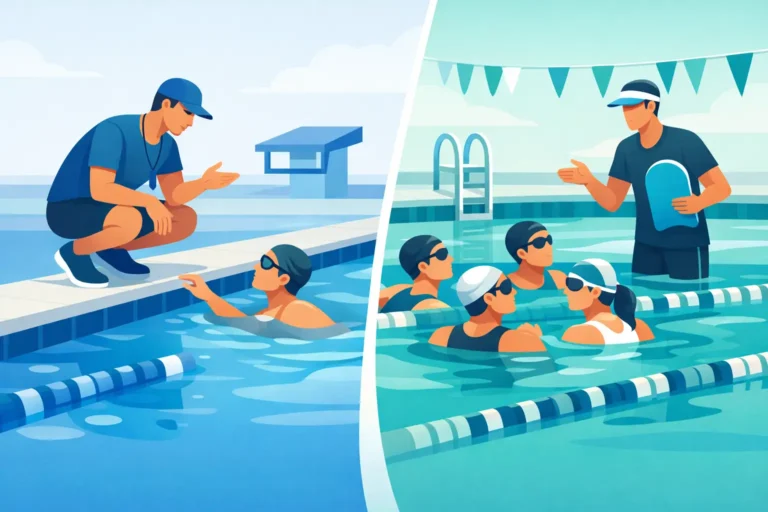
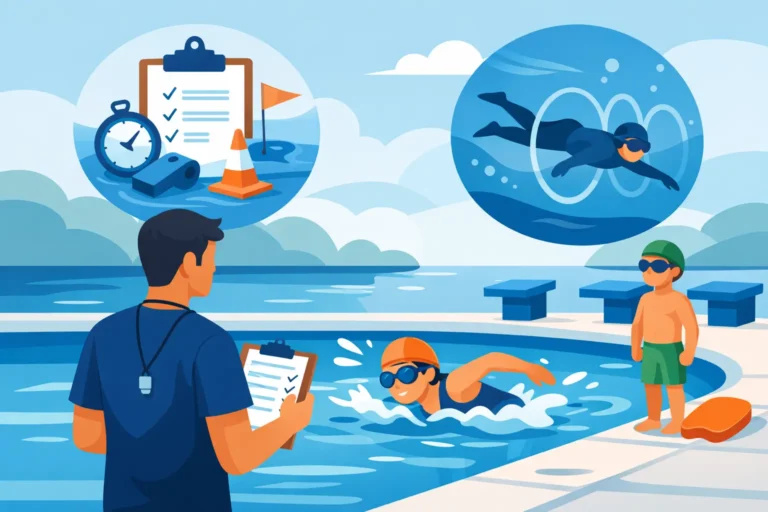
Structured lessons help here because they give parents a realistic picture of progress. In a good program, skill development is measurable. Children learn breathing control, body position, safe entry and exit, floating, kicking, and recovery skills in sequence. That progression matters because false confidence is a real risk in the water.
Rule 6: Wear the right safety support, but do not rely on it
Parents often ask about floaties, vests, and other aids. These can play a role, but they are not substitutes for supervision or swim ability. Some flotation devices can create an upright body position that does not support proper swimming mechanics or survival movement.
If a child needs buoyancy support, choose equipment appropriate for the setting and use it under direct supervision. More importantly, treat it as a temporary support, not proof that the child is safe independently.
This is one area where trade-offs matter. A flotation aid may help a nervous child feel calmer at first, which can be useful. But if it becomes the reason a child never learns to float, breathe, and move without assistance, it can slow real progress. The long-term goal should always be water competence.
Rule 7: Learn how to float, turn, and reach the wall
Swimming forward is valuable, but survival skills are often more urgent. If a child slips in unexpectedly, the first need is not perfect stroke technique. It is the ability to stay calm, get air, orient to safety, and move toward an exit point.
That is why children should learn to float on front and back, roll between positions, and return to the wall. They should also practice safe exits using the ladder, steps, or pool edge. These skills create options when a child is tired, startled, or out of position.
This is a major reason formal instruction matters. Programs built around water safety and progressive benchmarks give children repeat exposure to these exact skills. AQZOG emphasizes this kind of structured progression because safety is strongest when skills are trained systematically, not picked up casually.
Rule 8: Do not play breath-holding games
Children sometimes create games around staying underwater, racing to hold breath, or retrieving objects repeatedly without rest. These activities may look harmless, especially in shallow water, but they add risk and can quickly lead to distress.
Parents should set a firm no rule on underwater breath contests and prolonged submersion games. Children should surface, breathe normally, and stay responsive to instruction. The pool is not the place for endurance challenges.
The same principle applies to rough play. Dunking, pushing, and surprise splashing can trigger panic even in children who usually seem comfortable in the water. Safe play should still allow clear breathing, clear visibility, and clear control.
Rule 9: Listen to pool rules, lifeguards, and instructors immediately
Children need to understand that pool safety instructions are not optional and not delayed until they finish playing. When a lifeguard, parent, or swim coach gives a direction, the correct response is immediate action.
This is partly about respect, but mostly about response time. In the water, a few seconds matter. Children who are trained to stop, look, and listen are easier to guide away from risk.
Parents can strengthen this by using the same commands consistently. Short phrases such as stop, wall, wait, and eyes on me are easier for children to process quickly than long explanations shouted across the pool.
Rule 10: Every child should learn swimming and emergency basics
The strongest long-term safety rule is simple. Every child should learn to swim. Not eventually, not only before a vacation, and not only if they seem interested. Swimming is a life skill, and water safety training should be treated with the same seriousness as road safety.
That does not mean every child progresses at the same pace. Some become comfortable quickly. Others need more time, more repetition, and more confidence-building. What matters is consistent training with qualified instruction and a program that matches age and ability.
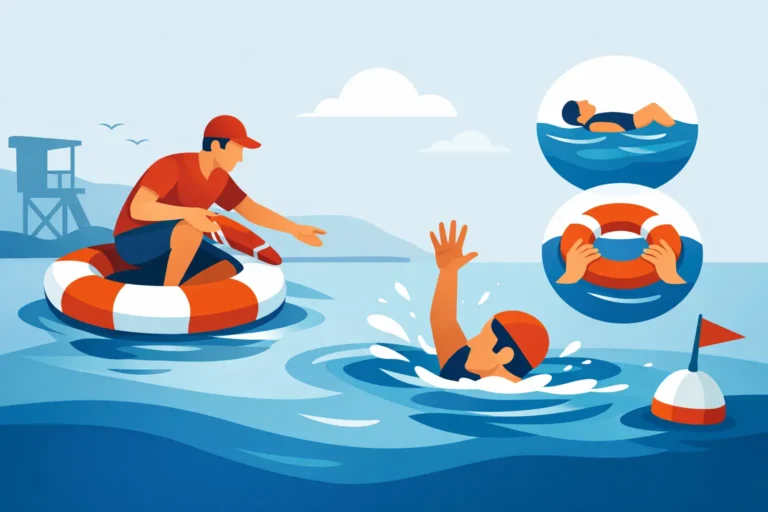
Emergency basics matter too. Children should know how to call for help, how to identify a lifeguard, and why they should never jump in to rescue another child on their own. Older children can also begin learning simple rescue principles such as reaching with an object from the deck rather than entering the water.
How parents make these rules stick
Rules work best when they are repeated before every swim, not only after unsafe behavior. Keep them visible in your routine. Review them in the car, at the changing area, or before a party starts. Young children benefit from hearing the same wording each time.
It also helps to connect rules to action. If a child runs, swimming pauses. If a child leaves the agreed area, they return to the wall or sit out briefly. Calm, consistent consequences teach faster than repeated warnings.
Most of all, match your expectations to the child in front of you. A toddler, a beginner, and a confident school-age swimmer need different levels of supervision and different reminders. Pool safety is never one-size-fits-all. The right approach is the one that combines close adult oversight, age-appropriate rules, and steady skill progression.
Children do not become safer around water by hearing one good lecture. They become safer through repeated habits, guided practice, and swim training that builds confidence with control. Start with clear rules, reinforce them every visit, and give your child the skills to handle the water with respect.