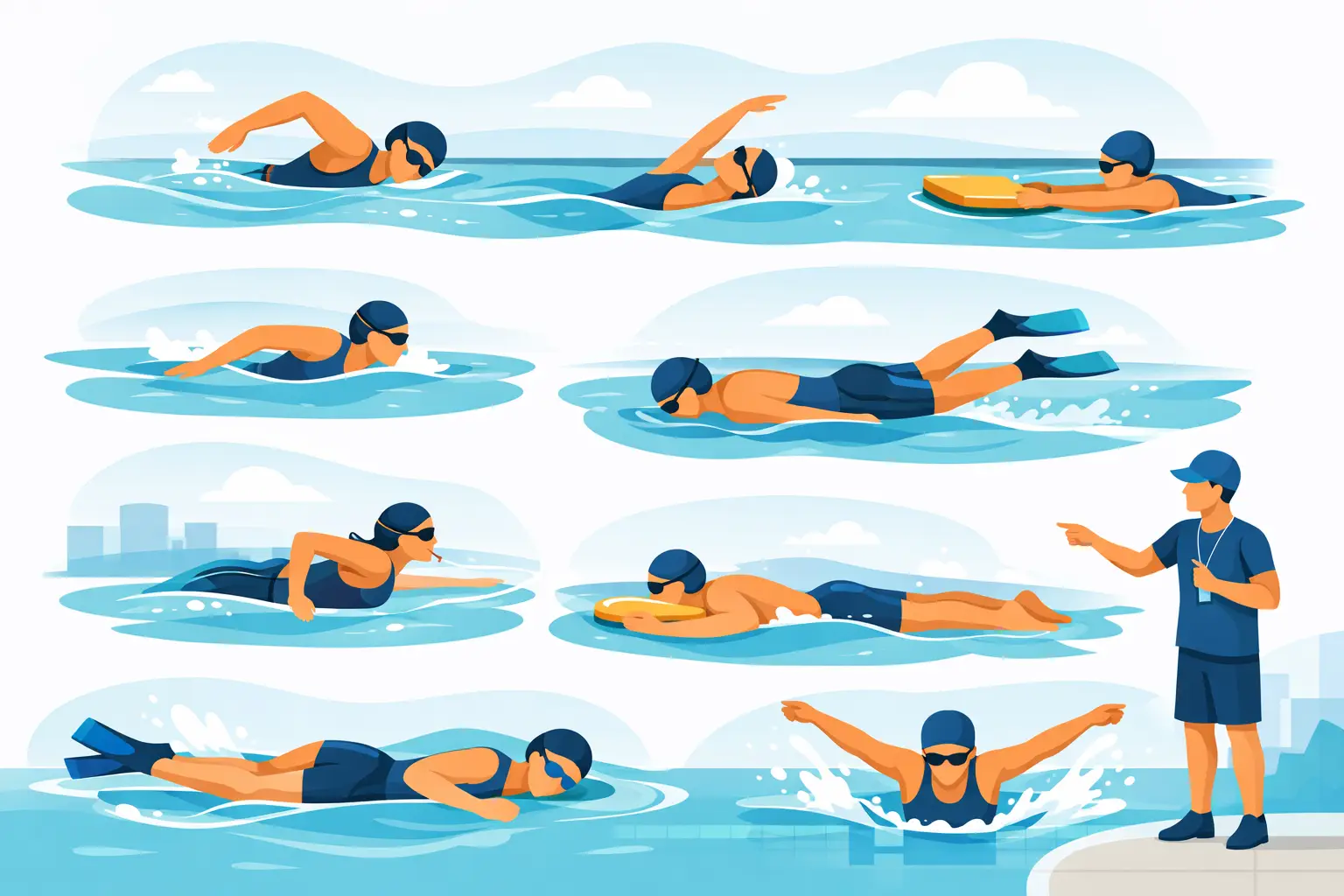
8 Best Swimming Drills for Beginners
The first few swim lessons usually reveal the same pattern – beginners are not held back by effort, but by coordination. A new swimmer may kick hard yet go nowhere, lift the head to breathe and sink the hips, or tense up the moment water reaches the face. That is why the best swimming drills for beginners are not random exercises. They are simple, repeatable movements that build confidence, safety, and control in the right order.
For children and adults alike, early progress comes from learning how the body behaves in water before trying to swim full laps. Good drills reduce fear, improve body alignment, and teach breathing without overload. When used properly, they create measurable progress and a much stronger foundation for later stroke work, endurance, and SwimSafer-style skill development.
Why beginners need drills before full strokes
A full swimming stroke asks a beginner to do several things at once – balance, kick, pull, turn the head, inhale, exhale, and stay calm. That is a lot to manage, especially for young children or adults who are still adjusting to the water. Drills break the process into smaller parts so the swimmer can succeed one skill at a time.
This matters for safety as much as technique. A swimmer who can float, kick with alignment, and control breathing is far more secure in the water than someone who simply thrashes forward. Progression should be structured. Confidence without control can create bad habits, while control built step by step creates lasting skill.
The best swimming drills for beginners start with body control
Before freestyle or breaststroke looks smooth, the swimmer needs to feel balanced in the water. These first drills are often the most valuable because they correct the basic issues that slow beginners down.
1. Bubble blowing drill
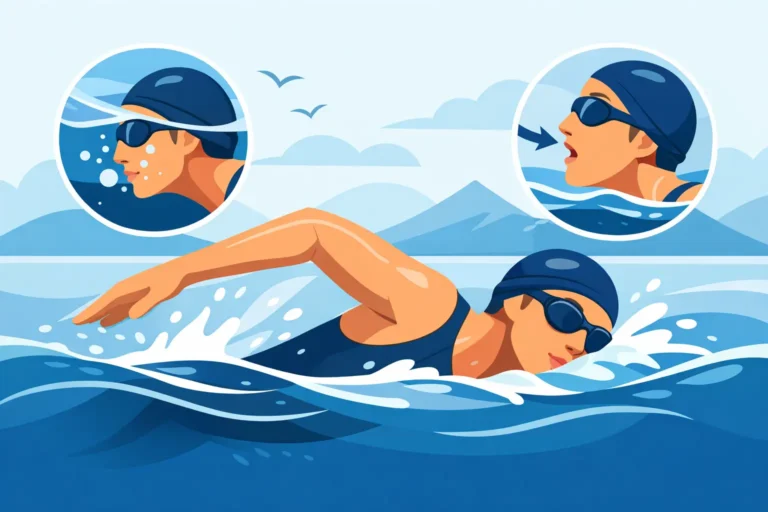
This is often the first real breathing drill, and it is more important than it looks. The swimmer places the mouth and nose in the water and blows steady bubbles, then lifts the face to inhale. The goal is rhythm, not speed.
For beginners, panic often starts when they hold their breath instead of exhaling in the water. Bubble blowing teaches calm breathing and removes the habit of lifting the head too high. With children, it can be made playful. With adults, it helps reduce tension quickly. If a swimmer struggles here, moving too fast into stroke work usually creates more frustration later.
2. Front glide drill
In the front glide, the swimmer pushes off gently from the wall with arms extended and face in the water, then holds a long body position. This drill teaches one of the most important concepts in swimming – the body should travel forward in a straight, balanced line.
A beginner who learns to glide begins to understand that swimming is not just about effort. It is about position. If the head is lifted or the body bends at the hips, the glide shortens immediately. That feedback is clear and useful. It helps swimmers feel what a better line through the water actually means.
3. Star float drill
The star float builds comfort, buoyancy awareness, and recovery confidence. The swimmer spreads the arms and legs while floating on the front or back, depending on readiness. For nervous beginners, especially children, the back float version is often a better place to start.
This drill supports water safety because it teaches the swimmer that the water can support the body when they remain calm. Some beginners dislike the feeling of the ears in the water or the face looking upward. That is normal. The key is gradual exposure with proper support and clear instruction, not forcing the position too early.
Drills that improve kicking without wasting energy
Many beginners kick too much from the knees and tire quickly. A useful drill should teach propulsion and body position at the same time.
4. Kickboard flutter kick drill
This is one of the best-known beginner drills because it isolates the legs and gives the swimmer a stable hand position. The swimmer holds a kickboard and practices a steady flutter kick with long legs and relaxed ankles.
The value of this drill depends on how it is coached. If the swimmer grips the board tightly and keeps the head too high, the body angle becomes poor and the kick loses effectiveness. A better approach is to keep the chest pressed lightly forward, eyes down or slightly ahead, and the kick narrow and continuous. Done well, this drill builds leg endurance and supports freestyle development.
5. Side kicking drill
Side kicking is excellent for teaching balance and preparing for freestyle breathing. The swimmer lies on one side with one arm extended and the lower ear resting near the shoulder, then kicks while keeping the body long.
This drill is harder than it looks, which is exactly why it is useful. Beginners learn that breathing and alignment are connected. If they rotate too far or lift the head, the body loses balance. For adults, this drill often improves confidence in side breathing. For children, shorter repeats usually work better because focus fades quickly when the skill feels unfamiliar.
Drills that prepare beginners for real stroke coordination
Once breathing and body position improve, the next step is linking simple movements together. This is where the best swimming drills for beginners begin to resemble actual swimming, but still with enough structure to prevent overload.
6. Catch-up freestyle drill
In the catch-up drill, one arm stays extended in front until the recovering arm returns to meet it, then the next stroke begins. This slows freestyle down and gives the swimmer time to organize the movement.
For beginners, that pause is helpful. It reduces rushed arm action and encourages a longer stroke. It also highlights whether the swimmer is dropping the lead arm too early or crossing over the center line. The trade-off is that if the drill is overused, freestyle can become too flat and slow. It works best as a correction tool, not as the final goal.
7. Single-arm freestyle drill
This drill asks the swimmer to use one arm at a time while the other remains extended or by the side, depending on the level. It improves focus on hand entry, pull path, and breathing timing.
Single-arm work is especially useful for swimmers who become chaotic when both arms move together. By simplifying the pattern, the coach can spot problems more clearly. Some beginners find it awkward at first, particularly if breathing is already weak. In that case, shorter distances and more rest usually produce better results than pushing through fatigue.
8. Streamline push and kick drill
This drill combines push-off, tight streamline, and a controlled kick. The swimmer squeezes the arms behind the ears, keeps the body straight, and travels forward with minimal resistance.
It is a simple drill with high value because streamline affects every stroke and every wall push. A swimmer with a poor streamline works harder for less distance. Teaching this early gives beginners a measurable sense of efficiency. Even very young learners can understand the idea of a tight, straight body moving cleanly through the water.
How to choose the right drill for a beginner
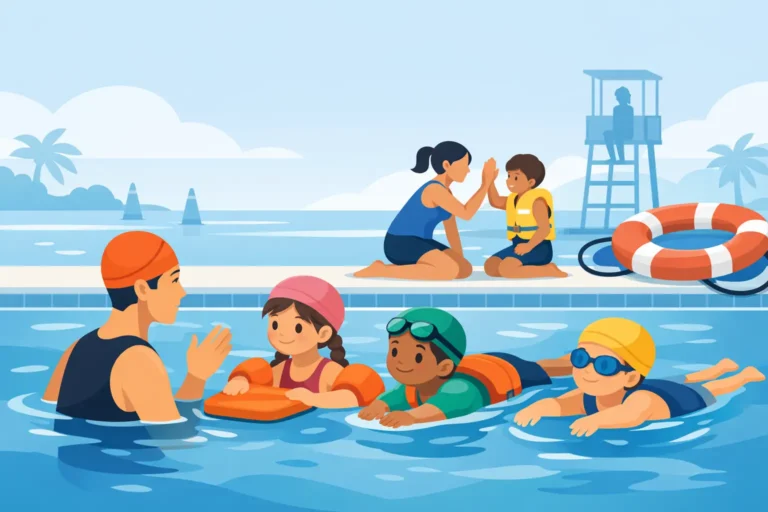
Not every beginner needs the same starting point. A child who enjoys the water but lacks coordination may progress quickly with glide and kick drills. An adult with water fear may need more floating and breathing work before any stroke pattern is introduced. The best drill is the one that solves the current problem without adding unnecessary complexity.
This is where structured coaching matters. Drills should not be selected because they are common or easy to copy from a video. They should match the swimmer’s stage, confidence level, and technical need. At AQZOG, that progression-first approach is central because fast improvement comes from doing the right basic skills well, not from rushing into advanced technique.
Common mistakes when practicing beginner swim drills
The biggest mistake is doing drills mechanically without understanding the purpose. If a swimmer blows bubbles but still panics when turning to breathe, the drill needs better coaching or a simpler setup. If kicking practice leads to bent knees and a sore back, body position has to be corrected before more distance is added.
Another common issue is too much repetition without feedback. Drills are effective because they sharpen one skill. Once that skill breaks down from fatigue or frustration, more laps do not help. Short, focused practice usually beats long, sloppy practice, especially for beginners.
Parents should also know that visible progress is not always linear. One session may focus on submersion comfort, another on floating, another on kicking balance. That can look slow from the poolside, but it often leads to stronger long-term results than pushing a child to swim full strokes too early.
What good progress looks like
A beginner is progressing well when the body becomes calmer, breathing becomes more regular, and movement starts to look less rushed. Distance will come, but first you want control. A swimmer who can float, glide, exhale in the water, and kick with alignment is building the right platform for freestyle, breaststroke, and water safety skills.
That foundation matters whether the goal is basic confidence, formal lesson progression, or readiness for structured assessments. Start with drills that teach balance and breathing, then build toward coordination. When the basics are trained properly, swimming stops feeling overwhelming and starts feeling learnable.
The most helpful next step is simple: practice fewer things, but practice the right things well.