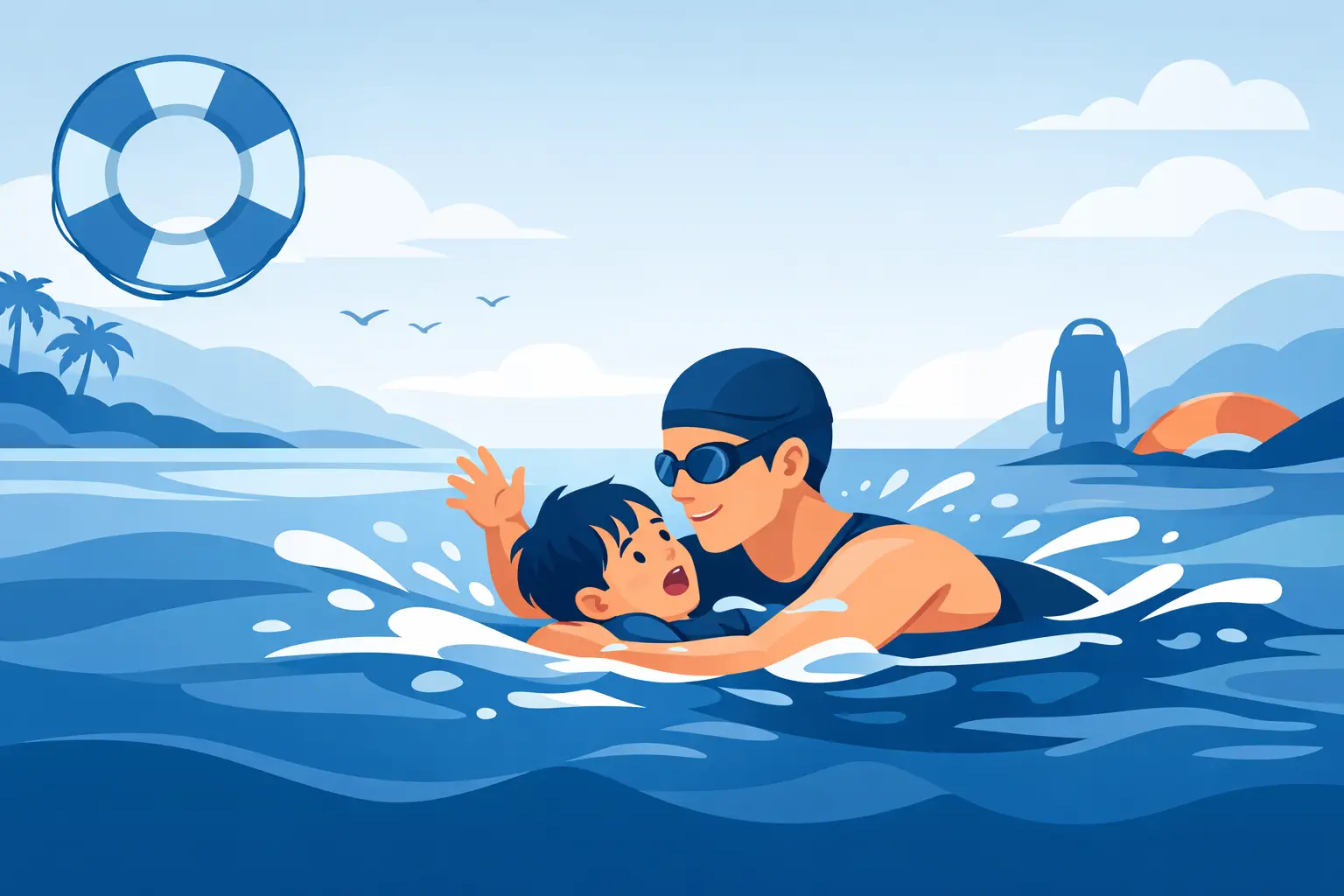
Why Swimming Is a Life-Saving Skill
A child slips at a pool edge. An adult loses footing during a beach outing. A teen panics after swallowing water in the deep end. These situations unfold fast, and they rarely look dramatic at first. That is exactly why swimming is a life-saving skill. It gives children and adults more than a recreational ability. It builds the physical control, judgment, and survival response needed when water conditions change without warning.
For many families, swimming starts as an activity. For experienced instructors, it starts as risk reduction. Water is part of daily life through school programs, vacations, public pools, and family outings. The question is not whether someone plans to become a competitive swimmer. The more practical question is whether they can stay calm, stay afloat, and move to safety if something goes wrong.
Why swimming is a life-saving skill for every age
Swimming matters because water does not make exceptions for age, confidence, or intention. A toddler can wander too close to a pool. A school-age child can overestimate ability. An adult can panic from fatigue, cramps, or unexpected depth. In each case, basic swimming and water survival skills create time. That time can be the difference between recovery and emergency.
For young children, learning to swim supports early water familiarity, safe entry and exit, breath control, and the ability to turn and move toward safety. These are not advanced goals. They are foundational responses. A child who can manage breathing and orientation in water is in a far safer position than one who freezes or thrashes.
For older children, swimming adds stamina, directional control, and confidence in deeper water. This is especially important when they begin participating in school activities, water parks, camps, and more independent outings. Confidence alone is not enough, though. Real safety comes from confidence built on tested skill.
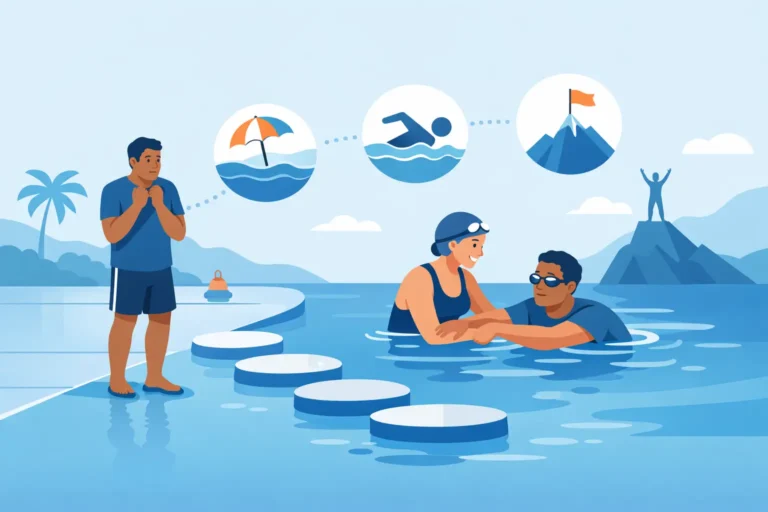
For adults, the need is often underestimated. Many adults avoid water because they never learned properly or had a negative early experience. That hesitation can become a serious liability in real-life situations involving children, boating, travel, or emergency response. Learning later is still valuable. In many cases, adults progress quickly when instruction is structured and consistent.
Swimming is not just movement – it is survival control
A common misunderstanding is that anyone who can paddle a short distance is safe in water. That is not always true. Survival in water depends on several skills working together under stress.
A swimmer needs to regulate breathing, maintain buoyancy, recover from submersion, change body position, and move with purpose. They also need enough composure to avoid panic. Panic is often the real danger. Once breathing becomes erratic and movement loses control, even a physically strong person can struggle.
This is where structured instruction matters. Good coaching does not only teach strokes. It teaches how to float when tired, how to tread water when help is not immediate, how to enter water safely, and how to return to the wall or exit point. These are practical responses that support survival, not just performance.
The trade-off is that stroke-focused training without safety foundations can create a false sense of ability. Someone may swim one lap well in calm conditions yet still struggle if they fall in unexpectedly while fully clothed, disoriented, or anxious. A life-saving swimming education includes both technique and water safety awareness.
The role of swimming lessons in preventing panic
One of the strongest safety benefits of swimming lessons is not speed. It is familiarity. A trained swimmer has repeated exposure to immersion, splashing, breath timing, floating, and recovery. That repetition reduces shock and improves decision-making.
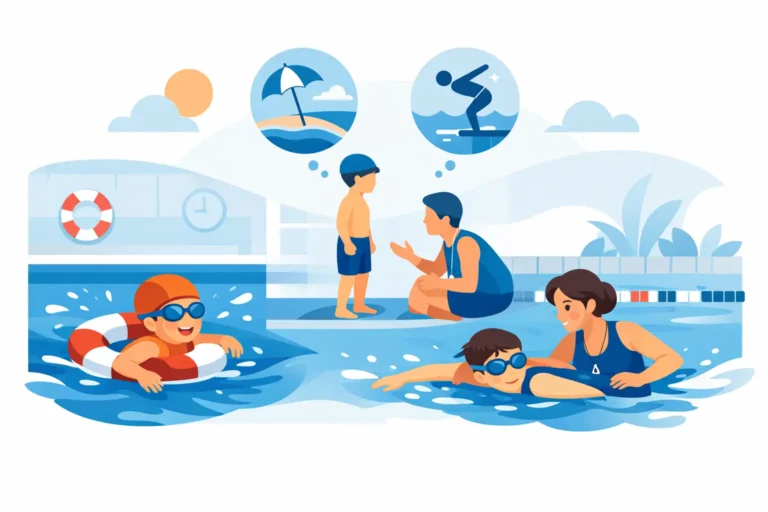
Children especially benefit from this kind of preparation. When a child knows what it feels like to put their face in the water, exhale, roll, float, and regain balance, they are less likely to react with uncontrolled fear. They begin to trust the process instead of resisting it.
Adults often experience the same shift. A beginner who once gripped the pool edge may, over time, learn to float independently, move across the pool, and recover after a missed breath. That progression is not just emotional progress. It is a safety gain.
This is one reason structured programs matter more than occasional exposure. Casual time in the water can help with comfort, but comfort without instruction can stall. Step-by-step teaching creates measurable ability. In a school such as AQZOG, that progression-based approach supports learners in building real competence rather than random familiarity.
Why formal water safety progression matters
Not all swim learning is equal. Some people learn informally from relatives or friends and do become capable swimmers. But informal learning often leaves gaps. Those gaps usually appear in stressful moments, when technique, breathing, and judgment are tested together.
A formal progression system helps reduce those blind spots. It introduces skills in a logical order, checks competency before advancement, and reinforces safety habits instead of assuming them. This is particularly important for children, who may seem confident before they are truly ready for deeper or more complex environments.
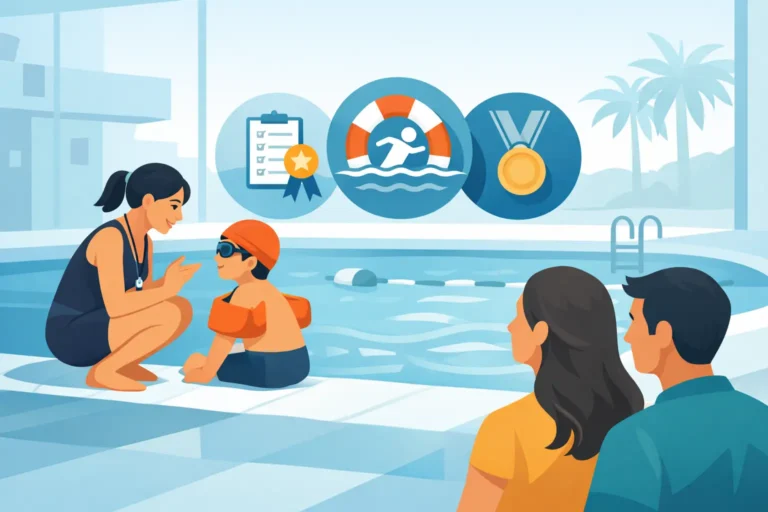
Assessment-based programs also give parents and adult learners something useful: evidence of progress. Water confidence can be subjective. A structured standard makes it easier to see whether a swimmer can float, kick, breathe, tread water, and respond correctly in realistic situations.
That matters because the goal is not simply to get through lessons. The goal is to build a swimmer who can function safely in water with increasing independence.
Why swimming is a life-saving skill beyond the pool
Many people associate swimming lessons with pools, but the value extends far beyond them. Beaches, resort pools, water parks, boats, and open water settings all present different challenges. Currents, waves, drop-offs, slippery surfaces, and reduced visibility can quickly turn a casual outing into a hazardous one.
A person with no swimming ability has very few options in those moments. A person with basic survival skills has more. They may be able to float and signal for help, orient their body correctly, conserve energy, or move toward a stable point. Even if they are not strong enough for long-distance swimming, those skills improve the chances of a safe outcome.
There is also a family safety dimension. Parents often focus on enrolling children, which is wise, but adults who cannot swim remain vulnerable. In real situations, adults may attempt a rescue without the skills to do so safely. That can put both people at risk. Teaching the whole family creates a stronger safety net.
Confidence is valuable, but competence is what saves lives
Confidence is one of the most visible outcomes of swimming lessons, and it matters. A confident swimmer is more likely to participate, practice, and stay calm. But confidence without control can be dangerous.
Children who become playful in water still need boundaries. Teens who can swim a few laps still need survival awareness. Adults who feel comfortable in shallow water may still panic when depth changes. This is why good instruction balances encouragement with standards.
The best swim education builds confidence through repeated proof. A learner practices floating until it becomes reliable. They practice breathing until it becomes steady. They practice safe entries, directional movement, and recovery until those responses hold under pressure.
That kind of competence changes how people approach water for life. They become safer swimmers, more responsible companions, and better prepared participants in school, travel, fitness, and recreation.
What parents and adult learners should prioritize
If the goal is safety, the right lessons should teach more than stroke appearance. Parents should look for programs that include water confidence, floating, breath control, safe entry and exit, treading water, and progression checks. Adult learners should look for patient coaching, clear milestones, and an environment that addresses fear without lowering standards.
It also helps to be realistic about timelines. Some learners progress quickly. Others need more repetition, especially if fear or inconsistent attendance is involved. Fast improvement is possible, but lasting skill comes from regular practice and proper sequencing.
A good program makes that journey clear. It shows what comes first, what comes next, and what readiness actually looks like. That structure is reassuring for families and effective for learners.
Swimming is one of the few skills that combines health, confidence, mobility, and personal safety in a single discipline. Few activities can make that claim. Whether the learner is a toddler starting water familiarization, a child preparing for formal benchmarks, or an adult overcoming years of hesitation, the value is the same: greater control in an environment that can become dangerous very quickly.
The strongest reason to learn is also the simplest. You do not get to choose when an unexpected moment in water happens. You can choose to be better prepared for it.