Parent Guide Swimming Lessons for Safer Progress
The first few minutes of a swim lesson can tell a parent a great deal. Is the instructor checking how a child enters the water? Does the class begin with a clear routine? Are children being taught what to do if they lose balance, get splashed, or need help? This parent guide swimming lessons article focuses on the details that turn a weekly class into meaningful water safety, confidence, and measurable progress.
Swimming is more than a sport or a holiday activity. For children, it is a life skill built through repeated practice, sound instruction, and calm decision-making in the water. The right program should help your child become more capable at each stage – not simply keep them busy in the pool.
What Good Swimming Lessons Should Build
A strong lesson program develops skills in a purposeful order. Children usually need to feel secure in the water before they can learn efficient strokes, and they need reliable survival skills before they are ready to focus on speed or distance.
For a beginner, progress may look like putting their face in the water willingly, blowing bubbles, floating with support, kicking with a straight body position, and moving safely to a wall. These are not small milestones. They form the foundation for independent movement and safer responses around water.
As children advance, instruction should become more specific. They learn coordinated breathing, body rotation, stroke technique, treading water, and ways to travel a practical distance. A structured program also teaches awareness: looking before entering, recognizing pool rules, staying calm when tired, and knowing how to seek help.
Parents should expect progress to be individual. One child may be physically ready to swim but cautious about submerging their face. Another may be fearless but need time to learn control and listening skills. Good coaching works with both the child’s confidence and their actual ability.
Parent Guide Swimming Lessons: Choosing the Right Class
The best class is not always the largest, fastest, or closest option. Start by matching the lesson format to your child’s current needs. A toddler who is new to water benefits from a gentle introduction built around comfort, safe holds, movement, and parent-supported routines. A school-age beginner needs clear fundamentals and close supervision. A child preparing for a formal assessment needs targeted practice against the required standards.
Ask how swimmers are grouped. Age matters, but skill level matters just as much. A child placed too far ahead may become anxious and begin relying on poor technique. A child kept in a class that is too easy may lose focus and stop progressing. Schools should have a practical way to assess ability and move swimmers when they are ready.
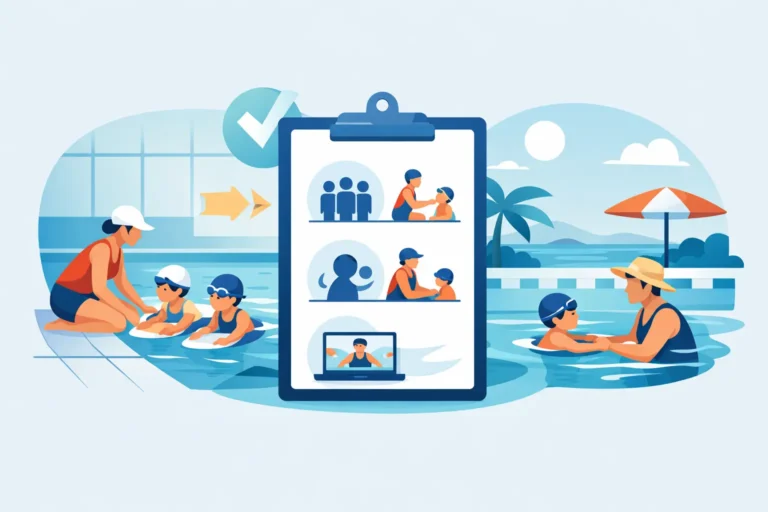
Class size also affects the learning experience. Group lessons provide valuable opportunities to follow instructions, wait safely, observe others, and build confidence alongside peers. They work well for many children when the coach can give each swimmer regular correction. Private lessons can be useful for children with water fear, a specific technique issue, an upcoming test, or a schedule that requires faster, more focused progress.
Neither format is automatically better. The right choice depends on your child’s starting point, learning style, goals, and how consistently they can attend.
Questions worth asking before enrollment
Before committing to a program, ask how the school manages safety, progression, and communication. Useful questions include:
- What water-safety and survival skills are taught at each level?
- How are children assessed before joining a class or moving to the next stage?
- What happens if a child is anxious, misses lessons, or needs extra support?
- How does the coach prepare swimmers for practical tests or certification requirements?
- How will parents know what their child is working on and what comes next?
Clear answers are a positive sign. A reputable provider should be able to explain its teaching pathway without making vague promises about instant results.
Look Beyond the Stroke
Parents often judge a lesson by whether their child can swim across the pool. Distance is useful, but it is not the only measure that matters. A child who can move forward with an inefficient stroke may still struggle if they cannot control their breathing, recover after an unexpected splash, float, or reach a safe point without panic.
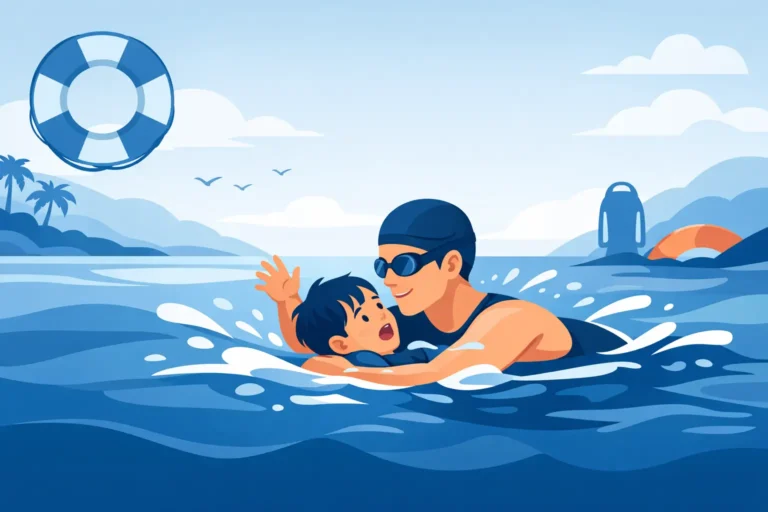
Water survival is especially important for younger swimmers. Children should learn how to enter and exit safely, regain a stable position, float or tread when needed, and move toward support. These skills build composure. They also give children a practical response if they unexpectedly find themselves in deeper water.
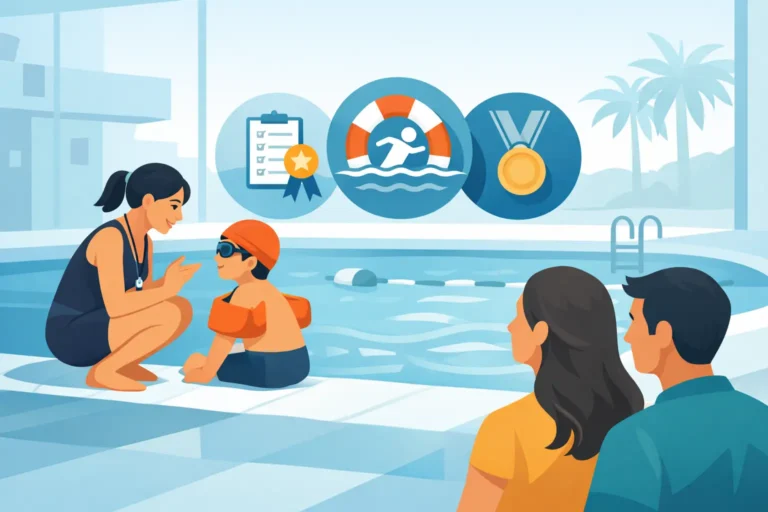
For families in Singapore, formal SwimSafer progression can provide a helpful structure. It combines swimming ability with survival knowledge, water safety, and increasingly demanding practical skills. Certification should never replace genuine competence, but a well-run test pathway gives parents visible goals and helps coaches identify gaps before assessment day.
AQZOG’s approach reflects this balance: structured weekly development, water-safety instruction, and focused preparation for swimmers who are working toward SwimSafer stages or practical tests.
How Parents Can Support Progress Without Adding Pressure
A child’s progress is strongly influenced by what happens between lessons. Parents do not need to become second coaches. In fact, too much correction from the pool deck can distract a child from the instructor and make the lesson feel stressful.
Instead, keep conversations simple. Ask, “What did you practice today?” or “What felt easier this week?” Praise effort, listening, and bravery rather than only distance or speed. If your child says they were scared, acknowledge it without labeling them as fearful. A useful response is, “It is okay to feel unsure. Your coach will help you practice safely.”
Consistency is more powerful than occasional intensive effort. Weekly lessons allow skills to settle over time, particularly for children who are building comfort in the water. Long gaps can mean that a child needs several lessons to regain confidence and coordination. If a holiday intensive is used, it works best as reinforcement or focused preparation rather than a substitute for long-term practice.
Practical preparation helps too. Arrive early enough for your child to use the restroom, change calmly, and listen at the start of class. Bring fitted goggles if the coach recommends them, a towel, a drink, and appropriate swimwear that allows free movement. Avoid a heavy meal immediately before swimming.
What to Watch During a Lesson
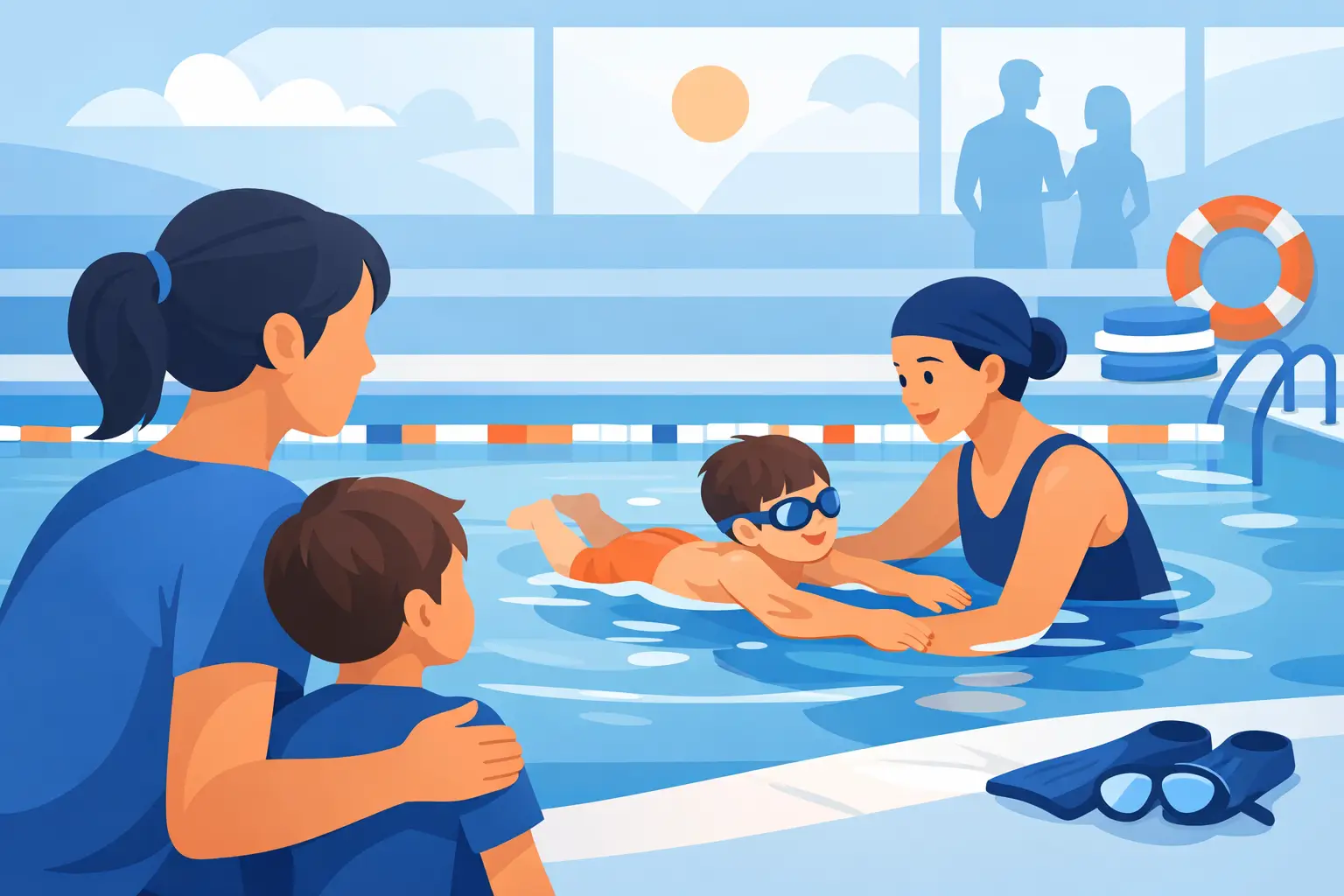
You do not need technical swimming knowledge to recognize quality instruction. Watch whether the coach gives clear, age-appropriate directions and maintains active supervision. Notice if children have defined tasks while waiting, rather than drifting or playing without purpose. Instructors should correct technique in manageable steps, not overload children with several commands at once.
A good lesson often includes repetition, but it should not look careless. Children may practice kicking, floating, breathing, or a stroke drill multiple times because consistency builds muscle memory. The coach should explain the purpose, demonstrate where helpful, and adapt if a swimmer is not understanding.
Also look for a positive standard of discipline. Pool safety requires children to listen, wait their turn, and follow rules. Firm guidance is appropriate when it is calm, respectful, and connected to safety. Humiliation, shouting, or forcing a distressed child into a task are not signs of effective coaching.
When Extra Support Makes Sense
Some situations call for more tailored instruction. Consider private or semi-private coaching if your child has a persistent fear of putting their face in the water, has stalled at the same skill for several months, needs to prepare for an assessment, or requires a more flexible pace. Focused lessons can identify the exact barrier, whether it is breathing, body position, coordination, or confidence.
Extra support should still have a goal. A short block of private coaching may help a swimmer settle into group lessons, correct a stroke pattern, or prepare for a specific test requirement. For other children, a steady group program remains the most effective and economical path.
Set Expectations That Keep Children Motivated
Swimming progress is rarely a straight line. A child may confidently float one week and resist it the next after swallowing water or feeling cold. This does not necessarily mean they are moving backward. It may simply mean they need another safe, successful experience before the skill feels reliable again.
Set goals that are specific and realistic: entering independently, floating for a few seconds, swimming a short distance with controlled breathing, or completing a stage requirement. Celebrate those gains. When children see that practice produces results, they become more willing to attempt the next challenge.
The lasting value of swimming lessons is not just a certificate or a polished stroke. It is the child who knows how to respond calmly, move with purpose, and keep building capability every time they enter the water.