How to Start Swimming as an Adult
Standing at the edge of a pool for the first time as an adult can feel harder than the workout itself. If you are wondering how to start swimming as adult, the biggest barrier is usually not fitness. It is uncertainty – about breathing, body position, safety, and whether you are already too late to learn properly. You are not. Adults learn to swim every year, and with a structured approach, progress can be faster than most beginners expect.
Why adults struggle at the start
Children are often introduced to water before they develop fear. Adults are different. You are more aware of risk, more self-conscious, and often less willing to make mistakes in public. That is normal. It also means adult swimming lessons should not be treated like children’s classes with a bigger kickboard.
Adult beginners usually need clear instruction, steady progression, and a strong safety foundation. Before speed or endurance, you need comfort in the water, controlled breathing, and the ability to recover calmly when something feels off. That is why the best starting point is not doing laps. It is learning the basic survival and movement skills that make laps possible later.
How to start swimming as an adult safely
Start with one honest question: are you learning for water confidence, fitness, stroke technique, or test preparation? Your goal matters because it changes the pathway. A complete beginner with water anxiety needs a different first month from someone returning to swimming after ten years.
If you are nervous in deep water, begin in a shallow training pool with an instructor or coach. You should be able to stand comfortably. This lowers stress and allows you to focus on breathing and body control instead of panic management. For many adults, private or small-group lessons are the most efficient choice because the feedback is immediate and the progression is adjusted to your pace.
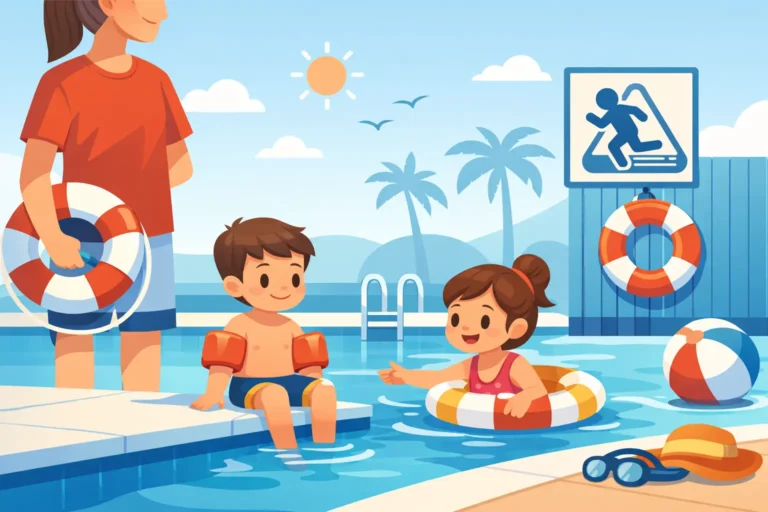
Safety should come before performance. Learn how to enter and exit the pool confidently, hold the wall, submerge your face, exhale underwater, float with support, and regain standing balance. These skills may sound basic, but they are the foundation of every later improvement.
The first skills to build
Breathing comes first
Most adult beginners think kicking or arm movement is the main challenge. In practice, breathing control is usually the skill that determines everything else. If you hold your breath, lift your head too high, or rush your inhale, your body stiffens and sinks. Then every movement feels harder.
Start by practicing a simple pattern: inhale through the mouth above water, exhale slowly through the nose or mouth into the water. Repeat this while holding the pool edge. Then practice putting your face in for two to three seconds at a time. Once this becomes routine, your confidence rises quickly.
Floating is a trust skill
Floating is partly technical and partly mental. Adults often fight the water by tensing the neck, shoulders, and hips. The result is poor balance and a strong feeling of sinking. A coach will usually correct this by helping you lengthen your body, relax your head position, and keep gentle support through the core.
Not every adult floats the same way. Body composition, lung capacity, and comfort level all affect the experience. That is why floating should not be treated as pass or fail. The real target is controlled balance in the water, whether on your front or back.
Kicking and gliding create movement
Once breathing and balance improve, the next step is learning how to move through the water without wasting energy. Beginners often kick too hard from the knees, which creates splash but not much propulsion. A more effective kick starts from the hips with relaxed ankles and a narrow rhythm.
Gliding matters too. If every stroke is rushed, swimming feels exhausting. Adults benefit from learning how to streamline the body and let each movement travel a little farther. Efficiency, not force, is what makes swimming sustainable.
What stroke should you learn first?
For many adults, freestyle seems like the obvious first stroke because it is common in lap swimming. That is partly true, but it depends on your comfort in the water. Freestyle requires breathing timing, side rotation, and coordination between kick and pull. It is useful, but not always the easiest first win.
Some adult learners build confidence faster by starting with back floating and back kicking, then progressing to front glide and freestyle drills. Others feel safer learning a simple survival-style stroke first so they know they can keep themselves afloat if they become tired. There is no single correct sequence for everyone.
What matters is structured progression. A good program teaches skills in the right order: water confidence, breathing, floating, kicking, propulsion, then full-stroke coordination. That order reduces frustration and produces measurable improvement.
What to bring to your first lesson
Keep it simple. You need comfortable swimwear, goggles that fit properly, and a towel. A swim cap can help if you have longer hair, and some beginners like using a kickboard during drills, though most pools or instructors provide training equipment.
Do not overbuy gear early. Paddles, fins, and other tools can help later, but they are not necessary on day one. The quality of instruction matters far more than the amount of equipment you bring.
How often should adults practice?
Most adults do well with one to two coached sessions per week. That is frequent enough to build consistency without overwhelming your schedule. If you can add a short self-practice session, progress is often faster, especially for breathing and floating drills.
There is a trade-off. Practicing too little makes each lesson feel like a reset. Practicing too much without correction can reinforce poor habits. If you are a complete beginner, technique should lead volume. Once your movement patterns are more stable, endurance can increase.
Common fears and how to handle them
Fear of putting your face in the water
This is one of the most common starting points. The answer is gradual exposure, not force. Begin with splashing water on the face, then chin in, lips in, nose in, and full face submersion. Small wins matter.
Fear of sinking
Every beginner feels this at some stage. The solution is not reassurance alone. It is learning specific recovery skills, such as holding the wall, standing up from a float, and using controlled breath to settle the body. Confidence grows when you know what to do.
Fear of looking inexperienced
Adult learners often delay lessons because they do not want to be the least skilled person in the pool. In reality, qualified instructors teach beginners at every age. Learning with structure is far more effective than staying stuck out of embarrassment.
Choosing the right lesson format
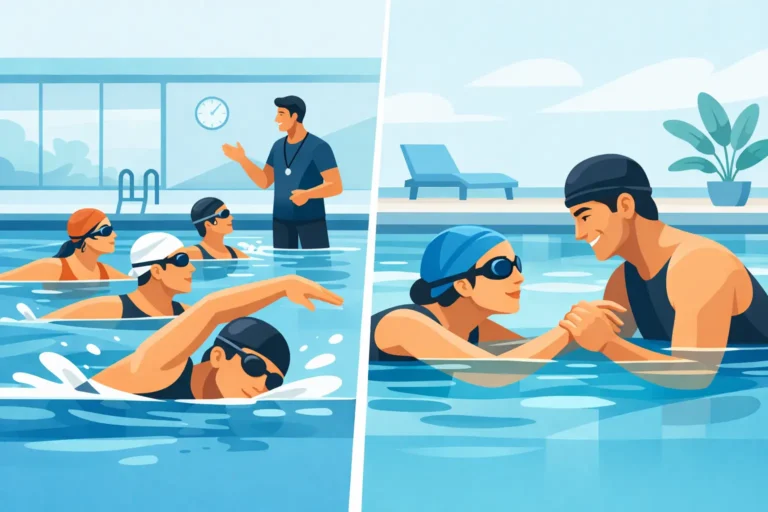
If you have significant water fear, private lessons are often the quickest route to early confidence because the coaching is fully personalized. If you are comfortable around water and motivated by shared progress, a small-group class can work very well and may feel more enjoyable.
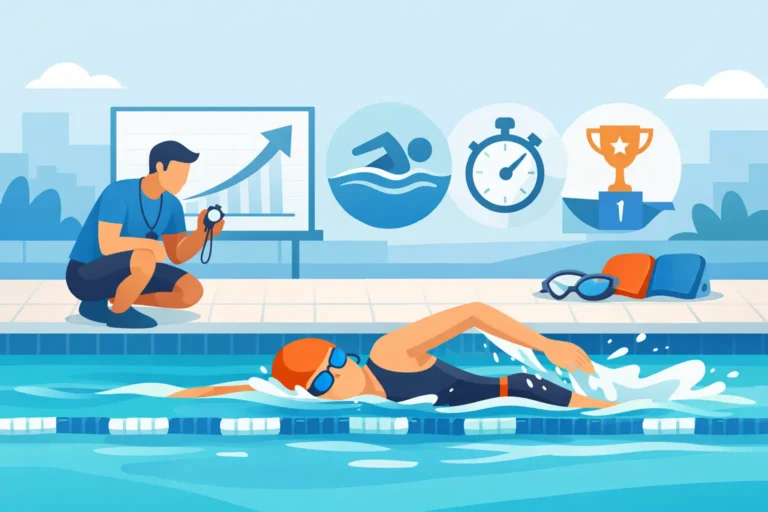
The key is to choose a program that is progression-based, not random. You should know what skills are being taught, how advancement is measured, and what the next milestone looks like. Structured adult instruction produces better results than occasional casual practice because it removes guesswork.
This is especially important if your goals extend beyond leisure swimming. Adults training for fitness, triathlon, water safety competence, or formal aquatic pathways need coaching that builds technique and control in a measurable way. That is where an experienced swim school such as AQZOG can make a real difference, because adult learning works best when each lesson has a clear objective.
How long does it take to learn?
It depends on your starting point, consistency, and comfort level in the water. Some adults gain basic water confidence in a few lessons. Swimming a full length with controlled breathing usually takes longer. For one person, that may happen within a month. For another, especially if fear is involved, it may take several months.
That is not failure. Swimming is a technical skill. Progress is not only measured by distance. Being able to submerge calmly, float with control, and recover without panic are major milestones. They are signs that real learning is happening.
A better mindset for adult beginners
Do not judge your progress by comparing yourself with experienced swimmers. Judge it by reduced tension, better breathing, smoother balance, and more control from one lesson to the next. Adult beginners often improve in quiet ways before those changes show up as full laps.
Give yourself permission to learn step by step. Swimming is not reserved for people who started young, and it is not only for athletes. It is a practical life skill that improves safety, confidence, and long-term health. Start with the basics, follow a structured path, and let progress build the trust you need in the water.
The first goal is not to swim perfectly. It is to feel safe enough to keep going.