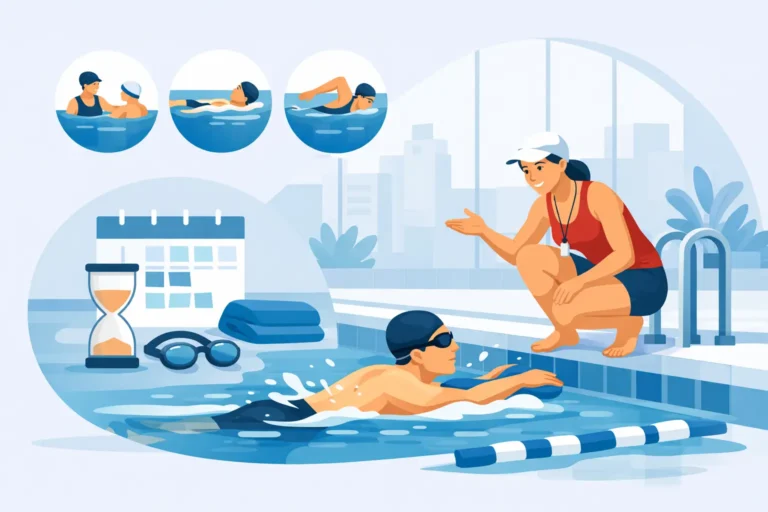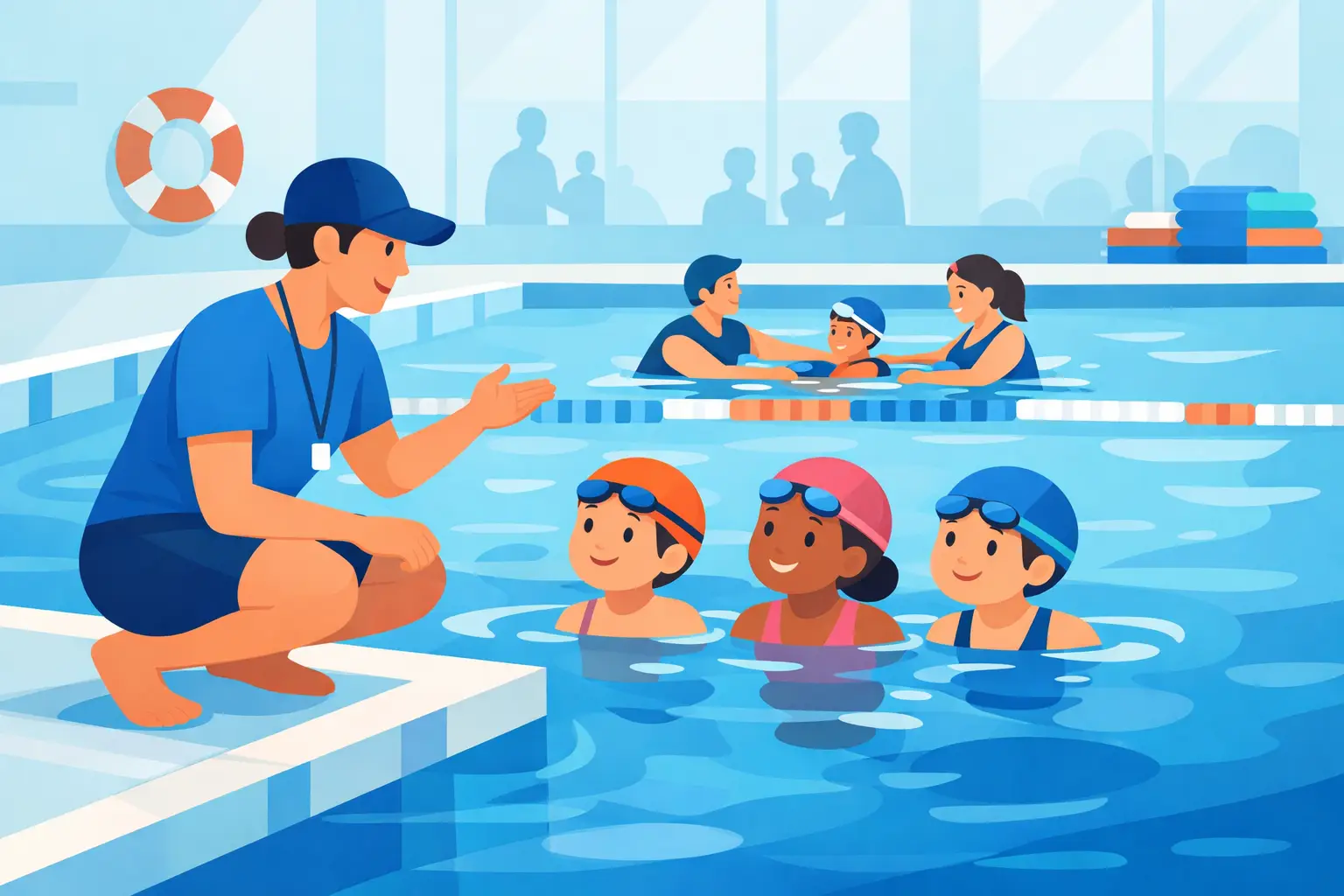
Why Weekly Group Swim Classes Work
A child who swims once in a while may enjoy the water. A child who attends weekly group swim classes learns how to stay safe, follow instruction, and build real skill over time. The same applies to adults. Consistency changes swimming from a casual activity into a practical life skill.
That is why weekly lessons remain one of the most effective formats for long-term progress. They create a steady learning rhythm, give swimmers time to absorb technique, and allow coaches to develop skills in the right sequence. For parents, this means clearer progress and better water confidence. For adult learners, it means less hesitation, more control, and a safer relationship with the water.
Why weekly group swim classes create better progress
Swimming is not learned through explanation alone. It is built through repetition, correction, and gradual exposure. A swimmer needs enough frequency to remember what was taught, but also enough time between classes to recover, reflect, and return ready to improve.
This is where a weekly format works well. Lessons are close enough together that skills are not forgotten, yet spaced enough to avoid overload. A beginner child can practice kicking, breathing, and floating one week, then return with more familiarity the next. An adult learner working through water fear can process the experience, rebuild confidence, and come back prepared for the next step.
Progress also becomes easier to measure. In a structured class, coaches can observe whether the swimmer is meeting clear milestones rather than simply spending time in the pool. That matters for families who want more than water play. It also matters for learners preparing for formal assessments or stage-based swimming programs.
Structure matters more than speed
Many people ask whether faster progress comes from more lessons per week. Sometimes it does, especially during holiday intensives or test preparation periods. But for most swimmers, especially beginners, the better question is whether the program follows a clear structure.
A strong weekly class is not just about showing up. It should move swimmers through a sequence – water orientation, floating, propulsion, breathing control, stroke basics, survival skills, and eventually stronger technique and assessment readiness. Without that structure, even frequent lessons can feel repetitive without producing solid outcomes.
This is one reason parents often prefer established swim schools over casual arrangements. They want to know what their child is learning, how safety is being taught, and what comes next. Adult learners usually want the same clarity. They may start for fitness or confidence, but they stay committed when they can see measurable improvement.
The value of progressive coaching
Progressive coaching means the lesson content matches the swimmer’s current ability while preparing them for the next level. That sounds simple, but it is where many swim programs succeed or fail.
If a child is pushed into stroke work before learning to float calmly, anxiety tends to rise. If an adult stays too long on basic drills without moving forward, motivation drops. Weekly group swim classes work best when coaches know how to balance challenge with readiness.
This is especially important in safety-focused instruction. Swimming well is not only about moving across the pool. It includes breath control, orientation in water, recovery from mistakes, and confidence under supervision. These are essential foundations for both recreational and formal swimming development.
Why group learning can be an advantage
Some families assume private lessons are always better. Private coaching is useful in many situations, especially for swimmers with very specific goals, high anxiety, or urgent assessment timelines. But group classes offer advantages that should not be overlooked.
In a well-run group, swimmers learn through observation as well as direct instruction. Children often gain confidence when they see peers attempt the same skill. Adults also benefit from shared progression. It reduces self-consciousness and creates a sense that learning is a process, not a performance.
Group settings also build listening skills, turn-taking, and responsiveness to instruction. For younger swimmers, these habits support both pool safety and learning efficiency. For school-age children preparing for structured aquatic programs, that discipline is valuable.
There is also a practical benefit. Weekly group classes are usually more sustainable for families over the long term. Since swimming development depends on consistency, affordability and routine matter. A lesson plan that can be maintained often produces better results than a short burst of high-intensity instruction followed by long gaps.
Weekly group swim classes for children
For children, weekly lessons support more than stroke development. They build familiarity with the pool environment, reduce fear, and teach safe responses around water. This is particularly important for beginners who may appear comfortable in shallow water but lack actual control.
A structured children’s class should develop basic survival habits early. Entering and exiting safely, listening for coach cues, floating with control, and recovering balance in the water all deserve attention before advanced technique becomes the focus. Parents sometimes look first at freestyle and breaststroke, but safety skills are what protect a child when something unexpected happens.
As children progress, weekly attendance helps maintain technical quality. Small corrections in body position, kicking pattern, arm movement, and breathing timing are easier to retain when practice is regular. This becomes even more important for those moving toward stage assessments or school-related aquatic benchmarks.
For toddlers and young beginners
Younger learners need patience, repetition, and a calm introduction to water. Weekly sessions help because they create familiarity without overwhelming the child. Too much time between lessons often resets the comfort-building process.
At this stage, progress may look modest from week to week. That is normal. Water acceptance, willingness to submerge, and the ability to follow simple cues are meaningful milestones. The right coach understands that confidence comes before speed.
Weekly group swim classes for adults
Adults often delay swim lessons because they think they started too late or feel embarrassed about being beginners. In reality, many adults learn very well in a weekly format because it gives them time to build confidence gradually.
Adults typically benefit from understanding why a drill matters. They respond well to structured teaching, clear correction, and realistic milestones. Weekly classes support that process. A learner can work on breathing control one session, practice mentally during the week, and return more prepared for front glide or coordinated movement.
For adults who fear water, consistency is even more important than intensity. Confidence grows when the pool, the coach, and the class routine become familiar. Skipping long periods between lessons often makes anxiety return.
More experienced adults can also use group classes to refine efficiency, improve endurance, or prepare for specific goals. The key is proper class placement. A beginner in an advanced group will struggle. A capable swimmer in an entry-level group will stall. Good program structure solves both problems.
What to look for in a quality program
Not all weekly swim programs deliver the same results. The strongest ones combine experienced coaching with a clear progression model. They do not treat all beginners the same, and they do not rely on repetition alone.
Look for classes that define learning stages, emphasize water safety, and provide instruction appropriate to age and ability. Public pool convenience matters too, especially for busy families and working adults. If attending lessons feels manageable week after week, consistency is far more likely.
It also helps to choose a school that understands formal progression systems, especially if certification or SwimSafer readiness is part of your goal. AQZOG has built its programs around structured advancement, safety-first teaching, and practical outcomes across different age groups and learning needs.
Signs the class is working
A good weekly class does not need dramatic breakthroughs every session. What you want to see is steady improvement. The swimmer becomes calmer in the water, responds faster to correction, and performs familiar skills with less prompting.
For children, this may show up as stronger independence and better control. For adults, it may look like reduced fear, better breathing rhythm, or more efficient movement. Progress is not always linear, but it should be visible over time.
The trade-off to understand
Weekly group swim classes are highly effective, but they are not the right answer for every situation. A swimmer with severe water fear, special learning needs, or an urgent test deadline may need private or semi-private support first. Some learners also need extra practice outside lesson time to progress faster.
That does not reduce the value of the group format. It simply means placement matters. The best results come from matching the swimmer to the right class type, level, and pace rather than assuming one format suits everyone.
When swim instruction is structured well, weekly attendance creates something more important than short-term excitement. It develops reliable skill, safer habits, and genuine confidence in the water. That is the kind of progress that stays with a swimmer long after the lesson ends.
If you are choosing a program for your child or for yourself, think beyond convenience alone. The right weekly class should give you a clear path, a credible coach, and visible signs of growth. Swimming is one of the few skills where steady progress can directly support safety, confidence, and lifelong independence.