How to Overcome Fear Swimming Safely
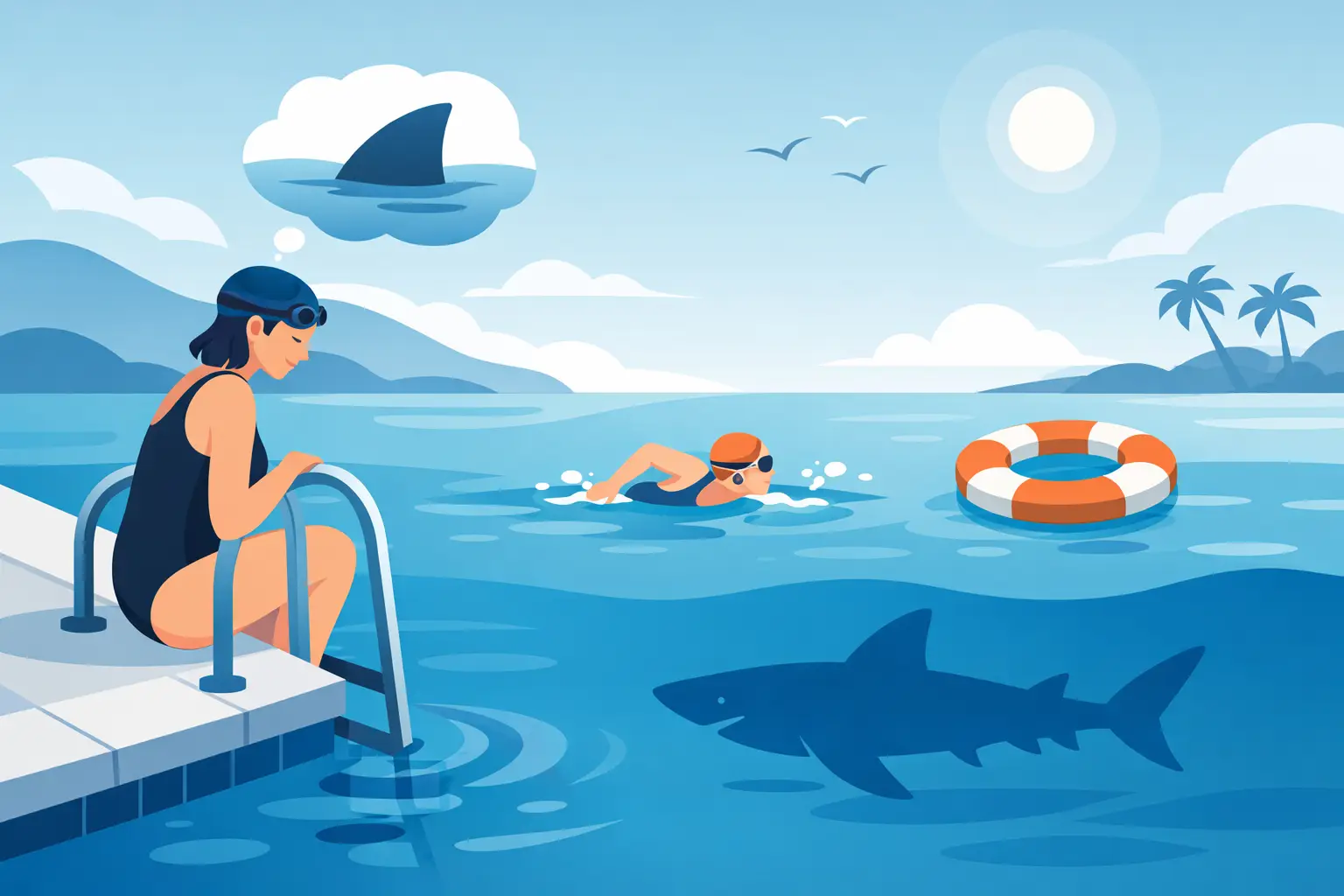
The fear often shows up before your feet even touch the water. For some people, it starts at the pool gate. For others, it appears the moment water reaches the face, the ears, or the chest. If you are searching for how to overcome fear swimming, the first thing to understand is this: fear in water is not weakness. It is a safety response, and it can be trained.
That matters for adults who never learned to swim, children who had a frightening water experience, and parents who want their child to build confidence the right way. Fear does not disappear because someone says, “relax.” It reduces when the swimmer feels safe, understands what is happening, and progresses in a clear sequence.
Why fear in the water feels so strong
Water changes your normal sense of control. Your footing is less stable, your breathing has to be timed, and your face may be exposed in a way that feels unnatural. Even shallow water can trigger panic if the swimmer is not confident with floating, breath control, or recovery to standing.
For children, fear often comes from unfamiliar sensations, loud environments, or being rushed too early. For adults, it is commonly linked to past embarrassment, a previous scare, or years of avoiding lessons. In both cases, the issue is usually not the water alone. It is the feeling of not knowing what to do next.
That is why structured instruction works better than random exposure. Repeating the same anxious experience does not always build confidence. Repeating the right skill with the right support does.
How to overcome fear swimming with the right starting point
The best starting point is rarely “swim a lap.” It is much simpler than that. A fearful swimmer needs proof of control before they can build technique.
Start in water where standing is easy and comfortable. The first goal is not distance. It is regulation. Can the swimmer stand calmly, hold the pool edge, and breathe without rushing? Can they put their hands in the water, then shoulders, then chin, without feeling overwhelmed? These small steps look basic, but they are the foundation of every later skill.
A common mistake is moving too quickly because the swimmer seems physically capable. A strong adult may still panic when the face goes in. A child who enjoys splashing may still freeze during a back float. Progress should follow emotional readiness as well as physical ability.
Begin with breathing, not strokes
Fear and breathing are closely connected. Once breathing becomes fast and shallow, the body tenses and the mind reads that tension as danger. That is when beginners grab, kick wildly, or refuse the next attempt.
A better approach is to practice controlled exhalation into the water. Blowing bubbles with the mouth, then the nose, teaches the swimmer that they can manage air and stay calm. This is especially important for children and adults who are afraid of putting the face in.
Breath work sounds simple, but it changes everything. A swimmer who can exhale calmly is far more likely to float, glide, and recover without panic.
Build confidence through repeatable success
Confidence in swimming should be earned, not forced. That means choosing tasks that are challenging enough to matter but manageable enough to repeat successfully.
For one learner, that may be sitting on the pool step and splashing water on the face. For another, it may be holding a wall and submerging the mouth for three seconds. Once a step becomes comfortable, the next one can be introduced. If the swimmer fails repeatedly, the step is probably too advanced.
This is where experienced coaching makes a real difference. Skilled instructors know how to break one big fear into smaller, trainable actions. That keeps lessons productive and protects trust.
The skills that reduce fear fastest
Not every swimming skill has the same impact on fear. For nervous beginners, a few key abilities tend to create the biggest shift.
One is safe entry and exit. Knowing how to get in and out of the pool confidently reduces hesitation before practice even begins.
Another is breath control. As mentioned earlier, this helps regulate panic and supports every later movement.
Floating is also critical, especially learning that the body can be supported by water without constant struggle. Some swimmers fear floating because they think stillness means sinking. In reality, correct body position and calm breathing often make floating easier than expected.
Recovery to standing is just as important. Many fearful swimmers become anxious because they do not trust that they can return upright after a float or glide. Once they practice that transition repeatedly, fear usually drops.
Finally, short glides and basic kicks help the swimmer feel movement with control. The goal is not speed. It is the ability to travel a short distance without panic.
How to overcome fear swimming in children
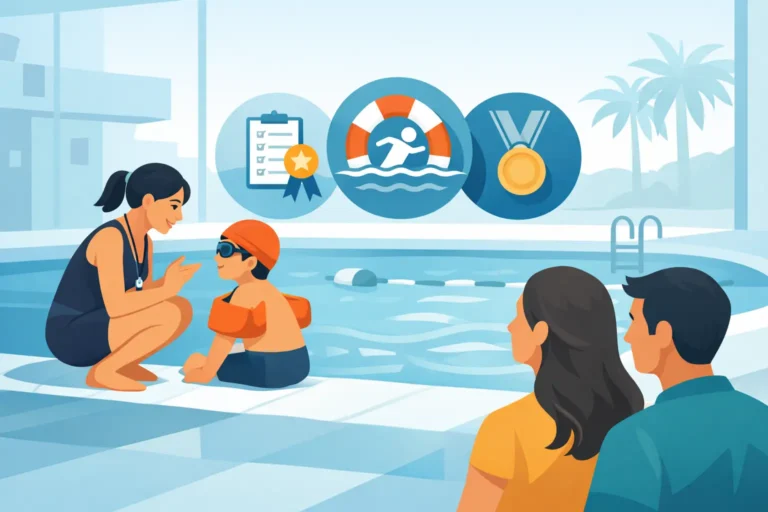
Children do best when lessons feel safe, consistent, and predictable. They usually do worse when adults bargain, pressure, or compare them to other kids.
A child who cries at the pool does not always need a break from swimming. Sometimes they need a slower introduction, a more structured coach, or more repetition at the same level. It depends on whether the child is resisting from fatigue, sensory overload, or genuine fear.
Parents can help by keeping language calm and neutral. Instead of saying, “There is nothing to be scared of,” try, “You are learning one step at a time.” That validates the feeling without feeding it.
Routine also matters. The same pool, similar lesson format, and a familiar coach can reduce anxiety significantly. Young learners build trust through repetition. If every session feels different, fear can stay high even when skills are improving.
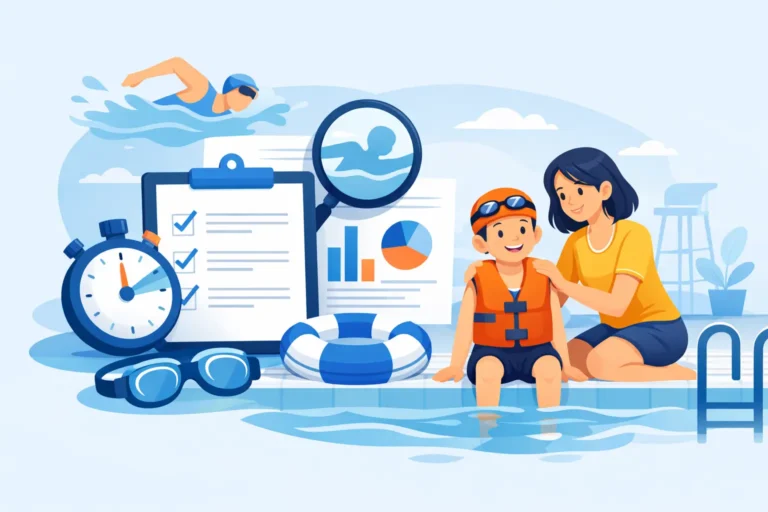
For children in structured programs, measurable progression is especially useful. Small milestones like bubble blowing, front float support, back float recovery, and short independent movement give both the parent and child visible proof that confidence is growing.
How adults can get past embarrassment and hesitation
Adult fear is often more private. Many adults are not only afraid of the water. They are afraid of looking afraid.
That can delay learning for years. Some avoid lessons because they think they should already know how to swim, or because they had one bad experience in a large group. The good news is that adult beginners usually progress well once they are taught in a logical sequence.
The main adjustment is mindset. Adults want to understand why a drill matters. That is a strength, not a problem. When an instructor explains that bubble practice supports rhythm, or that floating improves survival and reduces energy waste, adults tend to commit more fully.
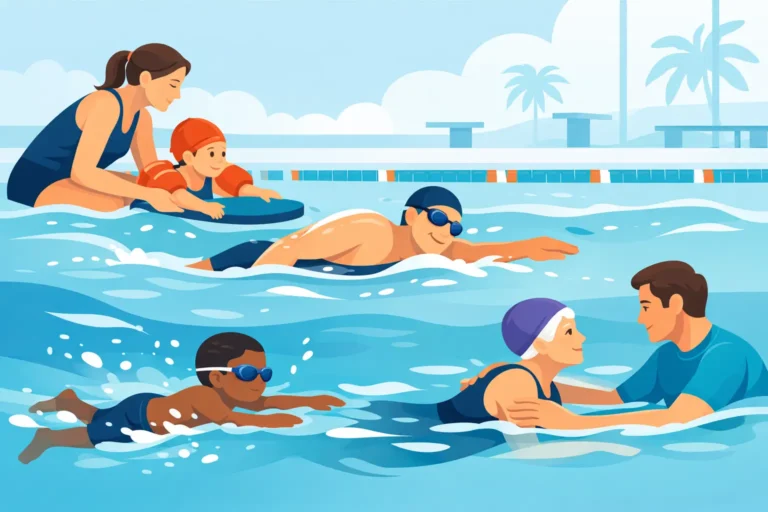
Private or very small-group lessons can be especially effective for fearful adult learners. They reduce self-consciousness and allow more time on fundamentals. AQZOG has long emphasized structured progression because confidence grows faster when each skill prepares the next one.
When pushing harder helps – and when it backfires
There is a difference between encouraging progress and overwhelming the swimmer. Good instruction stretches comfort zones gradually. Poor instruction skips the foundation and hopes courage will fill the gap.
A little discomfort is normal. Panic is not productive. If the swimmer cannot listen, cannot breathe steadily, or refuses repeated attempts after strong distress, the training step is too big. Pulling back is not failure. It is smart progression.
On the other hand, staying forever at the easiest step can also slow improvement. Once the swimmer shows control, the next challenge should come. Fear reduces through successful exposure, not indefinite avoidance.
That balance is why lesson structure matters so much. The swimmer should feel safe, but they should also be moving forward.
Practical ways to support progress between lessons
Progress often improves when swimmers practice short, calm repetitions outside formal instruction. Ten minutes of standing, breathing, bubble blowing, and supported floating can do more than one long session filled with stress.
Consistency matters more than intensity. Two or three calm exposures each week are often better than one emotional session every few weeks.
Parents and adult learners should also keep goals specific. “Be less scared” is vague. “Put face in and blow bubbles five times” is measurable. Specific goals create visible wins, and visible wins build trust.
If fear is linked to a previous incident, patience is essential. Some swimmers need more time to rebuild confidence. That does not mean they cannot learn. It simply means the pathway should be more deliberate.
What real progress looks like
Fear rarely disappears all at once. More often, it shrinks in stages. First the swimmer enters the water calmly. Then they control breathing. Then they float with support, recover to standing, and move short distances. Eventually, they focus less on fear and more on skill.
That shift is the real milestone. Once the swimmer starts asking, “How do I improve my kick?” instead of “What if I panic?” confidence is taking root.
Swimming is not just a recreational skill. It is a safety skill, a confidence skill, and for many learners, a life-changing one. If fear has delayed progress, the answer is not force. It is structured practice, calm repetition, and the right level of support at the right time.
Start smaller than your fear tells you to. Then keep going, one controlled step at a time.