A Guide to Beginner Swim Technique
Most beginners do not struggle because they are unfit. They struggle because the water feels unfamiliar, breathing feels rushed, and every movement seems harder than expected. A good guide to beginner swim technique should fix that from the start by focusing on control, safety, and simple skill progression instead of speed.
For both children and adults, the early stage of swimming is not about doing perfect laps. It is about learning how to stay calm, hold a better body position, breathe without panic, and move through the water with less effort. When those foundations are taught in the right order, confidence grows quickly and technique improves in a measurable way.
What beginner swim technique actually means
Beginner swim technique is often misunderstood as learning a stroke pattern. In practice, strong early technique starts before full strokes. A swimmer first needs to feel balanced in the water, understand how to exhale, and learn how the head, hips, arms, and legs work together.
This matters because many beginners try to copy what experienced swimmers look like from the pool deck. They kick too hard, lift their head too much, and tense their shoulders. That usually creates more resistance, not more progress. Good technique at the beginner level is about reducing struggle. The swimmer should look more controlled before they look more powerful.
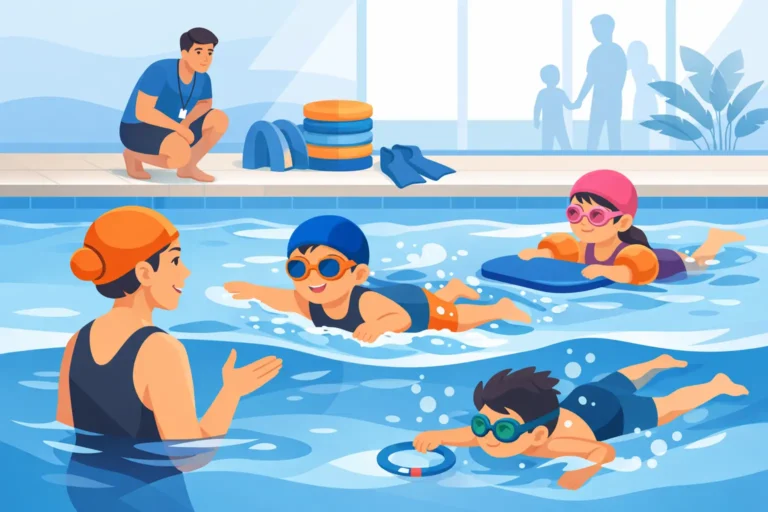
For young children, that may mean learning to float, kick with support, and recover from a face-in-water position. For adults, it may mean managing fear, trusting buoyancy, and building breathing rhythm. The goal is the same – safe, repeatable movement that can be developed step by step.
A guide to beginner swim technique starts with body position
The first technical priority is body position. If the body sits too upright in the water, the legs sink and movement becomes tiring very quickly. A beginner who learns to stay long and level will find every later skill easier.
Head position plays a large role here. Looking forward may feel safer, but it usually pushes the hips and legs downward. Looking more toward the pool floor helps the body stay flatter. This does not need to be extreme. The neck should stay relaxed, with the eyes directed slightly down and forward depending on the drill or stroke.
A long body line also matters. Beginners often bend at the waist or reach with stiff arms while the rest of the body loses shape. Think of stretching through the crown of the head and extending through the legs. Even with a board or coach support, the swimmer should learn what a balanced position feels like.
Children may need playful cues to understand this. Adults often benefit from direct correction and repetition. In both cases, the principle is the same – better alignment reduces drag and makes breathing, kicking, and arm action more manageable.
Why balance comes before speed
Many beginners assume stronger kicking will keep them afloat. In reality, excessive kicking often creates splash without useful propulsion. When balance is poor, more effort usually leads to more fatigue.
This is why structured instruction focuses on floating, gliding, and supported movement early on. A swimmer who can hold a calm front float or streamline push-off is developing the right base. Speed can come later. Efficiency should come first.
Breathing is the skill that changes everything
If a beginner feels tense in the water, breathing is usually part of the problem. People instinctively hold their breath when they are unsure, then lift their head suddenly to inhale. That breaks body position and creates panic.
A better approach is to treat breathing as a separate skill first. Exhale into the water in a slow, steady way. Lift or turn to inhale only when needed, then return the face to the water calmly. The exhale is often the missing part. Without it, the swimmer feels breathless almost immediately.
For children, bubble blowing is not just a fun activity. It teaches breath control and comfort with water on the face. For adults, repeated breathing drills can reduce anxiety and improve rhythm faster than trying full strokes too early.
There is a trade-off here. Some beginners want to keep their face out of the water as long as possible because it feels safer. That may help emotionally in the first lesson, but it usually slows technical progress. The right coaching approach respects that fear while still moving the swimmer toward proper breathing mechanics.
Kicking should support movement, not fight the water
In any guide to beginner swim technique, kicking deserves attention because it is often overdone. A useful kick is narrow, steady, and driven from the hips. Knees should bend naturally, but not excessively. Large bicycle-style kicks create drag and make the swimmer less stable.
Beginners also tend to kick from stress rather than purpose. When breathing feels rushed, the kick becomes wild. When balance improves, the kick usually becomes cleaner without much force.
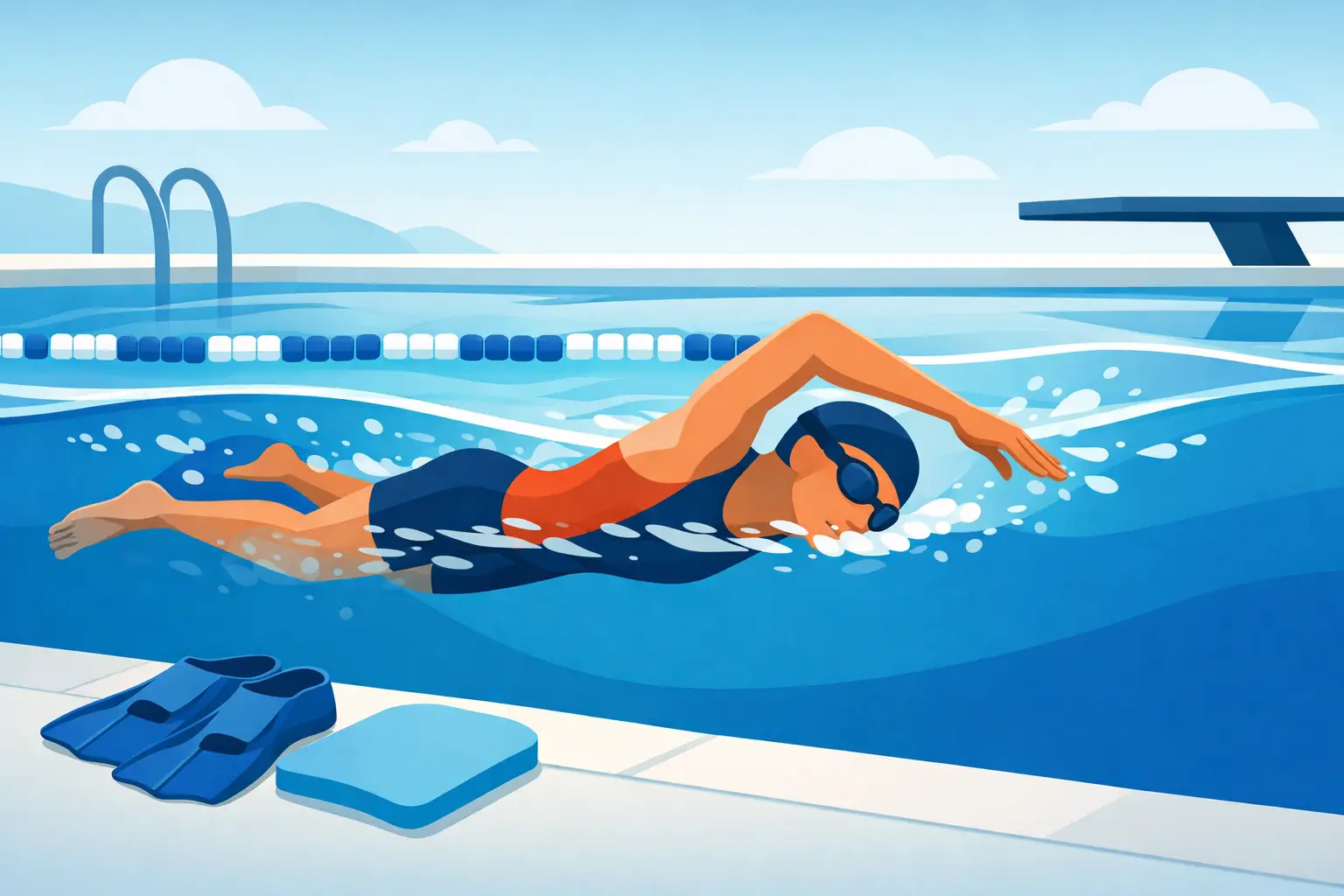
For front crawl basics, small flutter kicks are enough. The toes should stay relatively pointed and the legs should remain close together. The aim is not to create big splashes. In fact, smaller splashes often indicate better control.
That said, some swimmers have naturally stiff ankles or weak leg timing. They may need more focused kick work. Others improve faster when kick practice is blended with floating and breathing drills instead of isolated board work. This is where instruction should be adjusted to the individual, especially for adults with fear or children who fatigue quickly.
Arm movement works only when timing is simple
Arm technique can overwhelm beginners if taught with too much detail too soon. At the early stage, the focus should be on simple, repeatable actions. Reach forward, pull the water back, recover without tension, and keep the sequence organized.
For freestyle, many beginners cross their arms over the center line or pull downward instead of backward. Both errors reduce efficiency. The hand should enter in front of the shoulder area and the pull should press water back, not simply down.
It is also common to see rigid elbows and tight shoulders. That usually comes from trying too hard. Relaxed recovery and controlled pulling are more effective than force. If the swimmer cannot maintain breathing and body position while using both arms, it is often better to return to single-arm or supported drills first.
This is one reason structured progression matters. Technique should be layered. First balance, then breathing, then kick support, then arm timing. Not every beginner develops these at the same pace, but the order still matters.
Common beginner mistakes and what they usually mean
When a beginner lifts the head constantly, the issue is rarely just head position. It usually signals fear of submersion, poor breathing rhythm, or lack of trust in buoyancy. If the legs keep sinking, it may reflect body alignment more than weak kicking.
When a swimmer tires after one short length, the cause is often tension. Tight hands, rushed breathing, and overkicking waste energy quickly. When progress stalls, it is not always a motivation problem. The swimmer may simply need clearer drills and better feedback.
Parents should keep this in mind when watching a child learn. Visible splashing does not always mean progress. Quiet control, improved breath timing, and better recovery after each attempt are often more meaningful signs. Adult learners should think the same way. Early swimming success is usually measured by calmness and consistency before distance.
How to practice beginner swim technique the right way
Short, focused practice is usually better than long, messy repetition. A beginner gains more from 10 minutes of controlled float, breathing, and kick drills than from forcing multiple lengths with poor form. Technique learned badly is harder to correct later.
Each practice session should have a clear objective. One day may focus on exhaling into the water and lifting the head less. Another may focus on kick alignment and body position. When too many corrections are given at once, beginners often become confused and tense.
This is especially relevant for families choosing lessons for children and for adults returning to the pool after years away. Structured teaching creates faster improvement because each skill is introduced at the right stage. AQZOG follows this principle closely, especially for swimmers who need confidence building alongside technical development and safety readiness.
Why coaching makes such a big difference for beginners
Beginner swimmers often cannot feel what they are doing wrong. They may think they are flat in the water when they are actually angled upward. They may think they are exhaling when they are holding tension in the chest. A coach provides immediate correction and keeps practice aligned with clear outcomes.
This is not just about faster stroke improvement. It is also about safety. A swimmer who learns controlled breathing, floating recovery, and correct body position is building real water competence. For children, that supports long-term progress through structured programs and assessments. For adults, it often removes the fear barrier that self-practice cannot fix.
The best beginner technique is not flashy. It is calm, efficient, and reliable under instruction. Start there, keep the goals simple, and let consistency do the work. Confidence in the water is built one correct habit at a time.