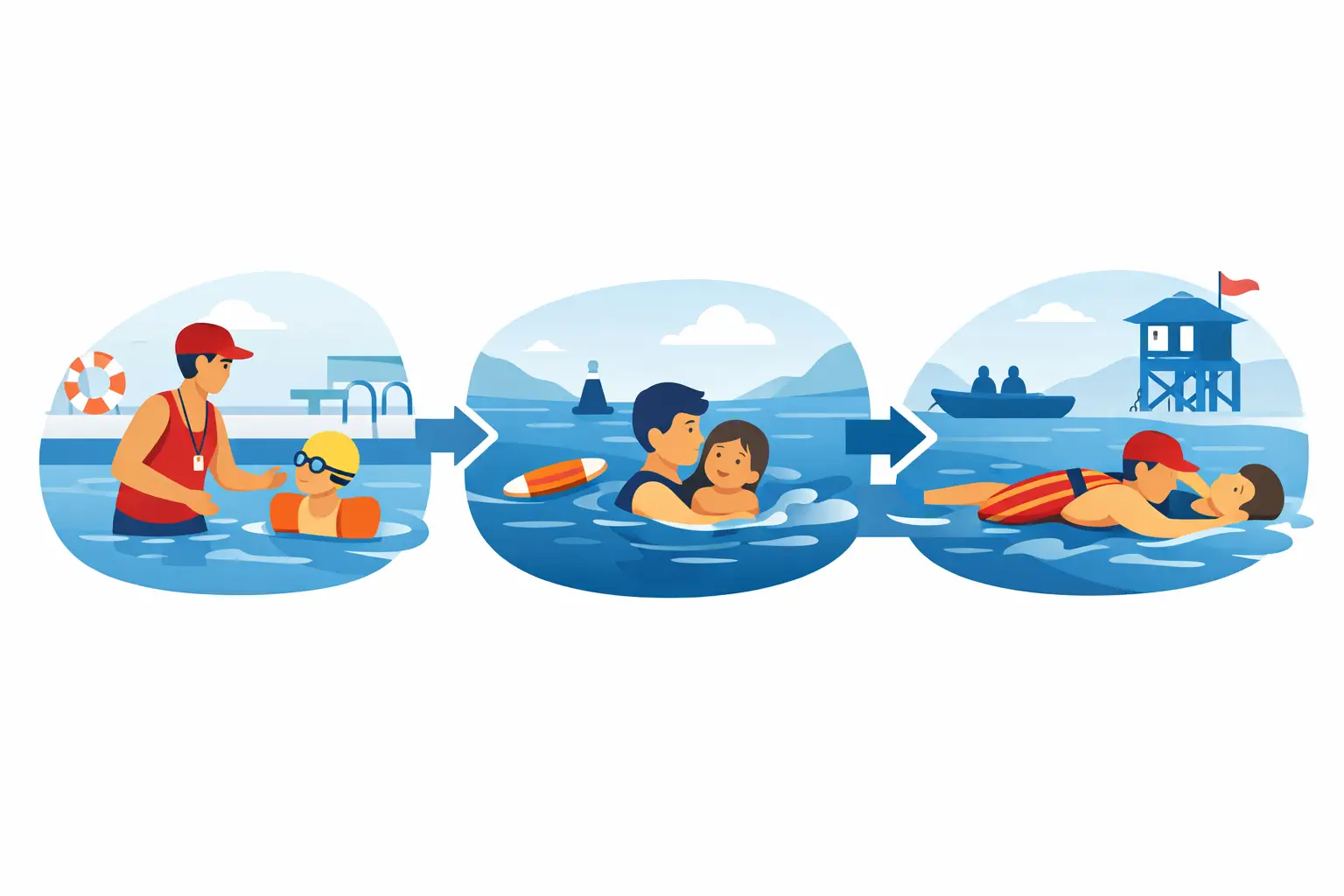
Lifesaving Swimming Course Progression
A swimmer who can move confidently across the pool is not always ready to save themselves, much less help someone else. That is why lifesaving swimming course progression matters. It gives children, teens, and adults a clear path from basic water confidence to controlled survival skills, sound judgment, and rescue readiness.
For many families, the mistake is assuming that learning strokes is the same as learning safety. It is not. Strong freestyle and breaststroke help, but lifesaving development adds a different layer – treading under pressure, surface dives, towing, clothed swimming, rescue awareness, and the discipline to stay calm when the situation is not calm.
What lifesaving swimming course progression really means
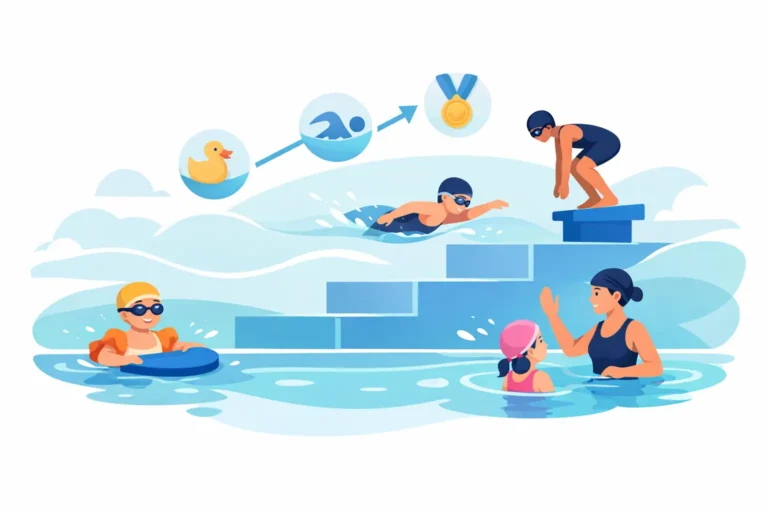
A proper progression is structured, not random. Swimmers build one level at a time so they do not skip critical foundations. In practice, that usually starts with water confidence, breathing control, body position, and basic movement. From there, swimmers develop stamina, survival technique, and safe rescue principles before moving into more demanding lifesaving tasks.
This matters because lifesaving is not just about physical strength. It combines technique, timing, observation, and decision-making. A swimmer who advances too quickly may look capable during a normal lesson but struggle when asked to tread for an extended period, support another person in the water, or perform under fatigue.
For parents, this progression gives reassurance that learning is measurable. For adult learners, it provides a realistic route forward. Instead of guessing what comes next, each stage has a purpose and builds toward stronger water safety outcomes.
The foundation stage comes first
Every effective lifesaving pathway begins with basics. Children and adults need to feel secure in the water before they can manage more complex drills. That includes entering and exiting the pool safely, submerging comfortably, floating on the front and back, recovering to a standing position, and maintaining steady breathing.
At this stage, stroke perfection is not the priority. Control is. A swimmer who can float, rotate, and recover calmly is in a better position than one who can sprint one lap but panics when asked to rest in deep water.
This is also where instructors observe something many families overlook – emotional readiness. Some learners need more repetition before they can handle deep water or face-down floating. Others progress quickly in technique but need time to build confidence. Good coaching respects that difference without lowering standards.
Stroke skills support lifesaving, but they are not the end goal
Once the basics are stable, formal swimming skills become more important. Freestyle and backstroke improve body alignment, breathing rhythm, and propulsion. Breaststroke is especially useful because it supports survival movement, scanning forward, and energy-efficient travel over distance.
At this point in a lifesaving swimming course progression, swimmers are usually developing endurance as well as technique. They need to cover distance without losing form, because rescue-oriented work often depends on efficient movement rather than speed alone.
There is a trade-off here. Some swimmers focus heavily on race-style technique and become fast but tense. Others move more slowly but stay relaxed and sustainable. For lifesaving, efficient control usually matters more than sprint performance. That does not mean speed is irrelevant. It means speed should sit on top of composure, not replace it.
Survival skills mark the real shift in progression
The transition from general swimming to lifesaving becomes clear when survival skills are introduced. This is where learners start practicing the things that matter when water conditions become stressful.
They may work on deep-water confidence, survival floating, extended treading, underwater recovery, and changing from swimming mode to resting mode without panic. Some programs also introduce clothed swimming or simulated fatigue, because real incidents do not happen under ideal lesson conditions.
This stage often reveals gaps. A child who looks confident in shallow water may tire quickly in deep water. An adult who can swim laps may struggle to tread efficiently because they rely too much on kicking strength. That is not failure. It is exactly why structured progression exists.
When these gaps are identified early, they can be corrected with focused coaching instead of becoming long-term weaknesses.
Rescue skills should be taught with control
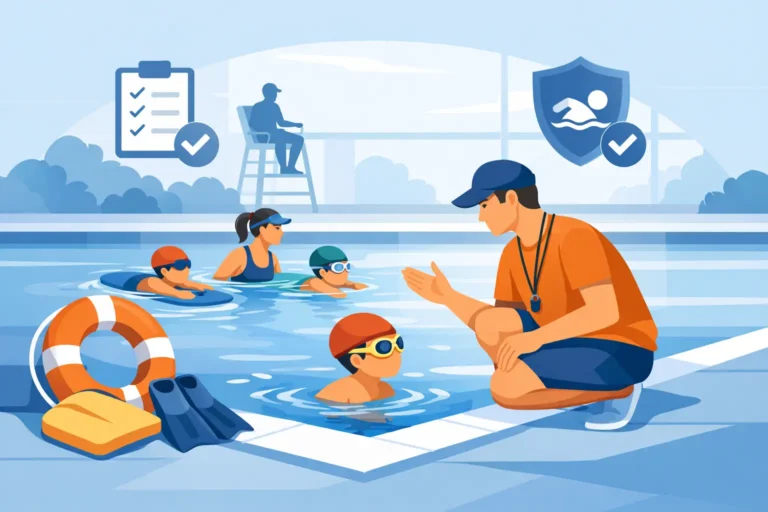
Rescue training is the part many learners find exciting, but it must be taught carefully. The first lesson is simple: reach or throw before entering the water whenever possible. Safe rescue starts with judgment, not heroics.
As swimmers advance, they may learn assisted towing, approach techniques, support holds, and how to move a casualty while protecting themselves. These are valuable skills, but they require maturity and proper supervision. Poorly taught rescue work can create false confidence, which is dangerous.
That is why strong programs introduce rescue concepts in sequence. A swimmer should first be able to control their own breathing, flotation, and direction. Then they can start helping another person in a structured way. For younger swimmers especially, the goal is not to turn them into rescuers overnight. It is to build awareness, discipline, and safe response habits.
How progression differs for children and adults
The same principles apply across ages, but the teaching approach changes.
For children, progression needs to be clear, motivating, and age-appropriate. They benefit from milestones they can understand, repeated practice, and visible improvement in water confidence. Their rescue learning is usually introduced through controlled scenarios that reinforce safety rules and body control without creating fear.
Adults often bring different challenges. Some are complete beginners. Some have poor technique despite years of casual swimming. Others are comfortable swimmers who now want certification-oriented advancement or more serious lifesaving competence. Adults usually respond well to direct explanation and measurable targets, but many also need help overcoming tension or past negative experiences in the water.
In both cases, progression works best when lessons match current ability rather than age or ego. Starting at the right level leads to faster and safer improvement.
Certification pathways give structure and accountability
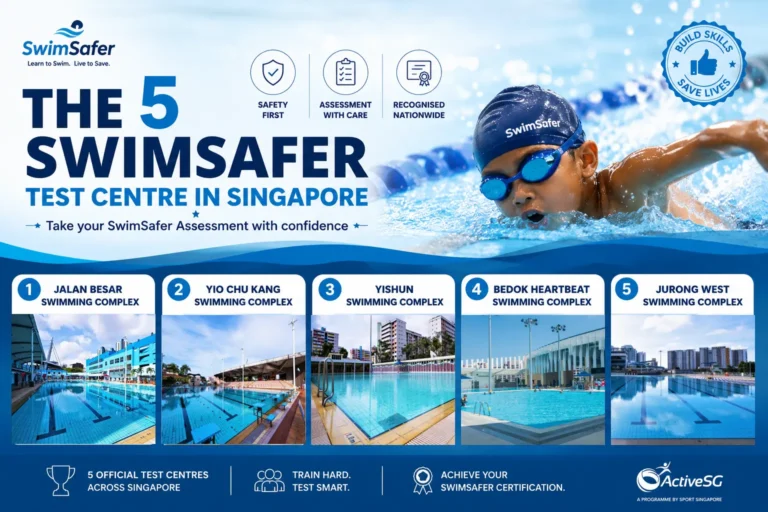
A major advantage of formal progression is that it can connect to recognized assessment standards. In Singapore, many families already understand the value of structured swim stages and practical test readiness. Lifesaving-oriented development fits naturally into that mindset because it turns general swimming into applied water safety skills.
Certification is useful for more than credentials. It gives swimmers a reason to train with precision. Distances, techniques, rescue sequences, and theory components become clearer when there is a defined standard to meet.
That said, certification should not be rushed. Some learners are eager to move quickly to the next badge or assessment. Progress is better when the swimmer can perform skills consistently, not just once on a good day. A reliable standard matters more than a fast promotion.
What to look for in a good program
Not every swim lesson setup is designed for genuine lifesaving development. If progression is the goal, look for a program with a clear curriculum, experienced instructors, and evidence that safety skills are taught alongside stroke work.
Ask how swimmers move from beginner to advanced stages. Ask whether deep-water skills, survival skills, and rescue principles are part of the pathway. Ask how test readiness is assessed, and whether weaker areas are corrected before advancement. These questions tell you whether the program is structured or simply reactive.
A school like AQZOG stands out when it combines weekly progression, SwimSafer alignment, mock assessment support, and practical coaching across age groups. That kind of structure helps families and adult learners see where they are, what comes next, and what standard they are working toward.
Why consistency matters more than intensity
Some swimmers improve through intensive holiday programs. Others do better with weekly repetition over time. Both models can work, but lifesaving skills tend to hold better when training is consistent enough for habits to form.
That is especially true for children. Treading, floating, recovery, and rescue response all rely on calm repetition. Adults are no different. A few strong sessions can create momentum, but real competence usually comes from sustained practice.
If progress seems slower than expected, that does not always mean the program is failing. Sometimes the swimmer is building exactly what cannot be rushed – judgment, confidence, and control under pressure.
Lifesaving ability is earned layer by layer. The strongest progression is the one that builds a swimmer who stays calm, thinks clearly, and knows what to do when the water stops feeling easy.