Every Competitive Swimmer Started as a Beginner Too
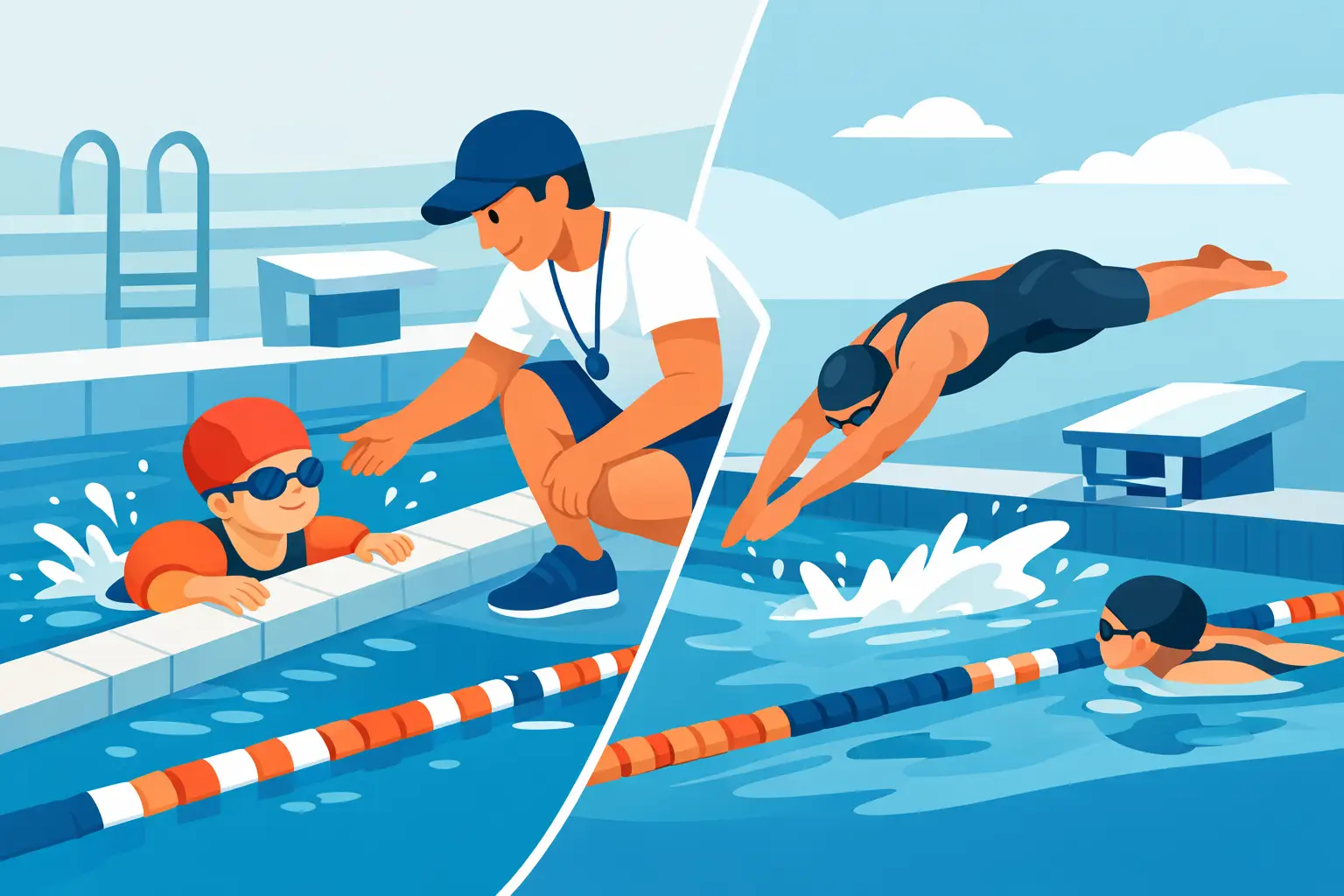
A child holding the pool wall, an adult who will not put their face in the water, and a swimmer stepping onto a competition block may look worlds apart. They are not. Every competitive swimmer started as a beginner too, usually by learning the same essential skills: how to breathe, float, move calmly, and respect the water.
That matters for parents choosing lessons and adults returning to the pool after years away. Competitive swimming is not reserved for naturally fearless children or people who grew up on a swim team. It is the result of a clear progression, patient coaching, consistent practice, and a foundation that puts water safety before speed.
A Competitive Swimmer Started as a Beginner Too
The early stages of swimming are not glamorous, but they shape everything that follows. Before a swimmer can improve a freestyle time or complete a race legally, they need body position, breath control, balance, and confidence. Skipping these basics often creates problems later, including fatigue, poor stroke habits, anxiety in deeper water, and difficulty progressing through formal assessments.
For young children, the first goal may be as simple as entering the water safely, kicking with support, or blowing bubbles with a relaxed face. For adults, it may be learning to float without panic or putting their face in the water for the first time. These are real milestones. A strong coach recognizes them as the building blocks of independent, capable swimming.
Structured lessons make the next step clear. Instead of asking a learner to copy a full stroke before they are ready, instruction should move from water familiarization to floating, propulsion, breathing, stroke coordination, endurance, and eventually more advanced skills. The pace will vary, but the pathway should not be random.
Safety Creates the Confidence to Progress
Parents sometimes assume competitive training begins with laps. In reality, it begins with safe habits. A swimmer who understands how to enter and exit safely, recover from an unexpected fall, orient themselves in water, and respond calmly when tired has a far better platform for long-term development.
Water safety is especially important for children who are confident but inexperienced. Confidence without control can lead a child to take risks beyond their ability. On the other hand, a child who is cautious may need time and repetition before they feel secure enough to try new movements. Neither child should be rushed. Good instruction balances encouragement with appropriate challenge.
This is why formal progression systems are valuable. SwimSafer-style training, survival skills, and practical assessment preparation give learners measurable targets beyond simply swimming a few meters. They develop awareness, decision-making, and competence in different water situations. Those skills serve a child whether they later join a competitive squad, enjoy recreational swimming, or simply spend time safely around pools and open water.
What the Beginner-to-Competitive Path Looks Like
A swimmer does not become competitive in one large leap. Progress usually happens in stages, with each stage preparing the swimmer for the demands of the next.
Stage 1: Comfort and Control in the Water
Beginners learn to be calm in shallow and deeper water, submerge comfortably, float on their front and back, kick with purpose, and travel short distances. The focus is not speed. It is control.
This stage can take longer for toddlers, learners with water fear, or adults who have had a negative experience in water. That is normal. Fast results should mean efficient, focused learning, not forcing someone past fear before they have the skills to cope.
Stage 2: Independent Stroke Foundations
Once a swimmer can move independently, coaching can begin to refine the core strokes. Freestyle typically introduces rhythmic breathing, a stable body line, effective kicking, and coordinated arm recovery. Backstroke develops comfort with supine floating and steady propulsion. Breaststroke and butterfly demand more timing and mobility, so they are usually taught when the learner has enough body awareness to manage them correctly.
At this stage, bad habits are easier to correct than they will be later. Lifting the head to breathe, bending knees excessively while kicking, crossing arms over the center line, or rushing through stroke timing can all limit efficiency. Regular feedback prevents these errors from becoming permanent.
Stage 3: Endurance, Technique, and Test Readiness
As distance increases, swimmers learn that efficient technique matters more than trying harder. A swimmer with good breathing rhythm and body position can often travel farther with less effort than a swimmer who is stronger but poorly coordinated.
For children following certification pathways, this stage may include practice for required skills, theory understanding, and mock practical assessments. For adults, it may mean building enough endurance to swim continuous laps, prepare for a triathlon, or feel confident during a vacation. The destination differs, but the method remains similar: train one skill at a time, measure progress, and increase the challenge when performance is consistent.
Stage 4: Competitive Preparation
Competitive swimming introduces a different level of precision. Swimmers may train starts, turns, streamlines, pacing, race rules, and event-specific strategy. They also need the emotional skills to handle race-day nerves, missed targets, and gradual improvement.
Not every capable swimmer needs this stage. Competition requires commitment, regular training, and a willingness to practice technique repeatedly. Some children thrive on the team environment and goal setting. Others prefer certification progression, lifesaving skills, fitness, or recreational swimming. A good program helps families choose the right path rather than treating competition as the only definition of success.
Why Consistency Beats Natural Talent
Natural coordination can help, but it does not replace attendance, coaching, and practice. A child who attends lessons consistently, listens carefully, and builds skills in order will often progress further than a more confident child who trains irregularly.
Consistency is also how swimmers gain real confidence. Confidence is not being told, “You can do it.” It is knowing, from repeated experience, “I have done this skill safely before, and I know what to do next.” That knowledge carries over from a first unsupported float to a first deep-water swim, a practical assessment, and eventually a race.
Parents can support this process by keeping expectations realistic. Progress is rarely a straight line. A child may perform a skill well one week and hesitate the next because the water is colder, the pool is busier, or they are tired after school. Look for trends over several lessons rather than judging progress by one session.
Choosing the Right Coaching Environment
The right lesson format depends on the swimmer’s starting point and goal. Group classes can provide structure, peer motivation, and regular progression for children who are ready to learn alongside others. Private lessons can be useful for water-fear learners, adults with specific goals, children who need focused correction, or swimmers preparing for an assessment or event. Semi-private instruction can offer a middle ground for siblings or friends at a similar level.
What should remain consistent is the quality of instruction. Look for experienced coaches who assess ability honestly, teach safety alongside stroke technique, and explain the next milestone clearly. Families should know whether a child is working toward independent swimming, a formal stage, stronger endurance, or advanced development. Vague promises are less helpful than a visible plan.
AQZOG approaches swimming as a life skill first, with structured progression that can support learners from early water introduction through certification preparation and advanced goals. That approach is valuable because it keeps achievement connected to safety, not separate from it.
Give Beginners a Goal, Not a Label
Calling someone “not sporty” or “scared of water” can become a label they carry into every lesson. Replace the label with a practical next goal: put the face in for three seconds, float with less support, complete one full length, or learn a safer way to rest in deep water.
The same principle applies to future competitive swimmers. Instead of asking whether a child is talented enough, ask whether they are building the skills, habits, and enjoyment that make continued training possible. Racing can come later. A safe, confident swimmer who wants to return to the pool is already moving in the right direction.
The next lesson does not need to produce a champion. It only needs to give the learner one more skill they can trust when they are in the water.