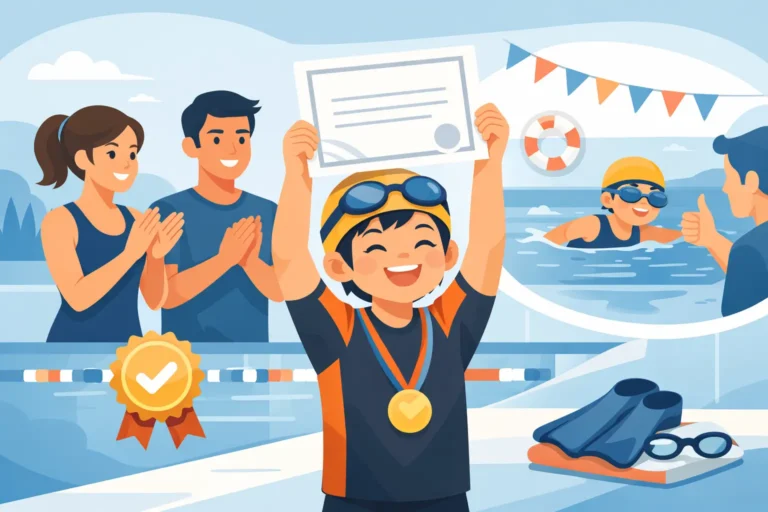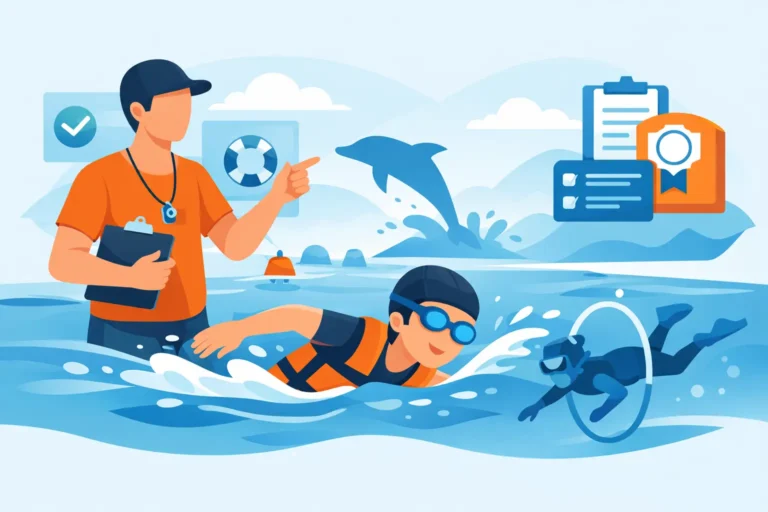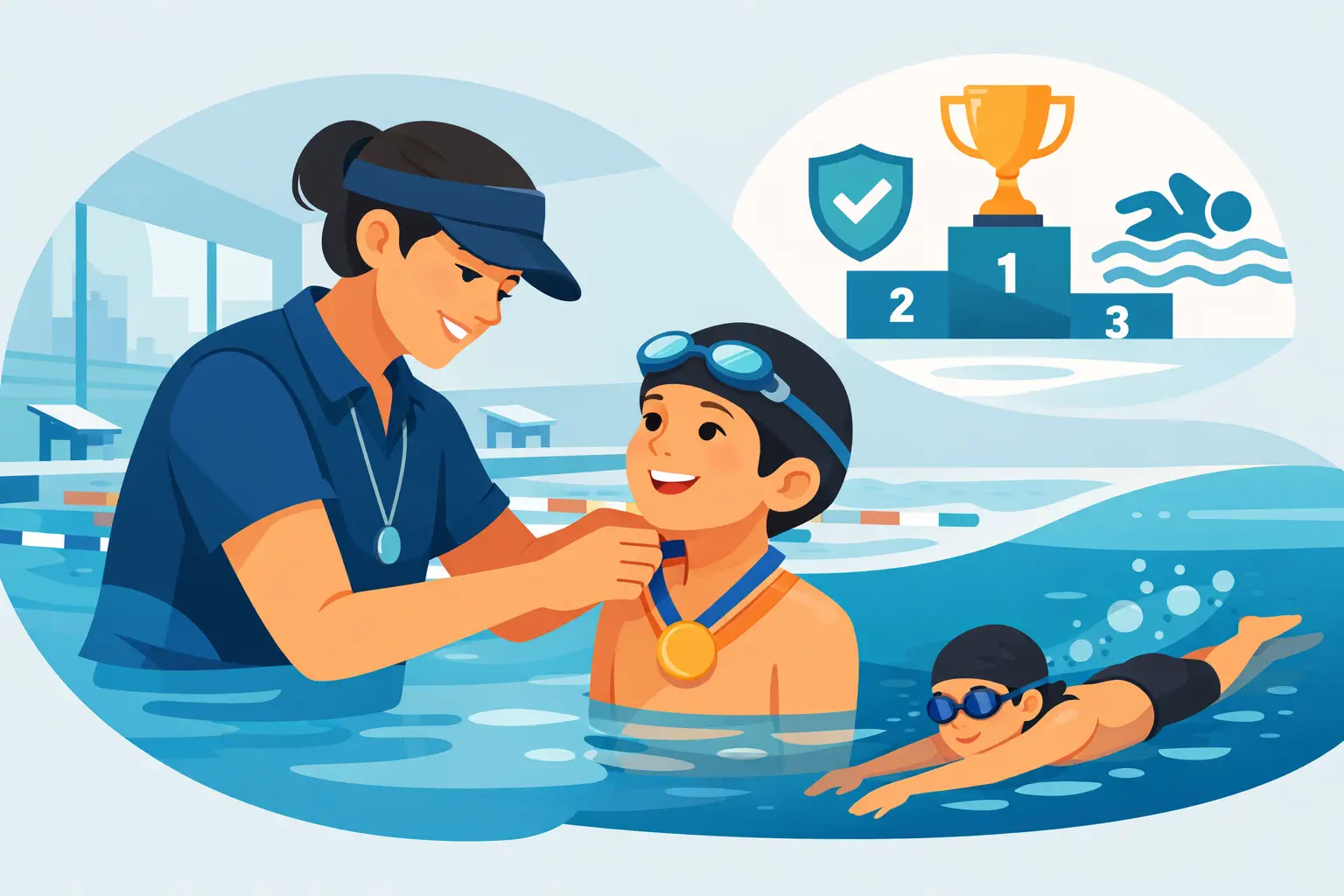
Does Getting SwimSafer Stage 6 Really Matter to Your Child?
A child who can swim a few laps may look confident from the pool deck. But confidence is not the same as being prepared when something goes wrong. That is why many parents ask, does getting SwimSafer Stage 6 really matter to your child? The honest answer is: it can matter a great deal, but not simply because it adds another certificate to a file.
Stage 6 represents advanced swimming and water-survival development within the SwimSafer progression. It asks a child to demonstrate skills with control, awareness, and composure – qualities that become especially valuable as they grow more independent around pools, beaches, water parks, and open-water activities. For the right child, it is also a meaningful bridge toward lifesaving pathways and more advanced aquatic training.
What SwimSafer Stage 6 Actually Represents
SwimSafer is designed as a structured progression, not a race from one badge to the next. Each stage builds on earlier skills, moving children from basic water confidence toward stronger stroke technique, water survival, and personal responsibility around water.
By Stage 6, children are generally expected to work at a much higher level than beginner or recreational swimmers. They need to apply swimming skills while tired, follow safety procedures, respond appropriately in simulated emergency situations, and show greater awareness of risks to themselves and others.
The value of this stage is not that a child can say they have reached the highest level. Its value is that the child has spent time practicing difficult, relevant skills under qualified supervision. They learn that swimming well includes more than moving quickly from one end of the pool to the other.
Why Advanced Water Safety Skills Matter
Most water incidents do not happen because a child has never heard a safety rule. They happen when a person is surprised, tired, overconfident, distracted, or unsure what to do next. Advanced SwimSafer training helps children make better decisions before a situation becomes serious.
At this level, swimmers develop greater endurance and stronger stroke efficiency. This matters because a child may need to swim farther than expected after entering deep water, losing footing, or helping themselves reach a safe exit. Efficient swimming conserves energy. Panic wastes it.
Children also become more familiar with survival-oriented responses, safe entries, water rescue awareness, and the limits of their own ability. A well-trained child should understand that attempting a risky rescue can create a second casualty. They learn to seek adult help, use available aids where appropriate, and respond with judgment rather than impulse.
These are practical life skills, particularly in Singapore, where families regularly enjoy public pools, condominium pools, beaches, resort holidays, and water-based school activities.
Confidence With Judgment, Not Overconfidence
Parents sometimes worry that advanced certification will make a child take bigger risks. Good coaching should produce the opposite result.
A child who has practiced water survival and safety scenarios is more likely to recognize when conditions are beyond their ability. They understand that fatigue, unfamiliar water, currents, poor visibility, and rough play can change a safe situation very quickly. Real confidence includes knowing when not to enter the water, when to stop, and when to call for help.
That is one of the strongest reasons Stage 6 can be worthwhile. It develops mature water behavior alongside physical ability.
Does Getting SwimSafer Stage 6 Really Matter to Your Child’s Future?
For every child, Stage 6 is not a mandatory destination. A child who can swim safely, follows pool rules, and enjoys recreational swimming may not need to continue immediately into advanced assessment preparation. Family schedules, motivation, learning pace, and other activities all matter.
However, Stage 6 is especially valuable for children who enjoy swimming, show strong water confidence, participate in school aquatic activities, or may later consider lifesaving, coaching, competitive swimming, or water-based leadership programs. It gives them a formal foundation that demonstrates sustained skill development rather than a one-time achievement.
The certificate can also give parents a clearer benchmark. Instead of guessing whether a child is “a good swimmer,” you can see that they have been assessed against defined requirements. That does not mean a Stage 6 swimmer should ever be unsupervised around water. It does mean they have built a more advanced set of skills and safety habits than a child who has only learned basic strokes.
The Trade-Off: Progression Should Not Become Pressure
There is a difference between challenging a child and pushing them through a stage before they are ready. Stage 6 training can be demanding. It requires stamina, focus, technique, and a willingness to repeat skills until they meet assessment standards.
Some children need more time to strengthen their strokes before they can perform confidently under test conditions. Others are physically capable but become anxious during assessments. In these cases, rushing toward certification can weaken confidence instead of building it.
The best pathway is individualized. A qualified coach should identify whether the child needs stroke correction, endurance work, survival-skill practice, theory preparation, or mock practical test exposure. Targeted preparation is more productive than repeating an assessment without addressing the reason for a previous difficulty.
At AQZOG, structured SwimSafer training focuses on readiness first. Children are guided through the skills required for progression while receiving practical coaching on technique, safety awareness, and assessment confidence. The goal is not just to pass a test. It is to help each swimmer earn the result with genuine capability.
Signs Your Child May Be Ready to Work Toward Stage 6
Readiness is not based on age alone. A child may be ready to begin advanced preparation when they can sustain swimming with sound technique, listen and respond calmly to instructions, and stay focused through longer skill sequences.
They should also be able to manage deep water without distress and demonstrate respect for safety rules even when they are excited or playing with friends. Children who ask questions about rescue skills, enjoy challenging drills, or want to pursue more advanced aquatic goals often respond well to Stage 6 training.
If your child still struggles with breathing rhythm, body position, or basic stroke coordination, strengthening those foundations first is usually the better choice. Advanced water safety training works best when the swimmer does not have to spend all their energy thinking about the basics.
Assessment Readiness Is Different From Skill Readiness
A child can have the ability to complete a skill but still need practice performing it during an assessment. Test conditions can feel different from a normal lesson. There may be time expectations, specific instructions, observation by assessors, and pressure from knowing that a result is being recorded.
Mock practical tests and theory preparation can make a major difference. They help children become familiar with the format, understand what assessors are looking for, and learn how to stay calm after a small mistake. This preparation is particularly useful for capable swimmers who tend to freeze or rush when they feel evaluated.
How Parents Can Support the Journey
The most helpful support usually happens away from the pool. Encourage effort rather than only praising certificates. Ask your child what they learned about staying safe, what skill felt challenging, and what they want to improve next.
Avoid comparing progress with siblings or classmates. Children develop endurance, coordination, and confidence at different rates. A swimmer who takes longer to reach Stage 6 but develops strong judgment and calmness in the water is making meaningful progress.
It also helps to keep water safety messages consistent. Remind children that even skilled swimmers need supervision, should avoid horseplay near water, and must respect rules at every pool and beach. Certification is evidence of training, not permission to take unnecessary risks.
Stage 6 matters most when it gives your child something more lasting than a certificate: the ability to enter the water with skill, think clearly under pressure, and make safer choices for themselves and the people around them.