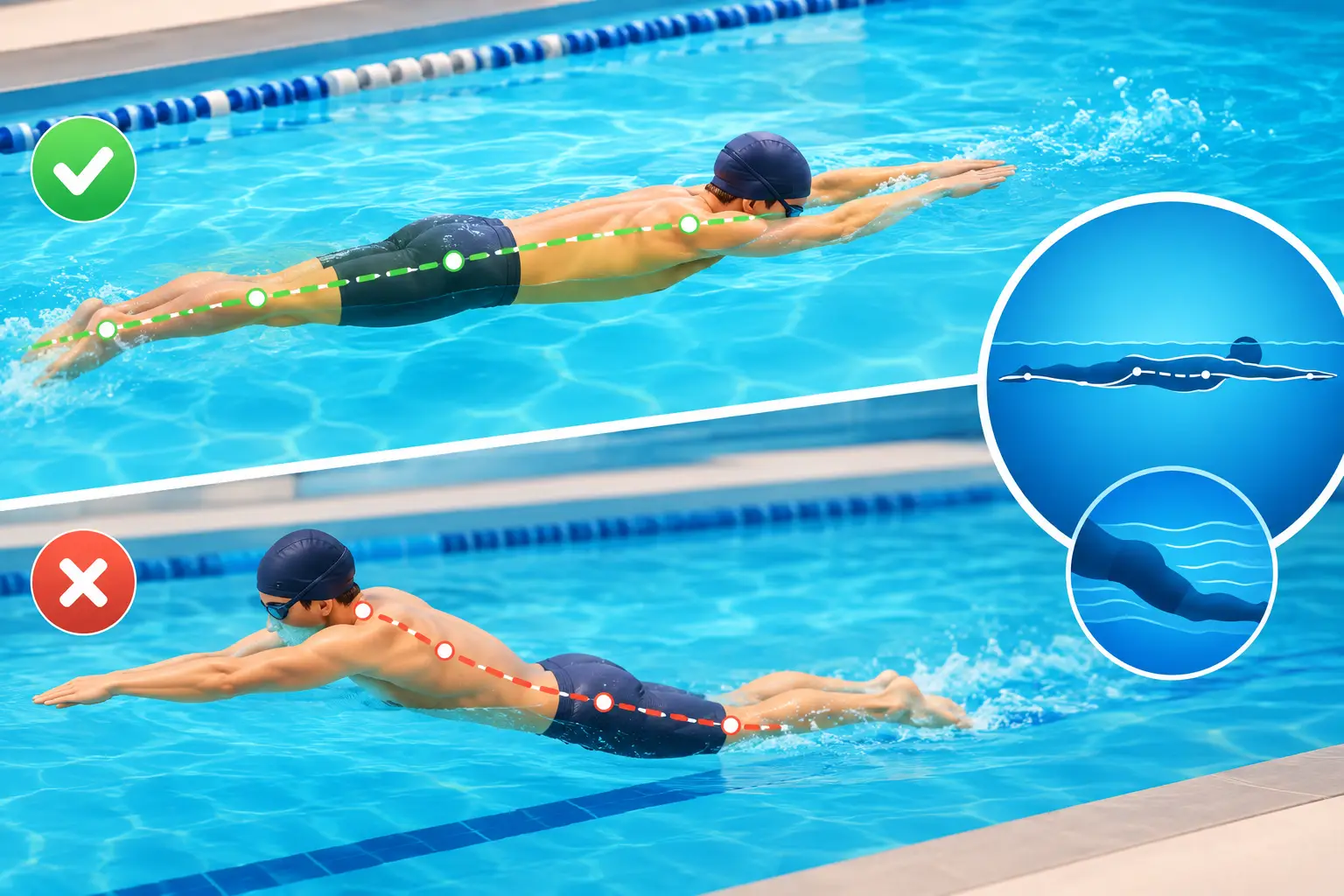
Why Body Profile Is Important to Swimming
A swimmer can work hard and still feel as if the water is holding them back. They may kick faster, pull harder, and tire sooner, while another swimmer moves forward with far less visible effort. One major reason is body position. Body profile is important to swimming because the way a swimmer holds their head, hips, torso, and legs determines how much resistance they create in the water.
For children learning water safety, good body profile supports calm floating, controlled breathing, and reliable movement to a safe point. For adults, it is often the missing piece between feeling exhausted after one lap and swimming with confidence. Before speed, endurance, stroke refinement, or SwimSafer test readiness, swimmers need to learn how to place their bodies in the water.
What body profile means in swimming
Body profile is the swimmer’s shape and alignment as they move through the water. In an efficient position, the body stays long, balanced, and close to the surface. The head is neutral, the hips are lifted, the legs remain behind the body rather than dropping downward, and the swimmer rotates with control when the stroke requires it.
Think of the difference between pushing a straight board through water and pushing one with its back end hanging down. The straight board travels with less resistance. A swimmer cannot become perfectly rigid, of course, because breathing and stroke movements require controlled motion. But the goal is the same: present as little unnecessary surface area to the water as possible.
A good profile does not mean every swimmer looks identical. A toddler developing basic buoyancy will have a different position from a competitive teenager training freestyle. An adult with limited shoulder mobility may need adjustments that differ from those of a flexible child. The principle remains consistent: find a balanced position that allows the swimmer to breathe, propel forward, and recover safely.
Why body profile is important to swimming performance
Water is much denser than air. Small errors in alignment can create significant drag. When the head lifts, the hips commonly sink. When the hips sink, the legs drop. The swimmer then has to kick harder simply to keep their lower body up, wasting energy that should be moving them forward.
This is why a swimmer who appears to have a strong kick may still struggle across the pool. The issue is not always effort. It may be that their effort is compensating for poor balance. Correcting the profile can immediately make a stroke feel lighter, even before the swimmer has developed greater fitness.
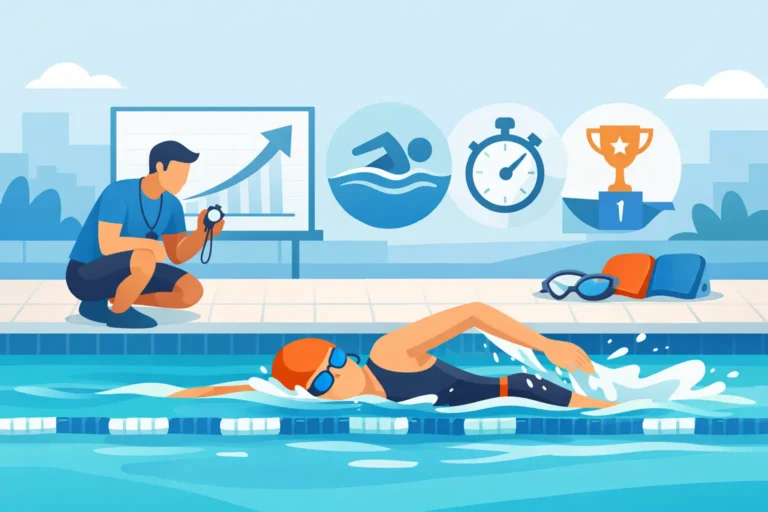
In freestyle and backstroke, a long horizontal line helps swimmers travel efficiently between strokes. In breaststroke, streamlined recovery and glide depend on keeping the body organized after each kick. In butterfly, the body must work with a controlled wave-like motion rather than breaking at the hips. Each stroke has its own technical demands, but all reward balance and reduced drag.
For test-focused learners, efficient body position also improves consistency. A child who can hold a stable float, push off in a streamlined shape, and maintain direction is better prepared to demonstrate skills under assessment conditions. Technical control supports confidence, and confidence helps learners follow instructions without panic.
Better alignment protects energy for the skills that matter
Swimming is not only about traveling from one end of the pool to the other. A learner may need energy to tread water, perform a survival float, change direction, respond to a coach’s instruction, or complete a sequence of SwimSafer skills. If they spend most of their energy fighting a sinking body position, these tasks become much harder.
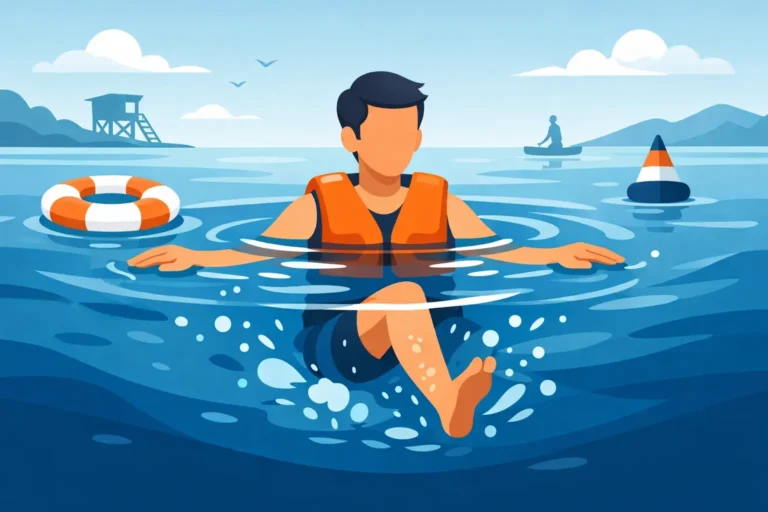
A streamlined profile helps swimmers reserve energy for breathing, decision-making, and safety actions. That matters particularly in open-water awareness and lifesaving-oriented training, where staying calm and moving efficiently can make a real difference.
Body profile and water safety go together
Parents often think of swimming posture as an advanced technical detail. In reality, it begins with foundational safety skills. A child who understands how to relax their face in the water, extend their body, and allow the water to support them is building practical water confidence.
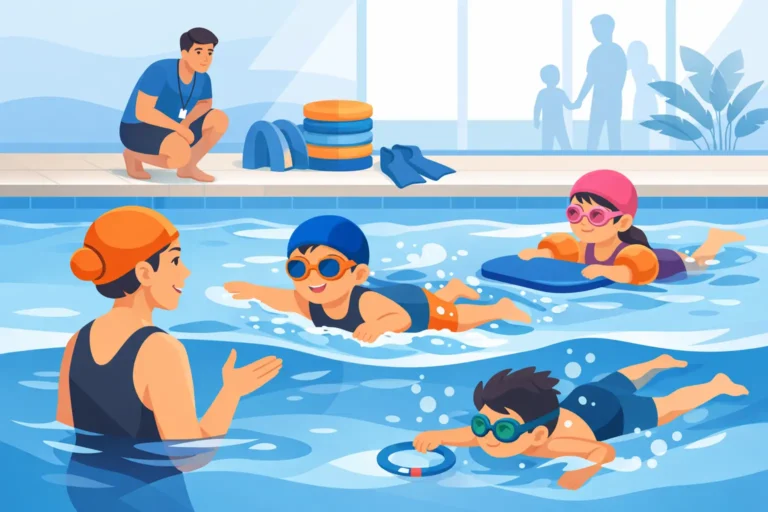
The first stages may look simple: front floats, back floats, push-and-glides, and kicking with a long body. Yet these exercises teach essential habits. Children learn that lifting the head too high can make the legs sink. They learn how a gentle exhale helps them stay relaxed. They learn that stretching long after a push-off carries them farther with less effort.
For fearful adults, body profile is equally valuable. Many adult beginners try to keep their head high because it feels safer. Unfortunately, this often causes the rest of the body to drop, creating the very instability they want to avoid. With progressive coaching, adults can learn to place their face in the water briefly, exhale steadily, and return to a supported breathing position. The result is usually more control, not less.
Common body profile errors and what they signal
A dropped leg position is one of the most recognizable problems. It can be caused by a lifted head, weak core engagement, incomplete exhalation, or anxiety about putting the face in the water. The right correction depends on the cause. Telling every swimmer to “kick harder” may mask the problem instead of solving it.
Another common error is looking forward while swimming freestyle. Looking ahead feels natural, especially for beginners who want to see where they are going. But it places the neck out of line and often lowers the hips. A swimmer should generally look down and slightly forward, keeping the waterline around the crown of the head. Coaches may use pool-floor markers or short-distance drills to make this feel more comfortable.
Overreaching can also affect profile. When a swimmer reaches too far forward and presses down on the water, their upper body can rise while the legs fall. A cleaner entry and forward extension, followed by a controlled catch, keeps the body traveling forward rather than seesawing through the water.
Finally, some swimmers hold too much tension. Stiff shoulders, clenched hands, and a locked neck interrupt balance. Streamlining requires purpose, but it also requires relaxation. This is especially true for young learners, who benefit from calm repetition before being asked to perform a skill at speed.
How structured coaching improves body profile
Body position is difficult to judge from inside the water. A swimmer may feel flat while their legs are actually deep below the surface. They may believe they are looking down while their chin is lifted. This is where qualified coaching provides a clear advantage.
A structured lesson begins by identifying the swimmer’s current ability and the reason behind the error. A beginner may need buoyancy confidence and breath-control practice. A child progressing through SwimSafer may need stronger push-offs and better line during supported or unsupported movement. A fitness swimmer may need stroke-specific corrections to reduce fatigue over repeated laps.
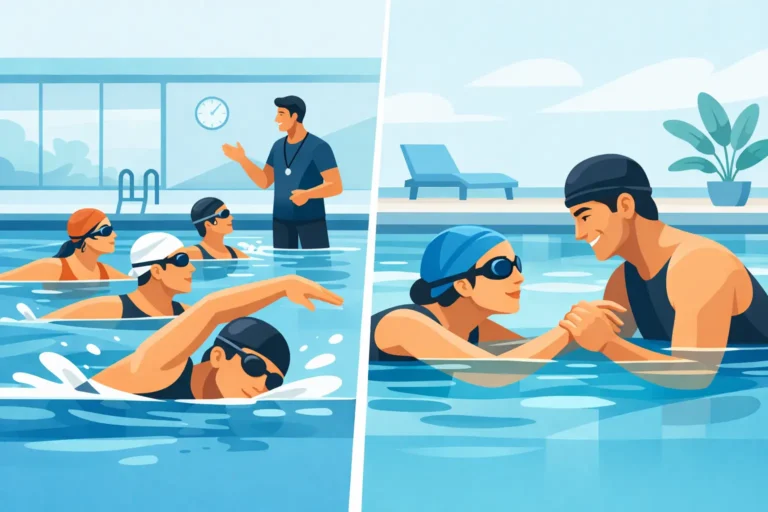
Coaches can then use short, purposeful drills rather than simply asking swimmers to complete more lengths. A streamlined push-and-glide teaches alignment after leaving the wall. Front and back floating build awareness of balance. Side-kicking drills help freestyle swimmers connect head position, rotation, and breathing. Repetition matters, but only when the learner understands what the drill is meant to improve.
At AQZOG, structured progression helps swimmers build these foundations before moving to more demanding skills. This is particularly useful for families who want visible development toward water confidence, SwimSafer readiness, and independent swimming rather than random practice without clear outcomes.
What parents and adult learners can focus on between lessons
Improvement does not come from reminders alone. “Keep your legs up” is useful only when a swimmer knows how to make that happen. Between lessons, focus on one or two cues that match the coach’s instruction. For a child, that may be “long body, eyes down.” For an adult, it may be “breathe out, then turn to breathe.”
Avoid rushing to speed. A short, calm push-and-glide with a good line is more valuable than a fast length completed with the head high and legs sinking. Once the position becomes reliable, swimmers can add stronger kicks, more strokes, and longer distances without losing control.
Progress will not always be linear. Growth spurts, fatigue, fear, and a change in stroke can temporarily affect alignment. The goal is not a perfect pose at every moment. It is a swimmer who understands how to return to a safe, efficient position when the water feels challenging.
The next time a swimmer seems to be working far harder than their distance suggests, look beyond strength. A calmer head position, a longer line, and better balance may be the practical change that turns effort into real progress.