Private Swimming Coach for Adults
Most adults do not book swim lessons because they want a hobby. They book because something feels urgent. Maybe they avoid deep water on family trips, panic when their feet cannot touch the floor, struggle to breathe during laps, or need stronger technique for fitness and open-water goals. A private swimming coach for adults is often the fastest way to turn that pressure into steady, measurable progress.
Private coaching works because it removes the biggest barrier adult learners face – trying to keep up with a pace that does not match their starting point. Adults come to the pool with very different needs. One person may be a complete beginner who has never put their face in the water. Another may be able to swim but cannot sustain freestyle beyond one lap. Someone else may need test preparation, water survival skills, or stroke correction. In a one-to-one setting, the lesson starts from the real problem, not from a generic class plan.
Why a private swimming coach for adults works
Adults usually learn differently from children. They ask more questions, carry more fear, and notice small failures quickly. They also want to know whether each drill has a purpose. Private coaching gives them that clarity. Instead of repeating movements without understanding, they get direct explanations, immediate feedback, and a progression built around confidence as much as technique.
This matters most for nervous learners. Fear in water is rarely just fear of water. It can be fear of losing control, fear of embarrassment, or fear of not recovering once breathing becomes irregular. A good coach does not force speed. They build control first – standing balance, breath timing, submersion comfort, floating, and recovery skills. Once those foundations are stable, stroke work becomes far more effective.
Private lessons also reduce wasted time. In a group setting, some adults benefit from shared energy and lower cost, but they may spend parts of the class waiting for turns or working on skills that are not their priority. One-to-one coaching keeps every minute focused on the learner’s specific gap.
Who should consider private swimming coaching
Private coaching is not only for complete beginners. It is a strong option for adults at several stages.
If you are afraid of water, private lessons give you a more controlled learning environment. You can move at a pace that feels challenging but manageable. If you are returning to swimming after many years, a coach can rebuild your fundamentals without making you start from zero emotionally. If you already swim for fitness, private sessions can identify why you tire quickly, why your legs sink, or why breathing throws off your rhythm.
It is also useful for adults preparing for practical assessments, lifesaving pathways, or swim proficiency requirements. In these cases, improvement needs to be structured, not random. Technique, endurance, efficiency, and safety skills all need to line up with a clear standard.
What a private swimming coach for adults should assess first
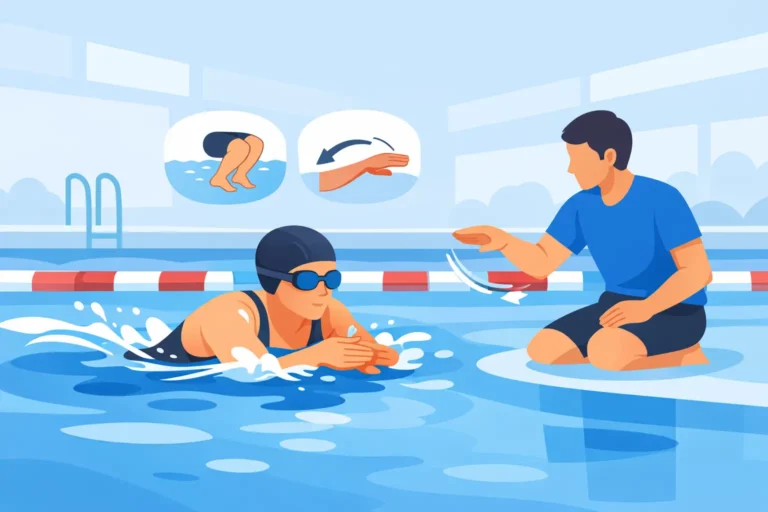
The first lesson should not jump straight into laps. A capable coach begins by assessing comfort, control, and movement patterns. That means looking at body position, breathing habits, buoyancy, kick mechanics, arm coordination, and how you respond when something feels difficult.
For beginners, the early focus is usually water confidence and safety. Can you exhale in the water calmly? Can you float with support and recover to standing? Can you glide without tensing your neck and shoulders? These are not small steps. They are the base that supports every stroke later.
For intermediate swimmers, assessment often reveals inefficient habits rather than lack of effort. Many adults try to solve poor technique by swimming harder. That usually creates more tension, rushed breathing, and early fatigue. A coach should identify what is limiting progress and then simplify it into drills you can repeat with purpose.
Common adult goals in private lessons
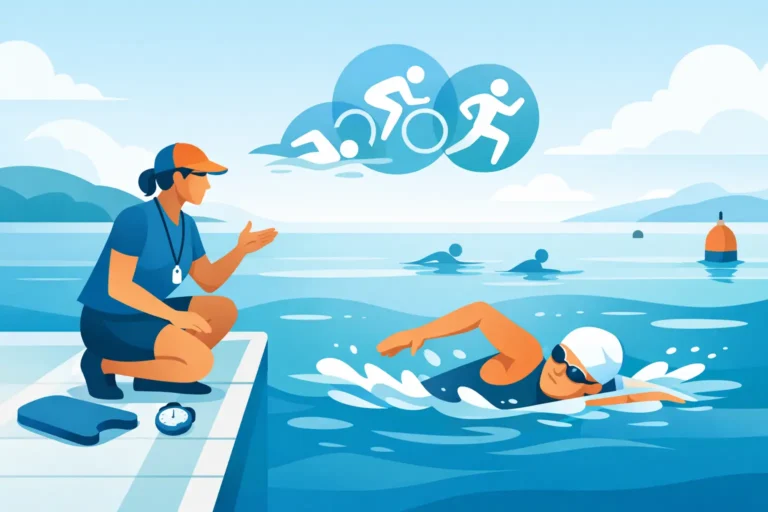
Some adults want to learn enough to feel safe around water. Some want proper freestyle and breaststroke technique. Others want to swim longer distances, prepare for triathlon training, or improve survival skills. The right coaching plan depends on that end goal.
If safety is the goal, lessons should include floating, treading water, recovery after submersion, controlled breathing, and basic propulsion. If fitness is the goal, the program should address stroke efficiency and pacing, not just distance. If certification or assessment is involved, practice should mirror the standards you need to meet.
What progress usually looks like
Adult learners often ask how long it will take. The honest answer is that it depends on your starting point, consistency, and level of water confidence. Someone who is comfortable in the water but technically weak may improve quickly. Someone managing deep fear may need more time, but can still make strong progress when lessons are structured properly.
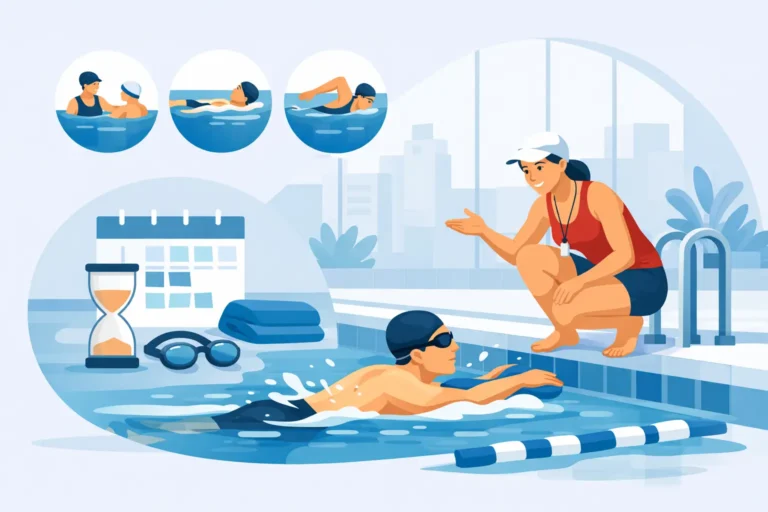
A realistic coaching pathway usually moves through clear stages. First comes comfort and breathing control. Then floating, gliding, and body alignment. After that, coordinated kicking and arm action. Once movement becomes calmer and more repeatable, endurance work starts to make sense.
Progress should be visible. You should be able to say what improved from one block of lessons to the next. Maybe you can submerge without panic, float with less support, swim one full lap without stopping, or breathe to the side without lifting your head. Good coaching turns improvement into specific milestones.
Private coaching versus group lessons for adults
A private swimming coach for adults is not automatically better than group instruction in every case. It is better when the goal is faster correction, stronger confidence building, or support for a specific challenge. Adults with fear, uneven technique, or limited training time usually benefit most from one-to-one lessons.
Group classes can still be a good fit for adults who are already comfortable in water and enjoy a shared learning pace. They may also be more budget-friendly. But if you have spent years avoiding swimming, or if you have tried group lessons and stalled, private coaching usually gives you the focused attention needed to break through.
The trade-off is cost. Private lessons are a premium format because the coach’s full attention stays with one learner. For many adults, that higher investment makes sense when results matter more than simply attending a class.
How to choose the right coach
Credentials matter, but teaching approach matters just as much. An adult learner needs a coach who can explain clearly, adjust drills quickly, and build confidence without lowering standards. Look for someone experienced with adult beginners and adult progression, not only children’s classes or competitive squads.
Ask how lessons are structured. A strong coach should be able to describe how they assess starting level, how they build safety and technique, and how they track progress. If your goal includes swim tests, lifesaving readiness, or stroke improvement for fitness, the coach should be comfortable planning toward that outcome.
Location and scheduling also matter more than many adults expect. Convenience supports consistency. Lessons at accessible public pools and realistic time slots make it easier to train regularly, which is often the deciding factor in long-term progress. That is one reason established programs such as AQZOG have strong appeal for working adults who want structured instruction without guesswork.
Signs your lessons are working
You should feel challenged, but not overwhelmed. Fear should become more manageable. Instructions should be specific enough that you know what to practice between lessons. Your coach should correct details, not just encourage effort.
Over time, you should notice greater control in simple tasks, not just in full strokes. Better exhalation, steadier floating, quieter kicking, and smoother recovery all signal real progress. These smaller wins usually come before major distance gains.
The best results come from consistency
Private coaching can accelerate learning, but it does not replace repetition. Adults improve fastest when lessons are regular and supported by simple practice goals. That might mean repeating breathing drills, short glides, kick sets, or timed lane work between sessions. The coach provides the method. Consistency turns it into skill.
It also helps to stay honest about what you need. Some adults want quick results but avoid practicing the uncomfortable parts, especially breathing and submersion. Those skills often feel frustrating early on, yet they are exactly what make the rest of swimming easier.
Choosing a private swimming coach for adults is really choosing a clearer path. You get a structured plan, direct correction, and a pace that matches your starting point. For adults who want safety, confidence, and measurable improvement, that focus can make the difference between staying stuck and finally moving forward in the water with control.