Chasing SwimSafer Certification – Is It Necessary?
A lot of parents ask this only after lessons have already started. Their child is swimming better, moving up in confidence, and then the question appears – chasing SwimSafer certification, is it necessary? It is a fair question, especially in Singapore, where SwimSafer is widely recognized and often treated as the default benchmark for progress.
The short answer is this: certification is useful, but it is not the only thing that matters. For some swimmers, it is the right target at the right time. For others, focusing too early on passing a stage can slow down real skill development. What matters most is whether the swimmer is building safe, repeatable ability in the water.
Why parents ask if chasing SwimSafer certification is necessary
Most families are not questioning the value of swimming. They already know swimming is a life skill. What they are really asking is whether every lesson should revolve around the next badge, the next stage, or the next assessment date.
That concern is valid. Once certification becomes the main goal, lessons can start feeling like test preparation instead of skill building. A child may learn how to complete a required task under coached conditions, but still struggle with breathing control, body position, or confidence in deeper water. On paper, that looks like progress. In practice, it can be shaky.
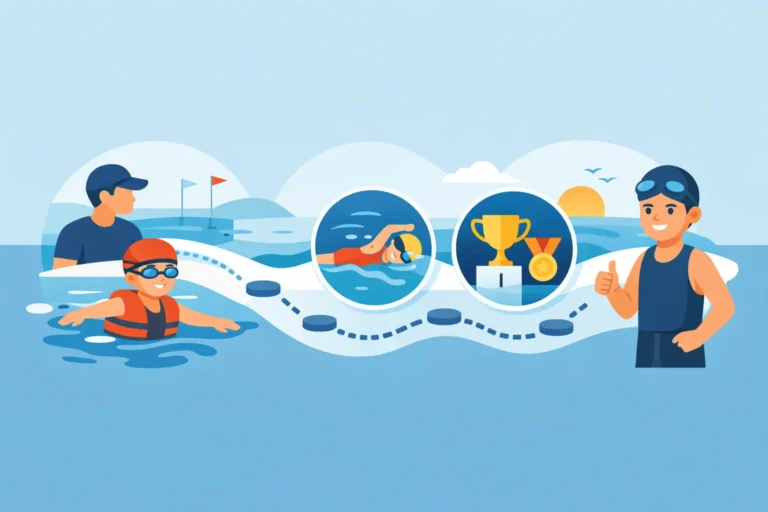
At the same time, SwimSafer does provide structure. It gives parents a clear progression pathway, helps coaches measure readiness, and encourages swimmers to develop survival skills instead of learning only strokes. That is one reason it remains valuable. The issue is not certification itself. The issue is treating certification as more important than competence.
What SwimSafer is actually meant to do
SwimSafer was designed as a national progression framework, not just a pass-fail hurdle. That distinction matters.
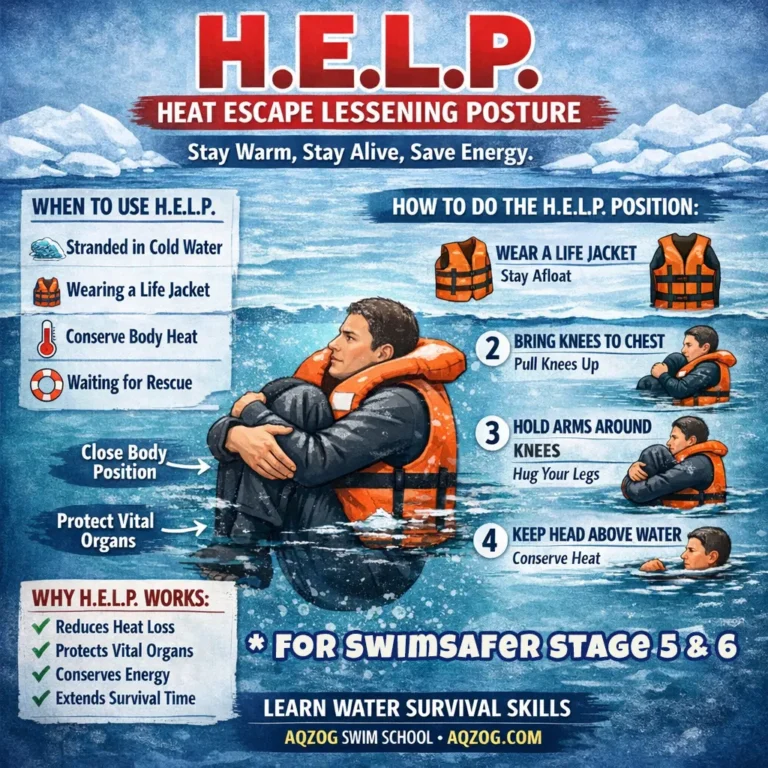
A good SwimSafer pathway develops more than freestyle and backstroke. It includes water confidence, entries and exits, personal survival skills, sculling, treading water, movement in different positions, and rescue awareness. These are practical skills with real safety value. For children especially, this broader foundation is often more important than how polished a stroke looks over one lap.
When taught properly, certification becomes evidence of learning rather than the only purpose of learning. That is the healthiest way to see it.
When certification is genuinely necessary
There are situations where pursuing SwimSafer certification makes practical sense.
For school-age children, certification can provide a clear benchmark that parents understand easily. It shows structured progression and can motivate children who like working toward a defined goal. Some schools, programs, and future aquatic pathways also look more favorably on swimmers who have completed recognized stages.
For families who want measurable milestones, certification can also remove guesswork. Instead of wondering whether a child is “doing okay,” they have a recognized standard to work toward. That can be reassuring, especially for parents who are not swimmers themselves.
For swimmers aiming for lifesaving, advanced aquatic training, or roles that require documented competency later on, early familiarity with assessment standards can be helpful too. In those cases, SwimSafer is not just a certificate. It is part of a longer progression route.
Adults can benefit as well, though usually for different reasons. Some adult learners want a formal target to stay disciplined. Others need proof of swimming ability for work, course entry, or personal achievement. Certification can provide that external marker.
When chasing certification too hard becomes a problem
This is where honest coaching matters.
A swimmer who is rushed into assessment before they are ready may pass some components and still lack consistency. They may perform well in one lesson, then fall apart the next week because the foundation is not stable. Children do this often when they have memorized a sequence but have not fully internalized the skill.
There is also a confidence risk. Repeated testing before readiness can make swimming feel stressful. Instead of associating lessons with progress and success, the child starts associating them with pressure. That can affect performance more than parents expect.
Another problem is technical compromise. Some learners can be coached to “get through” assessment items with poor habits that later need correcting. Kicking with tension, lifting the head to breathe, panicking during floats, or relying on rushed movements may still produce a temporary result. But these habits usually catch up with the swimmer at higher stages.
That is why strong programs do not simply push swimmers from one assessment to the next. They build readiness first.
The better question to ask
Instead of asking only whether certification is necessary, ask this: is the swimmer truly ready for certification, and will preparing for it improve their overall water safety?
That question shifts the focus from speed to quality.
A child who can recover calmly after a misstep, float without panic, maintain breath control, and move with basic efficiency is progressing well, even if they are not tested immediately. An adult who overcomes fear of submersion and learns safe, controlled movement is making meaningful progress too, even before any certificate is issued.
In other words, the strongest sign of success is not just passing. It is being able to repeat the skill confidently, safely, and without constant prompting.
How to tell whether your child should pursue the next stage now
Parents often need practical indicators, not broad theory.
If your child is consistent across multiple lessons, follows instructions calmly, handles deeper water without visible panic, and can complete core skills without heavy physical support, assessment may be the right next step. If those skills appear only on good days, or only when the coach stays very close, more training time is usually the wiser choice.
Readiness also depends on emotional maturity. Some children have the physical ability for a stage but struggle with test conditions. Others are motivated by assessments and perform better because they enjoy having a target. There is no single rule for every swimmer.
A credible coach should be able to explain not just whether your child can attempt the stage, but why they are ready or why waiting will produce a better outcome.
Progress first, certificate second
This is the approach experienced swim educators tend to trust most.
Certification should sit on top of good training, not replace it. If a swimmer has strong fundamentals, the certificates usually come. If the fundamentals are weak, every new stage becomes harder, more stressful, and more frustrating.
That is why structured lessons matter. A proper program does not train only for the checklist. It develops breath control, floating confidence, propulsion, recovery skills, safety awareness, and stage-specific technique in the right order. The result is not just a passed test, but a swimmer who is actually more capable in the water.
For many families, this balanced approach also saves time in the long run. Rushing into assessments can lead to repeat attempts, stalled progress, and loss of confidence. Building properly may look slower at first, but it often produces faster and more stable advancement later.
What adult learners should keep in mind
Adults sometimes assume SwimSafer is mainly for children. Not always.
If an adult learner wants a structured framework and enjoys clear milestones, certification can be useful. It can make progress feel tangible. But adults should be careful not to adopt a school-style mindset where the certificate becomes the only measure of success.
For a fearful beginner, being able to put the face in the water calmly is a major win. For a fitness swimmer, correcting breathing rhythm or body alignment may matter more than formal assessment. For someone planning a water-related course later, certification may be strategically useful. The right path depends on the learner’s purpose.
So, is chasing SwimSafer certification necessary?
Necessary? Not always.
Worthwhile? Often, yes.
If certification is used as a structured milestone within a strong training program, it can be very helpful. It gives direction, accountability, and measurable progression. If it becomes a race for badges before the swimmer is ready, it can distract from the real objective, which is safe, confident, functional swimming.
That is the standard good coaching should protect. At AQZOG, the strongest outcomes come when swimmers are developed for readiness first and assessed at the right time, not the fastest time.
A certificate is useful. Real water confidence is better. If you choose the path that builds both, you usually will not need to chase progress at all – you will be able to see it clearly, lesson by lesson.