Swim Coach advice
Swim Coach advice does matter
If At First You Don’t Succeed, Try Doing What Your Coach Told You To Do The First Time
Failure is frustrating. Whether it happens in swimming, sports, school, business, or life, nobody enjoys making mistakes. Yet many people repeat the same errors over and over again, hoping for different results. There is a funny but powerful quote that says:
“If at first you don’t succeed, try doing what your coach told you to do the first time.”
Behind the humor lies a valuable lesson. Coaches exist for a reason. They see things from a different perspective. They understand the process, the technique, and the long-term journey better than the student who is still learning. Many times, success does not come from doing more. It comes from listening better.
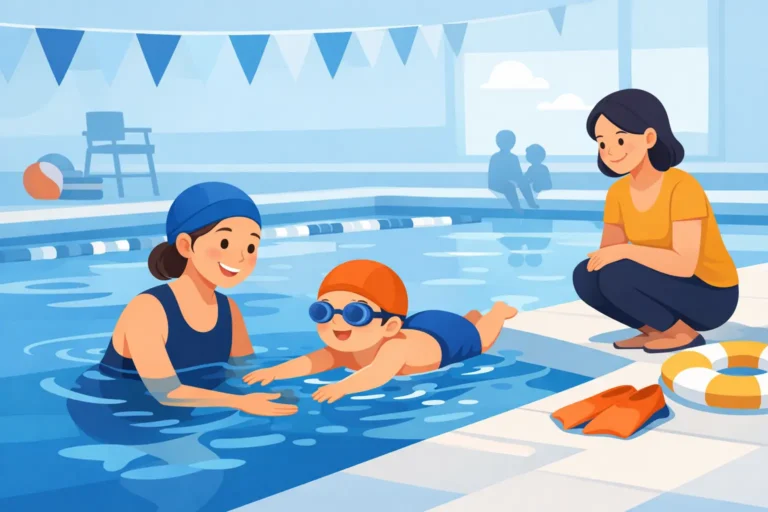
In swimming especially, this lesson appears every single day. A swimmer may struggle with freestyle breathing, kicking, floating, or timing. The coach gives instructions carefully:
- Relax your body.
- Keep your head down.
- Blow bubbles underwater.
- Kick from the hips.
- Stretch your arms forward.
But instead of following the advice exactly, the swimmer changes the method, rushes the movement, or relies on bad habits. Then frustration begins when improvement does not happen immediately.
The truth is simple: progress often starts when we trust the process.
Why Coaches Matter
A coach is more than someone who gives instructions. A coach guides, motivates, corrects, and protects students from developing poor habits. In sports like swimming, the smallest mistake in body position or breathing technique can affect the entire stroke.
Imagine a beginner swimmer trying to float. The coach says:
“Relax your body and trust the water.”
But the swimmer becomes tense, kicks wildly, and lifts the head too high. Naturally, the body sinks. The swimmer then says, “Floating is impossible.”
In reality, the issue was not the skill itself. The issue was not following the coaching instructions fully.
This happens in many areas of life:
- Students ignore study methods and fail exams.
- Athletes skip proper training and get injured.
- Employees avoid guidance and make repeated mistakes.
- Drivers refuse directions and get lost.
Experience matters. Coaches have already seen what works and what does not.
The Importance of Trusting the Process
Learning is rarely instant. Many people expect success after one or two attempts. When results do not appear immediately, they abandon the technique and try random alternatives.
Good coaching requires patience and consistency.
In swimming lessons, improvement often looks like this:
- Understand the skill.
- Practice slowly.
- Repeat correctly.
- Build confidence.
- Improve naturally over time.
Skipping steps creates frustration.
For example, a swimmer learning breaststroke may want to swim quickly immediately. However, the coach focuses first on glide, timing, and breathing rhythm. The swimmer may feel slow at first, but these foundations create smooth and efficient swimming later.
Great athletes understand this secret:
Master the basics before chasing advanced results.
Why People Ignore Coaching Advice
There are several reasons why students sometimes fail to follow instructions:
1. Ego
Some people think they already know better. They may listen halfway but continue doing things their own way.
2. Fear
Trying a new technique can feel uncomfortable. Many swimmers resist correcting bad habits because the old method feels familiar.
3. Impatience
People want fast results. Proper technique may feel slower initially, but it produces better long-term success.
4. Lack of Focus
Sometimes students simply do not pay full attention during practice.
5. Overthinking
Instead of following simple instructions, students complicate the process and confuse themselves.
The best learners are often not the most talented. They are the ones willing to listen, apply feedback, and improve gradually.
Swimming Teaches Life Lessons
Swimming is one of the greatest teachers of discipline and humility. Water immediately reveals mistakes. Poor breathing causes panic. Bad body position creates drag. Lack of rhythm wastes energy.
The pool teaches students to:
- Stay calm under pressure.
- Trust guidance.
- Practice consistently.
- Respect fundamentals.
- Learn from mistakes.
At organizations like AQZOG Swim School, coaches understand that every student learns differently. Some improve quickly while others need more time and encouragement. What matters most is persistence and willingness to learn.
Many successful swimmers once struggled with fear, coordination, or confidence. The difference is that they continued listening, practicing, and improving.
Failure Is Feedback
One important mindset shift is understanding that failure is not the opposite of success. Failure is part of success.
When a swimmer cannot complete a lap properly, the coach does not see failure. The coach sees information:
- What needs correction?
- Which skill is weak?
- What should be practiced next?
Every mistake becomes an opportunity for growth.
Champions are not people who never fail. Champions are people who learn faster from their failures.
The Power of Repetition
There is a reason coaches repeat the same instructions many times. Repetition builds muscle memory.
In swimming:
- Repeated kicking improves propulsion.
- Repeated breathing drills improve rhythm.
- Repeated floating practice builds confidence.
The same principle applies everywhere else:
- Musicians practice scales.
- Athletes repeat drills.
- Students revise lessons.
- Professionals sharpen skills daily.
Consistency beats occasional effort.
Listening Creates Faster Progress
Students who actively listen usually improve much faster. They:
- Observe carefully.
- Apply corrections immediately.
- Ask questions when unsure.
- Stay open-minded.
Coaching becomes effective only when the student participates fully.
Sometimes the solution to a problem is surprisingly simple:
- Relax more.
- Slow down.
- Focus on technique.
- Trust the instruction.
Many breakthroughs happen the moment students finally apply what they were told from the beginning.
Success Requires Humility
Humility is one of the most underrated qualities in learning. Humble students accept correction without feeling offended. They understand that feedback is meant to help them improve.
Great coaches are not criticizing students to discourage them. They are helping students unlock their potential.
The willingness to say:
“Maybe I should follow the advice properly this time,”
can completely change a student’s progress.
Final Thoughts
The quote,
“If at first you don’t succeed, try doing what your coach told you to do the first time,”
is funny because it is often true.
Many failures are not caused by lack of ability. They happen because people refuse to trust guidance, skip fundamentals, or rush the process.
Whether in swimming, sports, studies, or life, success usually comes from:
- Listening carefully,
- Practicing consistently,
- Staying humble,
- And trusting experienced guidance.
The next time something feels difficult, pause and ask yourself:
“Did I truly follow the instructions properly?”
You may discover that the solution was there all along.
Frequently Asked Questions (FAQ)
1. Why is listening to a coach important?
A coach provides experience, structure, and guidance that help students improve safely and effectively. Listening carefully helps avoid bad habits and speeds up learning.
2. Why do swimmers repeat the same drills many times?
Repetition develops muscle memory, confidence, and proper technique. Strong fundamentals lead to better long-term performance.
3. What should I do if I keep failing at a swimming skill?
Stay patient, trust the process, and review the coach’s instructions carefully. Sometimes small corrections make a big difference.
4. Can beginners become strong swimmers?
Yes. Many strong swimmers started with fear or poor coordination. Consistent practice and good coaching help beginners improve steadily.
5. Why do coaches focus so much on basics?
Basics form the foundation of all advanced skills. Without strong fundamentals, advanced techniques become difficult and inefficient.
6. How can I improve faster during swimming lessons?
- Listen carefully.
- Practice regularly.
- Stay relaxed.
- Ask questions.
- Apply corrections immediately.
7. Is failure normal in learning?
Absolutely. Failure is part of improvement. Every mistake provides feedback that helps students grow stronger and smarter.
8. What life lessons can swimming teach?
Swimming teaches discipline, confidence, patience, resilience, focus, and water safety skills that are valuable for life.
9. How do coaches help students overcome fear?
Coaches use step-by-step progression, encouragement, and safe practice methods to build confidence gradually.
10. Where can I learn more about swimming programs in Singapore?
You can explore programs and swimming resources at AQZOG Swim School.