Public Pool or Condo Lessons: Which Is Right?
A child who feels comfortable in a quiet condo pool can still hesitate when they enter a deeper, busier public pool. That is why the choice between public pool or condo lessons is more than a question of convenience. The setting affects confidence, safety habits, class consistency, and how well a swimmer is prepared for future SwimSafer progression.
For some families, a condo pool is the easiest place to begin. For others, public-pool training offers the space and conditions needed for stronger water survival skills and formal assessment readiness. The right choice depends on your child’s age, current ability, goals, and the quality of instruction available at each location.
What condo swimming lessons do well
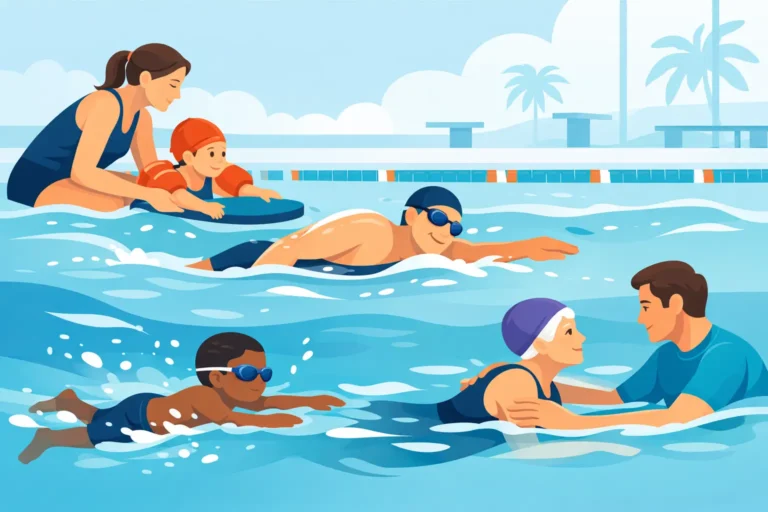
Condo pools can be an excellent starting point for toddlers, young children, and learners who are nervous around water. The familiar environment often feels calmer than a public facility. There may be fewer swimmers, less noise, and a shorter walk from home, which makes weekly attendance easier for busy families.
That consistency matters. Swimming progress comes from regular practice, not occasional lessons. When parents can bring a child to class without a long commute, children are more likely to arrive relaxed, alert, and ready to learn. This can be especially helpful for toddlers who are developing their first positive associations with water.
A smaller pool can also allow a coach to focus closely on foundational skills: safe pool entry, face wetting, breathing control, floating, kicking, and early stroke coordination. For a complete beginner, these are not minor skills. They are the building blocks of water confidence and future independence.
Private or semi-private condo lessons may suit children who need more individual attention. A child with water fear, sensory sensitivities, or a history of difficult lessons may respond better when the environment is predictable and the coach can adjust the pace carefully.
However, convenience should not be confused with readiness. A condo pool is useful only when it provides safe depth, enough clear space for instruction, and suitable access for the skills being taught. Pool rules, lane availability, and varying pool designs can limit what a structured program can cover.
Why public pool lessons build broader readiness
Public pools are usually better equipped for swimmers who need a complete progression pathway. They tend to offer larger teaching areas, deeper water, clearer lane spaces, and the variety of conditions children will encounter as they advance.
For parents focused on SwimSafer outcomes, this matters. Water survival skills must work outside a familiar, shallow corner of a residential pool. Children need to learn how to enter and exit water safely, orient themselves, move with control, float or tread when required, and follow safety instructions in a more active environment.
Public-pool lessons also help children manage normal distractions. Other swimmers, splashing, changing water depth, and a wider pool layout can initially feel challenging. With experienced coaching, these conditions become valuable practice. A child learns to stay focused, respond to instructions, and use safe habits even when the environment is not perfectly quiet.
The setting can also support more advanced technical development. Freestyle, breaststroke, backstroke, endurance work, and lifesaving-oriented skills need enough distance and depth for proper practice. A swimmer preparing for a practical assessment or improving stamina will often benefit from the space and structure of a public pool.
At AQZOG, structured public-pool programs are designed around measurable improvement, water safety, and SwimSafer progression. The purpose is not simply to help a child swim across a short pool. It is to build skills that remain reliable as the swimmer moves into deeper water, longer distances, and formal stages of development.
Public pool or condo lessons: compare the real trade-offs
There is no single answer that works for every family. The strongest decision comes from matching the pool environment to the swimmer’s immediate needs and long-term goal.
Choose condo lessons when confidence and access come first
Condo lessons are often a practical fit for toddlers and very young beginners. If your child is still learning to separate from a parent, tolerate water on the face, or float with support, the calmer surroundings can reduce anxiety. Families with demanding schedules may also find that the convenience protects lesson consistency.
Condo-based coaching can be valuable when the instructor follows a clear syllabus rather than relying on casual play. A lesson should still have goals, skill checks, and an appropriate progression from water familiarization to independent movement. A convenient pool is helpful, but a structured coach is essential.
Choose public-pool lessons when progression is the priority
Public-pool training is often the better option for school-age children who are working toward SwimSafer stages, stronger strokes, or practical-test readiness. It gives coaches more room to assess whether a swimmer can perform skills independently rather than only in a controlled, familiar setting.
It is also a sensible choice for children who already have basic confidence but need to develop endurance, technique, and water survival awareness. If your child can float, kick, and move through the water but struggles with breathing rhythm or longer distances, a larger pool may support faster improvement.
For adult beginners, public pools can be equally beneficial. Adults who are learning for fitness, travel, triathlon goals, or water confidence need exposure to realistic pool conditions. A well-managed beginner class should remain supportive, but it should also prepare the learner to use public aquatic facilities safely and confidently.
Do not choose based on pool location alone
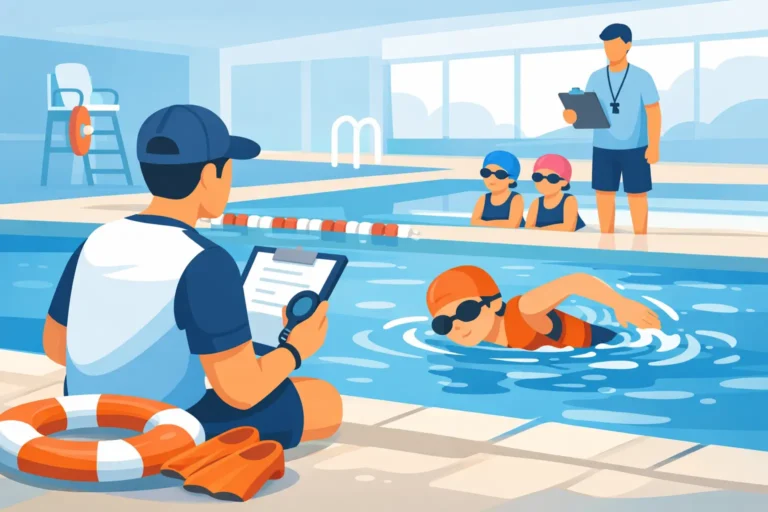
The quality of instruction should carry more weight than the pool’s postal code. A good swim program has clear learning objectives, coaches who can correct technique safely, and a method for tracking progress. Parents should know what their child is learning now, what comes next, and what skills indicate readiness to advance.
Ask whether the coach teaches water safety alongside strokes. A child may look busy during a lesson, but activity is not the same as progress. Meaningful instruction includes controlled breathing, floating, safe movement, situational awareness, and the ability to recover calmly after losing balance or taking in water.
For SwimSafer-focused learners, ask how the program prepares children for both theory and practical expectations. Assessment readiness should not be rushed. Mock practice can help, but it works best after the child has genuinely developed the required skills through regular training.
Class size also matters. Group lessons can be highly effective when swimmers are placed by ability and the coach can observe each child closely. Private lessons may accelerate progress for a learner with a specific challenge or deadline. Neither format is automatically better. The right format is the one that gives the swimmer enough coaching attention and repeated practice.
A practical pathway for growing swimmers
Many children do not need to stay in one environment forever. A toddler may begin with condo lessons to become comfortable with water, then move to public-pool sessions when ready for wider spaces and more formal progression. This transition is often a positive milestone, not a setback.
Likewise, a child enrolled in public-pool group classes may use occasional private coaching to strengthen a weak stroke, build confidence before an assessment, or practice a particular water survival skill. The lesson setting and format can change as the swimmer’s needs change.
Parents should watch for signs that it is time to progress: a child becomes bored with short-pool practice, performs basic skills easily, needs more distance for stroke development, or is preparing for a SwimSafer stage. On the other hand, a child who is anxious, repeatedly misses lessons due to travel, or needs closer support may benefit from a more accessible starting environment.
Make the choice around the swimmer, not the pool
The best pool is the one where your child can attend consistently, learn under qualified supervision, and progress toward safer independent swimming. A condo pool can create a gentle beginning. A public pool can provide the range, depth, and real-world practice needed for stronger skills and certification-focused development.
Start with your child’s current confidence, then choose a program with a clear next step. When lessons build from comfort to control, and from control to water safety, the pool becomes more than a place to practice strokes. It becomes a place where your child learns to stay calm, capable, and prepared around water.