Swimming Lessons for Adults Prices Explained
If you have ever compared swimming lessons for adults prices and wondered why one program seems affordable while another feels like a major commitment, the difference usually comes down to structure, coaching attention, and how quickly you want to progress. Price matters, but in adult swim training, value matters more. The right lesson should help you become safer, more confident, and measurably stronger in the water.
For many adults, swimming lessons are not casual spending. They are tied to a clear goal. Some want to overcome fear of water. Some need stroke correction for fitness. Some are preparing for a swim test, triathlon, or lifesaving pathway. That is why adult pricing is rarely one-size-fits-all. A lower fee may look attractive at first, but if the lesson format does not match your goal, you may spend more time and money than necessary.
What affects swimming lessons for adults prices
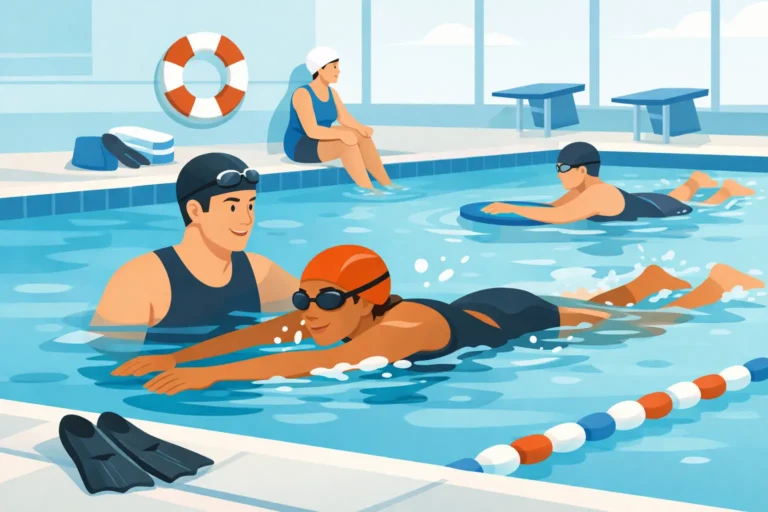
The biggest factor is lesson format. Group classes usually cost less per session because the coach’s time is shared across several learners. Private lessons cost more because the session is built around one swimmer’s needs, pace, and technical gaps. Semi-private lessons sit in the middle and can work well for friends, couples, or siblings who want more attention without paying full private rates.
Coach experience also affects price. An experienced swim instructor does more than supervise laps. They identify fear responses, correct inefficient movement, build breath control step by step, and create progression that is realistic for adult learners. That expertise often means faster improvement, especially for beginners who need confidence as much as technique.
Location can change the cost as well. Lessons at convenient public pools, especially in accessible neighborhood areas, may be priced differently from sessions in premium facilities or highly limited time slots. In some markets, peak-hour lessons command higher fees because working adults prefer evenings and weekends.
Program design matters too. A structured adult swim program with clear milestones, water safety emphasis, and measurable skill progression may cost more than loosely organized sessions. But it often delivers better outcomes. Adults generally benefit from a lesson plan that builds floating, kicking, breathing, body position, and stroke timing in a logical order rather than rushing straight into full-stroke swimming.
Typical adult swim lesson price ranges
In most cases, group adult lessons are the most budget-friendly option. These are often suitable for beginners who are comfortable learning alongside others, as well as swimmers who want regular practice with guided instruction. You pay less per class, but you also share the coach’s attention.
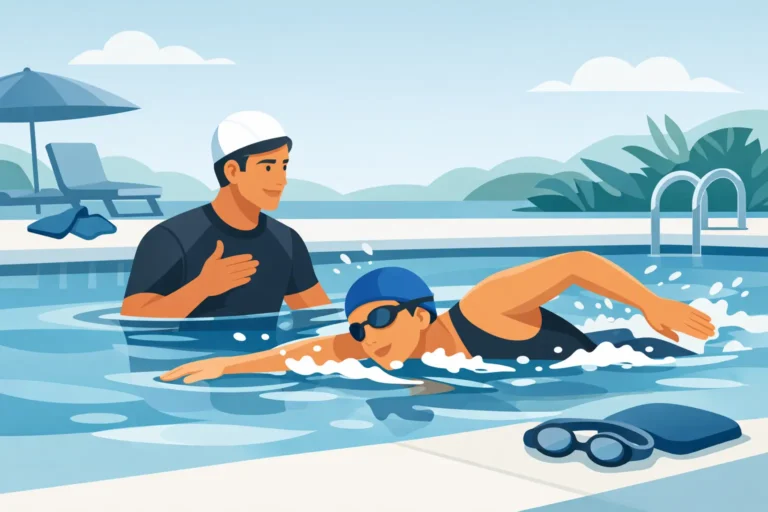
Private lessons usually sit at the premium end of the range. They are best for adults who want fast progress, have water anxiety, need flexible scheduling, or are training toward a specific performance target. If a swimmer has deep fear, poor breathing habits, or a short timeline, private coaching can be more cost-effective in practice because progress is often faster and more focused.
Semi-private lessons can be a strong middle ground. If two adults have similar ability levels and compatible goals, this format often provides better coaching attention than a group while keeping the price more manageable than one-to-one training.
Intensive or short-term programs may also appear more expensive upfront. However, if they are built for concentrated progress over a school break or limited training period, they can be worthwhile for learners who need momentum. Adults who attend too infrequently sometimes lose confidence between sessions, so a more concentrated schedule may improve results.
Cheap lessons are not always better value
This is where many adults make the wrong comparison. They look only at the session fee instead of the learning outcome. A cheaper class may still be expensive if class sizes are too large, progression is inconsistent, or the coach is unable to correct individual problems.
Swimming is a technical skill with safety implications. If you are learning as an adult, especially from a true beginner level, you need enough supervision and feedback to build correct habits early. Repeating poor breathing patterns, stiff kicking, or panic responses can slow progress and damage confidence.
A higher-priced program can be better value if it offers clear skill benchmarks, qualified coaching, and a teaching sequence designed for adults. That is especially true if your goal is not just to move through the water, but to swim safely, efficiently, and independently.
Group vs private: which price makes sense?
If your budget is the main concern and you are comfortable in water, group lessons usually make sense. They are practical for adults who want steady weekly progress and do not need constant one-to-one correction. Group learning can also reduce pressure, which helps some beginners stay consistent.
Private lessons are a better fit when the cost needs to produce a specific result. Adults who need to pass a swim assessment, prepare for an event, correct long-standing stroke errors, or manage fear of water often benefit more from targeted coaching. In these cases, paying more per session may actually reduce the number of sessions needed.
Semi-private works well when both swimmers are matched. If one person is fearful and the other is already working on front crawl timing, the shared session may not serve either swimmer well. Pricing only makes sense when the lesson format supports both learners equally.
Why adult beginners often need structured progression
Adults are different from children in the water. They tend to overthink movement, tense up under stress, and worry more about failure. That is why adult swim instruction should be structured, not improvised. Good coaching starts with water confidence and breathing control before moving into propulsion and full-stroke coordination.
This structure is one reason some programs are priced higher. You are not paying only for pool time. You are paying for a progression system that reduces fear, builds correct movement patterns, and improves safety awareness from the first lesson onward.
A school such as AQZOG builds value around that structured improvement model. For adult learners, this matters. When progress is tracked and skills are taught in sequence, confidence tends to rise much faster than in unstructured practice.
Questions to ask before comparing prices
Before you choose the lowest quote, ask what is included. Does the fee cover assessment, progression tracking, or a fixed lesson duration? Are there makeup policies, registration fees, or pool entry charges? Is the class size capped? Will the same coach teach consistently, or does the instructor rotate?
You should also ask how the program handles beginners with fear of water. Not every coach is equally skilled in this area. Adults who are anxious need calm, systematic instruction, not pressure. If that support is missing, even a low-priced lesson can feel like a poor investment.
For intermediate or fitness swimmers, ask whether the coach can provide stroke correction and efficiency training. Adult learners often plateau because nobody identifies what is technically wrong. A coach who can diagnose timing, alignment, and breathing issues brings more value than a lower-cost class that simply supervises drills.
How to decide what you should pay
A good starting point is your goal. If you want basic water confidence and safe independent swimming, a structured weekly group program may be enough. If you want fast improvement, test readiness, or targeted correction, private or semi-private lessons are often worth the added cost.
Then consider your learning style. Some adults need personal reassurance and direct correction. Others do well in a shared class environment and simply need repetition with guidance. The right price is the one attached to a format that helps you stay consistent and improve.
Finally, think beyond the first month. Swimming is a life skill. The real return is not just learning a stroke. It is being able to enter the water with control, recover your breathing under stress, and move safely with confidence. When adult swim lessons are taught properly, the price is not just a fee for classes. It is an investment in competence that stays with you for years.
Choose the program that gives you the clearest path forward, not just the cheapest starting point.