Why Swimming Is Like Dancing in Water
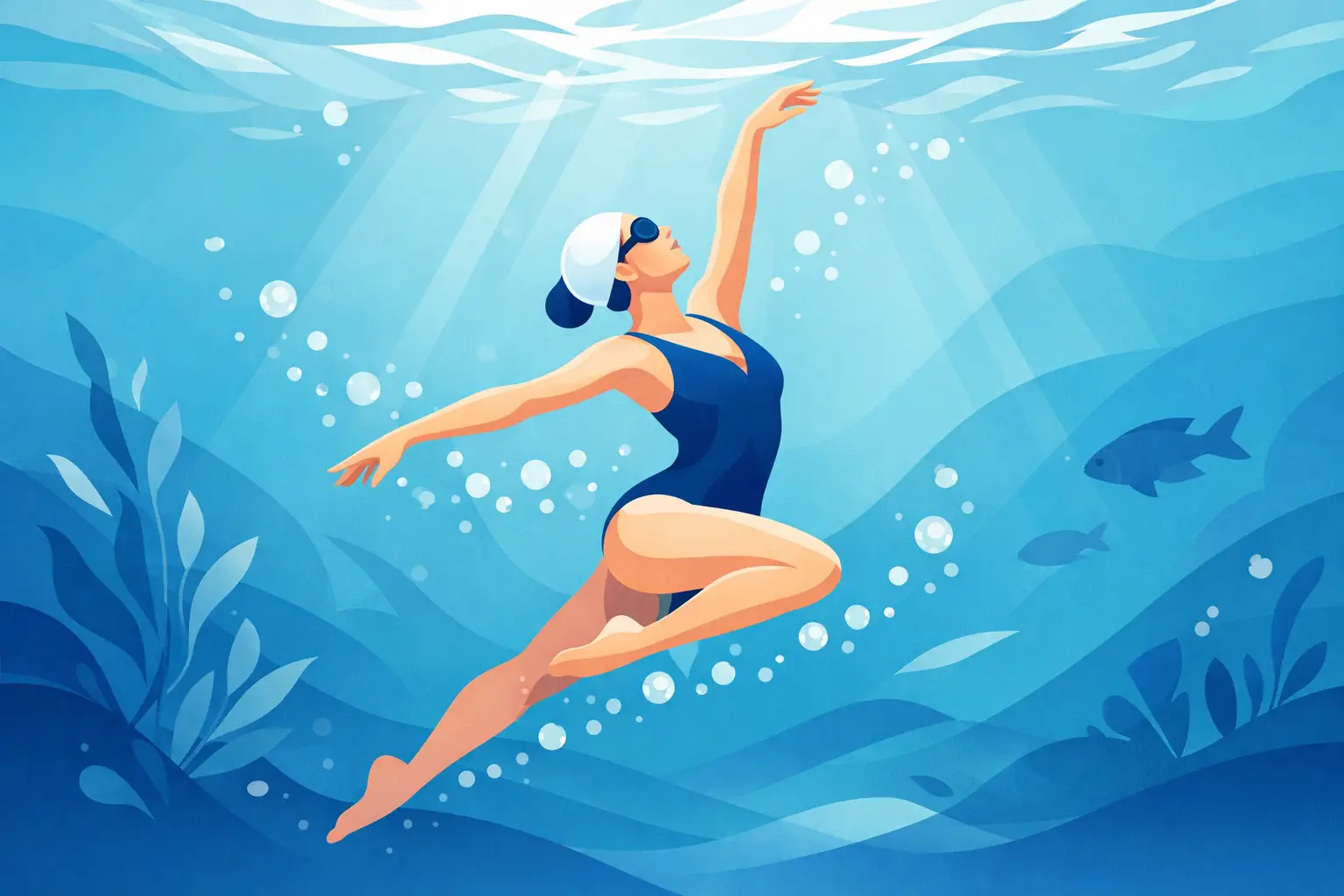
A swimmer who fights the water looks busy. A swimmer who moves well looks calm. That difference is why swimming is like dancing. The best swimmers are not simply strong or fearless. They are coordinated. They understand rhythm, body position, timing, and control. For children learning the basics and adults building confidence, this comparison is more useful than it first appears.
At first, many beginners think swimming is mainly about power. They kick harder, pull faster, and try to force movement. Usually, that creates the opposite result. The body stiffens, breathing gets disrupted, and progress slows down. In structured swim instruction, one of the first breakthroughs comes when a learner realizes that efficient swimming is built on sequence and balance, much like a dance routine.
Why swimming is like dancing
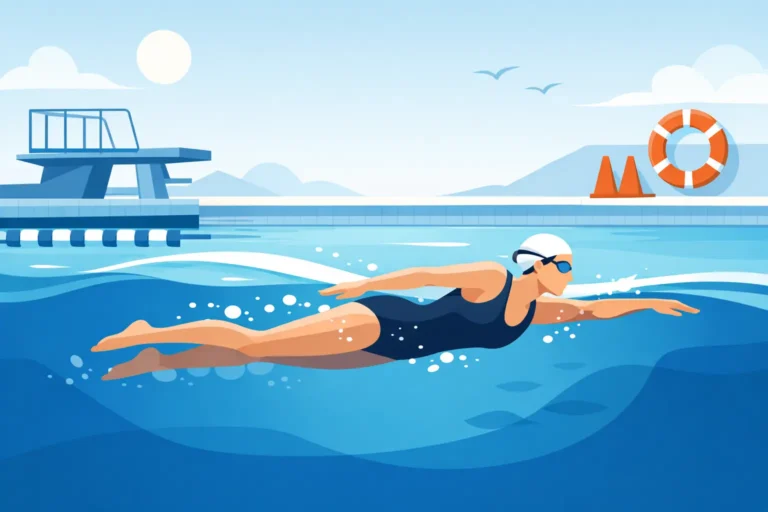
Dancing is not random movement. It depends on posture, timing, and the ability to connect one action smoothly to the next. Swimming works the same way. A freestyle stroke is not just arms turning and legs kicking. It is a pattern. The body rotates, the hand enters, the catch begins, the kick supports alignment, and the breath fits into a precise moment. When one part is early, late, rushed, or tense, the whole stroke loses flow.
This matters for every age group. A child learning to float and kick is already developing rhythm. An adult beginner learning how to exhale underwater and lift the head correctly for a breath is practicing timing. A more advanced swimmer working toward SwimSafer or test readiness is refining movement quality so each skill becomes repeatable under assessment conditions.
That is why experienced coaching focuses on more than getting across the pool. Reaching the wall is not the full standard. Good instruction builds clean habits that support safety, confidence, and long-term progression.
Rhythm matters more than force
Many new swimmers assume speed comes from effort. In reality, unnecessary effort often creates drag. When the kick is frantic, the body sinks. When the arms rush, the swimmer loses the catch. When the breath is panicked, the stroke falls apart.
Think about a dancer moving off the beat. Even if the dancer is energetic, the performance looks strained. Swimming is similar. A swimmer with proper rhythm often moves farther with less effort because the actions support each other instead of competing.
This is one reason structured lessons produce faster improvement than self-teaching. A coach can see whether the learner is holding tension in the neck, rushing the recovery, bending the knees too much in the kick, or lifting the head at the wrong moment. Small corrections in timing can create major gains in distance, breathing control, and confidence.
For children, rhythm-based learning is especially effective. Young swimmers respond well to repetition, patterns, and coordinated movement. Once they learn that every stroke has a predictable order, they become less anxious and more consistent. For adults, the same principle helps reduce overthinking. Instead of trying to control everything at once, they learn the sequence and trust it.
Body position is the swimmer’s posture
A dancer’s posture affects every step. A swimmer’s body position affects every stroke. If the hips drop, the legs create resistance. If the head is too high, the spine falls out of alignment. If the body stays rigid, rotation becomes difficult.
This is where the comparison becomes practical, not poetic. Swimming is like dancing because both require awareness of how the body moves as a whole. You cannot isolate one part for long and expect quality results. The hands, core, hips, legs, and breath must work together.
For beginners, this often starts with floating, gliding, and streamlining. These are not minor drills. They build the foundation for efficient movement and water safety. A swimmer who can hold a balanced body line is easier to teach, easier to correct, and usually safer in deeper water because panic is less likely to take over.
For test-focused learners, body position also supports cleaner execution during assessed skills. Whether the goal is stroke improvement, survival competency, or certification readiness, control in the water matters as much as effort.
Breathing is part of the choreography
Breathing is where many swimmers lose their rhythm. They hold the breath too long, inhale too late, or lift the entire head to breathe. Once that happens, the stroke breaks down.
In dance, breathing helps control pacing and movement quality. In swimming, it does even more. It supports buoyancy, calmness, and timing. A well-timed breath keeps the stroke connected. A poorly timed breath interrupts propulsion and creates fatigue.
This is why breathing drills are central in quality instruction. Before a learner masters distance, speed, or deep-water confidence, breathing must become reliable. Children need to learn comfort with submersion and steady exhalation. Adults often need to unlearn fear-based habits. Progress comes faster when breathing is treated as a skill sequence, not as an afterthought.
There is also an important trade-off here. Some learners want quick distance results and try to skip breathing foundations. That can work briefly in shallow, low-pressure settings, but it usually causes bigger problems later. Good technique may feel slower at first, but it creates stronger long-term progress.
What this means for children learning to swim
For parents, the phrase swimming is like dancing can be a helpful way to understand how children learn best in the water. Children do not improve through repetition alone. They improve through guided repetition with structure.
A child who splashes energetically is not necessarily building a usable stroke. A child who learns how to kick from the hip, align the body, turn for a breath, and recover the arms in sequence is building a skill that can progress toward confidence, safety, and certification.
This is particularly important in a program-led environment. If lessons are structured well, each stage builds on the one before it. Water confidence leads to breath control. Breath control supports floating and gliding. Those foundations support kicking and arm action. Then full-stroke coordination becomes possible. That progression is safer and more efficient than pushing a child toward distance too early.
It also gives parents something valuable to track. Instead of asking only, “Can my child swim across?” they can ask, “Is my child moving with control? Is the breathing improving? Is the stroke becoming more coordinated?” These are better indicators of real development.
What it means for adult beginners
Adults often come to swimming with urgency. Some want a life skill. Some need to prepare for fitness goals or practical assessments. Some simply want to stop fearing the water. In all of these cases, treating swimming as coordinated movement helps.
Adults tend to be more analytical than children, which can help or hinder progress. The advantage is that they can understand mechanics. The challenge is that they often become stiff while trying to get everything right. The idea that swimming is like dancing reminds adult learners that efficient movement must be practiced until it becomes natural, not forced.
That does not mean technique should be vague. It means technique should be taught in the right order. A beginner adult should not be overloaded with ten corrections at once. They need a structured path: water comfort, breathing control, floating balance, kick timing, arm movement, and then integrated stroke work. When those parts are taught progressively, confidence grows faster.
At AQZOG, this progression-focused approach is what helps learners move from hesitation to measurable improvement.
Why coaching makes the difference
Very few people can spot their own timing errors in the water. A swimmer may feel that the stroke is smooth while the body is crossing over, the legs are scissoring, or the breath is late. Skilled coaching closes that gap.
The value of coaching is not only correction. It is sequencing. A good coach knows which issue to fix first so improvement becomes visible quickly. Sometimes the problem is not the arms at all. It may be a head position issue that is disrupting the whole stroke. Sometimes a child’s weak kick is really a balance problem. Sometimes an adult’s fatigue comes more from breathing mistakes than fitness.
That is why structured swim education matters, especially for learners working toward water safety benchmarks or formal progress stages. Clear instruction creates consistency. Consistency creates confidence. Confidence supports performance when it counts.
Swimming is like dancing, but with higher stakes
The comparison is helpful because it makes technique easier to understand. Still, swimming carries more serious consequences. If movement in the water is uncoordinated, the issue is not only appearance or efficiency. It can affect endurance, confidence, and safety.
That is why smooth movement should never be dismissed as style alone. In swimming, form supports function. Coordination supports survival. Rhythm supports control. Whether the learner is a toddler entering the water for the first time, a school-age child progressing through formal stages, or an adult starting from zero, the goal is the same: move with enough control that the water feels manageable, not overwhelming.
The most encouraging part is that this can be taught. People are not born knowing how to coordinate breath, body line, kick, and stroke. They learn it through patient instruction, correct repetition, and clear progression. Once that happens, the water becomes less of a struggle and more of a skill.
If a swimmer starts to look calmer, smoother, and more deliberate, that is not luck. It is evidence that the pieces are finally working together. And that is when real progress begins.