Why Start Young With Swimming for Life Skills?
A child who can calmly turn around, find the pool wall, and hold on has gained more than a new activity. They have practiced a response that matters when water becomes unexpected. That is the strongest reason to start young with swimming: early lessons build familiarity, safe habits, and practical skills before fear or risky overconfidence has time to take hold.
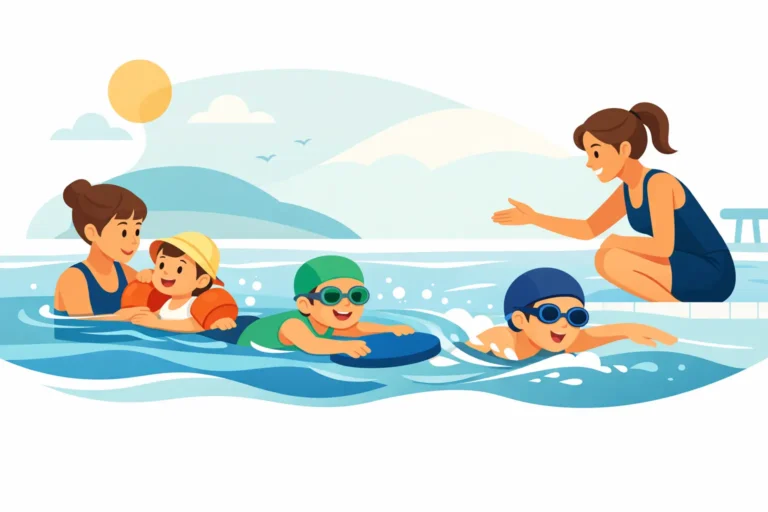
For families, swimming can also be one of the few activities that stays useful through every stage of childhood. A toddler begins by accepting water on the face. A preschooler learns to float and travel short distances. A school-age child develops strokes, stamina, and the water-survival knowledge needed for SwimSafer progression. Each step has a clear purpose.
Why Start Young With Swimming?
Children are naturally learning how their bodies move, balance, breathe, and respond to new environments. Water adds a different set of sensations: buoyancy, resistance, splashing, and the need to control breathing. When these experiences are introduced gradually, children can learn that water is manageable rather than frightening.
Starting early does not mean pushing a child to swim independently before they are ready. It means giving them repeated, positive exposure under qualified supervision. A good program moves at the child’s pace while still maintaining clear standards. They may begin by blowing bubbles or placing their ears in the water, then progress toward floating, kicking, and recovering to a safe position.
Early instruction also gives parents a more realistic understanding of safety. A child who has attended several lessons is not automatically “drown-proof.” No child is. Active adult supervision, pool rules, and appropriate barriers remain essential. Swimming lessons strengthen safety, but they never replace close supervision.
Water Confidence Should Lead to Water Competence
Confidence is valuable, but it needs to be earned through skill. A child who is willing to jump into deep water but cannot return to the wall is not yet water-safe. Equally, a child who is nervous around water may need time and encouragement before formal stroke work becomes productive.
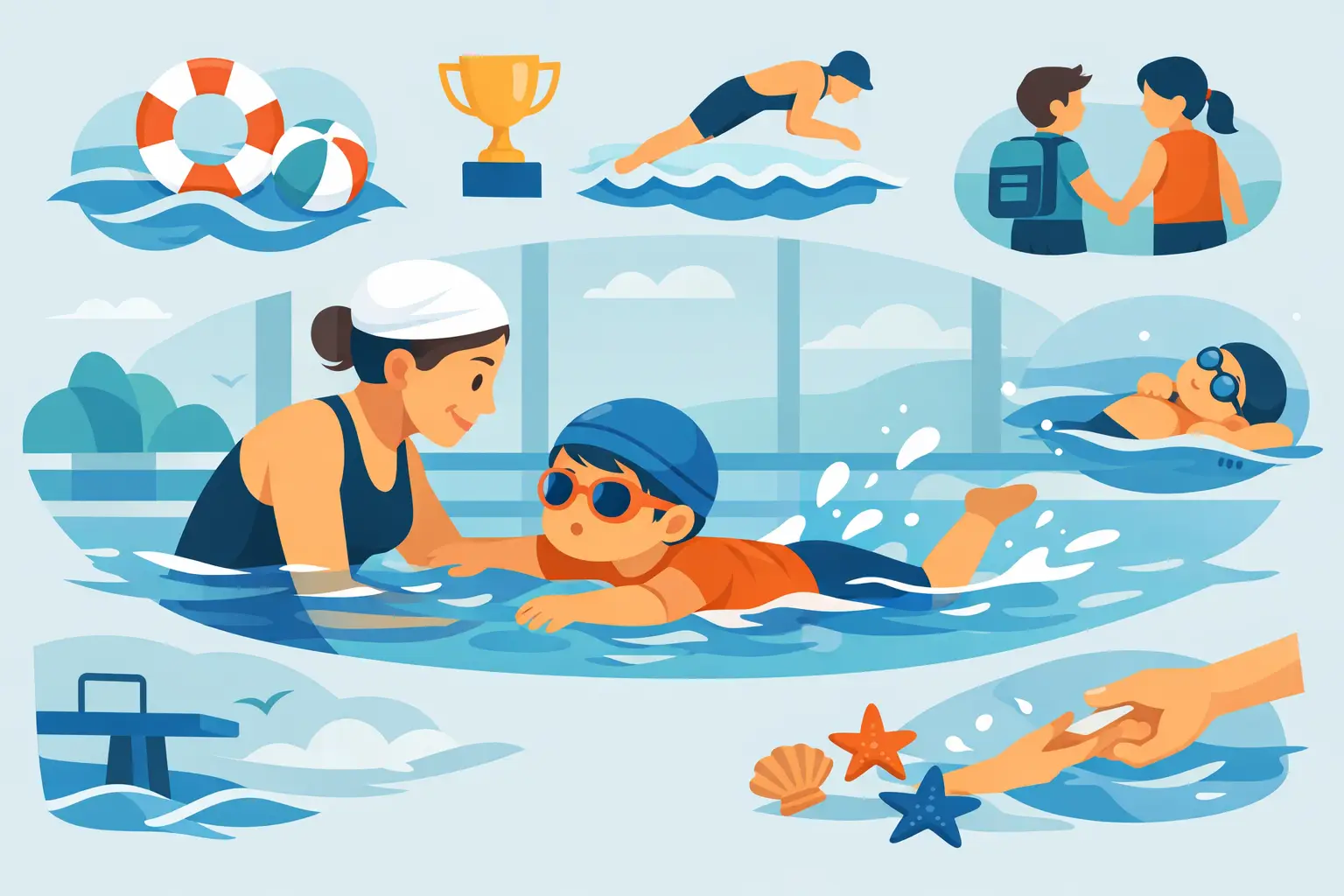
Structured lessons balance those two needs. Coaches first help children feel secure in the water, then teach them how to move with control. They learn to enter and exit safely, put their face in the water, float on the front and back, kick efficiently, and use their arms with purpose. As skills improve, children begin linking them together into short swims and eventually recognizable strokes.
This progression is especially important in Singapore, where pools, water-play areas, school programs, and holidays near water are common parts of family life. The goal is not simply to get from one end of the pool to the other. The goal is for a child to recognize hazards, stay calm, and use the skills they have practiced when they need them.
The safety skills that matter before perfect strokes
Parents often ask when their child will learn freestyle or breaststroke. Those are worthwhile milestones, but foundational survival skills should come first. Depending on age and readiness, a child should work toward safe entries, floating or treading, changing direction in water, breathing control, moving to the pool edge, and exiting independently.
These skills are practical because they address what happens when a child becomes tired, disoriented, or unexpectedly enters deeper water. Stroke technique can be refined for years. The ability to recover, breathe, and reach safety needs to be introduced from the beginning.
What Age Is Right for First Lessons?
There is no single perfect age, because readiness depends on a child’s development, temperament, health, and previous experiences around water. Toddlers can benefit from supervised water introduction that develops comfort, simple movement, listening skills, and a respectful attitude toward the pool. These classes should be age-appropriate, playful, and focused on parent-supported familiarity rather than independence too soon.
Many children are ready for more structured beginner lessons during the preschool years. At this stage, they can often follow short instructions, wait for turns, and practice basic skills with greater consistency. School-age beginners may progress quickly because they have stronger coordination and attention, although some may also bring fear from a past unpleasant experience.
Starting later is still worthwhile. An older child is never “too late” to learn, and adults should not feel embarrassed about beginning from zero. The advantage of starting young is not that later learners cannot succeed. It is that young learners have more time to build skill gradually, revisit it often, and make water safety a normal part of life.
A Structured Progression Creates Visible Results
Unstructured pool time has its place. It helps children enjoy water with family and practice what they know. But play alone does not reliably teach breathing, floating, stroke coordination, or safe decision-making. Those outcomes need a lesson plan, skilled observation, and repetition.
At AQZOG, structured swimming instruction is designed around progressive outcomes rather than random activities. Coaches assess where a swimmer is now, reinforce the skills that need attention, and introduce the next challenge when the foundation is stable. This approach helps parents see what their child is learning and why it matters.
For young beginners, progress may look small from week to week: a relaxed face in the water, a longer back float, or a child who can finally let go of the instructor’s support. These are meaningful changes. They show that the child is gaining control and trust in their own ability.
As swimmers advance, instruction becomes more technical. Body position, kick rhythm, arm recovery, timing, and efficient breathing all affect how far a child can swim without fatigue. A structured pathway keeps technique from becoming an afterthought while maintaining the survival skills that support formal assessment readiness.
SwimSafer gives progress a practical purpose
For many families, SwimSafer provides a useful framework because it combines swimming ability with water-safety awareness. Children work toward age- and skill-appropriate competencies, giving parents a clearer view of their development than a simple “beginner” or “advanced” label.
Preparation should not be treated as a last-minute test drill. The strongest test readiness comes from regular lessons in which each practical skill is learned correctly, repeated often, and performed with growing independence. Mock practical sessions and theory preparation can then help swimmers become familiar with assessment expectations without creating unnecessary pressure.
Certification is a valuable achievement, but the lasting value is what the child can do beyond the test. They should understand why safe entries matter, how to respond when tired, and when to call for help rather than take risks.
Choosing the Right Lesson Format for Your Child
The best format depends on the swimmer and the family’s goals. Weekly group classes are often a strong choice for children who benefit from routine, peer motivation, and consistent progression. Learning alongside others can improve listening, turn-taking, and confidence as children see that classmates are also working through new skills.
Private coaching can be helpful when a child has significant water fear, needs focused technique correction, is preparing for a practical assessment, or has a schedule that makes regular group sessions difficult. The individual attention may speed up specific improvements, but it is not automatically the better option for every child. Some young swimmers enjoy the social energy of a group and respond well to a familiar class routine.
Holiday intensive programs can suit families who want a concentrated start or a focused skills boost. They can produce noticeable momentum because children practice on consecutive days. However, intensive programs work best when families continue practice or enroll in ongoing lessons afterward. Swimming skills develop through repetition over time, not through a single burst of activity.
When selecting a program, look beyond class size or the promise of fast results. Ask how skills are sequenced, how coaches manage different confidence levels, whether water survival is included, and how parents receive feedback on progress. Convenient pool locations also matter because consistency is one of the biggest drivers of improvement.
How Parents Can Support Progress Between Lessons
Children usually make faster progress when swimming becomes familiar outside formal class time. That does not mean parents need to become instructors. In fact, introducing techniques that conflict with the coach’s guidance can confuse a child. The most useful role is to create calm, positive opportunities for supervised practice.
Before class, arrive with enough time for your child to settle in rather than rushing from one activity to the next. Use simple, encouraging language. Instead of asking, “Why are you scared?” try, “Let’s tell your coach which part feels hard today.” This helps children communicate rather than hide anxiety.
At family pool sessions, reinforce the safety rules they are learning: walk, ask before entering, stay within the agreed area, and return to an adult when called. Celebrate effort as well as outcomes. A child who tries a back float after several hesitant attempts has made progress, even if the float is not yet steady.
Avoid comparing siblings or classmates. Children develop at different rates, and pressure can turn lessons into a performance rather than a learning process. Regular attendance, a supportive response to setbacks, and clear coaching will do more for long-term progress than demanding a particular badge or stroke by a certain date.
The best time to begin is when your child can be introduced to water in a safe, supportive setting and given enough consistency to grow. Start with the next achievable skill, keep supervision non-negotiable, and let confidence be built on real ability.