A User-Friendly Guide to Learning Freestyle Swimming (Front Crawl)
A User-Friendly Guide to Learning Freestyle Swimming (Front Crawl)
Freestyle, also known as the front crawl, is the most popular and efficient swimming stroke in the world. It is fast, smooth, energy-efficient, and widely taught in learn-to-swim programs, SwimSafer stages, competitive swimming, triathlon training, and adult fitness swimming.
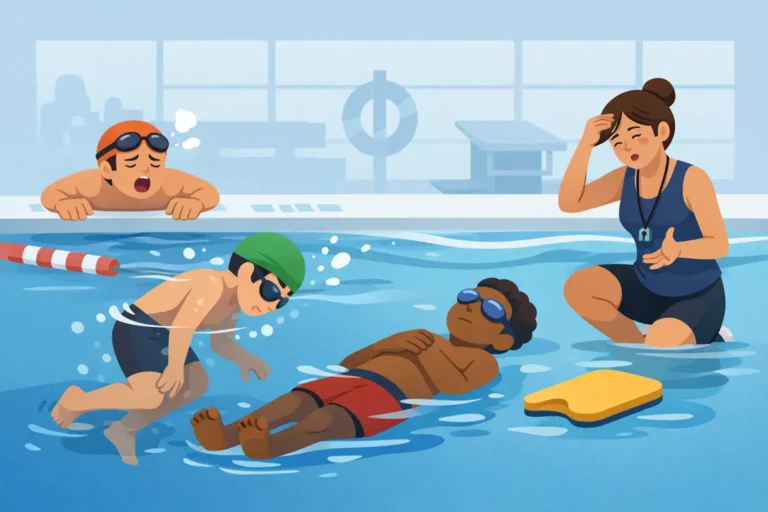
Yet for many beginners, freestyle feels anything but easy. Common struggles include poor breathing, sinking legs, tired arms, or feeling panicked in the water. The good news? Freestyle is a skill that anyone can learn with the right progression, mindset, and simple techniques.
This user-friendly guide breaks freestyle down into clear, manageable steps, so beginners, parents, and adult learners can understand what to do, why it matters, and how to improve—without confusion.
What Is Freestyle Swimming?
Freestyle is a stroke swum on the front of the body using:
- Alternating arm movements
- Continuous flutter kicks
- Rhythmic side breathing
- A streamlined body position
Although swimmers may technically choose any stroke in freestyle races, front crawl is always used because it is the fastest and most efficient.
Why Learn Freestyle First?
Freestyle is often taught early because it:
- Builds water confidence
- Improves breathing control
- Develops endurance and coordination
- Transfers well to survival swimming
- Forms the foundation for advanced strokes
For beginners and children, mastering freestyle also helps reduce fear and increases independence in the water.
The 5 Key Components of Freestyle (Simplified)
Learning freestyle is easiest when broken into five parts. Master them one by one, then combine them smoothly.
1. Body Position: Stay Long and Flat
Good freestyle starts with body alignment.
What to Aim For
- Body stretched long like a pencil
- Face in the water, eyes looking down
- Hips and legs close to the surface
- Neck relaxed, not lifted
Why It Matters
A flat body reduces drag. When your head lifts too high, legs sink, making swimming harder and more tiring.
Beginner Tip
Imagine balancing your body on the surface of the water rather than pushing through it.
2. Kicking: Small, Relaxed Flutter Kicks
Freestyle uses a flutter kick—small, quick kicks from the hips.
Correct Kicking Technique
- Legs straight but relaxed
- Movement starts from the hips, not knees
- Ankles loose, toes gently pointed
- Small, fast kicks instead of big splashes
Common Mistake
Over-bending the knees or kicking too wide, which wastes energy.
Beginner Drill
Hold a kickboard and practice steady kicking while focusing on relaxed ankles and a flat body.
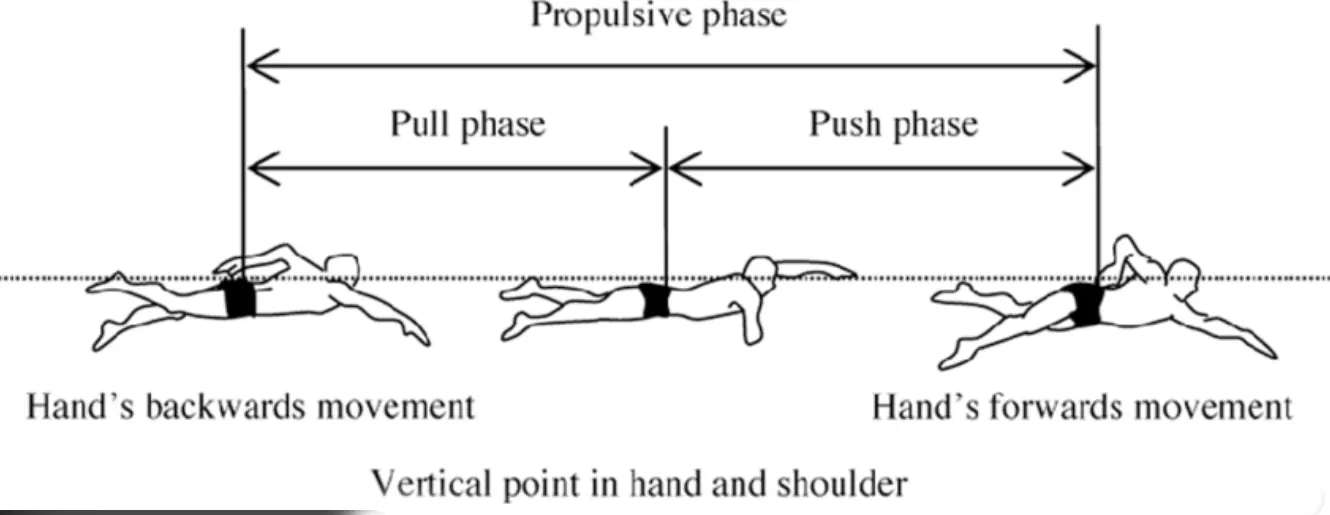
3. Arm Action: Reach, Pull, Push, Recover
Each arm works in a continuous cycle.
Step-by-Step Arm Movement
- Reach forward into the water
- Catch the water with a slightly bent elbow
- Pull down and back along your body
- Push past your hip
- Recover the arm relaxed over the water
Key Focus
Pull water backwards, not downwards.
Beginner Tip
Think of pulling yourself past the water rather than pushing water away.
4. Breathing: Breathe to the Side, Not Forward
Breathing is the biggest challenge for beginners—but also the most important skill.
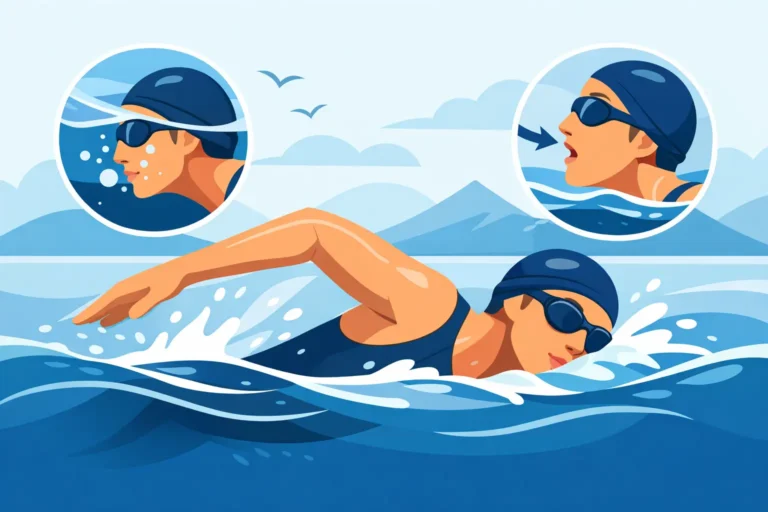
Proper Breathing Technique
- Exhale continuously in the water (bubble breathing)
- Turn head to the side when one arm recovers
- One goggle in, one goggle out of the water
- Quick inhale, then face back down
Common Errors
- Holding breath
- Lifting the head forward
- Turning too far and losing balance
Beginner Drill
Practice breathing while holding the pool wall or using a kickboard with side breathing.
5. Timing & Rhythm: Smooth and Relaxed
Freestyle is about flow, not force.
What Good Timing Looks Like
- One arm pulls while the other recovers
- Kick remains continuous
- Breathing fits naturally into the stroke cycle
Beginner Advice
Slow down. Smooth swimming beats fast, tense swimming every time.
How Beginners Should Learn Freestyle (Recommended Progression)
Trying to learn everything at once can be overwhelming. Follow this proven progression:
- Water confidence & floating
- Bubble breathing
- Kicking with support
- Single-arm freestyle drills
- Side breathing practice
- Full freestyle with pauses
- Continuous freestyle swimming
This step-by-step approach builds confidence and prevents panic.
Common Beginner Problems (And Easy Fixes)
“I get tired very fast”
- You may be holding your breath
- Slow your kick
- Relax your arms
“My legs keep sinking”
- Lower your head
- Engage gentle kicks
- Stretch your body longer
“I panic when breathing”
- Practice breathing drills separately
- Exhale fully underwater
- Start with short distances
Freestyle for Children vs Adults
Children
- Learn faster through games and repetition
- Need short, fun practice sessions
- Benefit from visual demonstrations
Adults
- Overthink technique
- Fear water more than children
- Improve quickly once relaxed and confident
Regardless of age, patience and consistency matter more than strength.
Safety Tips When Learning Freestyle
- Never swim alone
- Practice in shallow water first
- Rest when tired
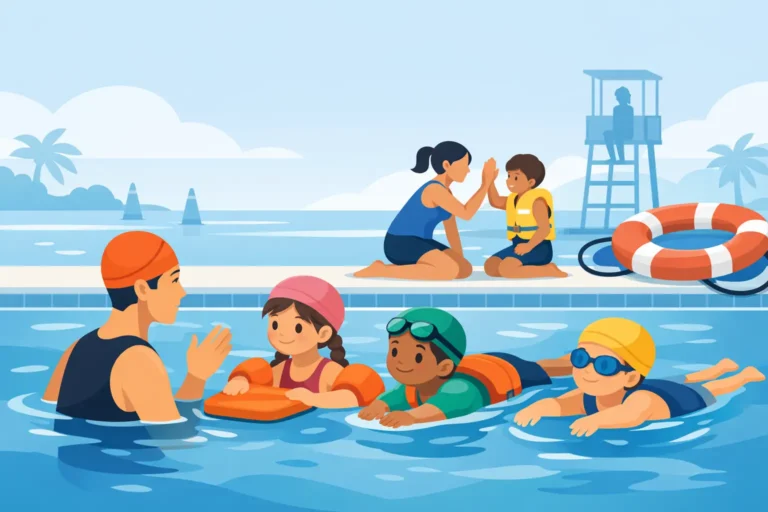
- Ask a coach or lifeguard if unsure
- Use flotation aids if needed (temporarily)
Swimming is a life skill—safety always comes first.
How Long Does It Take to Learn Freestyle?
Everyone progresses differently, but generally:
- Basic freestyle: 4–8 lessons
- Confident swimming: 8–12 lessons
- Smooth, efficient freestyle: Ongoing refinement
Consistency beats intensity. Short, regular practice works best.
Final Thoughts: Freestyle Is a Lifelong Skill
Freestyle is not just a swimming stroke—it is:
- A foundation for water safety
- A gateway to fitness and sports
- A confidence-building life skill
Learn it patiently, practice it correctly, and enjoy the process. With the right guidance, freestyle becomes smooth, graceful, and surprisingly relaxing.
Frequently Asked Questions (FAQs)
1. Is freestyle suitable for complete beginners?
Yes. Freestyle can be taught safely to beginners with proper progression and support.
2. How often should I practice freestyle?
2–3 times a week is ideal for steady improvement.
3. Do I need to be fit to learn freestyle?
No. Fitness improves because you swim, not before.
4. Why is breathing so difficult in freestyle?
Most beginners hold their breath. Learning to exhale underwater solves many problems.
5. Should beginners use goggles?
Yes. Goggles increase comfort and confidence, especially for breathing practice.
6. Can adults learn freestyle even if they fear water?
Absolutely. Many adults learn successfully with patient coaching and gradual exposure.
7. Is freestyle better than breaststroke for fitness?
Freestyle generally burns more calories and improves cardiovascular endurance.
8. How can parents help children learn freestyle?
Encourage practice, avoid pressure, celebrate progress, and choose qualified coaches.
9. What is the biggest mistake beginners make?
Trying to swim fast before mastering breathing and body position.
10. Can freestyle help with water survival?
Yes. Efficient freestyle improves stamina and confidence in emergency situations such as swimming away from danger zone or oil spill area.