SwimSafer Stage 2 in Singapore Explained
Many parents only realize how important SwimSafer Stage 2 in Singapore is when their child can already move in the water but still lacks control, safety habits, or test confidence. That gap matters. Stage 2 is where basic swimming starts becoming dependable swimming – with stronger coordination, better breathing, and clearer water survival awareness.
For children in Singapore, this stage is more than a badge progression. It helps bridge the distance between early water confidence and practical swimming ability. A child who passes Stage 2 should not just look comfortable in the pool. They should be able to demonstrate safer entries, controlled movement, simple stroke development, and better understanding of what to do in and around water.
What SwimSafer Stage 2 in Singapore focuses on
SwimSafer Stage 2 is commonly associated with fundamental stroke skills and personal water safety. At this level, swimmers are expected to show improved body position, kicking control, arm coordination, and breathing patterns. They are also introduced to more purposeful movement rather than random splashing or short-distance survival paddling.
This is an important point for parents to understand. A child may be brave in the pool and still not be ready for Stage 2 assessment. Confidence helps, but Stage 2 requires repeatable technique. The swimmer must follow instructions, complete specific tasks, and perform under test conditions.
In practical terms, Stage 2 usually develops front crawl and backstroke foundations, streamlining, movement through deeper water awareness, and safer entries or exits. Depending on the child, the biggest challenge is often not strength. It is consistency. Many young swimmers can perform a skill once, but the test standard expects more controlled execution.
Why this stage matters for long-term progression
Parents sometimes treat Stage 2 as a minor checkpoint because the more advanced stages sound harder. In reality, weak Stage 2 skills often create problems later. If breathing is rushed, body position is unstable, or kicking lacks control, children tend to struggle when distance increases or survival skills become more demanding.
A solid Stage 2 foundation supports everything that comes next. It improves stroke efficiency, reduces panic, and helps children listen and respond calmly in the water. That is especially important in Singapore, where SwimSafer progression is widely recognized and children may eventually need to complete school-based or structured assessment pathways.
This stage also builds discipline. Children begin to understand that swimming lessons are not just play sessions. They are learning measurable skills with clear safety outcomes.
Common skills children are expected to develop
While exact assessment items may vary based on current testing standards and instructor emphasis, most Stage 2 preparation centers on a few core areas: movement with control, stroke basics, breathing rhythm, and simple survival awareness.
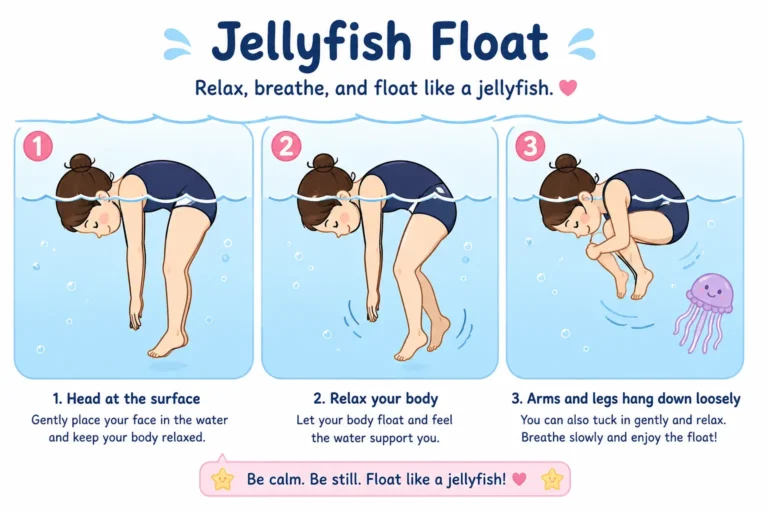
Children at this level usually need to show that they can move independently over set distances with more reliable technique. That includes kicking with better alignment, using arms with clearer coordination, and maintaining enough composure to finish a task without stopping midway. They may also need to demonstrate sculling, floating, or recovery-related skills that support water confidence beyond pure stroke work.
For many learners, backstroke feels easier because breathing is less stressful. Front crawl often takes longer because timing the breath can disrupt body position. That is normal. Good coaching focuses on correcting the root issue instead of forcing speed.
Why some children struggle at Stage 2
The most common problem is rushing. Children who try to swim fast often lose form, lift their heads too high, sink their hips, and tire quickly. Another issue is overreliance on flotation support during lessons. If a swimmer always trains with aids, they may look capable but struggle when asked to perform independently.
Attention span can also affect results. Stage 2 swimmers need to remember instructions and apply corrections from one attempt to the next. If a child is distracted, fearful of putting their face in the water, or inconsistent in attendance, progress tends to slow down.
This is where structured instruction makes a difference. A progression-based program gives children repeated practice in the exact skills they need, while building comfort and test readiness at the same time.
How to prepare for SwimSafer Stage 2 Singapore assessments
Preparation should be practical and steady. Children do better when lessons focus on correct repetition, not occasional performance. Weekly training helps, but the quality of practice matters more than simply spending time in the pool.
Parents should look for three things in a training program. First, the coach should understand SwimSafer assessment criteria and teach toward them clearly. Second, the child should receive corrections that are specific and age-appropriate. Third, the lesson structure should build both skill and confidence, because a child who freezes during a test may underperform even if they can do the task in class.
Mock assessments can help. They allow swimmers to experience simple test pressure before the real session. That often reveals small weaknesses such as poor streamlining, incomplete kicks, forgotten breathing patterns, or hesitation during independent swims.
AQZOG has long focused on structured SwimSafer preparation in Singapore, which matters because test success usually comes from methodical coaching rather than guesswork.
What parents should look out for before booking a test
A child is usually closer to readiness when they can complete required skills more than once, stay calm while being observed, and recover well after each task. If they only pass a skill occasionally, more preparation is usually the better choice.
It is also worth checking whether your child understands pool safety instructions, not just swimming movements. SwimSafer is designed around safety and progression together. Technique alone is not the full picture.
The best outcome at Stage 2 is not simply passing fast. It is building a swimmer who is safer, more confident, and ready for the demands of the next level. That foundation pays off every time they enter the water.
Swimming Skills
Swim 25 meter – Ability to swim on the front using either freestyle or breaststroke.
Back Swimming 15 meter– Participant may choose to swim either survival back or backstroke.
Survival Skills
Step In Entry
Front Float 10 sec
Swim 5m on front, roll over
Perform Backfloat for 10 sec
Swim 5m on back
Scull, float or tread water for 30 sec
Recover an object (Chest Deeo Water)
Resurface and exit safely from pool
Survival Skills- T shirt and Short
Implement the project plan by coordinating team activities. Monitor progress, manage workflows, and address issues as they arise.