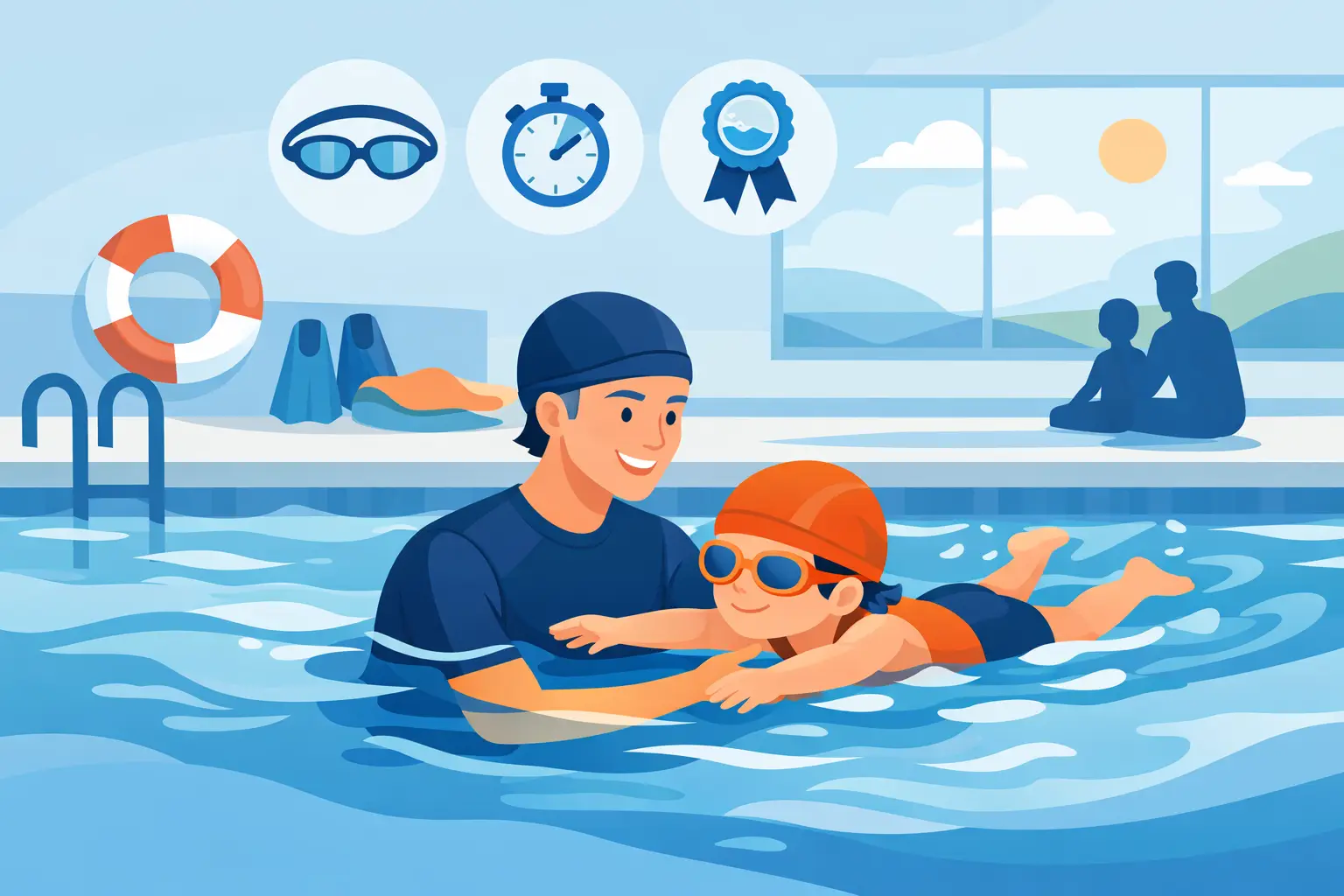
How Many Lessons for a Child to Learn to Swim?
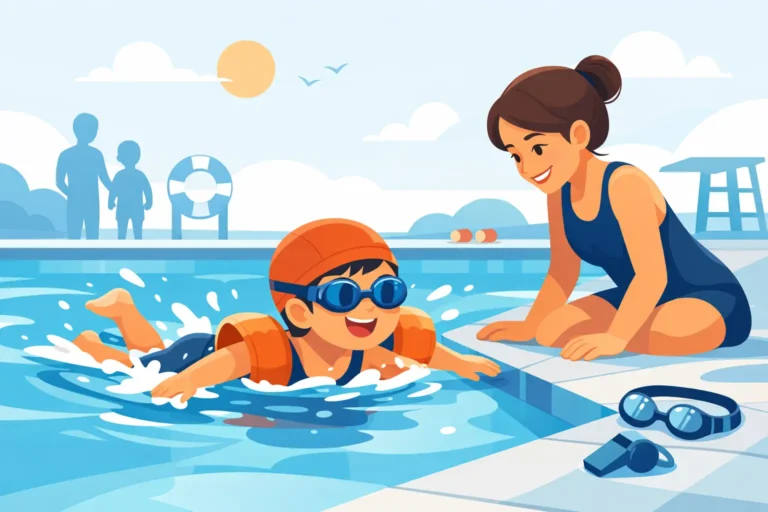
One of the first questions parents ask is how many lessons for a child to learn to swim. It is a fair question, but the honest answer is not a single number. Children do not learn swimming the way they memorize spelling words. Swimming is a safety skill, a movement skill, and a confidence skill all at once. That means progress depends on the child’s age, comfort in water, lesson consistency, and the standard you use for “can swim.”
For some children, early lessons focus on putting their face in the water, floating, and moving independently for short distances. For others, the goal is stronger stroke technique, deeper water confidence, and readiness for a formal stage assessment. The right expectation is not instant mastery. It is steady, structured progress that builds real water safety.
What does it mean to have learned to swim?
Before counting lessons, parents need to define the outcome clearly. A child who can kick three meters with a float has started learning. A child who can move independently, breathe calmly, recover to standing, and follow safety instructions has reached a more meaningful milestone. A child who can swim confidently in deeper water, tread water, and demonstrate survival skills is at a different level again.
This is why estimates vary so much. If your definition is basic water confidence, the number of lessons may be lower. If your definition is strong, safe, independent swimming, it will take longer. In a structured program, that is a good thing. Real swimming ability is built in stages, not rushed.
How many lessons for a child to learn to swim in real terms?
A realistic range for many beginners is 20 to 40 lessons to become basically independent in the water, with some children needing fewer and others needing more. That usually means they can float, kick, move short distances without support, and manage simple breathing and recovery skills. It does not always mean polished strokes or advanced deep-water confidence.
For stronger all-around swimming skills, many children need 40 to 80 lessons or more. This is especially true when lessons include water survival, stroke development, and readiness for structured assessments. The timeline becomes longer if the child starts very young, feels anxious in water, or attends lessons irregularly.
Parents sometimes hear that a child can learn in ten lessons. In limited cases, that may describe a child who already feels comfortable in water and only needs basic technique coaching. It is not a reliable benchmark for most beginners. When safety matters, fast claims should always be weighed against actual skill retention.
The biggest factors that affect lesson count
Age and developmental readiness
A toddler and a seven-year-old do not learn in the same way. Younger children can make excellent progress in water confidence, floating, body position, and pool familiarity, but they may not yet have the attention span, coordination, or breathing control for full stroke learning. Older children often understand instructions faster and can link movements together more efficiently.
That does not mean starting young is less valuable. Early exposure often creates comfort and trust in the water, which supports faster progress later. It simply means lesson goals should match the child’s developmental stage.
Fear level and water confidence
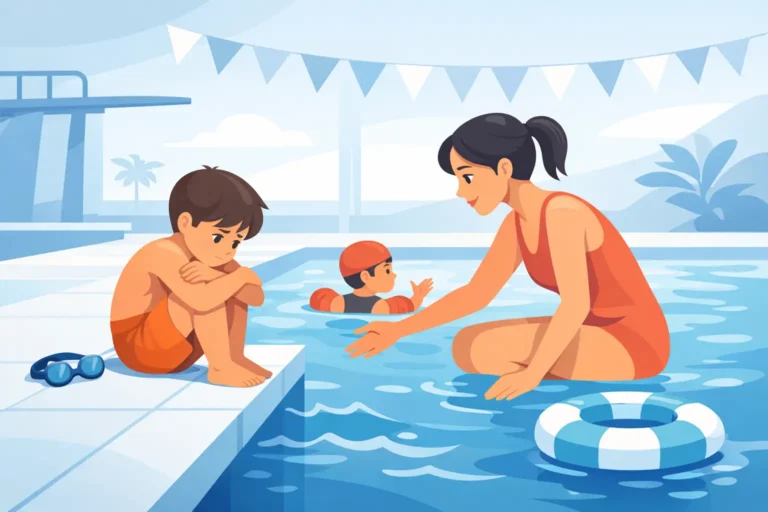
A child who is relaxed in water often progresses much faster than a child who is fearful. If a beginner cries, clings, refuses submersion, or panics when unsupported, the first phase of instruction must focus on calmness and trust. That is not slow progress. That is necessary progress.
Confidence is often the foundation that makes later technique possible. Without it, children may perform a skill once but not retain it under pressure.
Frequency of lessons
One lesson a week can work well, especially with consistent attendance over time. But children who attend more frequently, such as in intensive holiday programs or through a second weekly session, often improve faster because skills stay fresh. Repetition matters in swimming.
Gaps slow things down. If a child attends three classes, misses two weeks, then returns, part of each lesson may go toward regaining comfort and recall.
Group vs private instruction
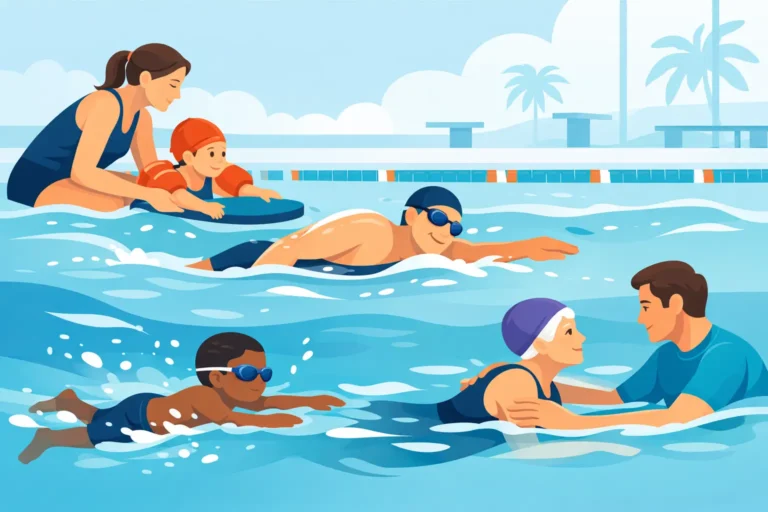
Group lessons are effective for many children, especially when the class is well structured and matched by ability. They build routine, social confidence, and steady progression. Private lessons can shorten the learning curve for children who need more individual correction, have strong fear, or are preparing for a test within a tighter timeline.
Neither format is automatically better for every child. The best choice depends on the child’s learning style, urgency, and support needs.
Quality and structure of coaching
Not all swim lessons produce the same outcomes. A structured program with clear progression points usually delivers better long-term results than loosely run classes without measurable goals. Children benefit when coaches know what skill comes next, how to correct errors early, and how to build safety habits alongside stroke development.
This is especially important for parents who want more than casual pool familiarity. If the goal includes survival skills, confidence in deeper water, and readiness for school-based or national progression standards, structure matters.
A more useful way to measure progress
Instead of asking only how many lessons for a child to learn to swim, ask what your child should be able to do after each phase.
In the first phase, many children learn water entry, bubble blowing, submersion, floating, and assisted movement. In the next phase, they begin independent kicking, gliding, turning, and basic breathing control. After that, they work on sustained movement, stroke coordination, and skills such as treading water or recovering after a jump-in.
This stage-based view helps parents see real progress, even before full independent swimming is achieved. It also prevents disappointment when a child improves steadily but not dramatically from one lesson to the next.
What parents can realistically expect after 10, 20, and 40 lessons
After around 10 lessons, a complete beginner may be more comfortable entering the water, putting their face in, floating with support, and moving short distances with aids or light assistance. Some children will do more. Others, especially nervous beginners, may still be working on trust and body position.
After around 20 lessons, many children can show clearer independence. They may kick and glide on their own, float with less support, and swim short distances with basic coordination. This is often where parents begin to see meaningful change, especially if lessons have been consistent.
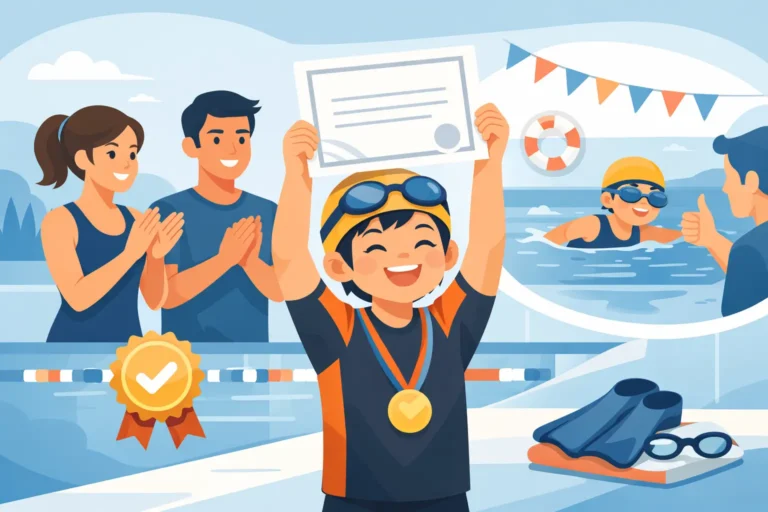
After around 40 lessons, a child in a structured program may demonstrate much more reliable swimming. That can include better breathing control, stronger front and back movement, improved confidence in deeper water, and greater readiness for formal progression benchmarks. Technique may still be developing, but the child is no longer just getting used to the water.
These are broad estimates, not promises. Some children move faster. Some need more time. What matters most is whether skills are becoming stable, repeatable, and safe.
Why rushing the process can backfire
Parents naturally want results. But in swimming, rushing often creates shallow learning. A child may appear to “swim” with rushed paddling and poor breathing, yet still struggle if they fall in, panic, or lose footing in deeper water. That gap between performance and true water competence is where risk lives.
Strong swim instruction does more than teach movement. It teaches recovery, control, awareness, and calm responses. Those qualities take repetition. They are worth the extra lessons.
How to help your child progress faster
The most effective thing parents can do is stay consistent. Regular attendance builds familiarity, muscle memory, and confidence. If your child is in a structured swim school, trust the sequence and avoid judging progress by stroke appearance alone.
It also helps to keep expectations calm. Children read adult pressure quickly. When parents focus only on distance or speed, anxious children often tighten up. When parents reinforce effort, listening, and confidence, children tend to learn more steadily.
If progress feels stalled, review the setup. The child may need a different class level, more frequent practice, or more individualized coaching. At AQZOG, this is why structured placement and progression matter so much. The right lesson pathway can save time by matching coaching to the swimmer’s actual stage.
When should parents be concerned about slow progress?
Slow progress is not automatically a problem. Some children simply need longer to trust the water or coordinate breathing. Concern is more justified when there is no clear teaching plan, no visible progression over many weeks, or no attention to safety skills.
A good program should be able to explain where your child is, what they are working on now, and what comes next. Progress does not need to be fast every week, but it should be purposeful.
If you are choosing lessons for your child, look beyond the promise of quick results. Ask whether the program builds independent movement, confidence, and water survival in a structured way. That is the kind of learning that lasts, and it is the kind that matters most when your child is in the water without hesitation.