How Many Swim Lessons to Learn to Swim Adults
Most adults do not ask this question until there is real urgency behind it. A vacation is coming up. A child has started swim class. A fitness goal suddenly feels serious. Or there is a quiet but persistent concern about water safety. If you are wondering how many swim lessons to learn to swim for adults, the honest answer is not one fixed number. It depends on your starting point, your comfort in water, and how structured your lessons are.
What matters more than the exact number is whether each lesson builds the right sequence of skills. Adults usually learn faster when instruction is systematic, safety-led, and focused on measurable progress rather than random practice. That is especially true for beginners who feel tense in the water or have had a long gap since their last swimming experience.
How many swim lessons to learn to swim for adults?
For most adults, basic swimming ability can develop in around 8 to 20 lessons. That range is wide for a reason. A confident adult with no fear of water may learn floating, breathing, kicking, and short-distance movement within the first 8 to 12 sessions. An adult beginner with water anxiety may need 15 to 20 lessons, sometimes more, before swimming independently with control.
The phrase learn to swim also needs clarification. For some adults, it means being able to move 25 meters without panic. For others, it means swimming multiple strokes with proper breathing and enough endurance to join a fitness class or open-water program. Those are very different outcomes, and the lesson count changes accordingly.
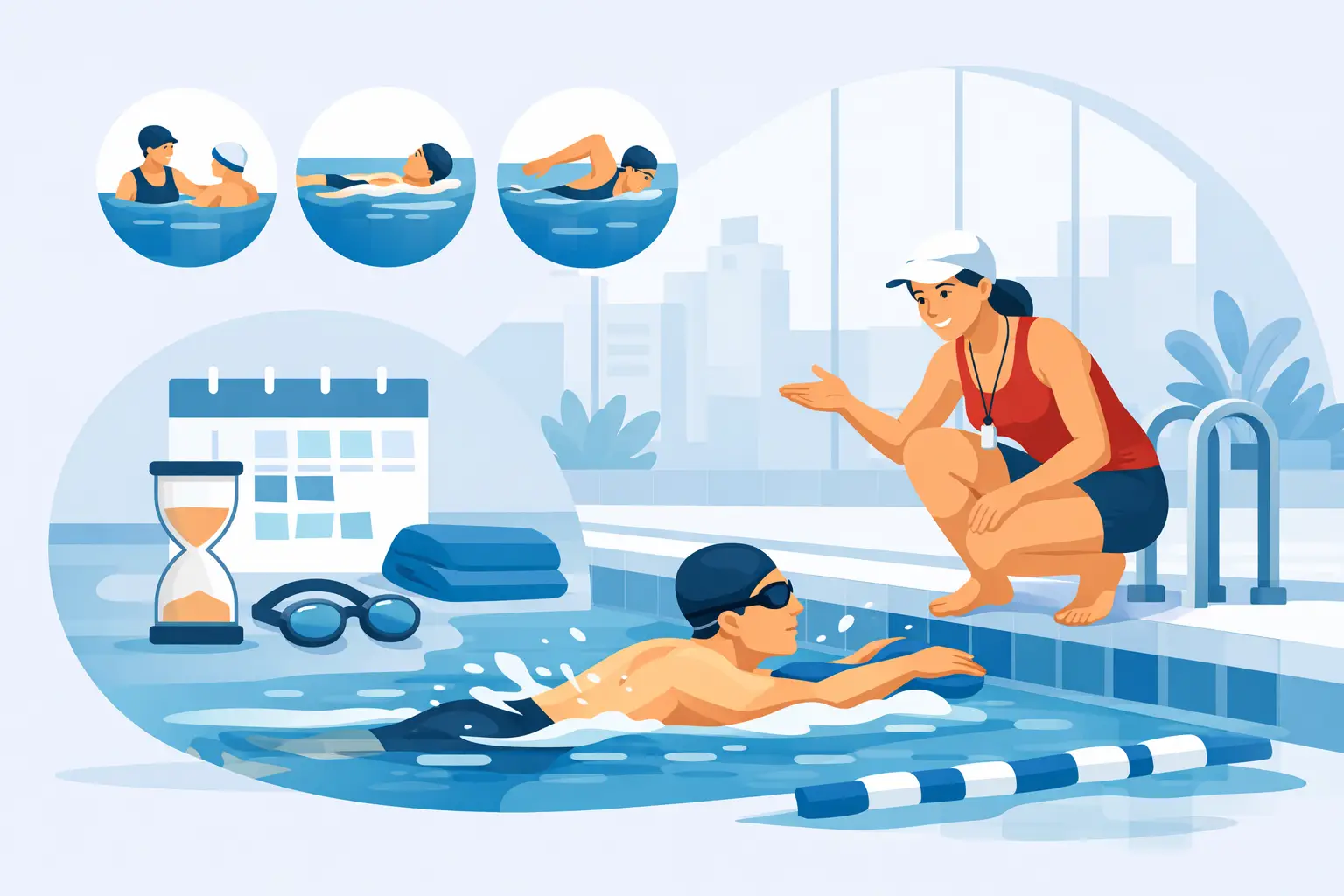
A better way to think about progress is in stages. First comes water confidence and breath control. Then floating and body position. After that, kicking, arm movement, coordination, and changing direction. Only then does smooth, sustainable swimming start to appear.
What affects how many swim lessons adults need?
Water confidence is usually the biggest factor. Adults who are calm in shallow water often progress much faster than adults who tense up when their face gets wet. Fear changes breathing, tightens the body, and makes simple skills harder to learn.
Previous exposure also matters. Someone who played in pools as a child but never learned formal strokes may regain comfort quickly. Someone with no prior pool experience may need more time just to feel steady and safe.
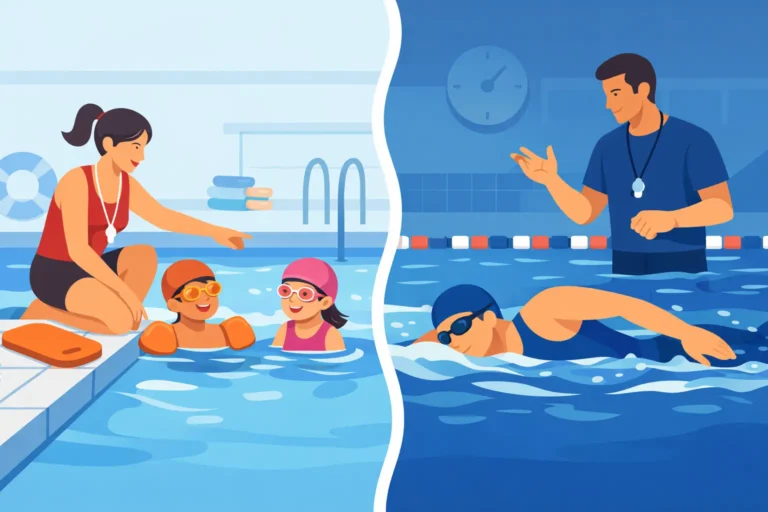
Lesson format can make a clear difference as well. Private lessons often shorten the timeline because the coach can correct breathing, balance, and timing immediately. Group lessons can still be highly effective, especially when they are structured well, but the pace may be less individualized.
Frequency is another major variable. One lesson a week can work, but progress is usually slower because adults forget details between sessions. Two lessons a week often creates better continuity. Intensive programs can accelerate early learning, especially for adults who want fast results and can handle focused practice.
Physical factors deserve mention too. Adults with strong general fitness do not automatically learn faster, but they may have better stamina and body awareness. On the other hand, adults with shoulder stiffness, poor ankle flexibility, or a very rigid body position may need extra time to move efficiently in water.
A realistic timeline by skill level
An adult who is completely new to swimming often spends the first few lessons on comfort, breathing, submersion, and floating. This stage can look slow from the outside, but it is not wasted time. It is the foundation for everything that follows. Without it, stroke work becomes stressful and inconsistent.
By around lessons 5 to 10, many beginners start to glide, kick with more control, and coordinate simple arm actions. Some can already swim short distances with aids or minimal support. Others are still refining breath timing and balance. That difference is normal.
By lessons 10 to 20, many adults can swim short to moderate distances independently, usually in freestyle and sometimes backstroke. Their movement may not yet be polished, but they are no longer just surviving. They are starting to manage breathing, direction, and pace.
Past 20 lessons, improvement tends to shift from learning to swim to swimming better. This is where efficiency, endurance, and technique become the focus. Adults training for lap swimming, triathlon, or formal water competency standards often continue well beyond the beginner phase.
Why some adults need more lessons than expected
The most common reason is not lack of ability. It is inconsistent practice. Swimming is technical. If you attend a lesson and then stay away from the water for two weeks, your body has to relearn timing and confidence.
Another common issue is rushing ahead. Many adults want to skip floating or breathing drills because they seem basic. But weak fundamentals usually show up later as poor endurance, panic during breathing, or difficulty swimming without stopping.
Fear can also return unexpectedly. An adult may do well in chest-deep water, then feel blocked when moving into deeper water. This does not mean progress has failed. It means instruction needs to stay structured, with confidence built step by step.
Finally, not all lessons are equal. A program with clear progression, experienced coaching, and practical corrections usually gets better results than casual instruction without a learning plan. Adults benefit from knowing what each lesson is meant to achieve and how it connects to the next stage.
How to reduce the number of lessons you need
If your goal is to learn efficiently, consistency is the first priority. Weekly lessons can work, but twice-weekly sessions often lead to faster retention and stronger confidence. Even 10 to 15 minutes of simple practice between lessons can help reinforce breathing, floating, and kick rhythm.
Choose the right lesson format for your starting point. If you are very nervous, private coaching may save time because the instructor can adjust the pace around your confidence level. If you are comfortable and motivated, a well-run group class can provide structure and momentum at a lower cost.
Be specific about your goal from the start. Saying “I want to learn swimming” is too broad. It is better to say you want to swim one pool length safely, pass a water competency test, improve freestyle breathing, or become fit enough for regular lap swimming. Clear goals make lesson planning more accurate.
It also helps to accept that swimming is not just about effort. Adults often try to overpower the water, especially when nervous. Good coaching teaches you to balance, breathe, and move with control. That reduces fatigue and speeds up learning.
Group lessons or private lessons for adults?
There is no universal best choice. Group lessons are a strong option for adults who like a supportive environment, can learn by watching others, and are comfortable progressing at a shared pace. They also work well for building routine.
Private lessons are often the better fit for adults with fear of water, highly specific goals, or a tight timeline. If you need faster correction, focused confidence work, or technical improvement, one-to-one coaching can be more efficient.
Semi-private lessons sit in the middle. They can be effective for couples, friends, or family members who want personalized attention without the full cost of private sessions.
At AQZOG, adult learners typically progress best when lessons are matched to both confidence level and objective, not just availability. That matters because an adult preparing for water safety needs a different pathway than an adult training for fitness.
What does “learn to swim” actually mean for an adult?
This is where expectations need to stay realistic. Being able to swim a short distance is a meaningful milestone, but it is not the same as being water-safe in different situations. True swimming competence includes controlled breathing, floating, directional movement, basic recovery skills, and enough calmness to respond under pressure.
For adults with children, this distinction matters even more. Many parents start lessons because they want to supervise their kids more safely around pools. In that case, basic stroke ability is helpful, but water confidence and safety judgment are just as important.
If your goal is fitness, the bar is different again. You may need more lessons because efficient technique matters. A swimmer with poor breathing and body position can finish one lap and still feel exhausted. A swimmer with sound basics can go farther with less strain.
So how many lessons should you plan for?
A practical starting plan for most adult beginners is 10 to 12 lessons. That is usually enough time to assess comfort level, build core skills, and see whether independent swimming is developing on schedule. If you are fearful or starting from zero, plan for closer to 15 to 20 lessons. If you already feel comfortable in water, you may progress sooner.
The key is to review progress after the first block instead of guessing from the start. Are you breathing comfortably? Can you float and recover? Can you move forward with control, not panic? Those markers tell you more than any generic promise about a fixed number of sessions.
Learning to swim as an adult is rarely about talent. It is usually about method, consistency, and trusting the process long enough for confidence to catch up with skill. Start with a realistic block of lessons, commit to regular practice, and let each session build the next one.