Kids Swimming Lessons That Build Real Skills
The moment a child steps into a pool, the goal should be bigger than getting through one lesson without tears. Kids swimming lessons should build water confidence, safety habits, and skills that improve in a clear, measurable way. For parents, that means looking past splash time and choosing a program that teaches children how to move, breathe, float, and respond calmly in the water.
That difference matters. A child who is simply comfortable standing in the shallow end is not the same as a child who knows how to recover from a slip, control breathing, tread water, and follow structured stroke progression. Good swim instruction develops those outcomes step by step, with coaching that matches the child’s age, ability, and learning pace.
What parents should expect from kids swimming lessons
The best programs do not treat swimming as a casual enrichment activity. They treat it as a life skill. That changes how lessons are planned, how progress is measured, and what children are expected to achieve over time.
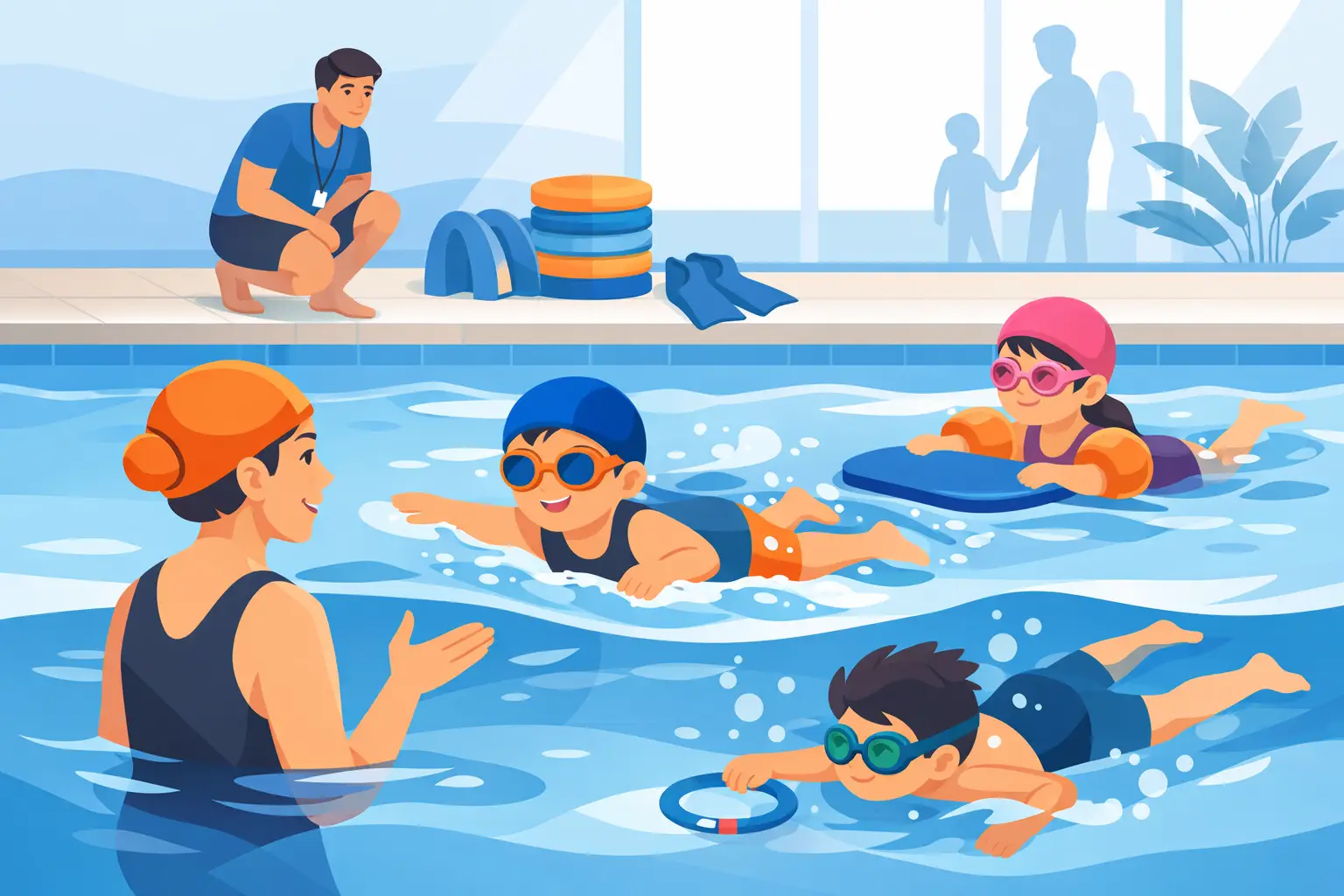
A strong lesson structure usually starts with water orientation and basic confidence. Young beginners learn how to enter the water safely, get their face wet, hold the wall, kick with support, and recover to a stable position. As they improve, lessons should move into breath control, floating, gliding, propulsion, and basic stroke mechanics. Later stages can include deep water confidence, survival skills, endurance, and test preparation.
This progression is especially important for parents who want more than short-term familiarity. Children learn best when each skill builds on the last. Random drills may keep a class busy, but they do not always create stable progress. Structured instruction gives parents a clearer sense of where their child started, what they have mastered, and what comes next.
Why structure matters more than entertainment
Children should enjoy lessons, but fun alone is not the benchmark. If a child laughs through class yet still cannot float independently or manage breathing, the lesson is missing its real purpose.
Structured kids swimming lessons create consistency. The coach follows a progression instead of improvising each week. The child repeats key movements often enough to develop confidence. Parents can track improvement through visible milestones rather than guessing whether classes are working.
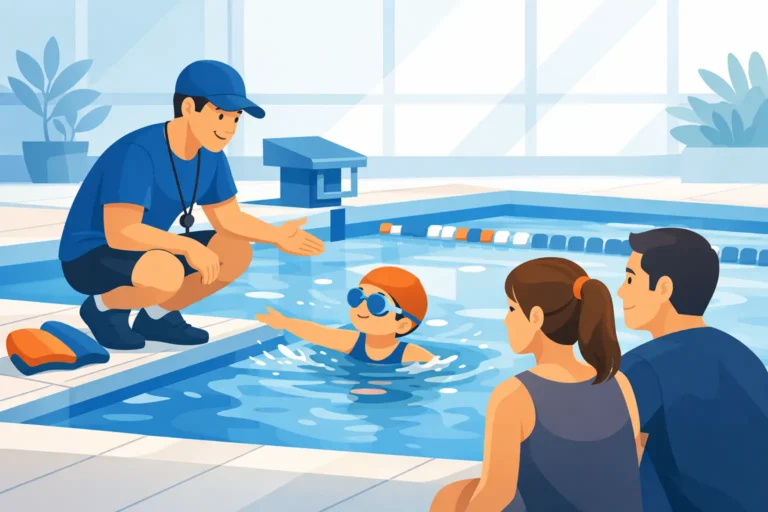
This also helps when a child is nervous. Fear in the water is common, especially in the early weeks. A structured coach does not rush that child or label them as difficult. Instead, the coach breaks the task into manageable stages – getting comfortable at the pool edge, blowing bubbles, submerging gradually, then learning supported float and movement. Progress may be slower at first, but it is more stable.
There is a trade-off here. Some children respond well to energetic group classes, while others improve faster in private or semi-private instruction. A confident child may thrive with peers and benefit from watching others. A child who is fearful, highly distracted, or preparing for a test may need more individual attention. The right format depends on the child’s temperament as much as their age.
Choosing the right lesson format for your child
Not every child needs the same setup. Group lessons are often a strong fit for children who are ready to follow instructions in a shared setting. They help build routine, listening skills, and comfort around other swimmers. For many families, they also offer a practical weekly schedule and a clear long-term pathway.
Private lessons can be a better option when a child needs faster correction, has uneven skill development, or feels anxious in larger classes. A child who can kick well but struggles with breathing, for example, may benefit from one-to-one coaching that targets the exact problem. Semi-private lessons can work well for siblings or friends at a similar level.
For toddlers, the expectation should be different from older children. Early lessons are about water familiarity, supported movement, and comfort with basic cues. Parents should be careful not to expect formal swimming too early. That said, toddler instruction still matters because it lays the groundwork for safer and more confident learning later.
Holiday intensive programs can also help, especially when a child needs concentrated practice. Weekly classes are excellent for steady development, but some children make visible breakthroughs when they train over several consecutive days. The trade-off is that intensive schedules work best when the child is physically ready and not overwhelmed by too much instruction at once.
How to tell if your child is making real progress
Parents often ask the same question after a few weeks: is my child actually improving? The answer should not rely on vague reassurance. Real progress is visible.
A beginner who once clung to the wall may start entering the water with less hesitation. A child who swallowed water during every breathing drill may begin to exhale calmly and recover. Floating becomes longer and more stable. Kicking creates movement instead of splashing in place. Instructions need fewer repetitions. These are meaningful signs of development.
Formal benchmarks matter too. Programs aligned to recognized standards give families a better framework for progression. In Singapore, many parents look for SwimSafer readiness because it reflects both skill development and water safety competency. That pathway can be especially valuable for school-age children because it turns lessons into a structured progression rather than an open-ended activity.
The strongest coaches also know when apparent progress is incomplete. A child may swim a short distance but still lack safe recovery skills. Another may pass basic drills in shallow water but panic in deeper conditions. This is why safety-based evaluation matters as much as stroke technique.
What good coaching looks like in the water
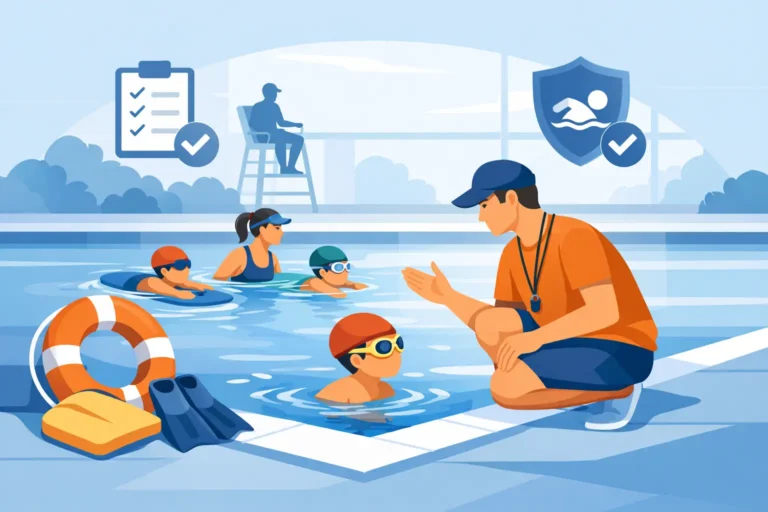
Parents do not need to be swimming experts to recognize quality coaching. Good coaches are clear, calm, and specific. They correct technique in simple language. They know when to push and when to slow down. Most of all, they keep safety central without making the lesson tense or intimidating.
Children respond best when expectations are firm but supportive. A coach who builds trust can ask more of a learner. That might mean encouraging proper submersion instead of letting a child avoid it for months, or insisting on better body position before moving to the next skill. Short-term resistance is sometimes part of long-term progress.
Experienced instructors also understand that different ages learn differently. Younger children need simple commands, repetition, and visible routines. Older children can process more technical feedback. Test-focused swimmers need targeted correction and consistent standards. A program that handles all learners the same way will often leave gaps.
This is where an established swim school has an advantage. Systems matter. When coaching methods, progression stages, and assessment expectations are clearly defined, children tend to develop more steadily. AQZOG has built its teaching around that kind of structure, with strong emphasis on water safety, progression, and readiness for recognized swimming standards.
Questions worth asking before you enroll
Before starting lessons, parents should ask practical questions that reveal how the program operates. What skills are taught first? How are children grouped? How is progress measured? What happens if a child is fearful? Is the lesson focused only on strokes, or does it include survival and safety skills too?
It is also worth asking how the program handles plateaus. Nearly every child has one. Progress is rarely perfectly linear. A child may improve quickly in kicking, then stall on breathing. Another may be confident in shallow water but hesitant in deeper water. Good programs expect this and adjust teaching accordingly instead of treating the child as the problem.
Convenience matters as well. Families are more likely to stay consistent when classes are accessible and fit the weekly routine. That sounds simple, but consistency is one of the strongest predictors of improvement. Even an excellent program loses effectiveness if attendance is irregular.
The goal is not just to swim
Parents often begin with one immediate goal – helping a child stop being afraid of water, learn a basic stroke, or prepare for an assessment. Those are valid starting points. But over time, the real value of swimming lessons becomes much broader.
A child who learns properly gains more than technique. They develop confidence under instruction, composure in an unfamiliar environment, and practical safety awareness that can matter for life. They also learn that progress comes from repeated practice, not instant success. That lesson carries well beyond the pool.
So when you compare kids swimming lessons, look for more than a friendly class and a convenient schedule. Look for structure, safety, measurable improvement, and coaching that treats swimming as an essential skill. Children do not need the most complicated program. They need one that teaches the right things in the right order, with enough consistency to turn early effort into lasting ability.
The best time to build that foundation is before a child needs it.