What Happens in a First Swim Lesson?
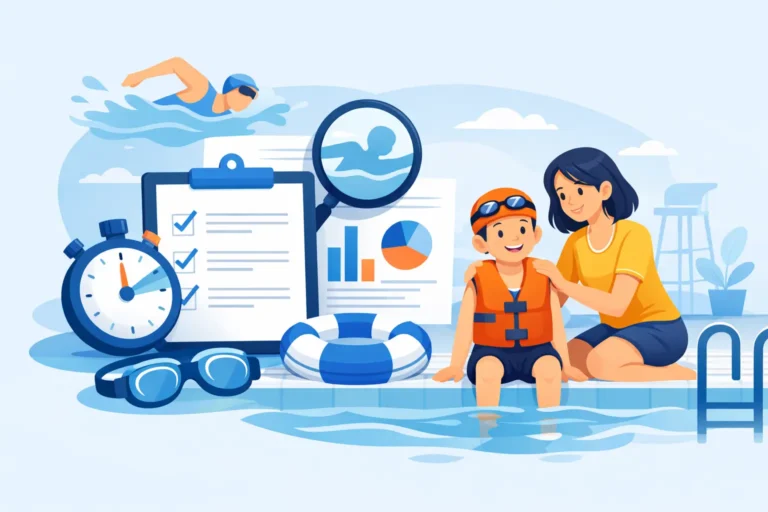
A first swim lesson usually starts before anyone gets into the water. For parents, that can be a relief. For adult beginners, it often settles the nerves. If you are wondering what happens in a first swim lesson, the answer is simple – a good coach is not rushing into laps. The first session is about safety, comfort, assessment, and building the right foundation for progress.
That matters because beginners do not all start from the same place. One child may be excited but distracted. Another may cling tightly to a parent and refuse to step down the pool stairs. An adult learner may be physically capable but tense around water. A structured first lesson accounts for these differences instead of forcing everyone through the same routine.
What happens in a first swim lesson for beginners
The first few minutes are usually observational. A coach will look at how the swimmer responds to the environment, instructions, and water contact. This is not a formal test in the way many people imagine. It is a practical assessment to understand confidence level, coordination, listening ability, breathing comfort, and basic body control.
For children, that may begin with simple poolside interaction. The coach may check whether the child can follow a one-step instruction, sit safely at the edge, hold the wall, or enter the water calmly. For adults, the coach may ask about prior experience, fear triggers, fitness level, and goals. Someone training for fitness needs a different pathway from someone who is overcoming a long-standing fear of submerging their face.
A strong first lesson is never only about technique. It is also about trust. Swimmers progress faster when they feel secure with the coach, understand what is being asked, and experience small wins early.
The first priority is water safety, not perfect strokes
This is where expectations sometimes need adjusting. Many parents hope to see obvious stroke teaching immediately. Many adults expect to start with freestyle mechanics right away. In reality, the first lesson often focuses on water orientation and survival basics.
That can include safe entry and exit, moving to the wall, holding a support point, kicking while supported, blowing bubbles, and learning how the body feels when floating. These may look simple from the pool deck, but they are essential. A swimmer who panics when water touches the face will struggle with every later skill. A swimmer who cannot maintain body position will find stroke learning slow and frustrating.
For young children especially, the first lesson may look playful on the surface. The play has a purpose. Reaching for toys can train balance and movement. Splashing games can reduce water sensitivity. Songs and repetition can improve cooperation and rhythm. Good beginner instruction is structured even when it appears light and relaxed.
How the coach assesses confidence and readiness
In a well-run program, the coach is constantly reading the swimmer. Confidence is not just whether someone smiles in the water. Some swimmers look happy but avoid putting their ears in. Others say they are fine but stiffen during floating. The first lesson helps identify these hidden barriers.
A coach will usually assess a few basic areas. One is water comfort – face wetting, bubble blowing, submersion, and response to splashing. Another is body control – kicking, balance, supported floating, and ability to stay aligned in the water. The coach may also observe communication and focus, especially with younger learners, because lesson progress depends heavily on how well the swimmer can receive cues.
This early assessment shapes placement. In a structured school, that matters a great deal. Starting too high can damage confidence. Starting too low can slow motivation. The right level gives the swimmer enough challenge to improve without feeling overwhelmed.
What beginners usually practice in the water
Most first lessons include a small set of core beginner skills. The exact order depends on age, temperament, and whether the lesson is private or group based, but the goals are usually consistent.
Breath control is one of the earliest priorities. Swimmers may practice blowing bubbles at the surface or with the face partly in the water. This sounds minor, but breathing control is often the difference between calm movement and panic.
Floating is another key area. A coach may support the swimmer on the front or back to introduce buoyancy and body position. Some learners accept front floating quickly but resist back floating because it feels less stable. Others are the opposite. There is no single pattern, which is why individual observation matters.
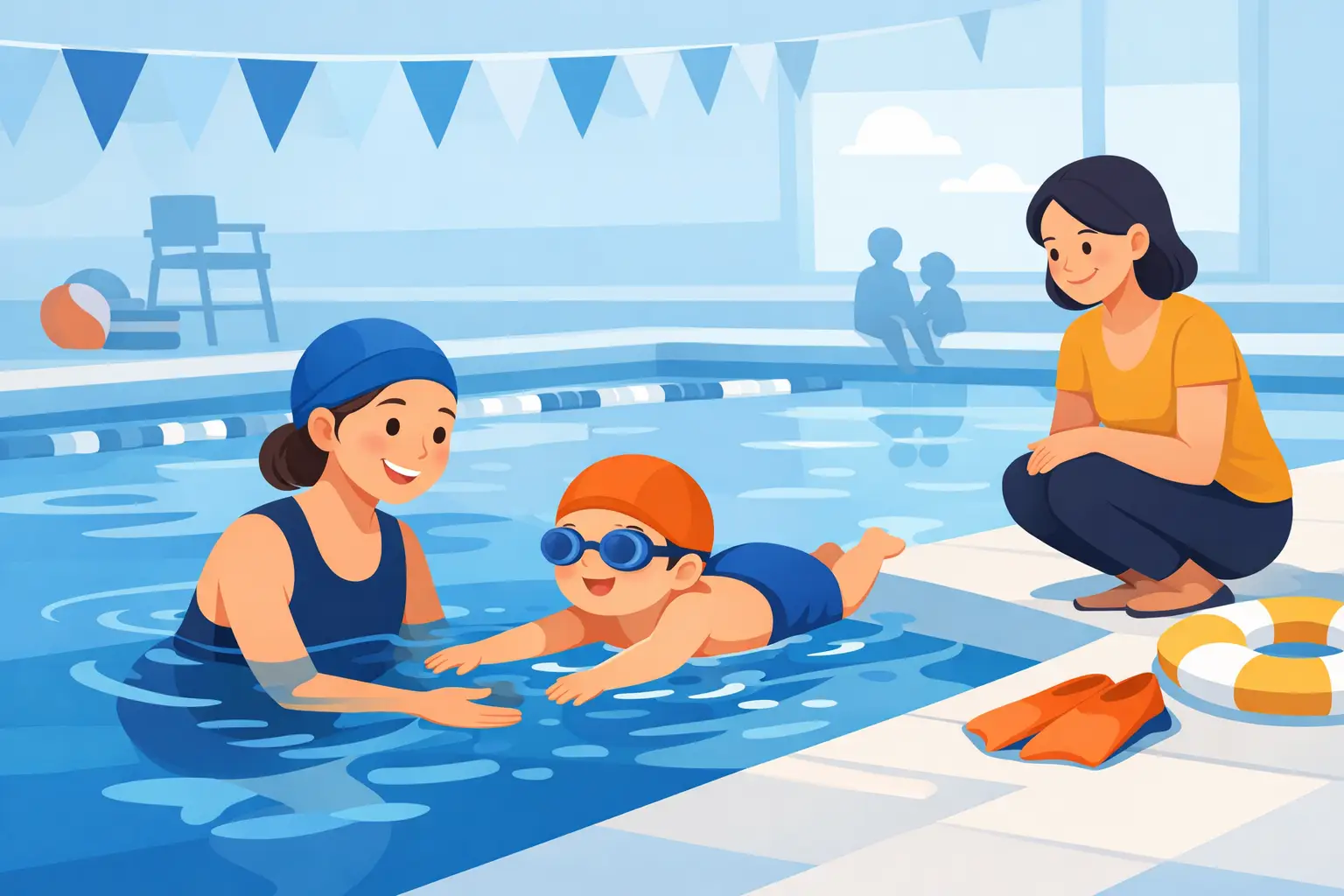
Kicking often comes next, usually with support from the wall, a step, or the coach. The purpose is not speed. It is to help the swimmer feel propulsion and begin coordinating leg action with body position. Depending on readiness, the lesson may also include short glides, reaching forward, or early arm actions.
For some swimmers, especially adults or older children with prior exposure, the coach may introduce a simple sequence that resembles an early freestyle movement. For complete beginners, that may be too much in one session. Good teaching does not overload the learner just to make the lesson look advanced.
What parents can expect during a child’s first swim lesson
Parents often want to know whether they should stay close, step back, or get involved. The honest answer is that it depends on the child’s age and the program structure.
Toddlers and very young children may need parent-accompanied support at the start, particularly if the class is designed as water introduction. School-age children usually benefit from allowing the coach to lead while the parent remains visible but calm. When parents coach from the poolside, children can become distracted or conflicted about whom to follow.
It is also normal for a child to cry, resist, or hesitate in the first lesson. That does not automatically mean the class is a bad fit. The more useful question is how the coach responds. A skilled instructor will reduce pressure, maintain clear boundaries, and work toward participation without forcing unsafe or traumatic experiences. Progress in beginner swimming is not measured by drama-free lessons. It is measured by whether trust and skill are increasing over time.
If your child leaves the first session able to enter more calmly, hold the wall, put their face near the water, or listen better to instructions, that is meaningful progress.
What adult learners can expect in a first swim lesson
Adults often arrive with more self-awareness and more fear. That combination can help or hinder. Adults usually understand instructions faster than young children, but they may also overthink every movement or carry embarrassment about being a beginner.
A good first lesson for an adult is practical and respectful. The coach should identify your current level without making assumptions. You may start with breathing drills, supported floating, standing recovery, and short movement sequences. If fear is the main issue, the lesson may progress more slowly than a fitness-focused beginner expects. That is not wasted time. It is how long-term comfort is built.
Adults also benefit from understanding why a drill matters. When learners know that bubble control supports rhythm, or that floating improves relaxation and body position, they are usually more willing to repeat fundamentals.
Group lessons versus private lessons on day one
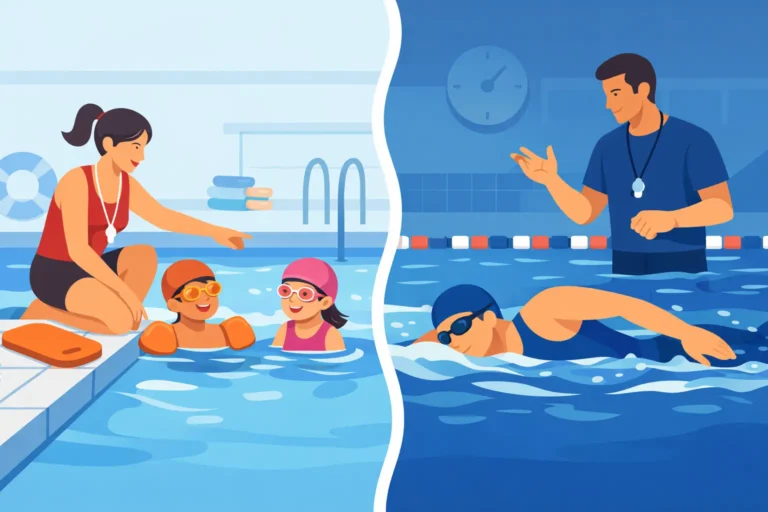
The first lesson experience can feel quite different depending on format. In a group lesson, the swimmer learns within a class structure and benefits from routine, social energy, and level-based progression. This works well for many children and some adults, especially if the group is properly matched.
Private lessons allow faster adjustment to the swimmer’s pace, fear level, and goals. That can be especially useful for very anxious beginners, adults returning after a bad experience, or learners who need targeted preparation for skill assessments.
Neither format is automatically better. Group classes can build confidence through familiarity and peer modeling. Private coaching can accelerate correction and personalize the lesson. The better choice depends on the swimmer’s temperament, urgency, and support needs.
Signs the first lesson went well
A successful first lesson does not require full submersion, independent floating, or a recognizable stroke. Those outcomes may happen for some swimmers, but they are not the benchmark for everyone.
What matters more is whether the swimmer was assessed accurately, taught safely, and left with a stronger starting point than they had before. You should see clearer comfort with the water, better understanding of instructions, and a sensible next step for progression. In a structured program, the first lesson should lead naturally into the next skill stage rather than feeling random or improvised.
That is one reason experienced schools such as AQZOG place so much emphasis on progression. Swimming is not learned in isolated moments. It is built layer by layer, with safety and confidence supporting every new skill.
The first lesson is not there to impress. It is there to establish control, trust, and direction. When that happens, the rest of the journey becomes far more efficient – and far more rewarding.