Parent Guide to Children’s Swim Certification
The first time a child is asked to swim, float, tread water, and follow instructions under test conditions, many parents realize they have more questions than their child does. This parent guide to children’s swim certification is here to make the process clearer – what certification actually measures, how progression works, and how to tell whether your child is truly ready.
For most families, swim certification is not just about collecting badges or passing the next level. It is about water safety, confidence, and proof that a child can perform key survival and swimming skills with consistency. A good certification pathway gives parents something valuable: a structured benchmark. Instead of guessing whether lessons are working, you can see skill development in stages and know what comes next.
Why children’s swim certification matters
Children learn at different speeds, but water does not wait for confidence to catch up. Certification matters because it checks performance against a standard, not against effort alone. A child may enjoy class and still need more time to build controlled breathing, stronger kicks, or better recovery after entering the water.
That is why formal swim progression is useful. It helps separate familiarity from competence. A child who splashes happily in the pool is not necessarily prepared to respond calmly if they lose footing, go underwater unexpectedly, or need to stay afloat without support.
In Singapore, many parents look to SwimSafer because it combines stroke development with practical survival skills. That balance matters. Strong technique is important, but safety outcomes matter more. The best certification tracks assess both.
A parent guide to children’s swim certification stages
Most children do best when certification is treated as a progression, not a race. Early stages usually focus on water confidence, safe entry and exit, breath control, kicking, floating, and basic movement. Later stages build stroke quality, endurance, treading water, sculling, and deeper water survival.
Parents sometimes assume age decides level. In practice, readiness depends more on skill control, attention span, comfort in the water, and how well a child performs without constant prompting. Two seven-year-olds can be at very different stages, and that is completely normal.
If your child is following a SwimSafer pathway, each stage is designed to build on the last. Skipping weak foundations often creates problems later. A child may scrape through an easier requirement, then struggle when asked to combine breathing, coordination, and stamina at the next stage. Slower progress at the start often leads to stronger long-term results.
What examiners and coaches are really looking for
Parents often focus on distance. Can my child swim 25 meters? Can they finish the lap? Distance matters, but certification usually looks beyond that.
Control is one of the biggest factors. A child who reaches the wall with poor breathing, panic, or inconsistent body position may not be ready, even if they cover the distance. Examiners also look for safe entries, recovery after submersion, the ability to listen and respond to instructions, and whether skills can be repeated reliably.
Technique also matters, but expectations should match the stage. At beginner levels, the goal is not polished competitive swimming. It is safe movement, basic coordination, and confidence in the water. At higher levels, there is more emphasis on efficiency, recognizable strokes, and sustained performance.
This is where experienced coaching makes a difference. A coach preparing children for certification is not only teaching them what to do. They are teaching them how to perform under observation, in sequence, and without freezing when a test feels different from a normal lesson.
Signs your child is ready for swim certification
Parents usually ask the same practical question: should we register now, or wait?
A child is often ready when they can perform core skills consistently across multiple lessons, not just once on a good day. They should be able to follow instructions, transition between tasks without emotional shutdown, and manage the water with a reasonable level of calm. If a child can only complete a skill with heavy prompting, physical support, or repeated retries, more preparation is usually the better choice.
Confidence is another clue, but it needs to be real confidence. Some children are bold and enthusiastic but lack control. Others are quiet and cautious yet highly capable. Readiness is about dependable performance, not personality.
It also helps to look at recovery. If your child makes a mistake, can they regroup and continue? In certification settings, that matters. Children rarely perform perfectly from start to finish. The ones who cope best are often the ones who have practiced enough to recover without panic.
Common reasons children struggle during certification
The most common issue is not lack of effort. It is uneven preparation.
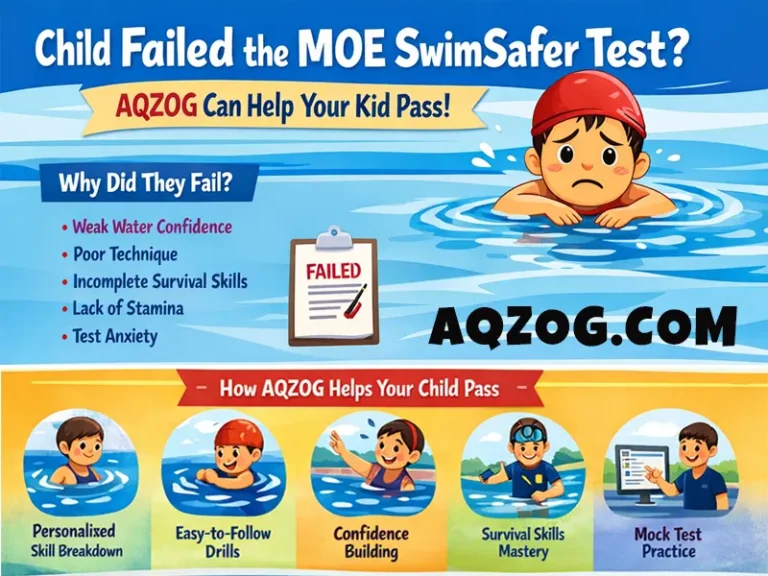
Some children have enough stroke ability but weak water survival skills. Others can float and kick well, but lose rhythm when asked to coordinate arms, legs, and breathing together. Test nerves can also affect children who normally perform well in class.
Another common problem is rushing into assessment too early. Parents may see visible improvement and assume the next certification should happen immediately. Sometimes that is appropriate. Sometimes an extra few weeks of structured practice produces a much stronger pass and better retention.
Children also struggle when practice is too narrow. If lessons focus only on swimming forward, a child may be surprised by requirements such as floating, treading, underwater confidence, or sequence-based tasks. Good preparation includes the full test profile, not just the most obvious parts.
How to choose the right certification-focused swim program
Not every swim lesson is designed for certification readiness. Some programs are excellent for general exposure or recreation, but parents who want measurable progression should look for a more structured pathway.
A strong certification-focused program should show clear stage outcomes, regular skill assessment, and coaching that aligns with recognized standards. It should also include practical preparation for both skill execution and test format. Mock assessments can be especially useful because they help children experience the rhythm and pressure of evaluation before the real test.
Class size matters too. In larger groups, progress can still happen well if instruction is organized and children are placed at the right level. But if your child needs faster correction, confidence rebuilding, or targeted work on specific test items, private or semi-private coaching may be more effective.
This is where families often benefit from a provider with deep experience in formal progression systems. AQZOG, for example, focuses on structured development, SwimSafer alignment, and practical test readiness rather than unstructured pool time. For parents who want a direct pathway from beginner skills to certification performance, that kind of structure can save time and reduce uncertainty.
How parents can support progress without adding pressure
Children usually perform best when parents treat certification as a milestone, not a verdict. The message should be simple: the goal is to become safer, stronger, and more confident in the water. Passing matters, but skill growth matters more.
At home, support can be very practical. Keep attendance consistent. Make sure your child arrives rested, hydrated, and ready to listen. Talk about the next lesson in calm, positive terms. If your child is anxious, avoid promising that the test will be easy. It is better to say that they are preparing well and that their coach is helping them improve step by step.
After lessons, ask specific questions. Instead of asking, “Did you have fun?” also ask, “What skill felt easier today?” or “What are you practicing for the next stage?” That keeps the focus on progress.
If your child does not pass on the first attempt, treat that result as useful information. It does not mean the lessons failed. It means a few components need more work. Many strong swimmers needed extra time at some point in their progression. What matters is how clearly the gaps are identified and how purposefully they are addressed.
Parent guide to children’s swim certification by age
For toddlers and preschoolers, certification should never be rushed. The early priority is water comfort, safe handling, listening skills, and simple movement patterns. Some young children are advanced physically, but still not ready to manage test conditions.
For school-age children, progress is often faster because attention span, coordination, and understanding improve. This is usually the best window for structured certification pathways, especially when lessons are consistent.
Older children who start late can still do very well, but their emotional experience may differ. They may compare themselves with peers or feel embarrassed about being beginners. In those cases, coaching style matters as much as lesson content. A results-driven program should still be supportive and confidence-building.
Swim certification works best when parents understand what it is meant to prove. It is not there to pressure children into performing for a certificate. It is there to show that real safety skills and swimming ability are developing in the right order. When you choose a structured pathway, give your child time to master each stage, and work with coaches who prepare them properly, certification becomes more than a test result. It becomes evidence that your child is genuinely safer in the water.