How to Choose Private Swim Coaching
A private swim lesson can either speed up progress or leave you paying more for the same slow results. The difference usually comes down to how well you understand how to choose private swim coaching before the first session is booked.
For parents, that means looking beyond convenience and asking whether a coach can build water safety, confidence, and measurable skill progression. For adults, it means being honest about your starting point, whether that is fear of water, stroke correction, fitness, or test preparation. Private coaching works best when the lesson plan matches the learner, not when it is treated as a premium version of a general class.
Why private coaching works for some swimmers
Private coaching is not automatically better than group lessons. It is better for specific situations. A child who is anxious in water, a student preparing for SwimSafer assessment, or an adult who needs focused stroke correction often improves faster in one-to-one sessions because the coach can adjust every drill, cue, and pace in real time.
That said, private lessons also come with trade-offs. They cost more, and they remove the peer learning that helps some children feel motivated. A confident child who learns well by watching others may do just as well in a structured group setting. A nervous beginner, on the other hand, may need individual attention before joining a group.
The first decision is not which coach looks best on paper. It is whether private coaching is actually the right format for your goal.
How to choose private swim coaching for your goal
Start with the outcome you want. This sounds obvious, but many families and adult learners skip this step and choose based on location or price alone.
If your child needs water confidence and basic safety skills, the right coach should be patient, structured, and experienced with beginners. If the goal is SwimSafer progression, the coach should understand stage requirements, practical standards, and how to prepare a student for assessment without rushing skill development. If you are an adult swimmer training for endurance or triathlon, you need a coach who can analyze technique, breathing, pacing, and efficiency instead of only teaching basic swimming.
A good private program should be able to answer a simple question clearly: what will this swimmer be working toward over the next eight to twelve lessons?
When that answer is vague, progress often becomes vague too.
Match the coach to the swimmer, not just the slot
Different swimmers need different teaching styles. Toddlers need water familiarization built around comfort and trust. Young children often need a balance of firmness and encouragement. Adults with water fear need calm instruction, controlled progression, and no pressure to perform before they feel safe.
This is why coach fit matters as much as credentials. An experienced instructor can still be the wrong match if their communication style does not suit the learner. Parents should ask how the coach handles fear, refusal, or inconsistency. Adult learners should ask how the coach works with nervous beginners or technical goals.
The strongest coaches do not use the same approach for every student. They adapt while keeping standards clear.
What to look for in a private swim coach
Credentials matter, but context matters more. You want a qualified swim coach who can teach safely, but you also want someone who understands your learner profile and progression target.
For children in Singapore, familiarity with structured national pathways such as SwimSafer is especially valuable. It shows the coach is not teaching random drills but building toward recognized benchmarks in water safety, stroke skills, survival techniques, and test readiness. For adults, relevant experience may mean beginner instruction, stroke development, rescue skills, or fitness-focused coaching.
Ask about teaching experience in the exact area you need. A coach who is excellent with competitive swimmers may not be the best choice for a fearful six-year-old. A great toddler instructor may not be the right fit for an adult refining freestyle timing.
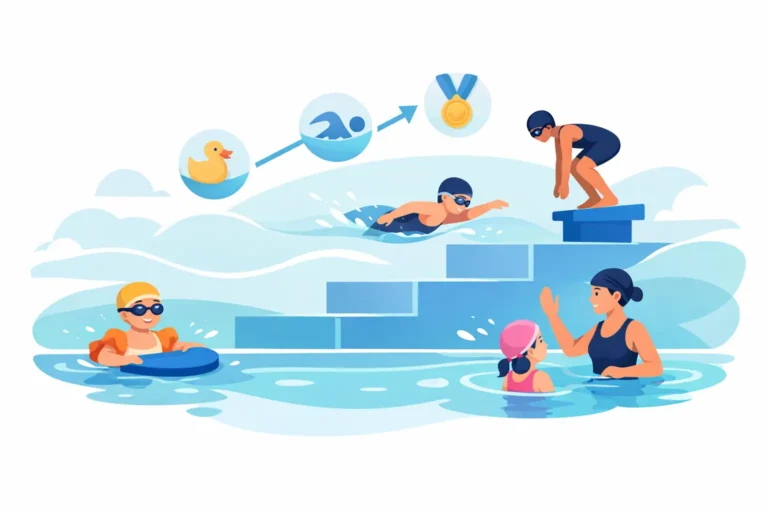
You should also pay attention to how the coach explains progression. Strong coaches can describe what comes first, what comes next, and what standards define readiness to move on. That structured thinking is often what separates effective private coaching from expensive pool time.
Signs of a structured coaching approach
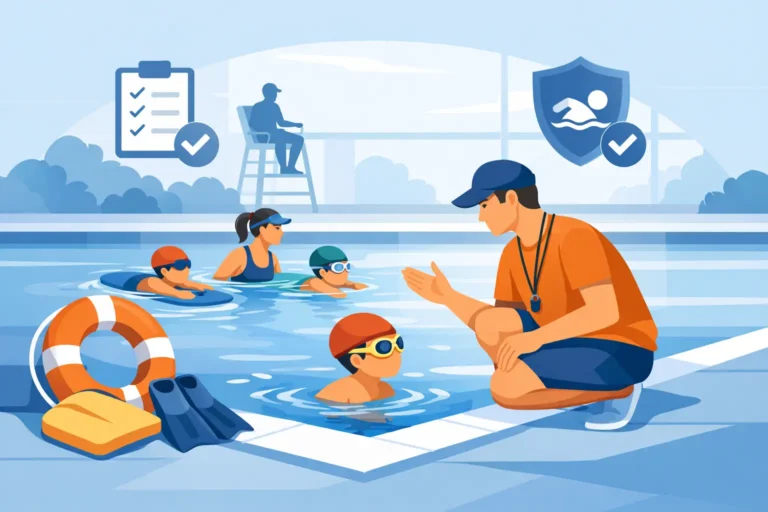
Private lessons should feel personalized, but they should not feel improvised. A reliable coach usually has a clear teaching method.
Look for signs such as an initial skill check, defined lesson targets, regular feedback, and honest pacing. If a swimmer is not ready to move ahead, the coach should say so. Fast results are valuable, but only when they are built on actual skill retention and safe technique.
This is especially important for children. Parents often want visible progress quickly, but skipping basic breathing control, body position, or water recovery skills can create bigger problems later. In swimming, confidence without control is not real progress.
Questions to ask before you commit
The best way to avoid a poor fit is to ask practical questions early. Ask what the coach would focus on for a swimmer at your child’s age or your current level. Ask how progress is measured. Ask how they handle missed lessons, fear, inconsistency, or plateaus.
You should also ask where the lessons take place and whether the environment suits the learner. Public pools can be convenient and effective, but pool depth, crowd levels, water temperature, and noise can affect beginner comfort and concentration. For some swimmers, a busy setting helps them adapt. For others, it creates distraction or stress.
Another useful question is how long it typically takes to reach your goal. No good coach can promise exact timelines, because learning speed depends on attendance, confidence, age, fitness, and prior experience. But an experienced coach should be able to give a realistic range and explain the variables.
Be cautious with guarantees that sound too neat. Swimming progression is measurable, but it is never one-size-fits-all.
Price matters, but value matters more
Private swim coaching is a premium service, so cost will naturally be part of the decision. Still, the cheapest lesson is not always the best value, and the highest price does not automatically mean better instruction.
Think in terms of outcomes. A coach who charges more but provides targeted correction, consistent progression, and strong safety foundations may save time and money over the long run. A cheaper option that lacks structure can lead to repeated lessons with limited improvement.
Parents should also think beyond stroke learning alone. If the coaching builds water confidence, self-rescue awareness, and readiness for formal assessment, that value goes beyond the weekly class itself. Adult learners should consider whether the sessions are solving a specific problem, such as panic in deep water, inefficient breathing, or stalled lap performance.
When comparing options, ask what is included in the coaching approach, not just what is charged per lesson.
How to choose private swim coaching for children vs adults
Children and adults often need different decision criteria.
For children, safety culture should come first. You want a coach who teaches boundaries, water awareness, and survival habits alongside swimming technique. Progress should be visible, but it should also be age-appropriate. Young learners do best when lessons are structured, encouraging, and consistent.
For adults, emotional comfort is often just as important as technical instruction. Many adults come to private lessons with embarrassment, fear, or frustration from past attempts. A strong adult coach respects that while still giving direct feedback and a clear plan. If your goal is performance, look for technical depth. If your goal is simply to feel safe in water, look for patience and progressive exposure.
In both cases, communication matters. Parents should leave with a clear sense of what was practiced and what comes next. Adult learners should understand their current barriers and the steps to improve.
When semi-private or group lessons may be the better choice
Private coaching is not the only effective pathway. Sometimes semi-private or small group classes are the smarter option.
If siblings or friends are at a similar level, semi-private lessons can reduce cost while keeping instruction focused. If a swimmer already has basic confidence and responds well to peer interaction, group classes may offer enough structure with added motivation. Many swimmers benefit from a blended pathway – private lessons to build foundations or overcome a specific barrier, then group classes to maintain progression.
An established school with structured programs across different formats can make that transition smoother. AQZOG, for example, builds around progression and safety rather than treating each lesson format as separate from the learning journey.
The best choice is the format that helps the swimmer progress safely, consistently, and with confidence.
Private swim coaching should feel purposeful from the start. If the coach can explain the goal, assess the learner accurately, and teach with structure, you are much more likely to see real progress in the water and not just time spent in it.