Beginner Swim Lesson Essentials That Matter
The first swim lesson usually reveals more than skill level. It shows how a child responds to water, how an adult handles uncertainty, and whether the teaching approach builds confidence or pressure. That is why beginner swim lesson essentials are not just about goggles and a kickboard. They are about safety, structure, and a learning plan that helps beginners move forward without fear or confusion.
For parents, the goal is rarely just getting a child to splash comfortably. It is about water safety, real skill development, and steady progress toward independent swimming. For adults, it is often about overcoming hesitation, learning proper technique, and gaining the confidence to be in deeper water. In both cases, the essentials are similar, but the way they are applied depends on age, temperament, and learning pace.
Beginner swim lesson essentials start with safety
Safety is the first non-negotiable. A beginner does not need to learn fancy strokes on day one. A beginner needs to understand how to enter the water safely, how to listen to instructions, how to hold the pool edge, and how to recover composure if water gets into the face. These early foundations may look simple from the outside, but they are what support every later skill.
For young children, safety also includes learning boundaries. That means waiting for the coach’s signal, staying within the teaching area, and developing a calm response in the water. For adults, safety often means learning breath control, floating, and body position before speed or endurance. A coach who rushes past these basics may create short-term movement, but not stable progress.
This is one reason structured programs matter. When lessons follow a progression, beginners build one skill on top of another. They do not just repeat random drills. They learn with purpose.
The right coach makes a bigger difference than equipment
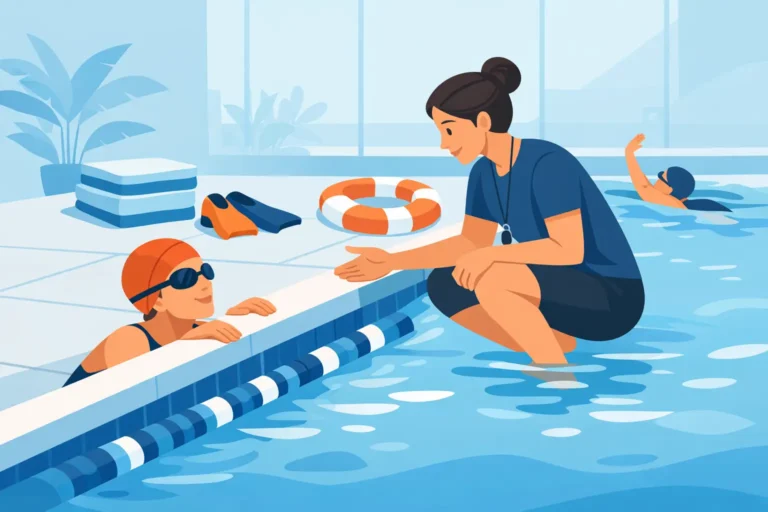
Parents often ask what to buy before the first lesson, but the stronger question is who will be teaching it. A qualified, experienced coach can adapt instruction to a nervous toddler, a distracted school-age child, or an adult with genuine fear of water. That adjustment is not a small detail. It often determines whether the beginner returns with confidence or resistance.
A strong beginner coach gives clear instructions, corrects technique early, and keeps lessons calm and focused. Just as important, the coach knows when to push and when to slow down. Some learners need more repetition before putting their face in the water. Others are physically ready to move ahead but need reassurance. There is no benefit in forcing progress that the learner cannot yet retain.
This matters even more in a safety-first environment. Swimming is a life skill. Teaching should reflect that. AQZOG has built its approach around structured progression because real confidence comes from measurable improvement, not guesswork.
What beginners actually need to bring
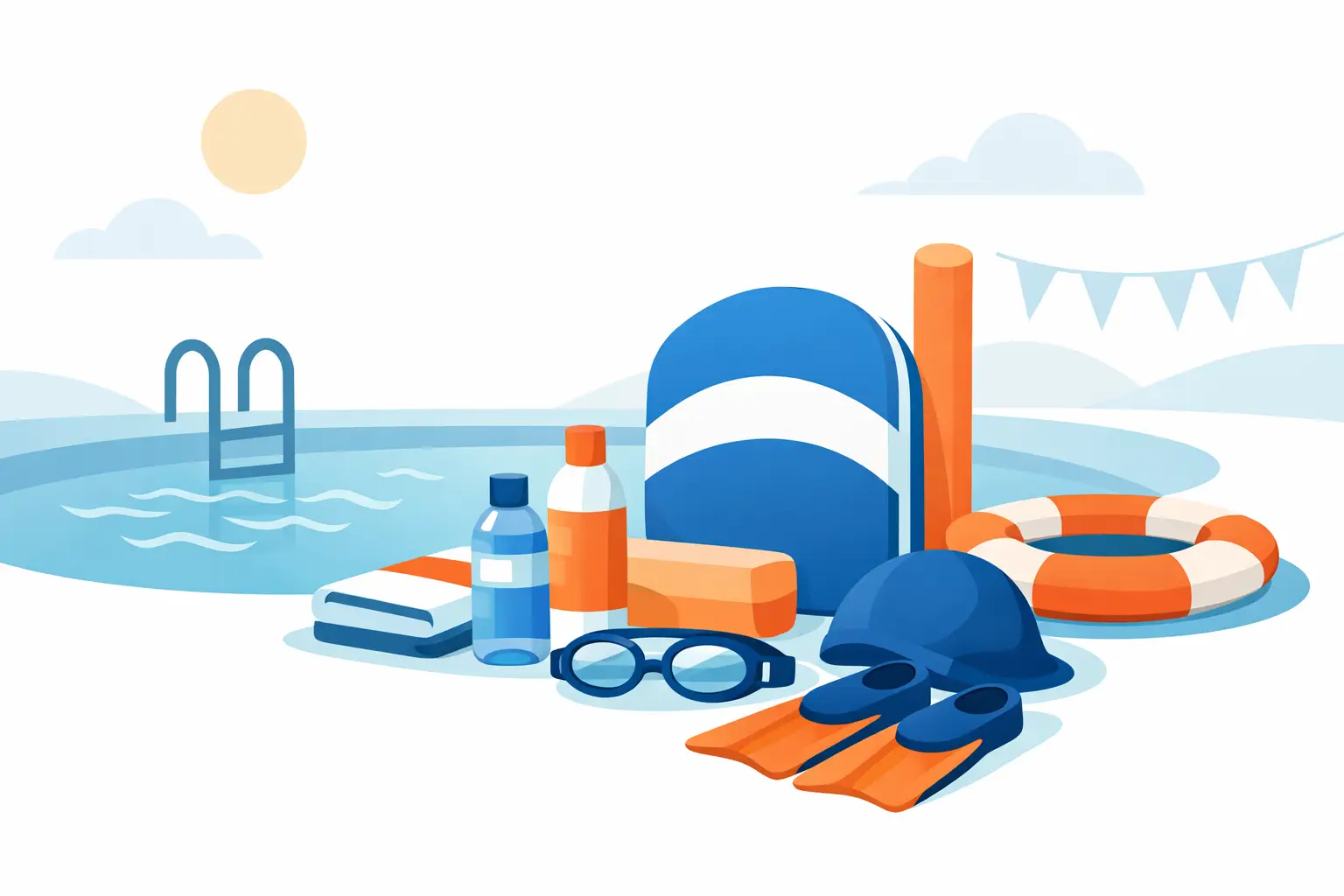
The physical beginner swim lesson essentials are straightforward. A proper swimsuit that allows free movement is the starting point. Goggles can help, especially for beginners who are uncomfortable opening their eyes underwater, but they should fit well and not become a distraction. A towel, a change of clothes, and drinking water are basic but often overlooked.
For children who are not toilet trained, a swim diaper is necessary. For long hair, a swim cap may improve comfort and visibility, although it depends on the program and pool rules. Float toys and extra gear are usually unnecessary unless the coach specifically recommends them. In many cases, too much equipment creates dependency and reduces body awareness.
The more important preparation is mental. Children do better when parents frame lessons positively but realistically. Saying, “You just need to have fun” can help some children relax, but others benefit more from knowing what to expect. Adults also benefit from clear expectations. The first lesson may focus on breathing, floating, and comfort in the water rather than full swimming. That is normal. Early control matters more than early speed.
Confidence and progression should develop together
One common mistake in beginner lessons is separating confidence from skill. In reality, they need to grow together. Confidence without skill can create unsafe overestimation. Skill without confidence often disappears under stress. Good beginner instruction builds both at the same time.
For example, a child who can kick across a short distance with support may appear capable, but if that child panics after water enters the nose, the skill is not yet dependable. An adult may understand floating in theory but still tense up when asked to release the pool wall. In both situations, the next step is not simply repeating the drill. It is helping the learner feel in control while practicing the right movement pattern.
That is why progression should be visible and specific. Small wins matter. Putting the face in the water calmly, exhaling underwater, floating for a few seconds, and moving independently to the wall are all meaningful milestones. They may not look dramatic, but they are the building blocks of safe swimming.
Beginner swim lesson essentials for children
Children need consistency more than intensity. Weekly lessons with a clear progression usually work better than irregular bursts of instruction followed by long gaps. Young swimmers learn through repetition, routine, and trust in the coach. If every lesson feels different in tone or expectation, progress becomes uneven.
Parents should also look for programs that teach more than basic movement. Water confidence is important, but survival awareness, safe entries and exits, breath control, and readiness for structured stages matter just as much. In places where formal swimming benchmarks are part of the education pathway, this becomes even more relevant. A child who learns in a structured system is generally better prepared for assessments later on.
Another essential is the right class format. Group lessons can be excellent for children who respond well to peers and routine, while private or semi-private lessons may be better for those who need closer correction or have strong anxiety. There is no single best format for every child. The best format is the one that supports steady learning without overwhelming the swimmer.
Beginner swim lesson essentials for adults
Adults often arrive with different barriers. Some are complete beginners. Some had a poor experience in childhood. Some can move in shallow water but have no confidence in deeper areas. Because of that, adult beginner lessons should never be treated as a simplified children’s program.
Adults need instruction that respects their awareness and concerns. They usually want to know why a drill matters, what correct technique feels like, and how each step connects to a larger goal. Breath control, buoyancy, and body alignment are especially important in the beginning. If these are neglected, adults tend to compensate with tension, and that slows everything down.
Private lessons can be especially effective for adults who feel self-conscious or need faster correction. Group lessons may suit those who are comfortable learning alongside others and benefit from a shared pace. Again, the trade-off depends on personality, budget, and urgency. The key is choosing a format that allows proper feedback and enough repetition.
How to judge whether a beginner program is working
Progress in swimming is not always linear, especially at the start. One week a beginner may cooperate well and complete new skills. The next week there may be hesitation. That does not automatically mean the lessons are failing. What matters is whether the overall direction is forward.
A good beginner program shows progress in clear ways. The swimmer becomes calmer in the water. Instructions need less repeating. Basic skills become more consistent. Fear reduces, and control improves. For children, parents should also notice better listening, more comfort with submersion, and increased independence in simple tasks. For adults, better breathing rhythm and reduced tension are often early signs that technique is settling in.
If lessons feel random, goals are unclear, or the swimmer remains stuck without any adjustment in teaching approach, that is a concern. Beginner instruction should be flexible, but it should never be vague.
The essentials are simple, but they should never be casual
Swimming starts with basics, but basics should be taught with care. The right environment, the right coach, and a clear progression plan make far more difference than most people expect. Equipment supports the process. Structure drives the result.
Whether you are enrolling a child for early water confidence or starting as an adult beginner, the essentials remain the same – safety first, instruction that fits the learner, and a pathway that turns early wins into real swimming ability. When those pieces are in place, the first lesson becomes more than an introduction. It becomes the start of lasting water confidence.