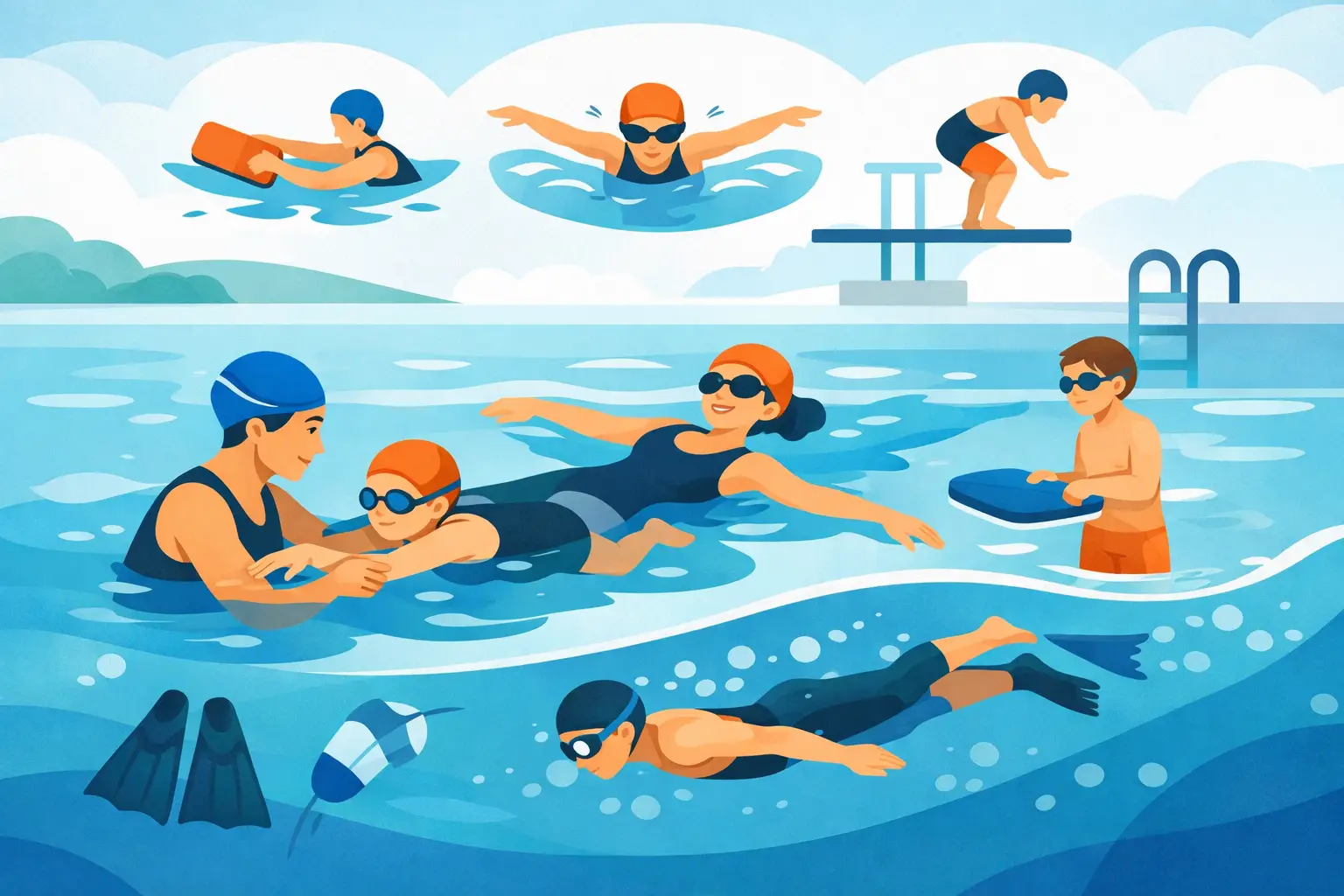
9 Best Swim Drills for Water Confidence
The first sign of real progress in swimming is not speed. It is calm. A child who can place their face in the water without panic, or an adult who can float without grabbing the wall, is building the foundation that every stronger swimming skill depends on. That is why the best swim drills for water confidence are not flashy. They are simple, repeatable, and focused on control.
For parents, water confidence means more than comfort at the pool. It supports safer reactions, better listening, and smoother progress through structured learning. For adults, it often means replacing tension with trust in the water. In both cases, drills work best when they follow a clear progression, not when learners are pushed too fast.
Why the best swim drills for water confidence work
Water confidence is built through familiarity and successful repetition. When a swimmer learns that they can blow bubbles, float briefly, recover to standing, and move a short distance with control, fear starts to reduce. Confidence does not come from being told to relax. It comes from proving, step by step, that the water can be managed.
This is also where many beginners get stuck. They try to learn strokes before they are comfortable with breathing, body position, or balance. That usually creates more anxiety, not less. A structured drill sequence fixes that problem by improving one skill at a time.
For young children, drills should feel predictable and safe. For adults, the same principle applies, even if the delivery is more direct. In both groups, short success cycles matter. A few well-executed repetitions are more valuable than a long, exhausting session.
1. Bubble blowing at the wall
This is one of the most effective starting points because it teaches breath control without the pressure of movement. The swimmer holds the pool edge, takes a breath with the mouth above water, then places the mouth or full face in the water and blows steady bubbles.
The goal is not force. It is rhythm. Many fearful swimmers hold their breath underwater, which increases tension. Bubble blowing teaches a calm exhale and reduces the shock of water on the face.
With children, start with mouth bubbles, then nose bubbles, then full face dips. With adults, be patient if facial immersion feels uncomfortable. If needed, begin with chin-in-water breathing before progressing further.
2. Sit-and-splash face immersion drill
This drill works well for toddlers, children, and nervous beginners. Sitting on the pool step or ledge, the swimmer splashes gently, wets the cheeks and forehead, and then practices brief face dips. The movement is gradual, which matters for learners who are still adjusting to water contact.
There is a trade-off here. Slow exposure builds trust, but staying too long at this stage can delay progress. Once the swimmer can dip the face in comfortably for a few seconds, move on. Confidence grows when the challenge increases at the right time.
3. Supported back float with recovery
Floating is often the moment when trust in the water begins. In this drill, the swimmer starts with full support under the head and back, keeps the ears in the water, eyes up, and stomach lifted. After a brief float, they recover back to standing.
That recovery part is critical. Many beginners fear floating because they do not know how to finish safely. Teaching the return to standing turns the skill into something controlled rather than risky.
For children, short holds are enough at first. For adults, tight hips and neck tension are common, so the coach may need to cue a softer head position and steady breathing. A back float does not need to be perfect to be useful. It only needs to feel manageable.
4. Front float and stand-up drill
This drill builds the same trust from a face-down position. The swimmer takes a breath, stretches forward, floats briefly with the face in the water, then tucks the knees and stands up. It teaches two vital ideas at once – the body can stay supported by the water, and the swimmer can recover when needed.
This is one of the best swim drills for water confidence because it reduces a common fear: feeling stuck. When swimmers know they can stand up calmly, they are more willing to try gliding and kicking later.
If the swimmer lifts the head too early, the hips usually sink. That is normal. Correct it gradually. The goal at this stage is confidence with position and recovery, not a competition-standard float.
5. Starfish float drill
The starfish float can be done on the back or front, though back starfish is often easier for anxious swimmers. The swimmer opens arms and legs wide, keeps the body long, and holds a balanced floating shape for a few seconds.
This drill helps learners feel how body spread and stillness improve buoyancy. Many beginners kick or paddle too much because they think motion equals safety. In reality, unnecessary movement often makes balance harder. The starfish teaches a calmer response.
Some swimmers, especially leaner adults, may feel less naturally buoyant than others. That does not mean they cannot learn the skill. It simply means they may need more repetitions and better timing with the breath.
6. Push and glide from the wall
Once basic breathing and floating are comfortable, push-and-glide drills help swimmers trust forward movement. The swimmer places both feet on the wall, pushes off gently in a streamlined shape, and glides a short distance before standing.
This is where confidence starts to become functional. The swimmer is no longer just stationary in the water. They are moving through it with control.
Keep the push small at first. A forceful push can make beginners feel rushed and unstable. For younger children, the instruction should be simple: push, stretch, and stand. For adults, emphasize head-down alignment and a relaxed glide rather than distance.
7. Kicking with support
Supported kicking can be done with hands on the wall, with an instructor assisting, or with simple flotation support if appropriate. The purpose is not just propulsion. It is to help swimmers feel that they can stay horizontal and move forward without panic.
This drill becomes more effective when combined with prior breathing and floating work. Without that base, kicking can turn into frantic splashing. With the right foundation, it builds confidence in travel and body position.
There is an important judgment call here. Some swimmers become over-reliant on boards or floats. Support is useful, but it should not replace learning balance. The best results come when support is gradually reduced as control improves.
8. Jump-in and return drill
For school-age children and stronger beginners, the jump-in and return drill is extremely valuable for safety and confidence. The swimmer enters from the side, resurfaces, turns back to the wall, and holds on or climbs out.
This drill teaches orientation after water entry, which is a core water survival skill. It also helps reduce panic if the swimmer unexpectedly submerges. In structured programs, this type of skill supports stronger long-term readiness than stroke practice alone.
It does require good supervision and the right timing. A child who is still fearful with face immersion is not ready for this yet. But once basic comfort is present, the drill can be a major confidence breakthrough.
9. Short swim to a target
A short, achievable swim to a clear target gives purpose to all the earlier drills. The target might be the wall, a teacher, or a marked point a few feet away. The swimmer uses a simple combination of push, kick, and basic arm movement to reach it.
Targets help swimmers organize their actions. They also create measurable progress, which is especially helpful for parents and adult learners who want visible results. A swimmer who can move three feet calmly today is on a strong path toward moving farther next week.
Keep the distance realistic. Confidence grows from successful completion, not from setting a target that is too ambitious.
How to use these drills safely and effectively
The right order matters more than the number of drills. Start with breathing and face comfort, then add floating, then movement, then entry and return skills. If a swimmer becomes tense, go back one step instead of pushing ahead. Regression in the moment is often what allows faster progress over time.
Session length should also match attention and energy. Young children do better with short, focused repetitions. Adults often benefit from slightly longer practice, but only if they can maintain quality. Once fatigue appears, technique and confidence usually drop together.
Professional instruction can make a major difference here because coaches can spot whether the issue is fear, poor body position, breathing timing, or simple lack of repetition. At AQZOG, structured progression is built around exactly this principle – each skill prepares the swimmer for the next one, with safety and measurable development leading the process.
Best swim drills for water confidence at different ages
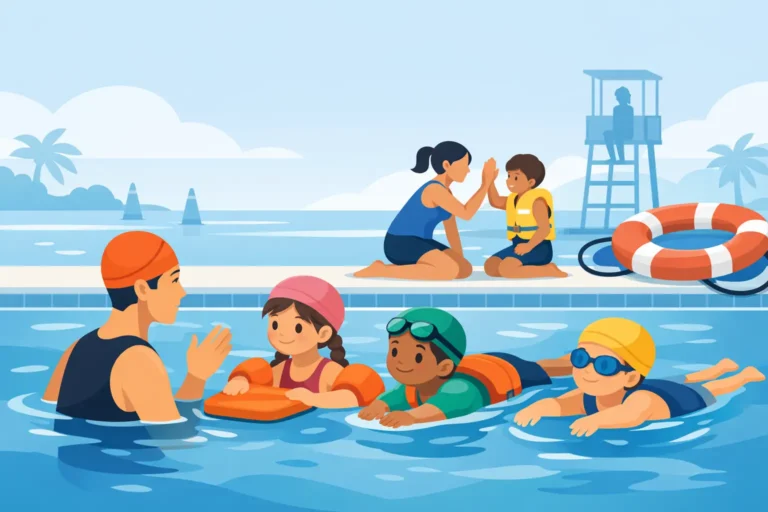
Toddlers need gentle exposure, routine, and parent-supported trust. Face wetting, bubbles, and supported floats are usually enough. School-age children can progress into glides, kicking, and safe jump-in drills once they show calm recovery skills.
Adults often need a different kind of reassurance. They usually want to understand why a drill matters and what success should feel like. Clear instruction helps, but so does patience. Adult fear is often tied to past experiences, so progress can be fast or gradual depending on the individual.
The most effective drill is not always the one that looks most advanced. It is the one that matches the swimmer’s current level and produces calm, repeatable success.
Water confidence is earned one controlled moment at a time, and those moments add up faster than most beginners expect when the training is structured well.