A Guide to Adult Swim Progression
Most adults do not start swimming because they suddenly want perfect freestyle. They start because they do not want to panic in deep water, feel embarrassed on family trips, or avoid pools for another year. That is exactly where a guide to adult swim progression should begin – not with advanced technique, but with safety, confidence, and a clear path forward.
Adult learners improve differently from children. They bring stronger body awareness and better focus, but they also bring fear, stiffness, old habits, and very real time constraints. A structured progression matters because adults rarely benefit from random practice. Without a clear sequence, many repeat the same mistakes, tire quickly, and assume they are “not natural swimmers” when the real issue is that they skipped foundation skills.
What adult swim progression really means
Adult swim progression is the step-by-step development from water comfort to controlled, efficient swimming. It is not just about learning strokes. It includes breathing control, floating, balance, propulsion, recovery from mistakes, and the judgment to stay safe in different water conditions.
That last point matters more than many people expect. A swimmer who can move 25 yards with poor breathing and no recovery skills may look capable, yet still feel unsafe. True progression means you can manage yourself in the water, not simply copy a stroke for a short distance.
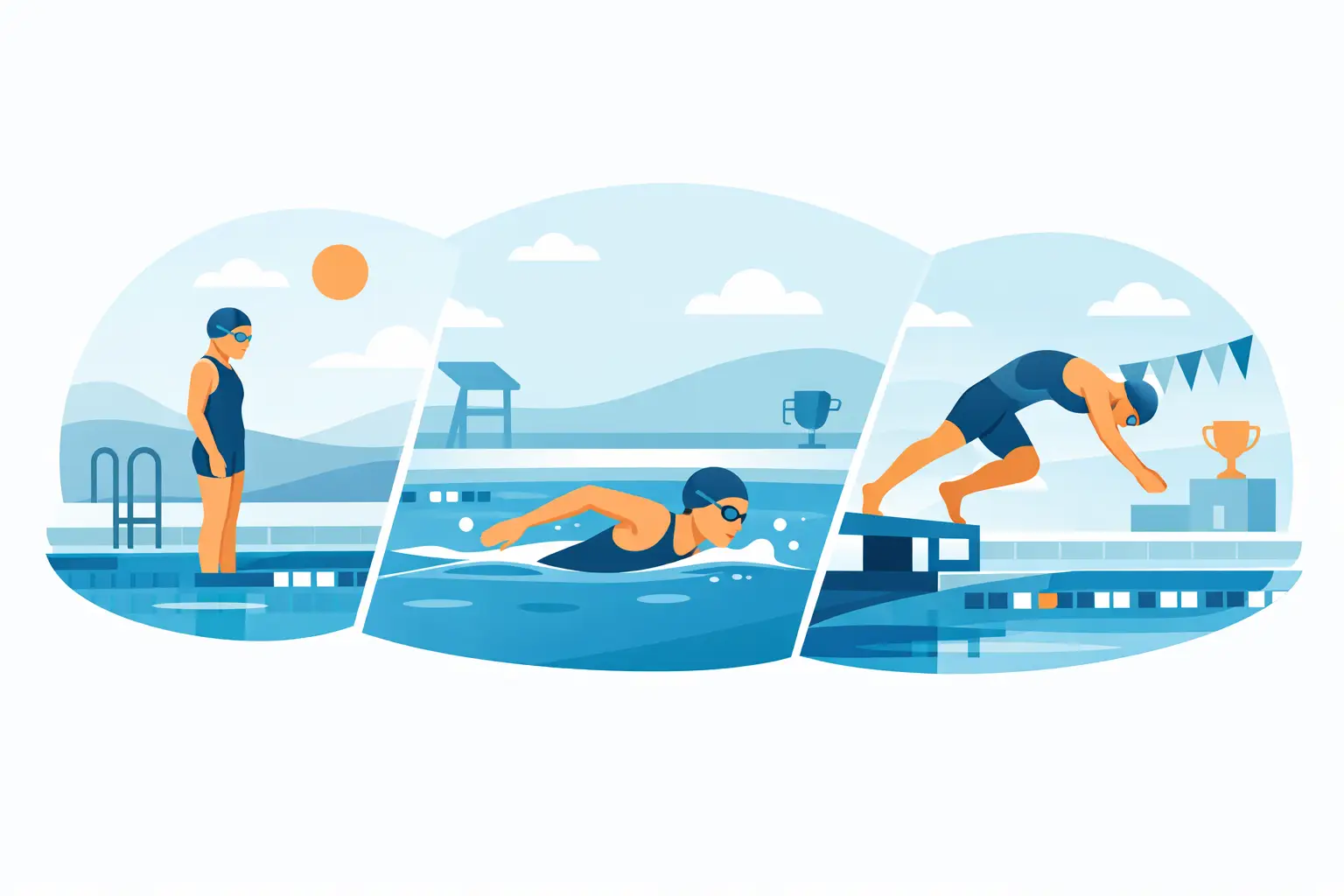
For most adults, progression follows four broad phases. First comes water confidence and breath control. Then basic body position, floating, and kicking. After that comes simple stroke coordination and distance building. Only then do efficiency, endurance, and advanced goals make sense.
A practical guide to adult swim progression by stage
Stage 1 – Water comfort and breath control
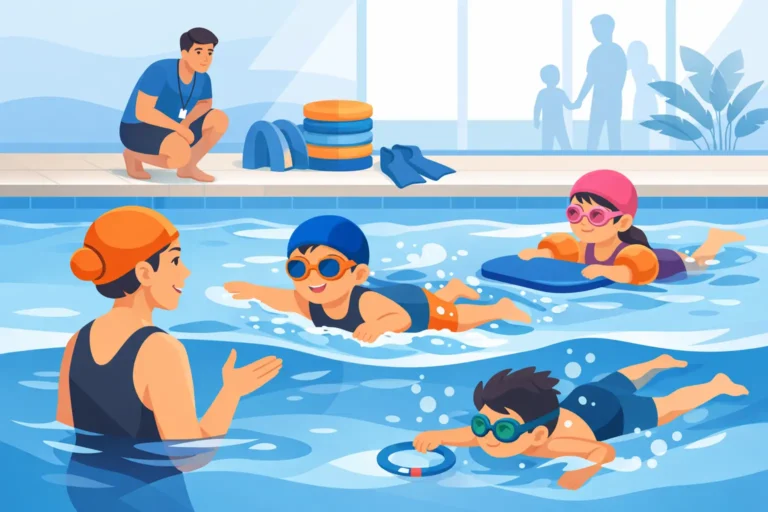
This is the starting point for many beginners, including adults who are comfortable standing in the shallow end but tense the moment water reaches the face. At this stage, success is measured by calmness. Can you exhale into the water without lifting your shoulders? Can you submerge your face without rushing? Can you hold the pool edge, float with support, and recover your standing position smoothly?
These may seem basic, but they are the base of everything else. Adults who skip them often struggle later with frantic breathing, sinking hips, and early fatigue. If you feel stuck here, that does not mean you are behind. It usually means your body is still learning that water is not a threat.
Stage 2 – Floating, balance, and movement basics
Once breathing improves, the next goal is body control. This includes front float, back float, streamline, kicking with support, and gliding short distances. Many adults expect kicking to carry them through the water, but balance is usually the bigger issue. If the head lifts too high or the body stiffens, the legs sink and effort increases.
This stage also introduces a critical skill that is often overlooked – recovery. If you lose balance, swallow water, or drift off line, can you reset without panic? A confident swimmer is not someone who never makes mistakes. It is someone who can correct them quickly and safely.
Stage 3 – Stroke coordination and short-distance swimming
This is where learners usually begin front crawl and backstroke in a recognizable way. Arm movement, side breathing, kick timing, and rhythm start coming together. Distances are still short because the priority is coordination, not speed.
This stage can feel frustrating. Adults often improve in parts rather than all at once. You may have a good kick but poor breathing, or strong arm movement but weak balance. That is normal. Progression is rarely linear. A good lesson structure isolates one problem at a time so the swimmer can improve without being overloaded.
Stage 4 – Endurance, efficiency, and goal-based development
After the basics are reliable, training becomes more specific. Some adults want lap swimming for fitness. Others want breaststroke refinement, treading water, deep water confidence, or preparation for open water and triathlon. At this point, progression is less about “learning to swim” and more about swimming with control under greater physical or technical demand.
This is also where efficiency matters. Many self-taught adults can complete a length, but they work far too hard for it. Technique improvements in breathing timing, body rotation, and catch mechanics can make swimming feel easier almost immediately.
How long does adult swim progression take?
It depends on the starting point, lesson quality, consistency, and confidence level. An adult with no water fear who attends regular lessons may develop basic stroke ability relatively quickly. An adult managing strong anxiety may need more time in the early stages, even if they are physically fit.
That does not mean slower learners are less capable. It simply means progression is not measured only by distance. For one person, a major milestone is swimming 50 yards continuously. For another, it is putting the face in the water calmly for the first time. Both are real progress.
Consistency matters more than intensity for most adults. One structured lesson a week with focused practice often beats sporadic bursts of effort. Long gaps between sessions can reset fear and disrupt motor learning, especially in the beginning.
What commonly slows adults down
The biggest barrier is usually tension. Tight shoulders, lifted chins, clenched hands, and rushed breathing make the body fight the water. Adults also tend to overthink. They try to fix kick, arms, breath, and timing all at once. That usually creates more stress, not better swimming.
Another issue is learning from mixed advice. Videos, friends, and casual tips can help, but they can also confuse the sequence. If a beginner is told to focus on advanced stroke details before learning buoyancy and breathing control, progress often stalls.
There is also the fitness misconception. Being strong or athletic helps, but it does not replace water skills. Swimming is technical. An adult who runs regularly may still struggle in the pool if breathing and balance are undeveloped.
Why structured lessons work better than trial and error
A clear guide to adult swim progression is useful, but real improvement comes faster when someone can spot the exact reason a skill is breaking down. That is the value of structured coaching. Instead of repeating full strokes and hoping they improve, the swimmer works on the right building block at the right time.
This is especially important for adults with fear, poor breathing habits, or long-standing self-doubt. Structured lessons create measurable wins. You are not just “trying to swim better.” You are learning to exhale fully, float independently, rotate correctly, and cover a set distance with control.
That clarity builds confidence because progress becomes visible. For adult learners, confidence is not just emotional support. It is a performance factor. A calmer swimmer usually moves better, breathes better, and learns faster.
At AQZOG, that structured progression approach is central because adult swimming should lead to practical results – water safety, confidence, and dependable skill development.
Choosing the right progression path as an adult
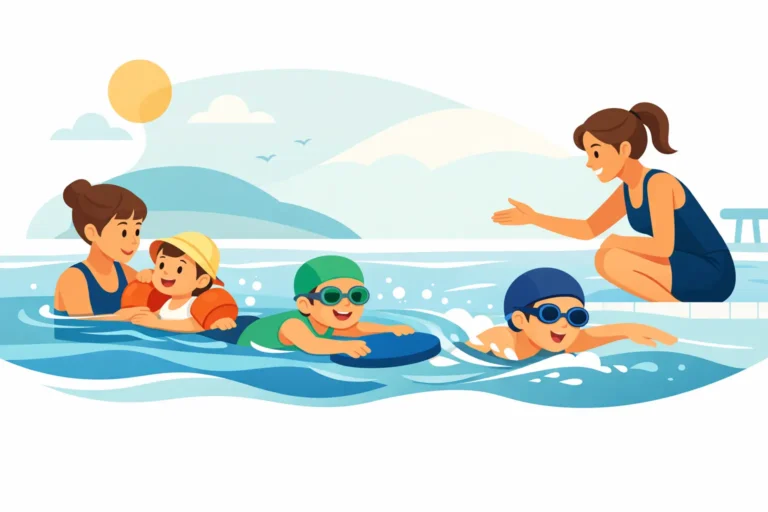
Not every adult belongs in the same lesson format. A complete beginner with water fear may progress best through private coaching or a very small group where the pace can be adjusted. A swimmer who already knows the basics may benefit from group lessons that add consistency and distance work.
Your goal also matters. If you want survival skills and family confidence at the pool, your plan may emphasize floating, treading water, and safe movement in deep water. If your goal is fitness, stroke efficiency and pacing become more important. If you are preparing for a test or aquatic pathway, technical standards and skill assessment carry more weight.
The right progression path is the one that matches both your current level and your real objective. Faster is not always better if the foundation is weak.
Signs your swim progression is on track
You do not need dramatic breakthroughs every week. Good progression usually looks quieter than that. Your breathing becomes less rushed. Recovery after mistakes gets easier. You can repeat a skill with less effort. Distances that once felt exhausting become manageable.
You may also notice better awareness. You know why a lap felt strong or why it fell apart. That understanding is a sign of real learning, not just temporary performance.
If progress feels slow, check whether the basics are truly secure. Many adult plateaus come from foundation gaps, not lack of effort. Returning to breath control, floating, or balance is not moving backward. It is often the fastest way forward.
Swimming as an adult is not about proving you should have learned earlier. It is about building a life skill properly, with enough structure to stay safe and enough patience to improve well. Start where you are, progress in sequence, and let each small win do its job. Confidence in the water is built, not guessed.