Adult Swim Coaching for Safety and Real Progress
Adult Class Sign Up
A crowded pool can make an adult beginner feel more exposed than a child. You may understand what you are supposed to do, yet still hold your breath too long, tense your shoulders, or avoid putting your face in the water. Adult swim coaching addresses those real barriers with a structured plan that builds safety, control, and confidence one skill at a time.
The right program does not assume every adult starts at the same level. Some learners have never had formal lessons. Others can stay afloat but cannot swim a full length without stopping. Some are returning after years away from the water, while others need stronger technique for fitness, triathlon training, lifesaving, or certification. Effective coaching begins with an honest assessment and a clear next step.
What Adult Swim Coaching Should Build First
Swimming is more than forward movement. A capable swimmer can manage breathing, body position, propulsion, and recovery when conditions are less comfortable than expected. That is why a quality adult program starts with water safety and foundational control, not with pressure to complete a perfect freestyle lap immediately.
For a complete beginner, the first milestones may include safe pool entry and exit, relaxed face immersion, bubbling, floating, and returning to a standing position. These skills can appear basic, but they change how a learner responds when water enters the nose, goggles shift, or fatigue begins. A swimmer who knows how to pause, float, and recover has a far stronger safety foundation than someone who can force their way across the pool while panicking.
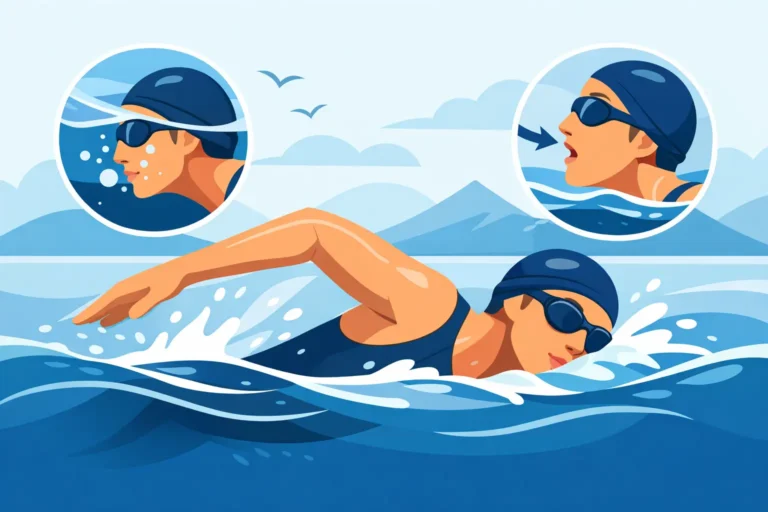
As confidence grows, coaching should connect these foundations to practical movement. You learn how to streamline, kick with balance, rotate for a breath, and coordinate your arms without rushing. The goal is not simply to get through a lesson. It is to develop repeatable habits that work every time you enter the water.
Why Adults Need a Different Learning Approach
Adults often bring strengths that younger learners do not. They can understand instruction, set specific goals, and recognize how practice affects results. They may also bring deeply established fears, unhelpful movement patterns, or embarrassment about starting later in life.
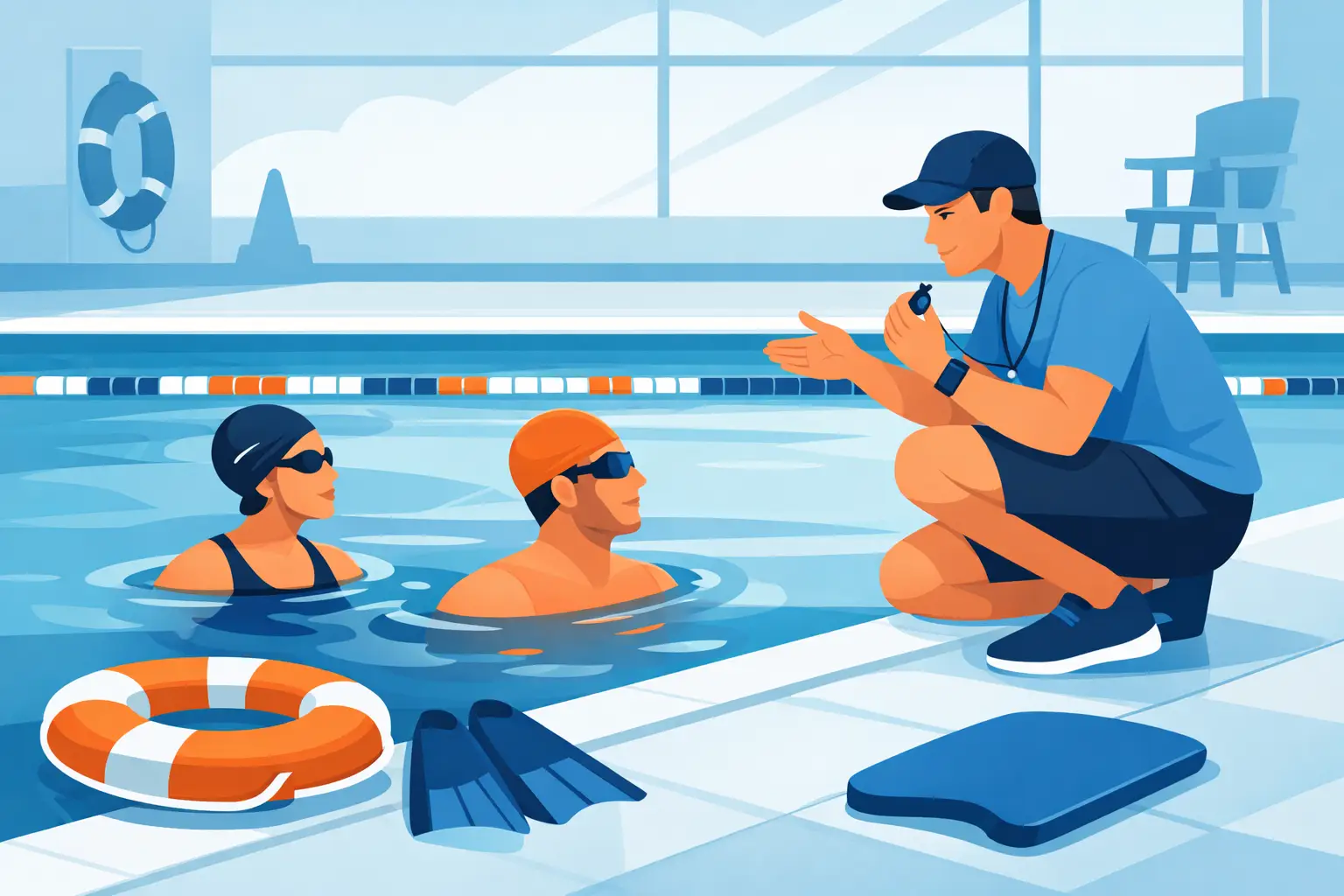
A skilled coach respects both sides of that experience. Rather than telling a nervous learner to “just relax,” the coach breaks a difficult task into manageable actions. For example, a swimmer who fears deep water may first practice supported floating near the wall, then controlled glides, then short independent swims with a planned recovery point. Each successful repetition gives the learner evidence that they can stay safe and in control.
For adults with prior experience, the challenge is often efficiency. Many self-taught swimmers work too hard because they lift their head to breathe, kick from the knees, cross their arms over the center line, or hold tension through the neck and hips. Small technical corrections can reduce fatigue significantly. This is especially valuable for lap swimmers who want to train longer, prepare for an event, or simply enjoy swimming without feeling exhausted after a few lengths.
Choose Coaching Based on Your Starting Point
The best lesson format depends on your confidence level, goals, schedule, and how quickly you need results. There is no single correct route for every adult.
Private lessons for focused progress
Private coaching is often the fastest option for complete beginners, fearful swimmers, and adults with a specific deadline. The instructor can adjust the pace in real time, spend more time on the exact skill causing difficulty, and build a plan around your goals. This format also suits swimmers preparing for a water assessment, triathlon, fitness test, or lifesaving pathway.
The trade-off is cost. One-to-one instruction is more personalized, but it is usually a premium option. It delivers the greatest value when the swimmer attends consistently and practices the assigned skills between sessions.
Small groups for structure and motivation
Small group lessons can provide a supportive learning environment at a more accessible price. Watching other adults work through similar challenges can reduce self-consciousness and create useful motivation. A well-organized group still needs level-appropriate instruction, enough practice time, and clear feedback from the coach.
Group coaching may be less suitable if your water fear is severe or if your goal requires highly individualized stroke correction. In that situation, starting with several private sessions and moving into a group later can be a practical progression.
Intensive programs for a time-sensitive goal
Holiday or intensive programs can accelerate learning by increasing practice frequency. Repetition matters in swimming because the body needs time to recognize a new breathing pattern or stroke movement as familiar. Several closely spaced sessions can help a learner maintain momentum instead of relearning the same skill each week.
However, intensity cannot replace readiness. A swimmer who is still uncomfortable submerging should not be rushed into deep-water laps solely because the schedule is short. Fast results come from focused instruction and consistent practice, not skipped foundations.
A Clear Progression From Fear to Functional Swimming
A structured adult program should make progress visible. You should know what you are working on now, what comes next, and how the skills connect to your wider goal. While each learner progresses at a different rate, a typical pathway moves through four stages.
First comes water orientation: safe entries, exits, breath control, floating, and basic recovery. Next comes independent movement: gliding, kicking, short-distance swimming, and controlled breathing. The third stage develops stroke competence, usually through freestyle and backstroke fundamentals, improved timing, and endurance. Finally, the swimmer refines technique, builds distance, and adds goal-specific skills such as treading water, deep-water confidence, turns, open-water preparation, or test readiness.
Progress is rarely perfectly linear. A learner may feel confident in a shallow pool but hesitate in deeper water. Another may swim freestyle well but struggle to exhale continuously. These are not failures. They are useful signals that a particular skill needs more deliberate practice before the next stage.
Water Safety Is Not Only for Beginners
Even strong swimmers benefit from regular safety training. Pool conditions, fatigue, cramps, unexpected splashing, and overconfidence can affect anyone. Adult swim coaching should reinforce practical responses, including how to float and rest, tread water, change direction, reach the wall efficiently, and recognize when to stop.
Safety matters even more for adults who swim with children or supervise family outings. A parent who understands safe behavior around water can model calm decision-making, identify unsafe situations earlier, and support a child’s learning without passing on fear.
For learners pursuing formal assessments or aquatic careers, safety skills should be measured, not assumed. Test preparation works best when it begins well before the assessment date. Mock practical sessions can reveal whether a swimmer has the required stamina, technique, and ability to perform under instruction. Theory preparation also matters when certification includes water safety knowledge, emergency awareness, or rescue principles.
How to Get More From Each Lesson
Improvement depends on what happens between lessons as well as during them. Attend consistently whenever possible. A long gap can make new movements feel unfamiliar again, particularly for beginners who are still building confidence.
Arrive with one clear focus for each session. It may be exhaling continuously, keeping your hips higher, or completing a relaxed back float. A coach can give several corrections, but trying to fix everything at once often creates tension. One or two priorities practiced well will produce more lasting change.
It also helps to define success by control rather than speed. If you can float calmly, recover your breathing, and repeat a skill with less support than last week, you are progressing. Distance and pace become easier to improve once that control is established.
Signs You Have Found the Right Coach
An experienced adult coach does not use fear, vague encouragement, or one-size-fits-all drills. They explain the purpose of each exercise, adapt it when needed, and provide feedback you can apply immediately. They should also maintain clear safety standards, appropriate supervision, and a lesson environment where questions are welcome.
Look for structured progression rather than promises of instant transformation. Some adults learn basic water confidence quickly; others need more time to overcome fear or rebuild coordination. Honest coaching sets ambitious but realistic milestones and recognizes achievement at every stage.
The most valuable outcome is not a single completed lap. It is the moment you realize that water no longer dictates your choices. With patient instruction, regular practice, and a progression built around safety, swimming can become a skill you trust for fitness, family time, travel, and life.