Water Survival Skills for Children That Save Lives
A child does not need to swim fast or look polished in the water to be safer. When an unexpected slip, fall, or wave of panic happens, the first priorities are staying calm, breathing, turning toward safety, and reaching a secure exit. That is why water survival skills for children should be taught as a structured progression, not treated as a few pool games or a one-time lesson.
For parents, the goal is not to create fear around water. It is to build respect, confidence, and practical decision-making. Children who understand what to do when they are tired, disoriented, or unable to touch the bottom have a much stronger foundation for safe swimming and future formal progression.
What Water Survival Skills for Children Really Mean
Water survival is the ability to respond safely when a child is not in an ideal swimming position. This may mean falling into deep water, needing to rest before reaching the wall, floating with clothing on, or recognizing that a pool situation is becoming unsafe.
A child who can swim one length using a front crawl may still struggle if they enter the water unexpectedly. They may inhale water, lose their goggles, forget where the wall is, or panic when they cannot immediately stand. Survival skills address these real-life moments by teaching children how to recover before they try to move.
The strongest programs teach skills in sequence. Children first gain comfort with water on the face and controlled breathing. They then learn body balance, floating, rotation, treading or sculling, safe entry and exit, and movement toward an exit point. As they progress, these skills are practiced in deeper water and combined under appropriate supervision.
The Core Skills Every Child Should Practice
Safe entry, resurfacing, and orientation
Children should know that water depth matters before they enter. They need to recognize where entry is permitted, look for a clear exit route, and avoid jumping or diving into unfamiliar water. In pools, they should understand that drains, lane ropes, wet decks, and crowded play areas require extra awareness.
A key skill is entering the water safely, resurfacing, and turning to locate the nearest wall or designated exit. This sounds simple, but it is very different from stepping into a pool calmly. During a supervised lesson, children can practice an unexpected-style entry in a controlled setting, then learn to regain a stable position before moving.
Controlled breathing and calm recovery
Panic often begins with a disrupted breath. A child who splashes water into their face and immediately gasps may take in water and become more distressed. Learning to close the mouth, blow bubbles underwater, and lift the face to breathe creates a reliable response.
Breath control should be taught patiently. For beginners, this may begin with putting the chin, lips, and nose into the water. For more confident swimmers, it can include repeated submersion, rhythmic exhaling, and surfacing without grabbing for the instructor or the pool edge. Progress is measured by calm, controlled repetition, not by forcing a child to stay underwater longer than they are ready for.
Floating and rotation
A float is not just a beginner exercise. It is a resting position. Children should learn both front and back floating because each has a purpose. A front float helps a child reset their body position, while a back float allows them to keep the face clear for breathing and look for help or an exit.
The transition between the two is especially valuable. A child may enter the water facing down or may become tired while swimming. Being able to roll onto the back without standing provides time to breathe, calm down, and make a better choice. Young children may need more support and repetition before this movement becomes reliable. That is normal.
Treading water and conserving energy
Treading water gives children a way to remain upright when there is no immediate wall within reach. It should be taught with realistic expectations. A smaller or younger child may only tread briefly at first, while an older child with stronger coordination can build endurance over time.
Technique matters more than frantic movement. Children should learn to use relaxed arm sculling and an appropriate leg action while keeping the head steady. They also need to understand that treading is not always the best choice. If they are near a wall, a back float followed by a calm swim may conserve more energy than trying to stay vertical for too long.
Moving to safety and exiting independently
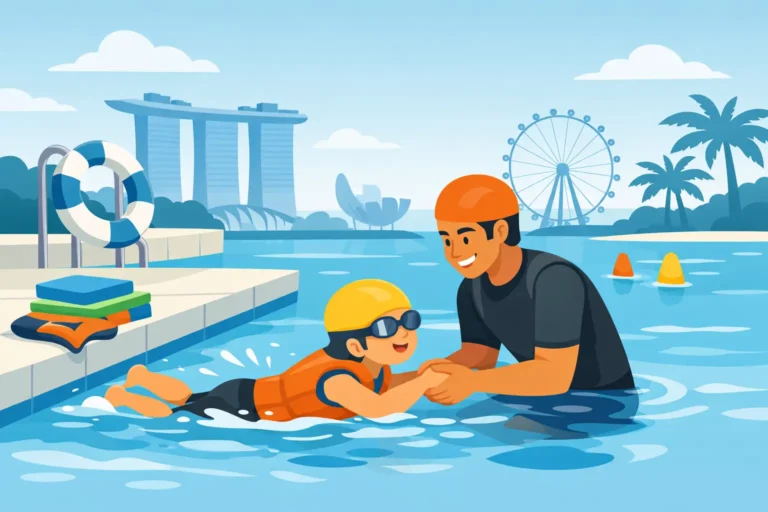
Once a child has recovered their breathing and body position, they need a clear plan: turn toward the nearest safe exit, move steadily, and hold the wall correctly. This can involve a short swim, a backstroke-style kick, or reaching for a stable ledge.
Exiting deserves practice too. In many pools, children must pull themselves up or use a ladder. A child who reaches the wall but cannot hold on or climb out is not fully prepared. Instructors should teach children to grip the edge, maintain contact, move sideways if needed, and exit without relying on an adult lifting them every time.
Why Pool Skills Alone Are Not Enough
Swimming pools are controlled environments, but real water risks vary. Open water, water parks, hotel pools, and crowded recreational areas can introduce waves, poor visibility, currents, unfamiliar depths, and distractions. Children should be taught that a skill learned in one setting must be practiced carefully before it can be relied on elsewhere.
Clothing also changes how the body moves. A swimsuit feels very different from a T-shirt, shorts, or shoes. Age-appropriate supervised practice in light clothing can help advanced children understand the added drag and the value of floating, pacing themselves, and choosing the nearest exit. This should only be done with a qualified instructor and proper pool supervision.
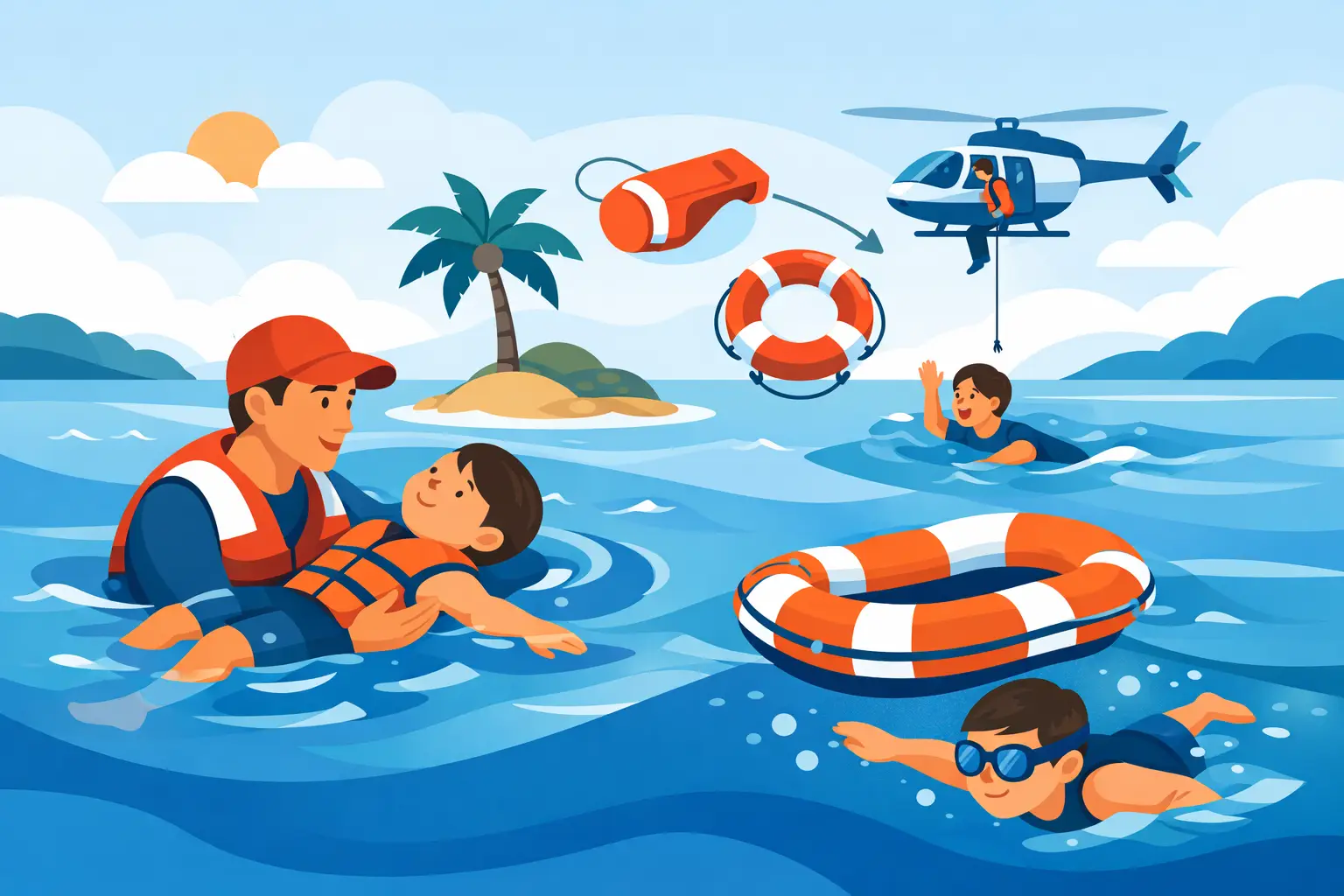
The same applies to rescue awareness. Children should never be taught to jump in and physically rescue another struggling swimmer. A panicked person can pull a rescuer underwater. Instead, teach the safer sequence: shout for an adult, call emergency services when needed, and reach or throw an approved flotation object from the deck if one is available.
Building Skills Through Structured Progression
Water confidence is not the same as water safety. A child who happily jumps into a pool may feel confident, but confidence without control can increase risk. Structured lessons help children build the right habits in the right order, with instructors checking body position, breathing, awareness, and decision-making.
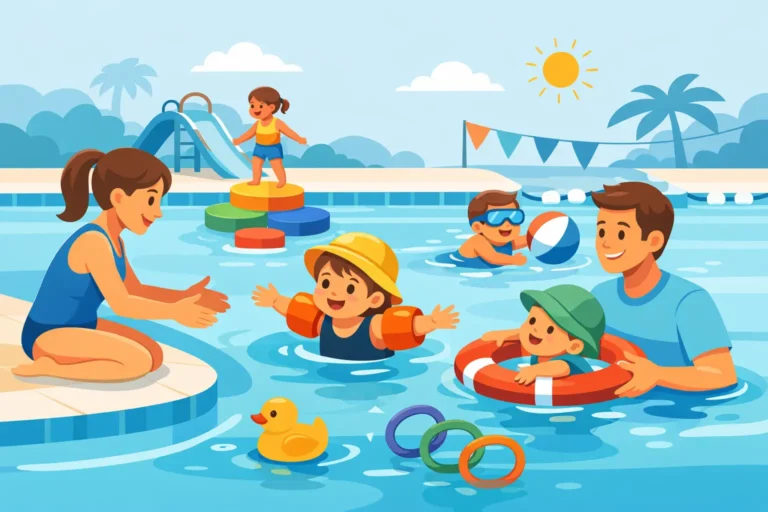
For toddlers, the focus should be gentle water orientation, supported floats, safe holds, and learning to return to an adult or pool edge. School-age beginners can work toward independent submersion, float-to-stand recovery, kicking, and safe wall travel. More advanced swimmers should practice deep-water recovery, sustained floating or treading, survival strokes, and formal water safety assessment skills.
Progression should also account for the child. A child who is anxious may need more time building trust and breathing control before attempting deep-water activities. A strong recreational swimmer may need coaching to slow down, improve efficiency, and recognize when to rest. Fast results are valuable, but reliable skills matter more than rushing through a checklist.
How Parents Can Reinforce Safety Between Lessons
Parents play an essential role, even when a child is enrolled in professional instruction. Before every swim, establish simple expectations: ask permission before entering, walk on wet surfaces, stay within the supervised area, and leave the water when instructed. Repeating these rules consistently makes them automatic.
At home, talk through simple scenarios. Ask, “What would you do if you fell in and could not touch the bottom?” Encourage the child to answer: turn onto the back or reach for the wall, breathe, stay calm, and call for help. Keep the conversation practical rather than frightening.
Most importantly, maintain active supervision. No lesson level or certificate replaces a responsible adult watching the water. Designate one adult as the water watcher, avoid distractions such as phones, and keep younger or weaker swimmers within appropriate reach. Swimming ability reduces risk, but layers of protection save lives.
Signs of Meaningful Water Safety Progress
Parents often look for distance swum or a new stroke as proof of improvement. Those milestones matter, but water survival progress can be easier to spot in a child’s behavior. A child is becoming safer when they enter only with permission, recover calmly after submersion, find the wall independently, and listen closely to pool rules.
Look for consistency rather than one perfect attempt. Can your child float after a surprise splash on several occasions? Can they move to the side without grabbing for an adult? Can they explain why they should not enter water alone? These are practical indicators that lessons are becoming real-world habits.
A well-taught child does not need to prove bravery by taking unnecessary risks. The most encouraging sign is often a child who pauses, assesses the situation, and chooses the safe action. Keep giving them supervised opportunities to practice that judgment, because calm decisions in water are skills that can protect them for life.