Can Adults Learn Front Crawl? Yes, With a Plan
An adult who can stand comfortably in the shallow end may still feel their heart race the moment their face enters the water. That is why the question is not simply, “can adults learn front crawl?” It is whether they can learn it safely, without being rushed, and with a clear progression that turns uncertainty into a repeatable skill. The answer is yes. Adults learn front crawl every day, including complete beginners, people returning to swimming after years away, and fitness-focused swimmers who have never felt efficient in the water.
Front crawl is not reserved for people who started swimming as children. It is a technical stroke built from smaller skills: relaxed floating, controlled exhalation, balance, rotation, timing, and a practical kick. Adults can understand these skills well. What they often need is patient instruction, enough practice, and a lesson plan that addresses fear or poor habits before adding speed.
Can Adults Learn Front Crawl Safely?
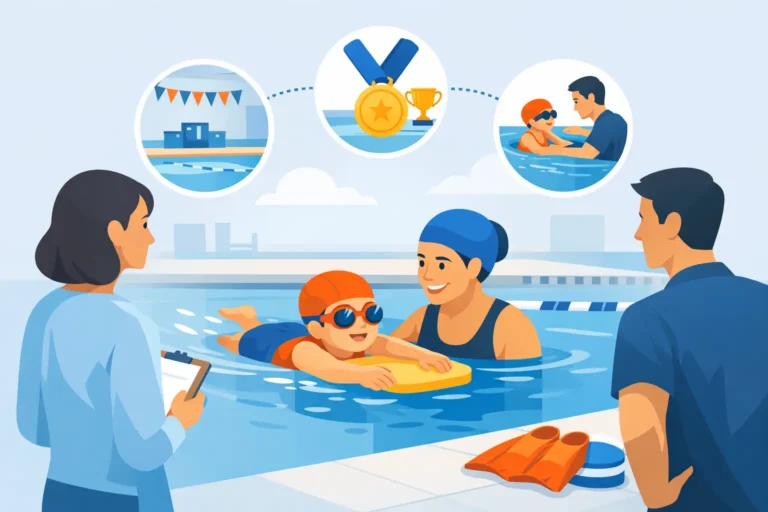
Yes, provided the learning process starts at the swimmer’s actual comfort level. A beginner who is still uncomfortable submerging their face should not be asked to swim a full length immediately. First, they need to establish water confidence, safe recovery to standing, and calm breathing. These are safety skills as much as stroke skills.
For adults with water fear, the first success may be as simple as placing the face in the water and exhaling steadily. That can sound basic, but it changes everything. Holding the breath creates tension in the neck and shoulders, lifts the head, drops the hips, and makes front crawl feel exhausting. Controlled bubbles allow the body to settle into a more horizontal position.
A qualified coach should also assess whether the swimmer can float, roll onto their back, move to the pool wall, and rest when tired. Front crawl is an excellent fitness stroke, but no stroke should be taught as a substitute for water-survival awareness. Confidence grows faster when a learner knows how to pause and recover safely.
Why Front Crawl Feels Harder for Adults
Adults are often stronger and more focused than young children, yet they can find early swimming more difficult because they bring expectations into the pool. They may expect to coordinate arms, legs, breathing, and body position in the first lesson. When that does not happen, they assume they are not built for swimming.
Usually, the issue is coordination, not ability. On land, we breathe without thinking. In front crawl, exhalation happens underwater and inhalation happens during a brief turn of the head. That new rhythm can feel unnatural at first. Adults also tend to overthink the arm pull or kick too early, while the real priority is learning to remain balanced and relaxed.
Stiffness is another common barrier. A tense swimmer may look as though they are working hard but travel slowly because their legs sink and their head stays lifted. The solution is rarely “kick harder.” It is usually better alignment, a quieter kick, and learning to look down rather than forward.
The Skills Adults Need Before Full Front Crawl
A structured program breaks the stroke into manageable stages. Rather than measuring progress only by distance, it measures whether each foundation is secure.
1. Water confidence and recovery
Before swimming independently, adults should be comfortable entering the pool, standing in chest-deep water, holding the wall, submerging the face, and returning to a stable position. They should know how to roll onto their back or reach the side if they lose rhythm. This reduces panic and allows practice to stay productive.
2. Floating and body position
Front crawl becomes easier when the body is long and close to the surface. Learners practice pushing off in a streamlined position, looking toward the pool bottom, and allowing the hips and legs to rise behind them. A coach may use short glides or supported drills before asking for continuous swimming.
3. Breath control
The basic pattern is simple: exhale gradually while the face is in the water, then turn to the side for a quick breath. The head does not need to lift out of the water. Lifting disrupts balance and can strain the neck. Early breathing drills often use the wall, a kickboard, or a short glide so the swimmer can focus on timing without worrying about distance.
4. Rotation and arm timing
Front crawl is not flat swimming. The body rolls gently from side to side as each arm reaches forward and pulls back. This rotation creates space to breathe and makes the stroke more efficient. Beginners do not need a perfect high-elbow pull on day one. They need an arm action that feels controlled, keeps the body moving forward, and does not cause them to rush their breathing.
5. A relaxed, purposeful kick
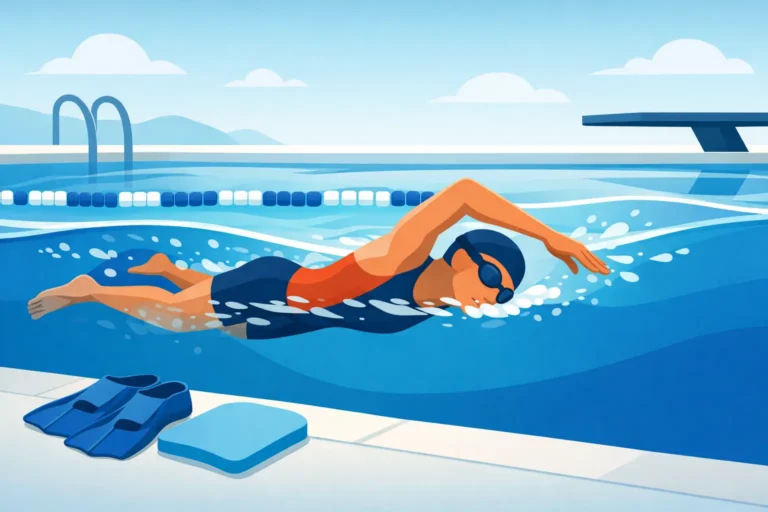
The kick supports body position. It should come from the hips with loose ankles and small, consistent movements. Many adults use a large knee-driven kick because they are trying to stay afloat. That approach consumes energy quickly. Once balance improves, the kick can become quieter and less tiring.
A Realistic Timeline for Adult Learners
Progress depends on starting confidence, lesson frequency, previous experience, and opportunities to practice. An adult who already swims breaststroke or backstroke may develop basic front crawl within a few lessons. A complete beginner who is nervous in deep water may need more time on breathing and floating first. Neither route is a failure.
With weekly lessons and short, consistent practice sessions, many adults can begin swimming a basic, recognizable front crawl over a few months. Building a comfortable 25-yard swim, bilateral breathing, and endurance takes longer. Technique matters because poor habits become harder to change once a swimmer begins relying on them for distance.
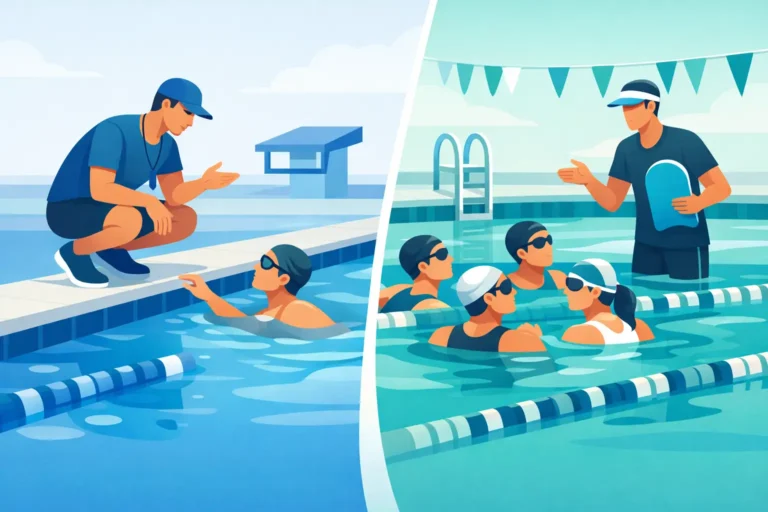
Private coaching can speed up improvement when a learner has specific concerns, such as water fear, an upcoming fitness test, a triathlon goal, or difficulty breathing to one side. Small group lessons can also work well for adults who benefit from regular structure and encouragement. The best format depends on the swimmer’s confidence, schedule, and need for individual feedback.
What Adult Beginners Should Practice Between Lessons
Practice should reinforce good habits, not repeat a stressful full-length attempt. Two or three short pool sessions can be more effective than one exhausting workout. Start in an appropriate depth, stay close to the wall when needed, and stop before fatigue causes technique to fall apart.
Useful practice might include a few relaxed face-in-the-water breathing repetitions, streamlined push-offs, short kicking drills, and brief swims with plenty of rest. As control improves, increase the distance gradually. A swimmer who can complete several relaxed 10-yard repeats with consistent breathing is often building a better foundation than someone forcing one tense 25-yard length.
Avoid relying on flotation equipment as a permanent solution. Kickboards and fins can be helpful teaching tools, but they should support a specific skill. If a swimmer can only move with equipment, the next coaching goal is to understand why: body position, breath control, leg action, or confidence may need attention.
Common Mistakes That Slow Progress
The most common mistake is trying to breathe by lifting the head forward. This drops the legs and makes each stroke feel like a struggle. Think of turning the head with the body rather than lifting it away from the water.
Another problem is holding the breath underwater. The swimmer may manage a few strokes, then suddenly need air and lose control. Steady exhalation is the answer. It is also common to reach too far across the centerline with the hand, which can make the body zigzag. Reaching forward in line with the shoulder creates a cleaner path.
Adults should be cautious about pushing through shoulder pain. Front crawl uses repeated overhead movement, and discomfort can result from poor technique, limited mobility, or an abrupt increase in training volume. A coach can adjust the drill, stroke timing, or workload. Persistent pain should be assessed by a qualified health professional before intensive swimming continues.
When Coaching Makes the Biggest Difference
Video tutorials can introduce useful ideas, but they cannot tell a swimmer whether their hips are sinking, their breath is rushed, or their head turns too late. Live feedback shortens the trial-and-error process. It is especially valuable for nervous learners, because an experienced instructor can set safe distances, choose the right drills, and make corrections before frustration takes over.
AQZOG’s structured adult instruction reflects the same progression used for meaningful swim development: establish safety and confidence first, then build measurable stroke skills, endurance, and independent ability. For learners pursuing fitness, open-water preparation, or lifesaving pathways, that foundation is not extra work. It is what makes later training reliable.
Adult learners do not need to prove they are fearless or athletic before starting. They only need a suitable first step: a safe pool environment, a coach who respects their starting point, and the willingness to practice one skill at a time. The first calm breath underwater is often where front crawl truly begins.