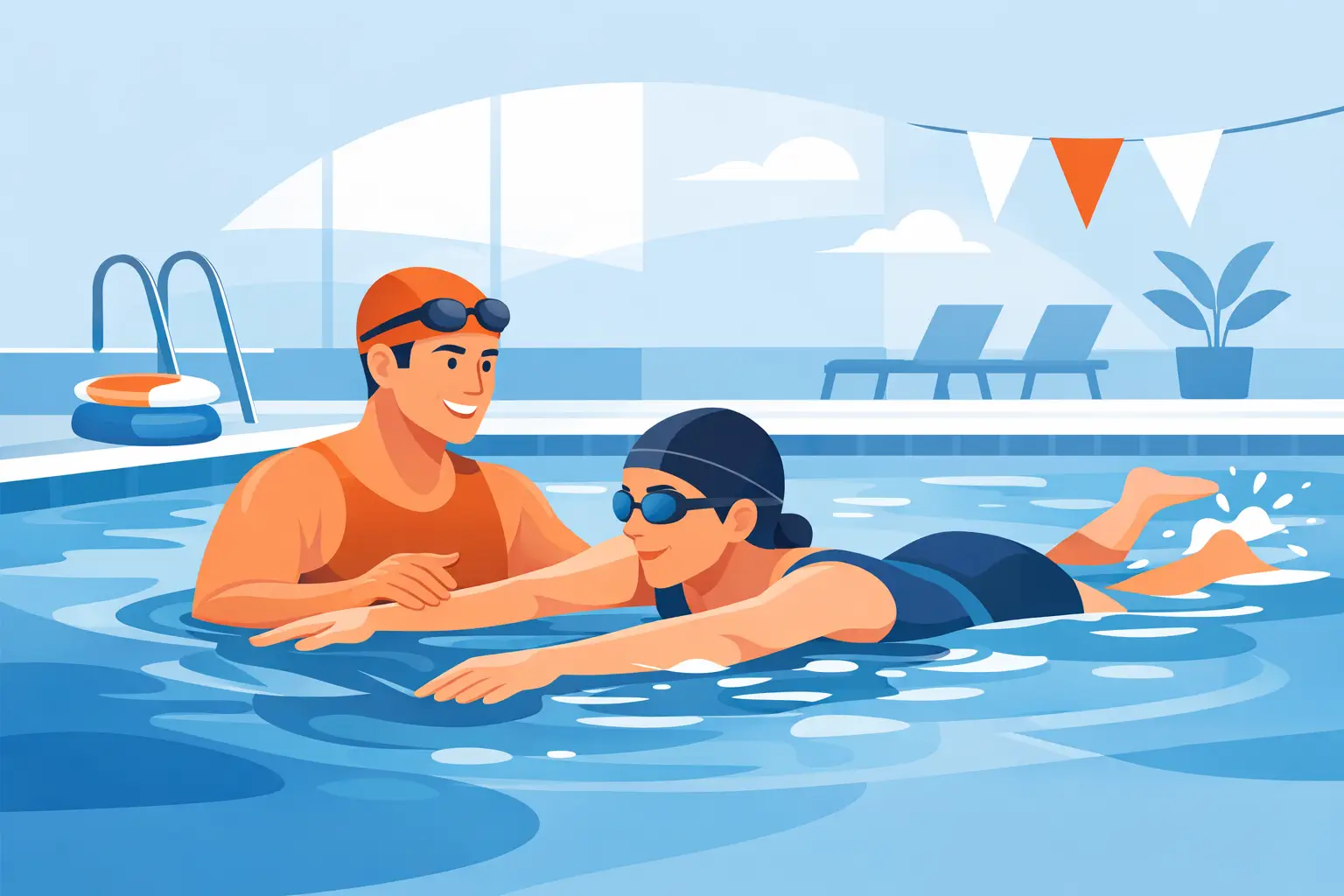
Adult Swimming Lessons for Beginners
Walking into a pool for your first lesson as an adult can feel harder than the lesson itself. Most beginners are not worried about technique first. They are worried about breathing, sinking, panic, or looking inexperienced in front of others. That is exactly why adult swimming lessons for beginners should be structured, paced properly, and taught with safety as the starting point rather than speed.
For adults, learning to swim is rarely just about recreation. It is about water safety, self-confidence, fitness, travel, family life, and in some cases passing formal assessments or preparing for aquatic pathways. The right lesson program respects that. It does not throw beginners into full strokes too early. It builds control first, then consistency, then efficiency.
Why adult swimming lessons for beginners work better with structure
Many adults try to learn from videos, friends, or occasional practice sessions. The problem is not lack of effort. The problem is sequence. Beginners often practice the wrong thing at the wrong time. They may try front crawl before they can float calmly, or they may kick harder when the real issue is breath timing.
A structured lesson plan removes that confusion. Each skill supports the next one. You learn how to enter the water comfortably, regulate breathing, float with support, recover from imbalance, and move short distances before attempting full stroke coordination. That progression matters because confidence in the water is built through repeatable success.
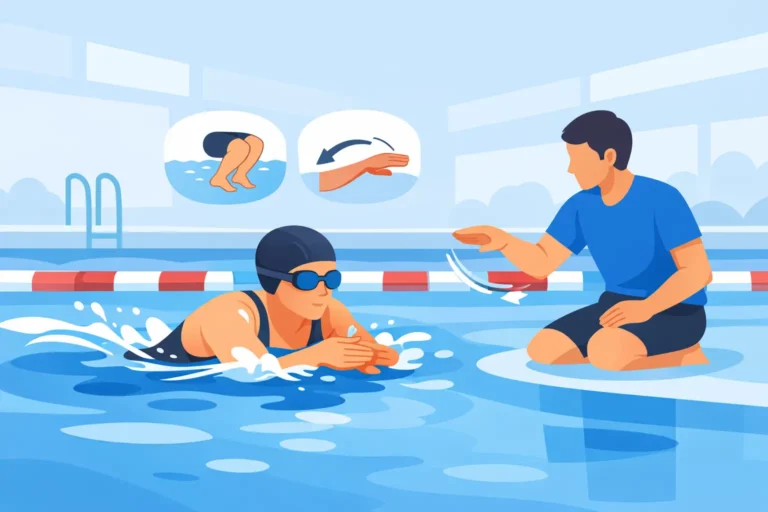
There is also a safety reason for proper sequencing. Adults who are tense in the water tend to hold their breath, lift their head, and stiffen their limbs. That combination makes movement less efficient and can increase anxiety. A qualified coach spots these patterns early and corrects them before they become habits.
What complete beginners usually need first
Most adult beginners do not need more bravery. They need a clear process. In early lessons, the focus is usually on comfort, breathing control, body position, and basic propulsion.
Breathing is often the biggest barrier. If you are not comfortable exhaling into the water, every other skill becomes harder. Floating is another early milestone, not because floating looks impressive, but because it teaches trust in the water and reduces panic. From there, simple kicking and arm movement can be introduced with much better control.
Some adults learn quickly once fear is reduced. Others need more time just to become comfortable submerging their face or letting go of the pool wall. Both are normal. Fast progress is possible, but only when the foundation is solid.
Fear, embarrassment, and adult learning
Adults often carry more hesitation than children because they are more self-aware. They worry about failing, about swallowing water, or about being the slowest learner in the class. Good instruction takes that seriously without making it the center of the experience.
A strong beginner program creates small, measurable wins. Putting your face in the water calmly for five seconds is progress. Floating with less support is progress. Swimming a short distance with controlled breathing is progress. When improvement is made visible, confidence follows.
What to expect in beginner swim lessons
A well-run beginner program should feel organized from the first session. That means a clear starting point, realistic goals, and a progression plan based on your current ability rather than a generic class pace.
Most adults start with one of two profiles. The first is the true beginner who cannot float, breathe comfortably, or move independently in the water. The second is the partial beginner who can move a little but has poor technique, low endurance, or no confidence in deeper water. These learners may be in the same broad category, but their lesson pathway should not be identical.
In the first stage, expect work on water entry, poolside safety, breath control, front and back floating, gliding, and basic kicking. Once those become more stable, lessons usually move into stroke foundations, coordinated breathing, and short-distance swimming. Backstroke may feel easier for some beginners because the face stays out of the water. Front crawl can be introduced once breathing and body alignment improve.
Progress is not always linear. One week you may feel strong and relaxed. The next week, breathing may feel off again. That does not mean you are going backward. It means motor skills in the water need repetition under calm guidance.
Group or private lessons?
This depends on your starting point, your comfort level, and how quickly you want to progress. Group classes work well for adults who are comfortable being around peers and benefit from a steady weekly routine. They also create a sense of shared learning that helps some beginners feel less isolated.
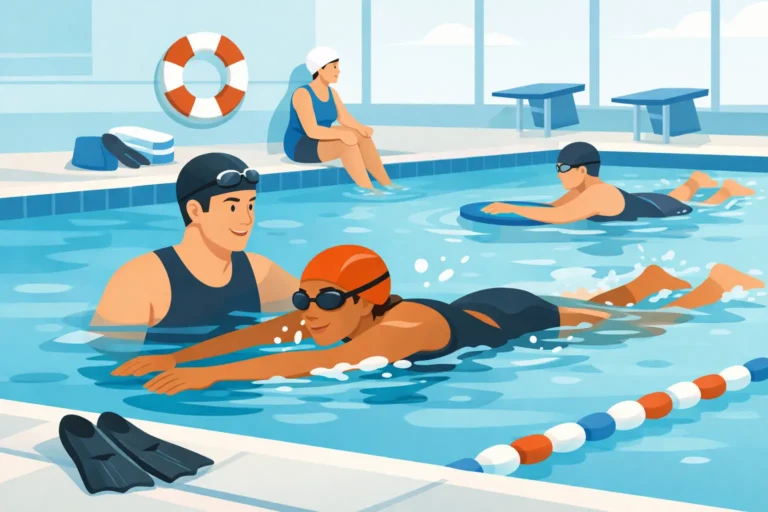
Private lessons are often the better choice for adults with significant water fear, irregular schedules, or highly specific goals. If you need concentrated attention on breathing, deep-water confidence, or faster skill correction, one-to-one coaching can shorten the learning curve.
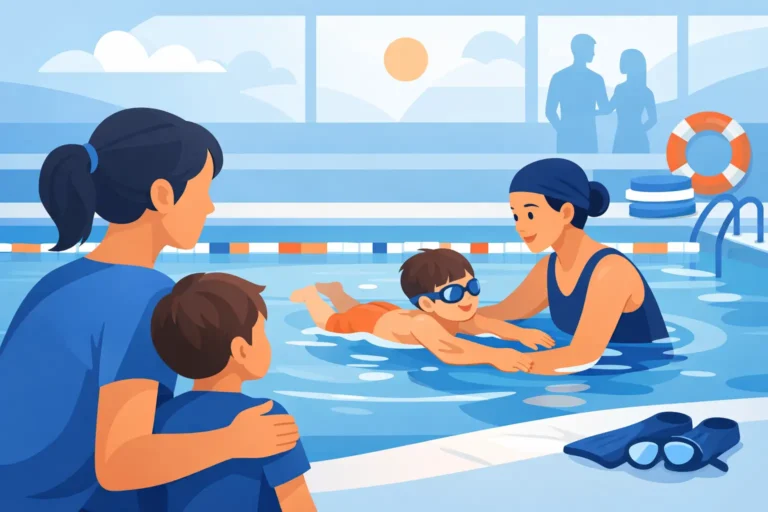
Semi-private lessons can be a useful middle ground. They offer more individual attention than a full group while still giving you a partner-based learning environment. This can work well for spouses, friends, or siblings who want to start together.
The best format is not the cheapest or the most intense. It is the one you will attend consistently and complete with confidence.
How long does it take to learn?
This is one of the most common questions, and the honest answer is that it depends. Adults who attend lessons consistently, practice between sessions, and start without severe water anxiety may develop basic independent swimming within a relatively short period. Adults managing strong fear or long-held tension in the water may need more time.
What matters more than an exact timeline is whether the program has clear benchmarks. Can you submerge comfortably? Can you float and recover calmly? Can you move a short distance without stopping? Can you coordinate breathing without panic? Those are meaningful measures of progress.
Structured schools that focus on progression tend to produce better outcomes because they do not rely on random practice. They teach toward milestones. That is especially valuable for adult learners who want visible improvement rather than vague exposure to the water.
What makes a good beginner swim program
Not every swim lesson labeled beginner is actually beginner-friendly. Some classes move too quickly. Others mix learners with very different abilities and leave the least confident swimmers behind.
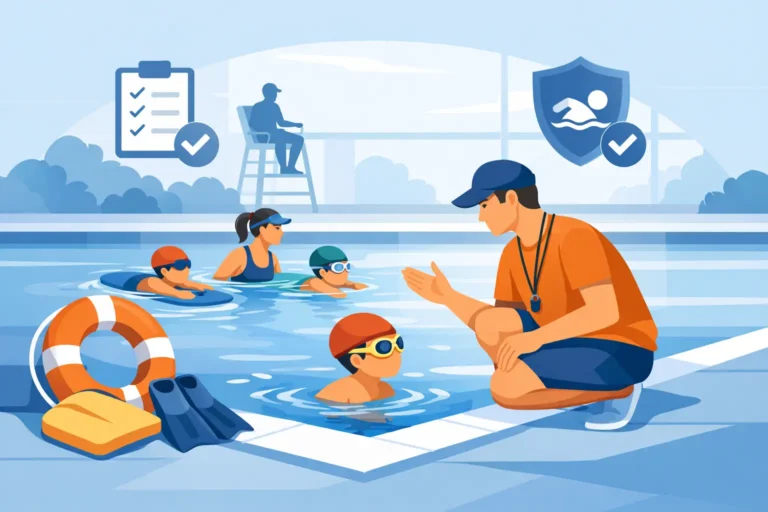
A good program starts with assessment. It identifies whether you need fear reduction, technical correction, basic water survival, or stroke development. It also uses experienced coaches who understand adult learning behavior, not just child instruction. Adults need clear explanation, practical correction, and a calm teaching style that builds trust.
Look for lessons that emphasize safety, progression, and measurable outcomes. Water confidence is not a vague concept when it is taught properly. It can be broken down into specific skills, repeated under supervision, and improved over time. Schools with long coaching experience and structured pathways, such as AQZOG, tend to be better positioned to support both complete beginners and adults aiming for higher performance or certification goals later on.
How to get better results from your lessons
The most important factor is consistency. One lesson followed by three weeks away from the pool usually leads to slow progress. Weekly attendance helps your body and breathing adapt to the water before fear and hesitation return.
It also helps to arrive with realistic expectations. Your first goal is not elegant technique. It is control. Once you can breathe calmly, float with confidence, and move through the water without panic, technical refinement becomes much easier.
Outside the pool, mental preparation matters more than many adults expect. If you tend to rush or tense up, remind yourself that swimming improves through relaxation and timing, not force. Beginners often try too hard. Better outcomes usually come from better control.
Signs you are making real progress
You are improving when the water feels less threatening, when recovery after a mistake is calmer, and when short distances require less effort. Stroke perfection is not the first signal of progress. Reduced panic and better rhythm are.
Another good sign is when your coach needs to correct smaller details rather than basic survival habits. That means your foundation is becoming stable enough for refinement.
Common mistakes adult beginners should avoid
The first is comparing yourself to swimmers who learned as children. Adults learn differently, and many are working through fear at the same time as technique. Comparison usually adds pressure without improving performance.
The second is trying to skip foundational skills. Floating, breathing, and body position can seem basic, but they are not optional. They are what make every stroke safer and more efficient.
The third is choosing a lesson format that does not fit your needs. If you are highly anxious, a large group may slow your progress. If you are self-motivated and reasonably comfortable, private lessons may not be necessary. Matching the lesson type to the learner matters.
Learning to swim as an adult is not late. It is practical, responsible, and often life-changing. The right beginner program gives you more than movement in the water. It gives you safety, control, and the confidence to keep progressing one skill at a time.