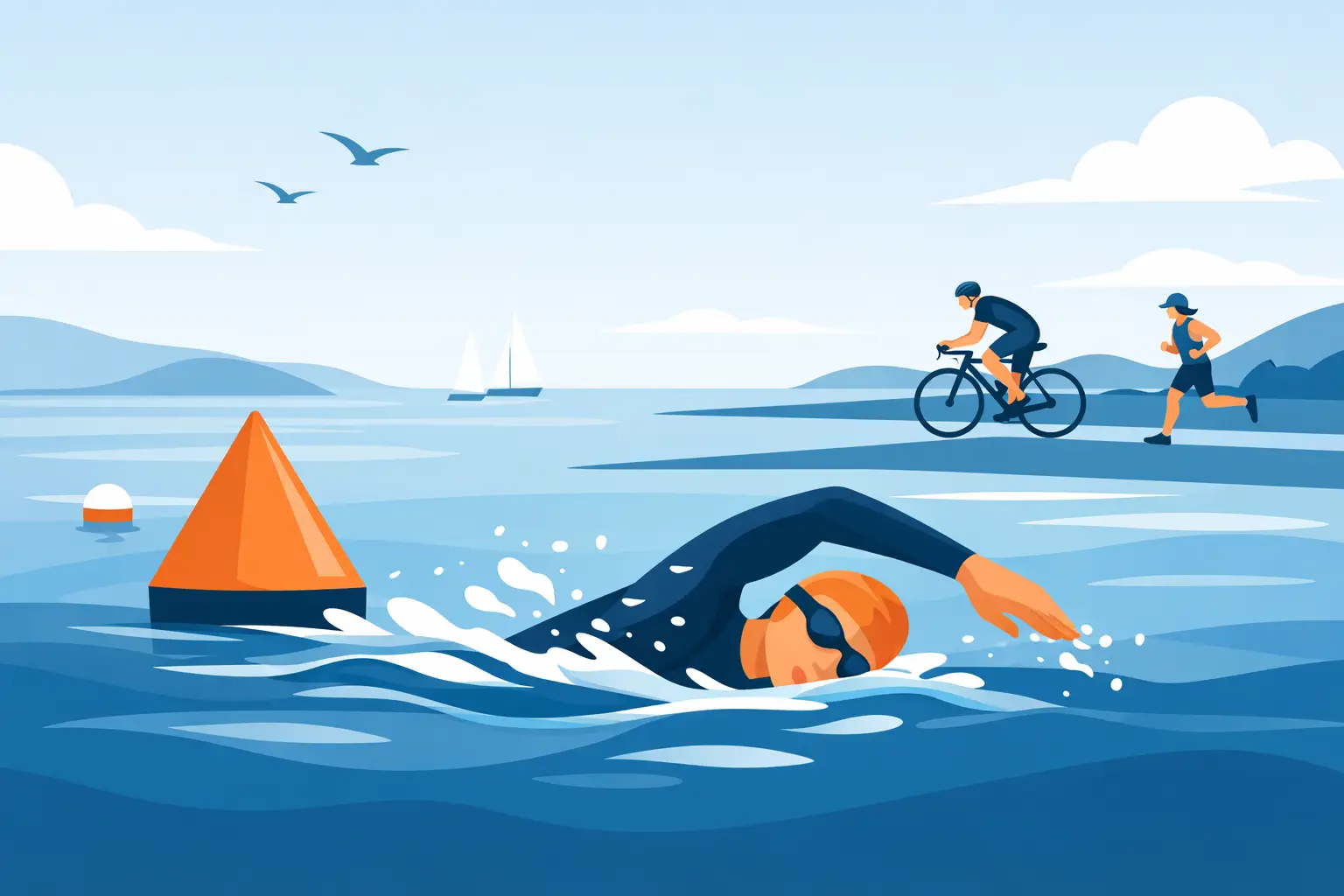
Open Water Swimming for Triathlon Beginners
The first time you leave the pool and swim in open water, the distance usually is not the real problem. The shock comes from everything else – no lane lines, limited visibility, cooler water, other swimmers near you, and a mind that suddenly feels much louder than usual. That is why open water swimming for triathlon beginners should never be treated as just pool swimming in a different location. It is a separate skill set, and when you train it properly, it becomes far more manageable.
For new triathletes, the goal is not to look smooth on day one. The goal is to stay calm, stay safe, and build repeatable habits under race conditions. Confidence in open water comes from structured progression, not guesswork.
Why open water feels harder than the pool
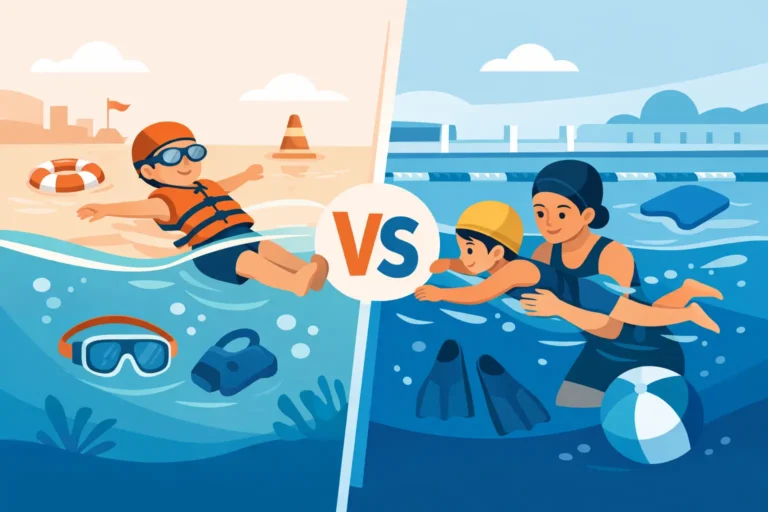
In a pool, you get constant reference points. You can see the bottom, judge your pace from the wall, and pause if needed. Open water removes most of that structure. Even strong pool swimmers can feel anxious once they cannot see clearly ahead or beneath them.
This matters because anxiety changes mechanics. Breathing gets rushed. The stroke shortens. Kicking becomes inefficient. Heart rate rises before the swim has even settled. Many beginners then assume they are not fit enough, when the real issue is that their nervous system is overloaded.
The good news is that this can be trained. Open water confidence is partly fitness, but it is also breathing control, orientation, race awareness, and the ability to recover quickly when something feels off.
Start with safety before speed
Triathlon culture often celebrates toughness, but beginners need a different priority. You do not earn confidence by forcing yourself through fear. You earn it by learning how to control the situation.
That starts with supervised practice whenever possible. Open water sessions should be planned, not improvised. Swim in a designated safe area, go with a coach or training group if available, and use visible safety gear such as a bright cap and a swim buoy when appropriate. If conditions are poor, postpone the session. Strong currents, low visibility, and crowded swim zones are not ideal places to build first-stage confidence.
There is also a practical point many beginners miss. Race-day safety depends on your ability to make decisions early. If breathing is getting ragged, if panic is building, or if contact from other swimmers is escalating your stress, you need to know how to slow down, switch to an easier stroke, float, or reset without embarrassment. That is not weakness. That is skill.
Build pool skills that transfer to open water swimming for triathlon beginners
Before spending long sessions outside, sharpen the basics in the pool. This is often the fastest route to improvement because the pool gives you a controlled place to practice specific problems.
Breathing is usually the first issue. If you already lift your head too high in the pool, that habit becomes more costly in open water. Work on exhaling fully underwater and turning to the side for air without losing body position. Bilateral breathing can help with flexibility, but it is not mandatory for everyone. Some swimmers do better using their stronger side most of the time and switching only when conditions demand it.
Sighting is another key skill. In open water, you need to look forward occasionally to stay on course. If you lift your whole head and pause the stroke, your hips drop and momentum disappears. Practice sighting in the pool by looking forward briefly with your eyes and forehead just above the surface, then turning to breathe as normal. The movement should be quick and controlled.
You should also practice swimming without wall-dependent rhythm. Sets with fewer push-offs, longer continuous repeats, and pacing control all prepare you better than sprint-heavy sessions alone. Triathlon swimming rewards efficiency more than brute force.
Your first open water sessions should feel easy
A common mistake is treating the first few sessions like race rehearsals. That usually backfires. Early open water practice should be short, calm, and structured. Stay close to shore or in a marked area. Swim easy. Pause if needed. Focus on adapting to the environment rather than proving fitness.
Expect the first two to four sessions to feel awkward. The water may feel heavier, your stroke timing may seem off, and navigation will likely be less accurate than you expect. This is normal. The body needs time to recalibrate.
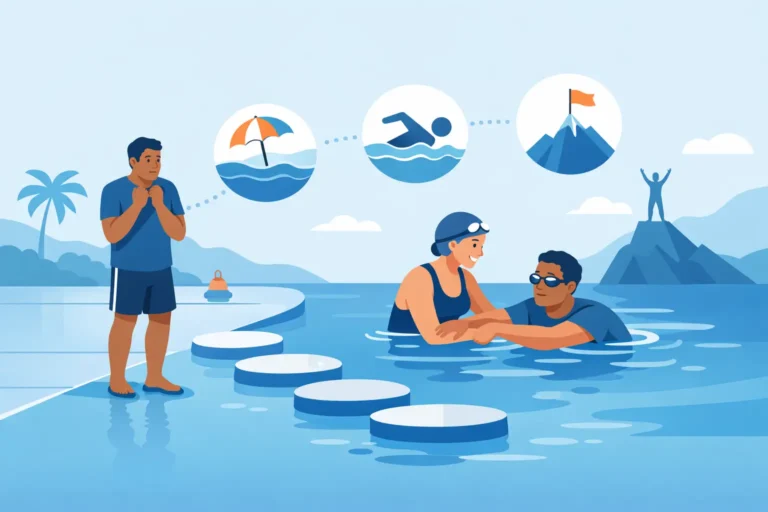
A useful progression is simple. First, get comfortable entering the water, putting your face in, and floating calmly. Next, swim short sections with frequent resets. Then extend those sections while adding sighting. Only after that should you practice sustained efforts at race pace.
If you are especially nervous, begin with a buddy-supported session where the only target is relaxed breathing and five to ten minutes of controlled swimming. Confidence built this way tends to last.
How to manage anxiety during the swim
Panic usually builds in stages. It starts with a small trigger – cold water on the face, unexpected contact, swallowed water, or the feeling that you cannot see enough. Then breathing speeds up, the stroke gets messy, and the brain starts predicting failure.
The solution is to interrupt that sequence early. When you feel tension rising, lengthen the exhale first. Many swimmers try to inhale more, but the bigger problem is often that they are not emptying the lungs properly. A longer exhale helps reduce urgency.
Then simplify your task. Do not think about the whole distance. Focus on the next six to ten strokes. If needed, switch temporarily to breaststroke or sidestroke to reorient yourself and lower stress. In training, rehearse these resets on purpose so they feel familiar rather than like emergency responses.
There is a trade-off here. Pushing through discomfort can build resilience, but pushing through uncontrolled panic usually reinforces fear. Beginners improve faster when challenge is introduced in stages.
Race-day skills matter as much as swim fitness
Many beginner triathletes train the swim but neglect the start, and that is often where the biggest stress appears. A mass start or even a crowded rolling start can feel chaotic. You may be bumped, splashed, or forced off your preferred line.
That means positioning matters. If you are a newer swimmer, starting slightly to the side or a little behind faster athletes is often smarter than fighting for open space in the center. You may swim a few extra meters, but you are more likely to settle into rhythm quickly.
Drafting can help save energy, but it depends on comfort and skill. For beginners, chasing feet too aggressively often leads to rushed breathing and poor navigation. It is better to hold a sustainable effort and swim straight than to surge repeatedly in bad position.
Practice transitions in your overall training as well. Swimming hard in open water and then running to transition feels different from pool exits. Even a short race simulation can teach you how your breathing and balance respond.
Gear helps, but only if it solves a real problem
Beginners often ask whether they need special gear to feel ready. Some equipment does help. A properly fitted wetsuit can improve buoyancy and warmth in races where it is allowed. Tinted goggles may improve visibility depending on light conditions. Anti-chafing protection can prevent avoidable discomfort.
Still, gear should support skill, not replace it. A wetsuit may make you float better, but it can also feel restrictive around the chest and shoulders if you are not used to it. That is why race gear should be tested in training, not debuted on event morning.
If your goggles leak, fog, or feel unstable when you sight, fix that early. Small gear issues become large distractions in open water.
When coaching makes the biggest difference
Some swimmers can self-correct with enough practice. Others repeat the same stress patterns for months because no one identifies the root cause. A structured coach-led approach usually shortens that learning curve.
This is especially true for adults who are fit enough for triathlon but do not have a strong swimming background. They often assume more volume is the answer, when the better solution is targeted work on breathing, stroke efficiency, sighting, and open water confidence. A progression-based program can also help you separate real safety issues from normal first-stage discomfort.
For triathlon beginners, this matters because the swim sets the tone for the whole race. A controlled swim does not just save energy. It protects your decision-making, your bike pacing, and your overall confidence.
AQZOG’s coaching approach reflects that same principle – structured skill development, safety first, and measurable progress that helps swimmers move from hesitation to competence with clear steps.
What success actually looks like
Your first win in open water may be very small. It might be swimming 200 meters without your breathing spiking. It might be sighting without stopping. It might be finishing a session feeling steady instead of relieved that it is over.
Those milestones count. For beginners, success is not about copying experienced triathletes. It is about building control under conditions that once felt uncomfortable. Speed comes later, and often faster than expected once calmness is in place.
Treat open water as a trainable environment, not a test of bravery. If you give yourself structured exposure, honest pacing, and the right support, the swim leg stops feeling like something to survive and starts becoming something you can manage with confidence.