Water Safety and Survival Skills That Matter
A child who can kick across a pool is not automatically safe in water. An adult who can complete a few laps is not automatically prepared for an unexpected fall, deep water panic, or fatigue halfway back to the wall. Water safety and survival skills are different from casual swimming ability, and that difference matters for families, students, and adult learners who want real protection, not false confidence.
Strong swimmers are built through structure. That means learning how to enter water safely, control breathing under stress, float and recover, move with purpose, and make sound decisions around pools and open water. For parents, this is why lessons should be measured by more than distance swum. For adults, it is why a calm, progressive approach often produces better long-term results than simply forcing endurance.
What water safety and survival skills actually include
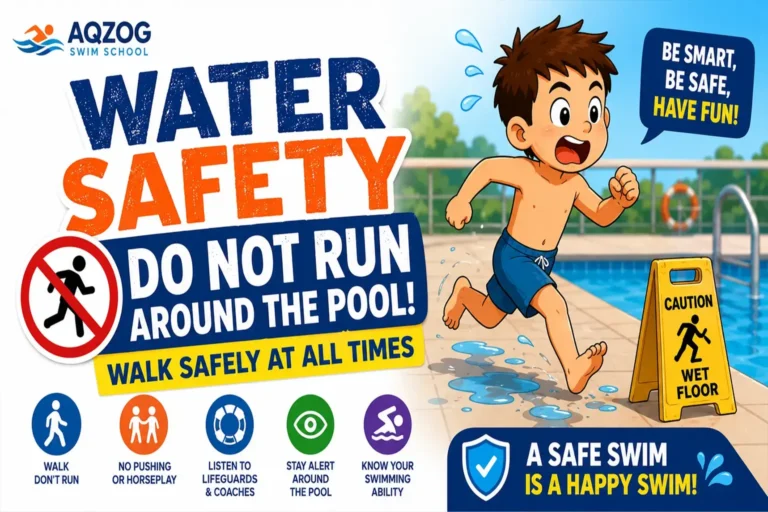
Water safety starts before anyone gets into the pool. It includes recognizing hazards, following instructions, understanding depth changes, respecting pool rules, and knowing personal limits. Those habits may sound basic, but they prevent many incidents before they begin.
Survival skills begin when something goes wrong. A swimmer slips into deeper water than expected. A child loses footing. An adult gets tired or panics. In those moments, the most valuable skills are not speed or fancy strokes. They are breath control, body position, floating, turning, orienting to safety, and moving efficiently toward a wall or safe exit.
This is why good swim instruction does not rush students into technique alone. Front crawl and breaststroke matter, but they should sit alongside practical competencies such as safe entry, submersion recovery, treading water, signal awareness, and basic rescue understanding. A swimmer who can recover composure in the water is safer than one who only performs well under ideal conditions.
Why formal instruction matters more than casual exposure
Many people assume water confidence comes naturally with time. Sometimes it does, but just as often casual exposure creates risky habits. Children may become playful in water without understanding danger. Adults may copy movements without learning efficient breathing or recovery. Familiarity is not the same as competence.
Structured instruction closes that gap. It breaks water skills into teachable stages, reinforces correct responses, and gives learners enough repetition to perform under pressure. This staged approach is especially important for young children, who need consistent routines, and for nervous adults, who often progress faster when each skill is introduced in a logical order.
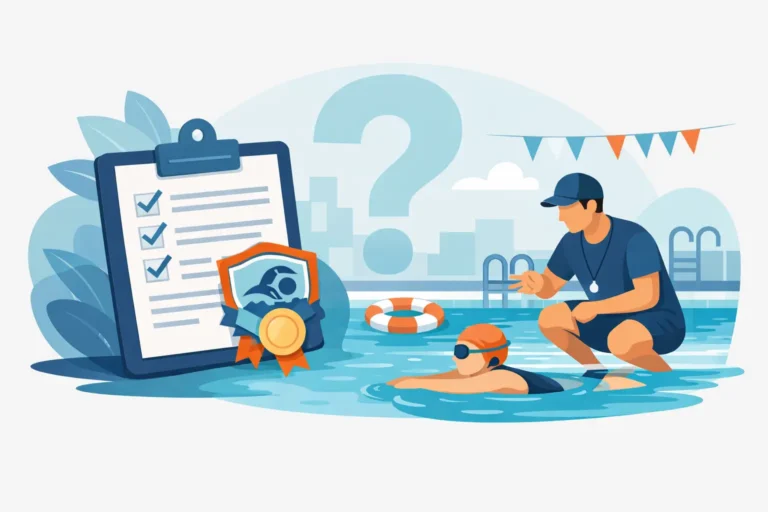
A good program should also test practical readiness, not just participation. Can the student float independently? Can they regain balance after submersion? Can they travel to a point of safety without panicking? Can they follow verbal commands in the water? These are meaningful indicators of progress because they reflect real outcomes.
Water safety and survival skills for children
For children, the goal is not simply to create early swimmers. The goal is to build safe behaviors that stay with them as they grow. Young learners need to understand boundaries, supervision, and the idea that water is enjoyable but never casual.
The first stage is comfort and control. Children learn to enter the water calmly, wet the face, blow bubbles, and hold the body in supported floating positions. These early skills are often underestimated, but they form the foundation for everything that follows. A child who can regulate breathing and remain calm is far easier to teach than one who is rushed into stroke work before basic control is established.
The next stage is independent recovery. Children should learn to float on the back, turn the body, kick with direction, and move toward the wall. They also need repeated practice following simple safety instructions. In real settings, listening and responding quickly can be just as important as physical skill.
As they progress, stronger children can build treading ability, deeper water confidence, basic rescue awareness, and more refined swimming technique. This is where structured benchmarks become useful. Parents benefit from seeing clear standards rather than vague reassurance that a child is doing fine.
What adults often need most
Adult learners usually arrive with one of three goals. They want to overcome fear, gain practical swimming ability, or improve for fitness and performance. In every case, survival skills remain central.
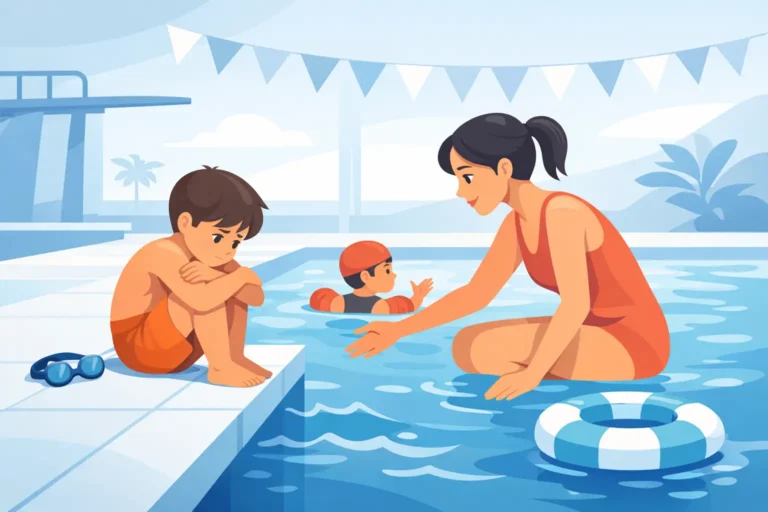
Beginners and fearful adults often need a reset. They may have spent years avoiding water because of a bad experience, poor instruction, or embarrassment. For them, early success is not about swimming far. It is about learning to exhale underwater, stand with control, float without panic, and recover from a disrupted position. Those wins create trust in the process.
More experienced adults sometimes have the opposite problem. They can swim, but they rely too heavily on effort. When tired, they lose form, lift the head, shorten the breath, and become inefficient. Survival training helps them stay composed, conserve energy, and choose the safest response when conditions are less than perfect.
This is particularly relevant for fitness swimmers and triathlon trainees. Pool performance does not always translate into calm decision-making in unpredictable situations. A swimmer who understands pacing, breath control, and recovery is safer than one who only pushes speed.
The difference between swimming strokes and survival readiness
There is value in learning all the major strokes well. Good technique improves efficiency, endurance, and confidence. But survival readiness asks a different question: what can you do when you are surprised, disoriented, or tired?
A child who swims a neat freestyle in a lesson may still struggle if dropped into deeper water unexpectedly. An adult with decent lap speed may still panic if goggles shift, breathing rhythm breaks, or the body rolls off balance. That is why skill progression should include interrupted scenarios and recovery drills, scaled safely to the learner’s level.
Floating, sculling, treading water, rolling from front to back, and pushing off toward safety may not look as impressive as a polished stroke, but they are often more important in an emergency. The best swim education combines both. It develops swimmers who are technically better and practically safer.
How structured progression reduces risk
Progression is not about making lessons feel formal for the sake of it. It reduces risk because it ensures no critical skill is skipped. When learners move through defined stages, coaches can spot weaknesses early and correct them before they become dangerous habits.
This is one reason stage-based systems and assessment-focused training are so useful for families. They create transparency. Parents can understand what their child has achieved, what still needs work, and how each stage supports water safety. Adults benefit too because measurable milestones make improvement clearer and more motivating.
At AQZOG, this progression-led approach is central because real water confidence comes from demonstrated ability, not guesswork. Whether a student is a toddler starting water introduction, a school-age child working through SwimSafer preparation, or an adult building from zero, the path should be structured, coached, and outcome-focused.
What parents and learners should look for in a program
Not every swimming class teaches survival skills with the same level of focus. A strong program should make safety visible in the lesson content, not just mention it in marketing. That means students are taught how to float, recover, tread, orient themselves, and respond to instruction consistently.
It should also match teaching style to the learner. Toddlers need water familiarity and parent-trust building. School-age children need clear benchmarks and repeated safety habits. Nervous adults need patient coaching and small, achievable steps. Faster learners may benefit from intensive formats, while others progress better with steady weekly exposure. It depends on confidence, age, and learning pace.
Coach quality matters as well. Experienced instructors know when to push for progress and when to slow down so technique and safety stay intact. Fast results are valuable, but only when the skills are stable and repeatable.
Real confidence is calm, not careless
One of the biggest misconceptions in swimming is that confidence always looks bold. In reality, safe confidence is usually calm. It shows up in controlled breathing, good judgment, respect for instructions, and the ability to recover without panic.
That is the standard worth aiming for. Whether you are choosing lessons for a toddler, a school-age child, or yourself as an adult beginner, the right question is not just, Can they swim? It is, Can they stay safe, regain control, and make sound decisions in the water?
Those are the water skills that carry beyond a lesson. They support certification, stronger swimming, and peace of mind for everyday pool use. Most of all, they give learners something far more valuable than temporary confidence: dependable ability when it counts.